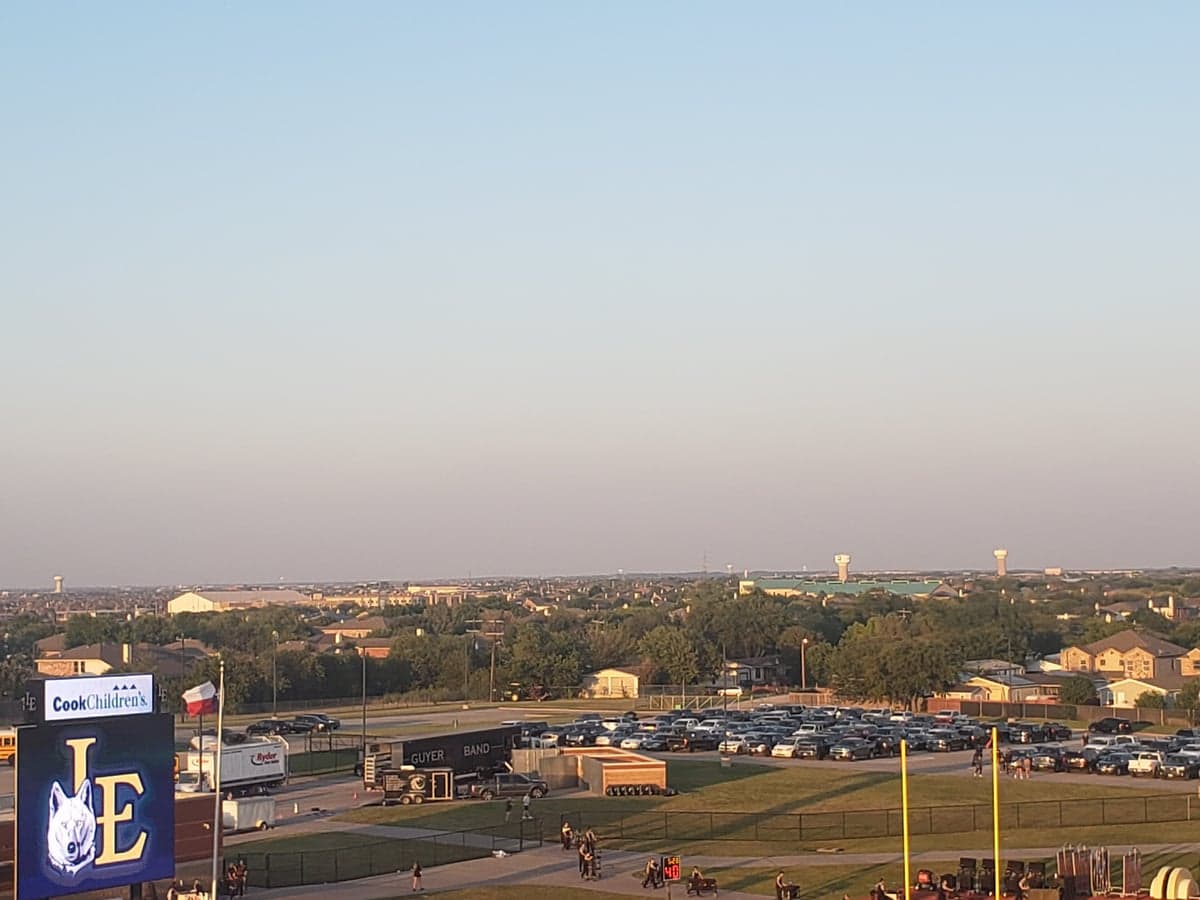
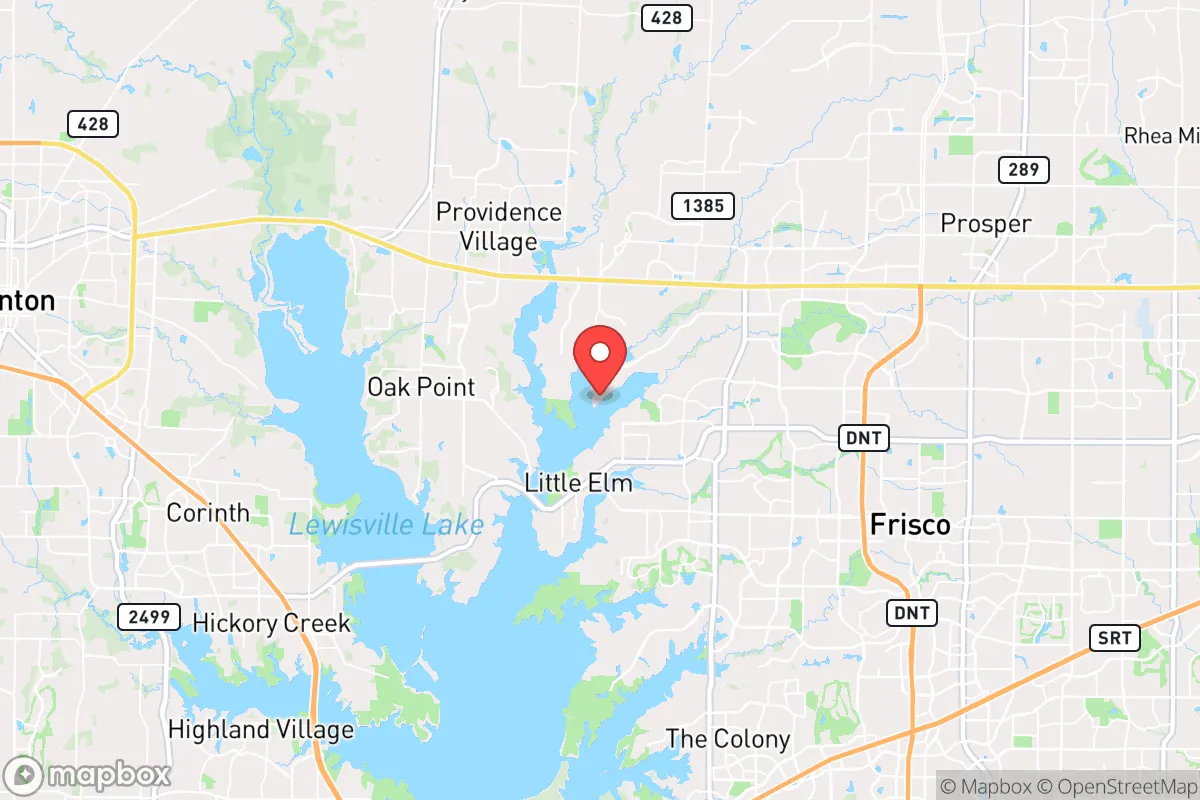
Photo: Wikipedia
Personal Sovereignty in Little Elm, TX
Strong independent fundamentals that actively favor personal liberty and low regulation.
What does Personal Sovereignty tell us?
Personal Sovereignty measures your capacity for self-reliance and independence with minimal government friction. Higher scores mean fewer barriers between you and the way you want to live... but it assumes you have the space you need and good neighbors.
What does this tell us?
Personal Sovereignty measures your capacity for self-reliance and independence with minimal government friction. Higher scores mean fewer barriers between you and the way you want to live... but it assumes you have the space you need and good neighbors.
State Policy
Energy independence: Net exporter (220% of energy produced in-state)
Personal Liberty
Homesteading

Personal Liberty Analysis
For the individualist or prepper evaluating Little Elm, Texas, the personal sovereignty environment is a study in contrasts: the state provides a robust legal framework for self-defense, low taxation, and strong property rights, but local municipal codes and HOA restrictions in this rapidly growing suburb can chip away at the autonomy you’d expect from a rural homestead. You’re not getting wide-open freedom here—you’re getting a carefully managed version of it, where state-level protections (like permitless carry and no state income tax) coexist with local ordinances that limit livestock, vehicle storage, and off-grid modifications. The key is knowing which battles are won at the state capitol and which are lost in your neighborhood covenant.
Tax burden and regulatory posture: how Little Elm compares to surrounding areas
Texas’s lack of a state income tax is the headline advantage, but the devil is in the property tax millage. Little Elm sits in Denton County, which levies a combined property tax rate around 2.3% to 2.6% of assessed value when you add city, county, school district, and special district rates. That’s higher than the national average but typical for fast-growing North Texas suburbs. The state’s regulatory posture is broadly business-friendly—no state-level zoning, no state income tax, and relatively few occupational licensing hurdles compared to California or New York. However, Little Elm’s city government has adopted a comprehensive zoning code that restricts home-based businesses, limits signage, and enforces minimum lot sizes in most residential zones. For a prepper running a small-scale side operation (e.g., welding, firearms repair, or food preservation for barter), you’ll need to check whether your specific lot is zoned for commercial activity. The city also enforces a strict noise ordinance after 10 PM, which could affect generator testing or late-night workshop work. Compared to unincorporated Denton County, where you’d face fewer municipal restrictions, Little Elm trades some regulatory freedom for access to city services and infrastructure.
Self-defense and gun law specifics: what the Castle Doctrine means for you
Texas law provides some of the strongest self-defense protections in the nation, and Little Elm residents benefit directly. The state’s Castle Doctrine (Penal Code §9.32) presumes a reasonable belief of deadly force when someone unlawfully enters your occupied home, vehicle, or workplace—no duty to retreat. This applies in Little Elm as it does anywhere in Texas. Additionally, permitless carry (constitutional carry) has been law since 2021, meaning any law-abiding adult 21 or older can carry a handgun openly or concealed without a license. For parents, this extends to vehicle carry: you can store a firearm in your locked car on school parking lots under the “Motorist Protection Act” (Texas Government Code §411.2032), though school buildings remain off-limits. Local police in Little Elm have not shown a pattern of aggressive enforcement against lawful carriers, but the town’s proximity to Dallas means you’ll occasionally encounter “30.06” and “30.07” signage at private businesses (prohibiting concealed and open carry, respectively). For preppers, the key limitation is that NFA items (suppressors, short-barreled rifles) are legal under state law but require federal tax stamps and local sheriff sign-off—Denton County has historically been shall-issue for these, but processing times can stretch months. Magazine capacity and “assault weapon” bans do not exist at the state or local level, so your AR-15 and standard-capacity magazines are fully legal.
Self-reliance and homesteading viability: lot sizes, zoning, and off-grid feasibility
Little Elm’s residential lots average 0.15 to 0.25 acres in newer subdivisions, with a few older neighborhoods offering half-acre parcels. That’s tight for serious homesteading. City zoning prohibits livestock (chickens, goats, bees) in most residential zones unless you’re on a lot of one acre or more and obtain a special permit. Even then, roosters are banned outright, and beekeeping requires registration with the city. For off-grid systems, the city requires connection to municipal water and sewer—rainwater collection is allowed as a supplementary source but cannot be your primary supply. Solar panels are permitted but must meet HOA architectural guidelines in most subdivisions, which often restrict ground-mounted arrays and require low-profile roof installations. Composting toilets and graywater systems are not explicitly banned but must comply with the International Residential Code, which effectively requires a conventional septic or sewer tie-in. If you’re serious about self-reliance—raising meat rabbits, running a root cellar, or maintaining a wood-fired backup generator—you’ll want to look at unincorporated areas north of town (e.g., near Lake Ray Roberts) where lot sizes start at 1-5 acres and county zoning is minimal. Inside Little Elm, you can still garden intensively, store bulk supplies, and maintain a small workshop, but the HOA covenants in most subdivisions will limit visible stockpiling, vehicle parking, and external structures.
Personal liberties: parental rights, medical autonomy, speech, and property
Texas has become a battleground for parental rights, and Little Elm parents benefit from state-level protections. The Texas Parental Bill of Rights (Family Code §151.001) affirms that parents have the right to direct their child’s education, medical care, and moral upbringing. This has practical teeth: school districts must notify parents of any changes to a student’s mental health or medical records, and parents can opt their children out of sex education or controversial curriculum. Little Elm ISD has not been a flashpoint for critical race theory or gender ideology debates, but the state law gives you leverage if issues arise. On medical autonomy, Texas prohibits any COVID-19 vaccine mandates by private employers (Senate Bill 7, 2023) and has banned vaccine passports. However, childhood vaccination requirements for school attendance remain in place—you can claim a religious or philosophical exemption, but the process requires a signed affidavit and may draw scrutiny. For speech and assembly, Little Elm has not enacted any local ordinances restricting political signage, leafleting, or public gatherings beyond standard time-place-manner rules. Property rights are strong under Texas law: there is no state-level rent control, no statewide inclusionary zoning, and the Texas Property Code protects your right to exclude others from your land. However, the city’s code enforcement can fine you for tall grass, inoperable vehicles, or unapproved structures—so your property sovereignty is real but bounded by municipal aesthetics.
Overall, Little Elm offers a moderate-to-high personal sovereignty score compared to blue-state suburbs, but it falls short of the full autonomy you’d find in rural Texas counties like Jack or Palo Pinto. The state provides a solid foundation—no income tax, strong self-defense laws, parental rights, and property protections—but the city’s zoning, HOA culture, and utility requirements impose a layer of managed living that a serious prepper will find constraining. If you’re willing to trade some freedom for proximity to Dallas jobs and Lake Lewisville recreation, it’s a defensible choice. If your priority is maximum self-reliance with minimal government or HOA oversight, look 30-45 minutes north to unincorporated areas where you can own acreage, keep livestock, and build without a permit for minor structures. The sovereignty you get in Little Elm is real, but it’s the kind you exercise within a well-defined box—not the open range.

* Values derived from national, state, county, city and local statistics and may differ in a specific area. Last updated: 2026-05-08T21:16:26.000Z
Narrative content on this page is AI-generated and may contain mistakes. Verify any details that matter before acting on them.
ReloMaps may earn a commission from affiliate links at no extra cost to you.

