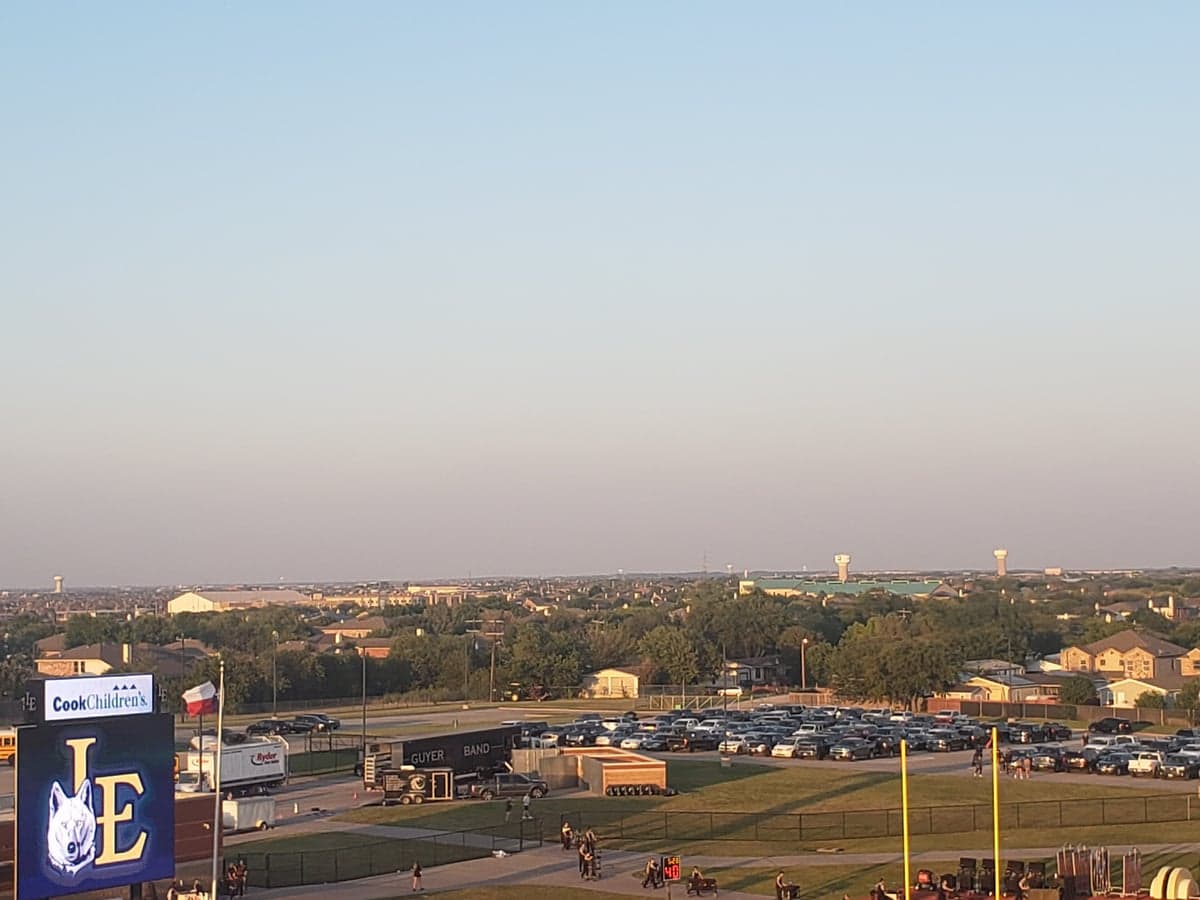
Photo: Wikipedia
Strategic Assessment of Little Elm, TX
Multiple tactical vulnerabilities. Population density, target proximity, or disaster risk are likely compounding. A retreat property and exit planning is required.
What does the Strategic Assessment tell us?
Our Strategic Assessment grades tactical survivability of an area. Major population centers, military targets, fallout zones, natural disasters, and border exposure all drive risk — lower exposure means a more defensible position in a crisis.
This is heavily inspired by Joel Skousen's Strategic Relocation book. Highly recommended you checkout the book ($)What does this tell us?
Our Strategic Assessment grades tactical survivability of an area. Major population centers, military targets, fallout zones, natural disasters, and border exposure all drive risk — lower exposure means a more defensible position in a crisis.
This is heavily inspired by Joel Skousen's Strategic Relocation book. Highly recommended you checkout the book ($)Strategic Pillars

Key Distances
Regional Safe Places
Below is our recommended "safe zones" in Texas and the surrounding area based on our strategic heuristics. For most people, it's unrealistic to live in a “safe zone” full-time due to work, family or other personal reasons. They tend to be more rural. However, many of these areas are perfect for second homes and retreat properties that double as a vacation home or even a short-term rental.

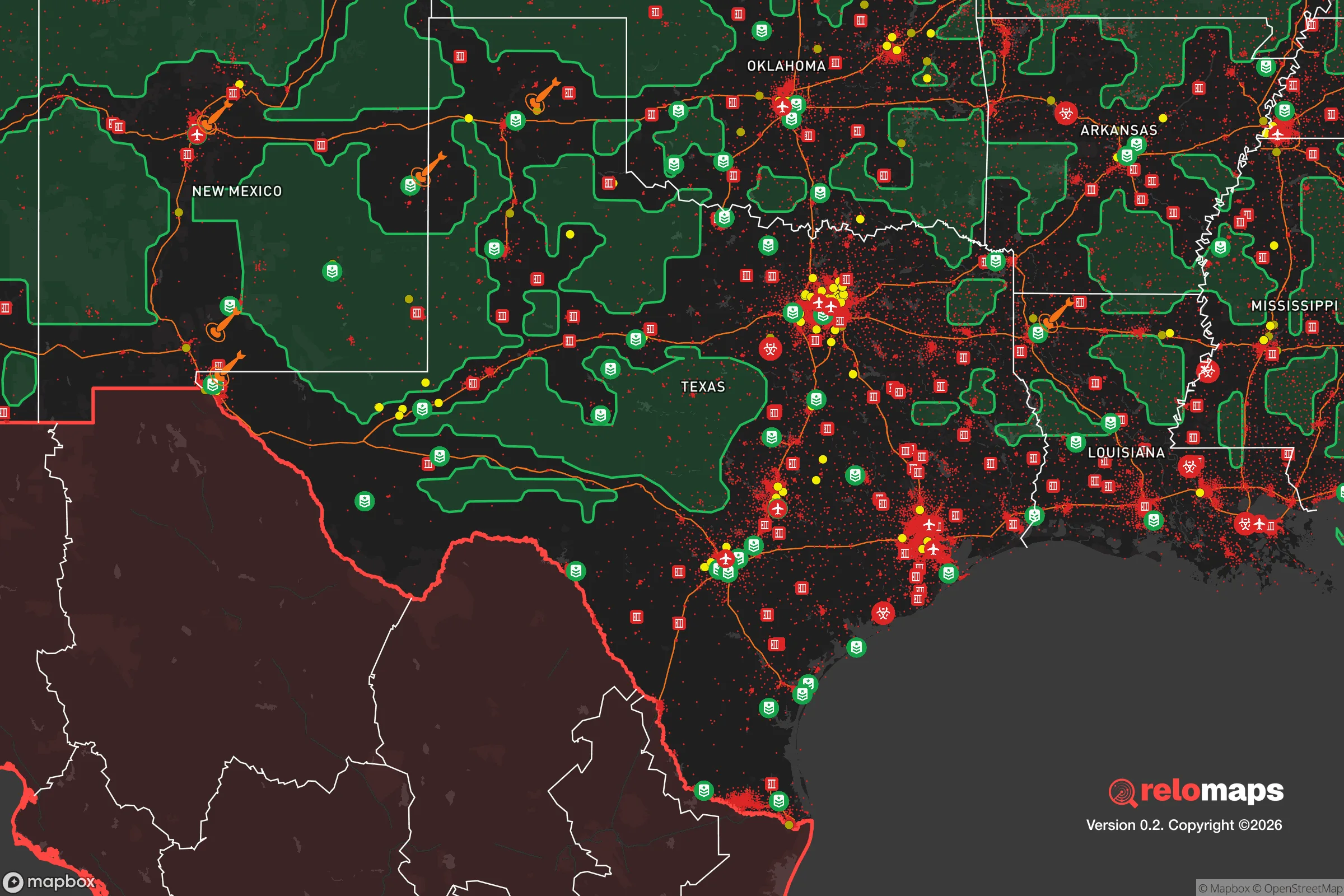


Important Note: For informational purposes only. This does not mean nothing bad ever happens in the green zones. Please use common sense. This is based on public data and modeled with AI. We tried to take a conservative approach but mistakes happen. We update this regularly as new information becomes available.
Solar Generator Recommendations
Backup power matters more here than in safer locations. We've picked three solar generators across budgets and capacity tiers — start with the budget unit if you only need a few essentials, or step up if you want to run a fridge and HVAC for days at a time.

Jackery Portable Power Station Explorer 300
Budget OptionPower on the Go: Weighing only 11 lbs, it's convenient to set up and store with book-sized foldable solar panels

BLUETTI Portable Power Station AC180
Designed for both indoor and outdoor scenarios, AC180 is highly capable as it has a robost capacity and continuous output power.

EF ECOFLOW DELTA Pro Ultra Power Station
Upgraded PickEcoFlow DELTA Pro Ultra is a whole-home energy system designed to grow with your family. Integrated with the Smart Home Panel 2, it scales to meet your evolving energy needs — keeping your home powered, intelligent, and secure through every stage of life.
We earn a commission, at no additional cost to you.
Strategic Assessment Analysis
Little Elm, Texas, presents a mixed strategic picture for the conservative prepper or survivalist. Its rapid growth and proximity to the Dallas-Fort Worth metroplex offer economic opportunity and community, but those same factors introduce significant vulnerabilities. The town’s resilience is tied directly to its ability to manage the risks of being a suburban bedroom community within a major urban corridor, making it a location that demands careful, active preparation rather than passive reliance on its natural advantages.
Geographic position and natural advantages for long-term stability
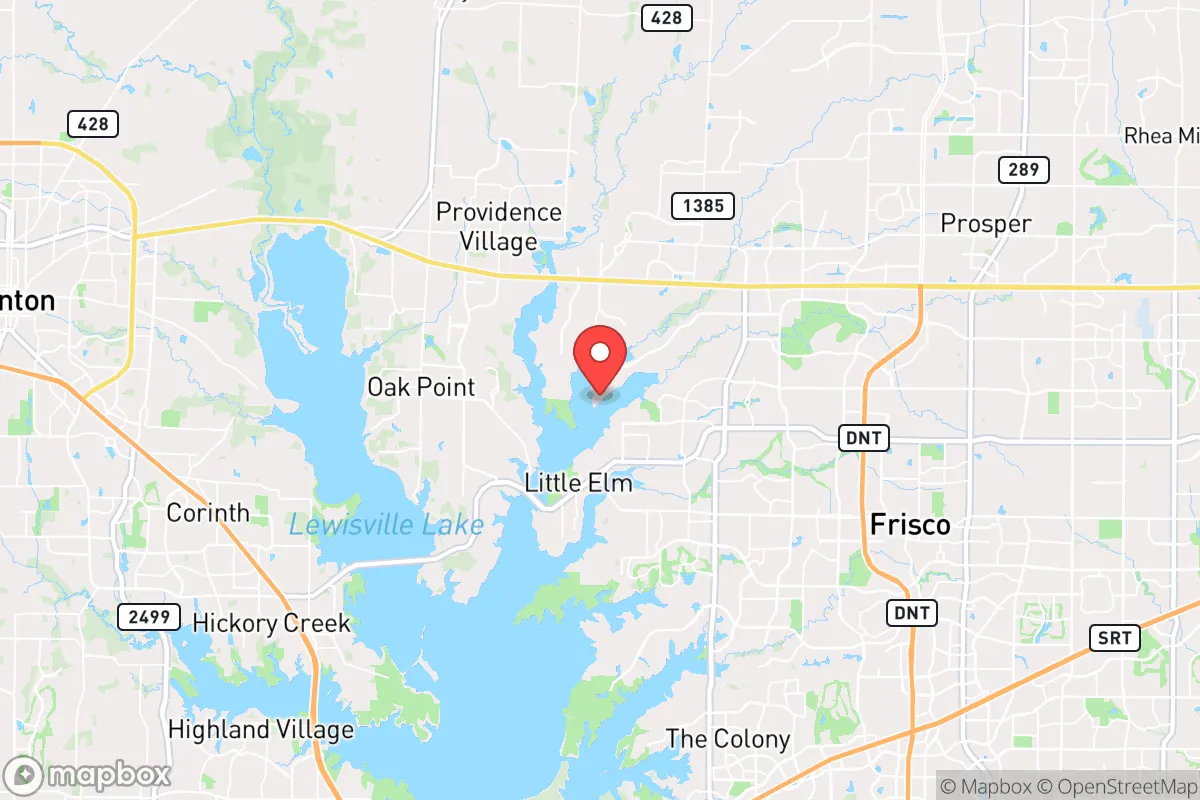
Little Elm sits on the northern shore of Lewisville Lake, a massive 29,000-acre reservoir that provides a substantial, if not infinite, water source. This is the single strongest natural advantage for the area. In a grid-down or prolonged drought scenario, access to this body of water for purification, irrigation, and basic sanitation is a strategic asset that many inland Texas towns lack. The town’s position in Denton County places it roughly 40 miles north of downtown Dallas, which is far enough to avoid the immediate crush of a major urban evacuation but close enough to feel the secondary effects. The surrounding terrain is mostly flat, open prairie and ranchland, offering limited natural defensibility but good visibility. The soil is generally clay-heavy, which complicates large-scale gardening but is workable with raised beds and amendments. The area’s position relative to the Dallas-Fort Worth metroplex means it sits in a zone that would experience heavy traffic and resource competition during any regional crisis, but its lakefront location offers a potential fallback water and food source that interior suburbs simply do not have.
Risks, exposures, and proximity to fallout-relevant landmarks
The most significant risk for Little Elm is its location within the Dallas-Fort Worth (DFW) metropolitan statistical area. While not a primary target for a nuclear strike, DFW is a major transportation, logistics, and economic hub. The presence of Dallas Love Field, DFW International Airport, and major defense contractors like Lockheed Martin in nearby Fort Worth makes the entire region a secondary or tertiary target in a major conflict. Fallout patterns from a strike on downtown Dallas or Fort Worth would likely drift east or northeast depending on prevailing winds, putting Little Elm in a potential downwind zone. Beyond nuclear concerns, the area is vulnerable to the cascading effects of civil unrest in a major city. The town’s growth has been explosive—population jumped from roughly 25,000 in 2010 to over 50,000 by 2025—meaning infrastructure like roads, hospitals, and law enforcement capacity is strained. During a regional emergency, the major evacuation routes, primarily Highway 380 and the Dallas North Tollway, would gridlock almost immediately. The town’s reliance on these arteries for supply chains and commuting means that any disruption to the DFW core would rapidly deplete local resources. Additionally, the proximity to the Lewisville Lake dam is a double-edged sword; a catastrophic failure or targeted attack on the dam could inundate large portions of the town, particularly the lower-lying areas near the lake.
Practical resilience for a relocator: food, water, energy, and defensibility
For a relocator with a prepper mindset, Little Elm requires a proactive, self-reliant approach. Water is the strongest asset—Lewisville Lake provides a year-round, reliable source, but you must have your own purification systems (filters, UV, chemical treatment) and storage capacity. The municipal water supply is treated and generally reliable, but a prolonged power outage would disable pumping stations. Food security is a challenge. The town is surrounded by agricultural land, but much of it is dedicated to cattle and hay, not row crops. Local grocery stores are typical suburban chains (Walmart, Kroger, Aldi) that would empty within hours of a panic. A serious prepper would need to establish a home garden, likely with raised beds due to the clay soil, and consider a greenhouse for year-round production. Local farmers’ markets exist but are small and seasonal. Energy independence is achievable but requires investment. The Texas grid (ERCOT) is notoriously fragile during winter storms, as the 2021 freeze demonstrated. Solar panels with battery backup are a wise investment, as the area gets abundant sunshine. Natural gas generators are common but depend on fuel supply chains that can fail. Defensibility is moderate. Little Elm is a suburban grid of cul-de-sacs and subdivisions, not a rural homestead. This makes perimeter security difficult. However, the town’s layout, with several gated communities and a relatively low crime rate (violent crime is below the national average), offers a baseline of security. The local police department is responsive but small relative to the population. For a relocator, the best strategy is to buy a property on the northern or western edge of town, closer to open ranchland and away from the major highway corridors, to reduce exposure to fleeing urban populations. Community is a double-edged sword. The town is growing fast, and many residents are new, meaning established mutual-aid networks are weak. A prepper would need to actively build relationships with like-minded neighbors, as isolation in a suburban environment is a vulnerability, not a strength.
The overall strategic picture for Little Elm is one of calculated risk. It offers a genuine water security advantage and a location that is far enough from the urban core to avoid the worst of a collapse, yet close enough to be affected by its fallout. The town’s explosive growth has created infrastructure strain and a transient population, which undermines the kind of deep-rooted community resilience found in smaller, more isolated Texas towns. For a conservative relocator who values economic opportunity and is willing to invest heavily in self-sufficiency—solar, water purification, food production, and a strong personal security plan—Little Elm can work. But it is not a bug-out location. It is a suburban outpost that requires constant vigilance and preparation. If your goal is to be truly off-grid and defensible, look further north toward the Red River or west toward the Hill Country. If you need to stay near work in DFW but want a fighting chance at riding out a crisis, Little Elm is a viable, if demanding, option. The lake is your lifeline; everything else is a variable you must control yourself.

* Values derived from national, state, county, city and local statistics and may differ in a specific area. Last updated: 2026-05-08T21:16:26.000Z
Narrative content on this page is AI-generated and may contain mistakes. Verify any details that matter before acting on them.
ReloMaps may earn a commission from affiliate links at no extra cost to you.

