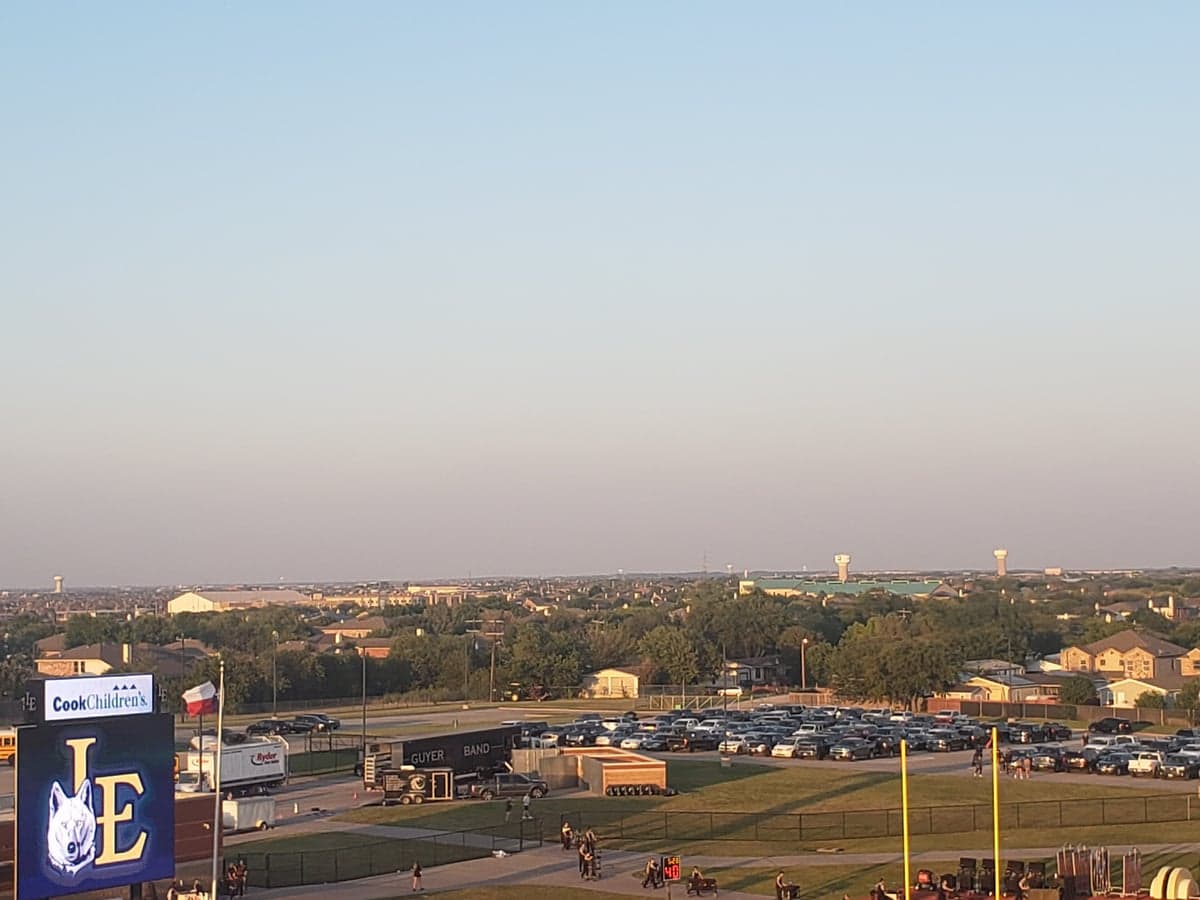
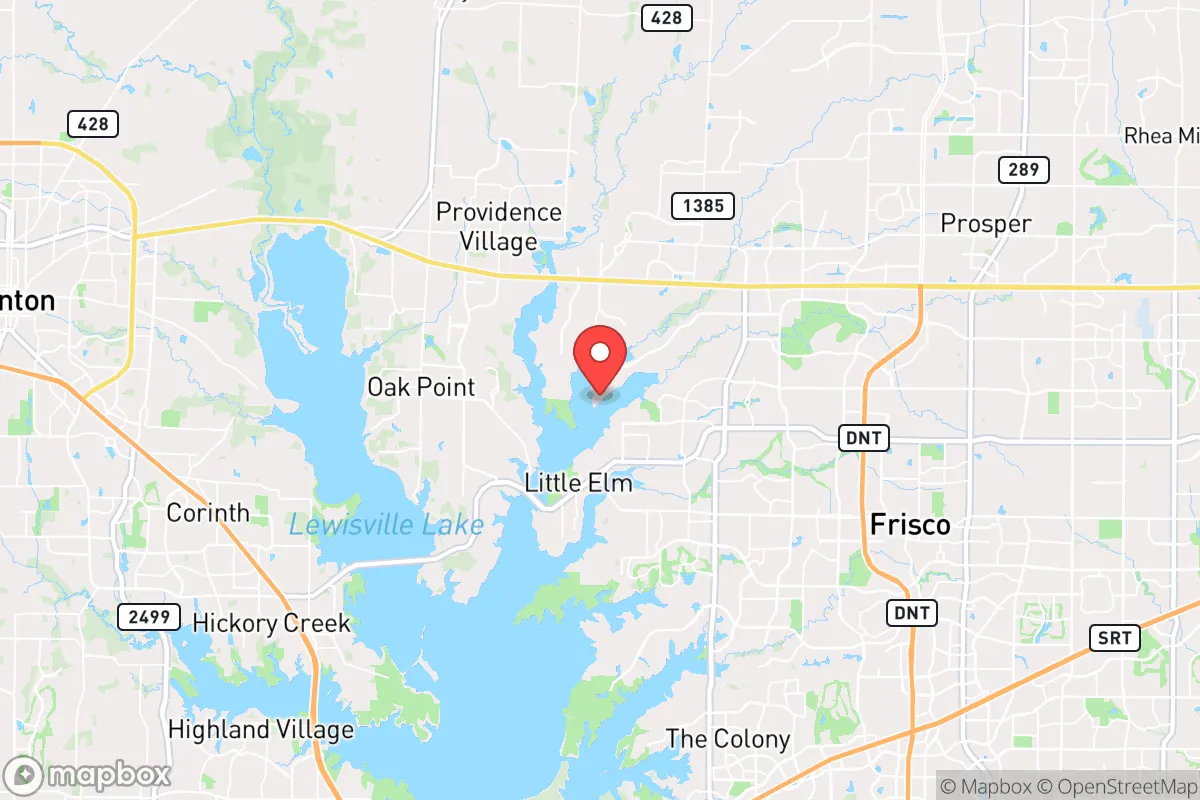
Photo: Wikipedia
Political ClimatePolitical Climate in Little Elm, TX
District shown is the primary district for this city’s centroid. Cities may span multiple districts.
Local Political AnalysisPolitical Analysis of Little Elm, TX
Little Elm, Texas, has long been a solidly conservative community, and that hasn't changed much despite the massive growth. The Cook PVI here is R+11, which is a full seven points more Republican than the state of Texas as a whole (R+4). That number tells you the real story: while the state has been drifting a little more purple in recent cycles—especially in the big metros—Little Elm has held the line. You still see more pickup trucks with American flags than electric cars with progressive bumper stickers. The local elections and school board races tend to reflect that same lean, though we've had a few close calls that make you pay attention.
How it compares
Compared to the rest of Texas, Little Elm is a conservative outlier in a state that's already pretty red. The R+11 rating puts us closer to places like Frisco or Prosper than to the more moderate suburbs like Plano or Carrollton, which have seen their politics shift leftward as they've densified. Drive ten minutes south to Lake Dallas or Hickory Creek, and you'll find a similar vibe, but head over to Denton proper—just 20 minutes away—and it's a whole different world. Denton's city council has been flirting with progressive policies on housing and policing for years, and you can feel the difference in the air. Little Elm, by contrast, has kept its focus on low taxes, property rights, and keeping government out of your business. That's a big part of why people move here instead of closer to the urban core.
What this means for residents
For folks living here, the political climate means a lighter touch from local government. You're not going to see the kind of overreach you hear about in Austin or Dallas—no heavy-handed zoning fights over your backyard shed, no mandates on what kind of lightbulbs you can use, and definitely no talk of defunding the police. The town council and school board have historically been dominated by folks who believe in personal responsibility and limited interference. That said, the rapid growth—Little Elm's population has nearly doubled in the last decade—is bringing in new people from all over, including some from blue states. A few of them have tried to push for more "progressive" ideas like higher density zoning or "equity" initiatives in the schools. So far, those efforts have been beaten back, but it's something to keep an eye on. If you value your Second Amendment rights and want to raise your kids without a bunch of government ideology in the classroom, this is still one of the safer bets in North Texas.
One thing that really sets Little Elm apart is the culture around the lake. The town is built around Lewisville Lake, and that creates a lifestyle that's very pro-outdoor, pro-family, and pro-freedom. You don't see a lot of heavy-handed regulations on boat access or lakefront property use. Compare that to some of the more "managed" lakes in Travis County, where the state parks and local governments have started imposing all kinds of fees and restrictions. Here, it's still pretty straightforward: you buy your lot, you build your dock, and you enjoy your weekend. That's the kind of common-sense, low-overhead approach that keeps people loyal to Little Elm. The concern going forward is whether the newcomers will respect that culture or try to change it. For now, the R+11 rating gives me confidence that the conservative majority is still in charge, but we can't afford to get complacent.

State Political ClimatePolitical Climate in Texas
State Political AnalysisPolitical Environment in the State
Texas has been a reliably Republican state for decades, with a Cook PVI of R+4, but the political landscape is far more complex than a simple red-state label. The dominant coalition has long been a mix of suburban conservatives, rural voters, and business interests, but explosive population growth and shifting demographics have made the state a genuine battleground over the last 10-20 years. While Republicans still hold every statewide office and both legislative chambers, the margin of victory has narrowed significantly—from double-digit wins in the 2000s to single-digit ones in recent cycles—driven largely by the rapid expansion of the state’s major metropolitan areas.
Urban vs. rural divide
The political map of Texas is a textbook study in urban-rural polarization. The state’s five biggest metros—Houston, Dallas-Fort Worth, San Antonio, Austin, and El Paso—are the engines of Democratic growth, with Austin and El Paso being the most reliably blue. Harris County (Houston) and Dallas County have flipped from red to blue over the past decade, while Tarrant County (Fort Worth) only turned blue in 2020 after decades of Republican dominance. Meanwhile, the vast rural stretches of West Texas, the Panhandle, and East Texas remain deeply conservative—places like Lubbock, Midland, and Tyler routinely deliver 70-80% of the vote for Republicans. The real battleground is the fast-growing suburban ring counties—Collin, Denton, Montgomery, and Williamson—which are trending purple as new arrivals from blue states bring different voting habits. In 2024, Collin County still voted Republican, but by a much slimmer margin than a decade ago, signaling that the suburbs are the key to the state’s political future.
Policy environment
Texas’s policy environment is defined by a low-tax, low-regulation philosophy that has attracted millions of new residents. There is no state income tax, property taxes are high but capped at 10% annual growth for homeowners, and the regulatory framework is business-friendly. On education, the state has leaned into school choice with the creation of education savings accounts in 2023, though the program is still limited. Healthcare policy remains a flashpoint: Texas has not expanded Medicaid under the Affordable Care Act, leaving roughly 1.5 million uninsured residents, but the state has also banned most abortions after six weeks (SB 8) and restricted gender transition procedures for minors (SB 14). Election laws tightened in 2021 with SB 1, which banned 24-hour and drive-through voting, added ID requirements for mail ballots, and empowered poll watchers. For a conservative-leaning audience, the policy environment is largely favorable, though the property tax burden and lack of Medicaid expansion are real pain points for middle-class families.
Trajectory & freedom
On the freedom front, Texas has moved in two directions simultaneously. On the positive side for conservatives, the state has expanded gun rights significantly—permitless carry (HB 1927) became law in 2021, allowing adults to carry handguns without a license. Parental rights were strengthened with the 2023 law requiring school districts to notify parents of any changes to a child’s mental or physical health, effectively restricting transgender accommodations. Property rights got a boost with the 2023 ban on foreign ownership of agricultural land near military installations. On the concerning side, the state has seen an expansion of government overreach in the name of public health and election integrity. The 2021 election law (SB 1) was sold as security but created new bureaucratic hurdles for voters. More troubling for some is the growing use of state police to patrol the southern border under Operation Lone Star, which has led to constitutional challenges over warrantless arrests and detentions. The state’s medical autonomy record is mixed: while COVID-19 vaccine mandates were banned for state employees, the state also restricted access to gender-affirming care for adults in some cases. Overall, Texas remains freer than most states on economic and Second Amendment issues, but the trend toward centralized state power in Austin is worth watching.
Civil unrest & political movements
Texas has seen its share of political flashpoints in recent years. The 2020 Black Lives Matter protests in Austin, Dallas, and Houston were large and occasionally violent, leading to property damage and a lasting shift in public sentiment toward law-and-order policies. The border crisis has fueled a powerful grassroots movement on the right, with groups like the Texas Minutemen and the Texas Border Volunteers organizing regular patrols. Immigration politics are front and center: Governor Abbott’s busing of migrants to New York, Chicago, and Denver has been a deliberate provocation, and the state’s lawsuit against the Biden administration over razor wire at the border is ongoing. Secession rhetoric, while fringe, has gained a louder voice through the Texas Nationalist Movement, though it remains a non-starter in mainstream politics. Election integrity remains a hot-button issue, with the 2020 and 2022 cycles seeing widespread claims of fraud in Harris County, leading to the removal of the county’s elections administrator. A new resident will notice that political bumper stickers, yard signs, and even clothing are common in everyday life—politics is not a private matter here.
Projection
Looking ahead 5-10 years, Texas is on a trajectory toward becoming a true swing state. The in-migration from California, New York, and Illinois is accelerating, and these new arrivals tend to vote Democratic, especially in the suburbs. The Hispanic electorate, long assumed to be a Republican growth opportunity, has not broken for the GOP as expected—in 2024, the state’s Hispanic voters still favored Democrats by a significant margin. If current trends hold, Texas could be competitive at the presidential level by 2028 or 2032. However, the state’s rural and exurban areas are growing too, and the Republican legislature has shown no interest in making voting easier, which could slow the Democratic shift. For a new resident, the practical takeaway is that the political environment will become more contested, more polarized, and more expensive as both parties pour resources into the state. The low-tax, low-regulation model will likely persist, but expect more fights over school funding, property tax relief, and the scope of state power.
For someone moving to Texas now, the bottom line is this: you’re getting a state that still values individual liberty on economic and Second Amendment issues, but the political climate is heating up fast. The suburbs are where the real action is—places like Frisco, McKinney, and Round Rock are ground zero for the demographic and ideological shift. If you’re looking for a place where your vote still counts and your voice matters in a red state, Texas is still that—for now. But don’t expect it to stay the same. The freedom you’re moving for is being contested every legislative session, and staying engaged is the only way to keep it.
* Values derived from national, state, county, city and local statistics and may differ in a specific area. Last updated: 2026-05-08T21:16:26.000Z
Narrative content on this page is AI-generated and may contain mistakes. Verify any details that matter before acting on them.
ReloMaps may earn a commission from affiliate links at no extra cost to you.

