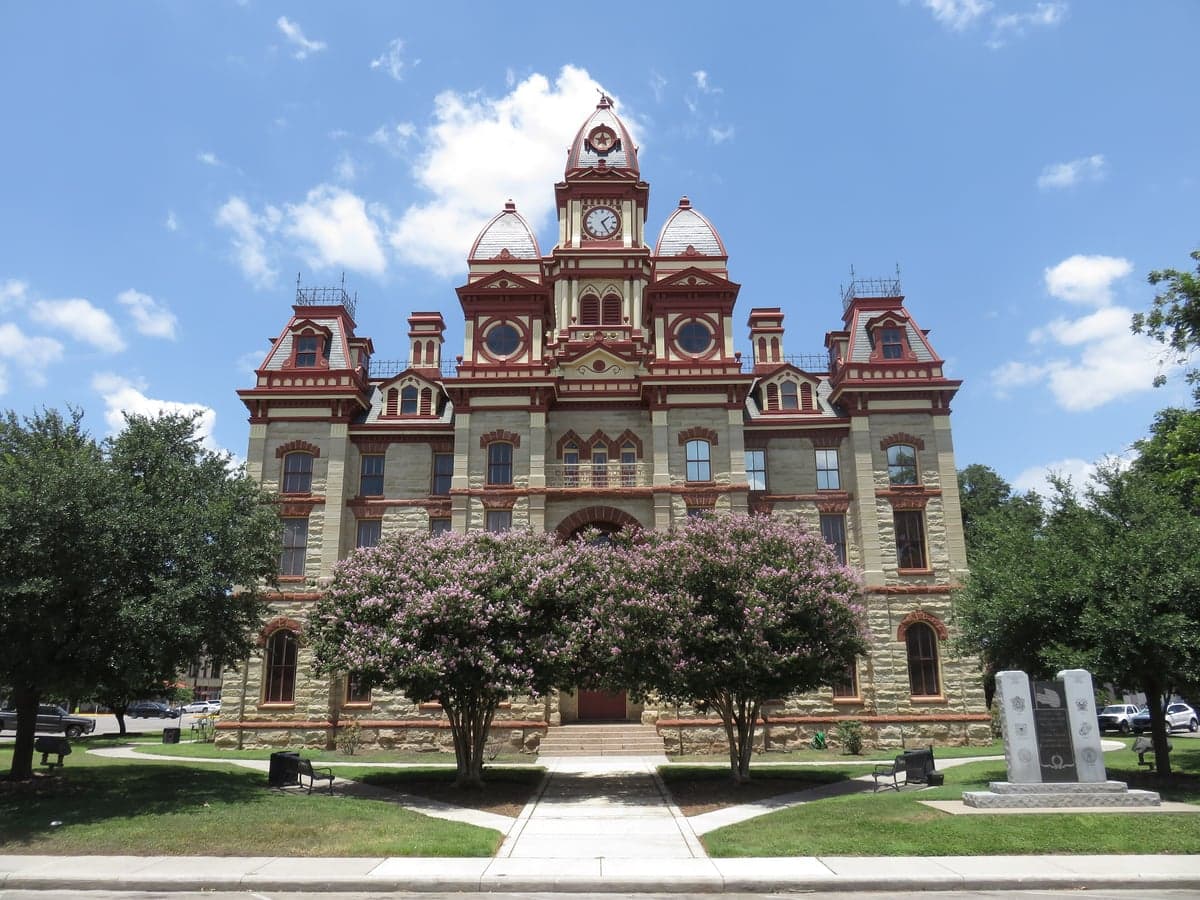
Photo: Wikipedia
Strategic Assessment of Lockhart, TX
Meaningful friction. Expect exposure to either population pressure, blast zones, or natural disaster risk. Consider buying a retreat property.
What does the Strategic Assessment tell us?
Our Strategic Assessment grades tactical survivability of an area. Major population centers, military targets, fallout zones, natural disasters, and border exposure all drive risk — lower exposure means a more defensible position in a crisis.
This is heavily inspired by Joel Skousen's Strategic Relocation book. Highly recommended you checkout the book ($)What does this tell us?
Our Strategic Assessment grades tactical survivability of an area. Major population centers, military targets, fallout zones, natural disasters, and border exposure all drive risk — lower exposure means a more defensible position in a crisis.
This is heavily inspired by Joel Skousen's Strategic Relocation book. Highly recommended you checkout the book ($)Strategic Pillars

Key Distances
Regional Safe Places
Below is our recommended "safe zones" in Texas and the surrounding area based on our strategic heuristics. For most people, it's unrealistic to live in a “safe zone” full-time due to work, family or other personal reasons. They tend to be more rural. However, many of these areas are perfect for second homes and retreat properties that double as a vacation home or even a short-term rental.

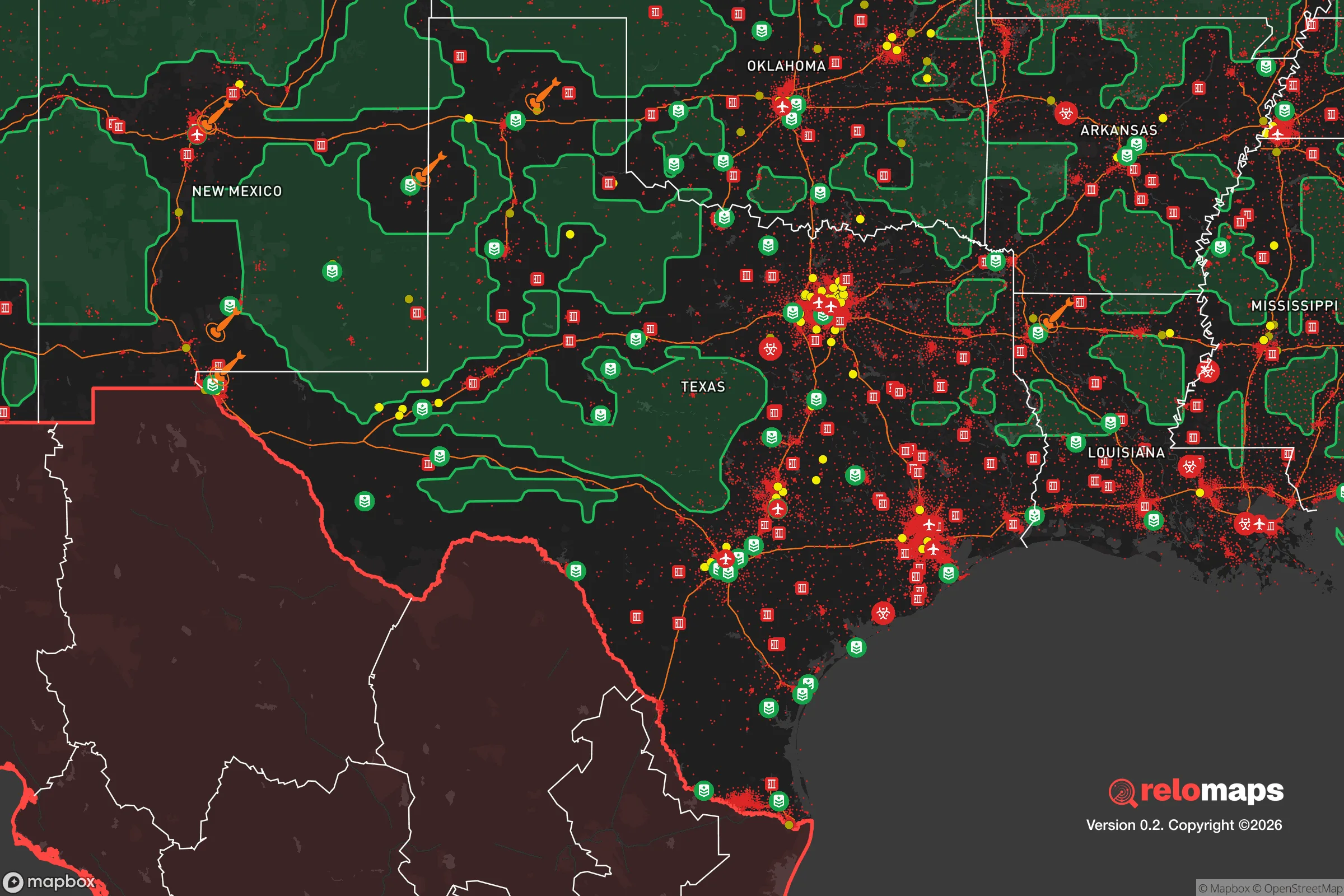


Important Note: For informational purposes only. This does not mean nothing bad ever happens in the green zones. Please use common sense. This is based on public data and modeled with AI. We tried to take a conservative approach but mistakes happen. We update this regularly as new information becomes available.
Solar Generator Recommendations
Backup power matters more here than in safer locations. We've picked three solar generators across budgets and capacity tiers — start with the budget unit if you only need a few essentials, or step up if you want to run a fridge and HVAC for days at a time.

Jackery Portable Power Station Explorer 300
Budget OptionPower on the Go: Weighing only 11 lbs, it's convenient to set up and store with book-sized foldable solar panels

BLUETTI Portable Power Station AC180
Designed for both indoor and outdoor scenarios, AC180 is highly capable as it has a robost capacity and continuous output power.

EF ECOFLOW DELTA Pro Ultra Power Station
Upgraded PickEcoFlow DELTA Pro Ultra is a whole-home energy system designed to grow with your family. Integrated with the Smart Home Panel 2, it scales to meet your evolving energy needs — keeping your home powered, intelligent, and secure through every stage of life.
We earn a commission, at no additional cost to you.
Strategic Assessment Analysis
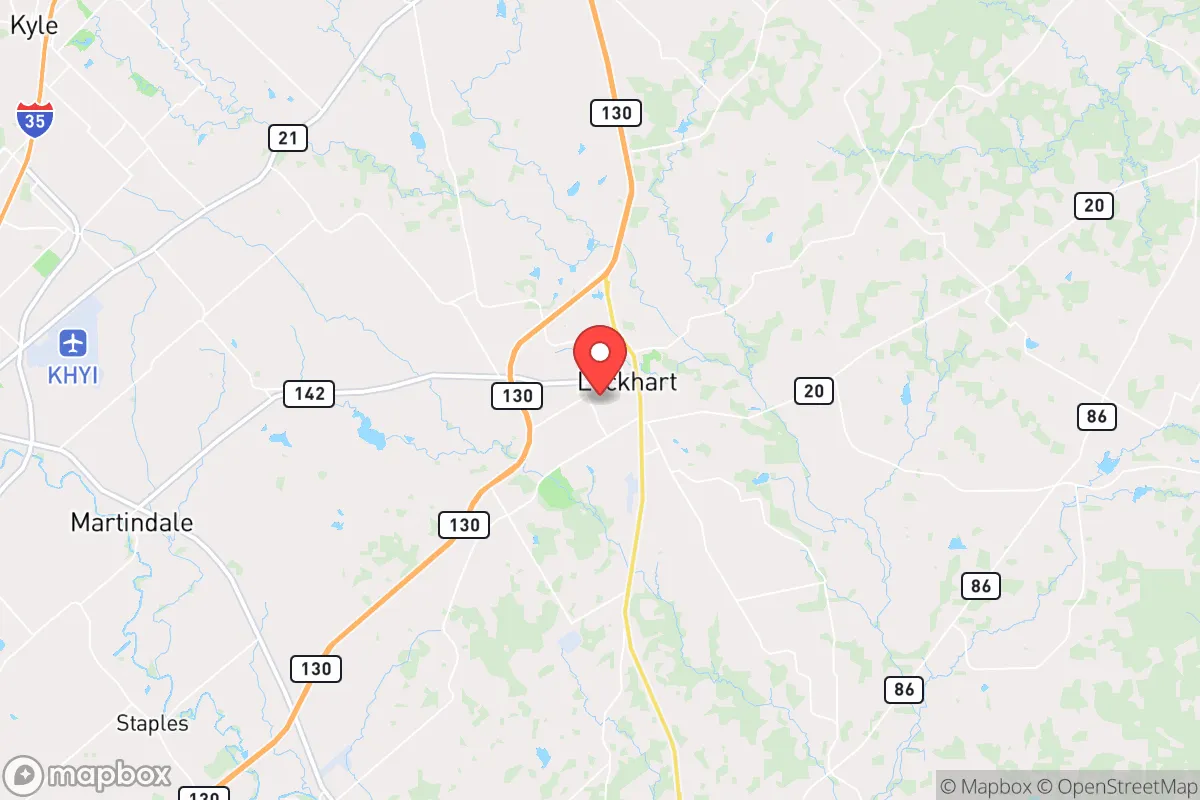
Lockhart offers a mixed bag for the serious prepper: small-town resilience and a location that’s close enough to urban resources to be useful, but dangerously near the kind of population centers that could become epicenters of unrest. Sitting about 30 miles south of Austin and 50 miles northeast of San Antonio, it’s within the blast radius of any major societal collapse that starts in those cities. The town’s historic courthouse square and tight-knit community provide a foundation, but the surrounding flat farmland offers limited natural barriers. This analysis weighs the pros and cons for a relocator seeking a long-term survival retreat, with a clear-eyed view of what works and what doesn’t when the grid goes down or the streets fill with chaos.
Geographic position and natural advantages for a survival retreat
Lockhart sits in the Blackland Prairie, a region of deep, fertile soil that has supported agriculture for generations. For a prepper, that means the land itself can produce food—corn, cotton, hay, and livestock are all viable. The climate is moderate by Texas standards: hot summers, mild winters, and fewer extreme weather events than the Panhandle or Gulf Coast. Tornado risk exists but is lower than in the Dallas-Fort Worth corridor. Flooding is a concern along Plum Creek, but most of the town sits on higher ground. Water access is decent: the local aquifer (the Carrizo-Wilcox and Edwards systems are within reach) and surface water from Plum Creek and the San Marcos River a few miles east provide options for well drilling and rainwater catchment. The area is also less prone to wildfire than the Hill Country, thanks to the lack of heavy brush. Population density is low—Caldwell County has about 45,000 people spread over 547 square miles—meaning you’re not elbow-to-elbow with neighbors when things go sideways. The terrain is mostly flat to gently rolling, which isn’t ideal for defensive positions but does make it easy to set up a homestead, run fences, and keep an eye on your perimeter.
Risks, exposures, and proximity to fallout-relevant landmarks
The biggest liability is Lockhart’s proximity to Austin. Austin is a prime target for civil unrest—it’s a state capital, a major tech hub, and a city with a history of large-scale protests. In a mass casualty event or societal breakdown, the 30-mile drive from downtown Austin to Lockhart could become a river of refugees, looters, and desperate people. Interstate 35 runs just east of town, and that corridor is a chokepoint that would be clogged in any evacuation scenario. The Austin-Bergstrom International Airport is a potential target for terrorism or military staging, and its fallout zone (if a dirty bomb or conventional strike hit) could extend into Caldwell County depending on wind. San Marcos, home to Texas State University, is only 15 miles north and could see its own unrest from a student population that may not share conservative values. The Texas Capitol in Austin is a symbolic target that would draw attention from both domestic and foreign adversaries. On the natural disaster front, the Texas power grid (ERCOT) is notoriously fragile—Lockhart has experienced rolling blackouts during winter storms, and a long-term grid failure would leave the town without power unless residents have their own generation. Tornadoes are a real threat, and flash floods can isolate parts of the county. Law enforcement presence is thin: the Caldwell County Sheriff’s Office has around 30 deputies for the whole county, so in a crisis you’re largely on your own.
Practical resilience for a relocator: food, water, energy, and defensibility
For a prepper looking to set up a sustainable homestead, Lockhart has real strengths. Local agriculture is robust—there are working farms and ranches within a few miles of town, and the Caldwell County Farmers Market operates regularly. You can buy land with good soil for a fraction of what you’d pay in the Hill Country. Water is the critical factor: drilling a well is feasible, but you need to check the depth and yield for your specific parcel. Rainwater harvesting is legal and encouraged in Texas, and with 30–35 inches of annual rainfall, you can supplement. Energy is the weak link. The grid is unreliable, but solar potential is excellent—central Texas gets over 200 sunny days per year. A solar array with battery storage, plus a propane or diesel backup generator, can keep a household running off-grid. Natural gas is available in town but not in rural areas, so plan accordingly. Defensibility is the biggest challenge. The flat terrain offers no natural high ground or cover. A determined group could approach from any direction. However, the town’s layout—a compact historic core with a central courthouse square—could be hardened with barriers and watch posts if you’re part of a community defense group. The local gun culture is strong; Caldwell County has a high rate of firearm ownership and a pro-Second Amendment sheriff. Church networks and volunteer fire departments provide social cohesion that would be invaluable in a grid-down scenario. For a single individual or family, the key is to buy land with a good well, install solar, and build a home with passive security features (e.g., reinforced doors, clear sightlines, a fenced perimeter). Avoid being too close to I-35 or the main highways that funnel urban traffic south.
Overall, Lockhart is a decent secondary retreat if you have the resources to harden a property and the willingness to work with neighbors. It’s not a true bug-out location—the lack of natural barriers and the proximity to Austin are serious liabilities. But for a relocator who wants to stay within striking distance of medical care, hardware stores, and a like-minded community, it offers a balance of access and isolation. Serious preppers may want to look further west into the Hill Country (e.g., Llano, Mason) or deeper into rural South Texas for better defensibility and lower risk of urban spillover. Lockhart works best as a “prepare in place” town where you build your self-sufficiency while the world still functions, and hope the chaos doesn’t roll down I-35 before you’re ready.

* Values derived from national, state, county, city and local statistics and may differ in a specific area. Last updated: 2026-05-14T18:32:09.000Z
Narrative content on this page is AI-generated and may contain mistakes. Verify any details that matter before acting on them.
ReloMaps may earn a commission from affiliate links at no extra cost to you.

