Photo: Wikipedia
Find The Best Places To Live
in San Marcos
PRO TIP! You can paste a Zillow or Redfin link to get info on that property.
What It's Like Living in San Marcos, TX
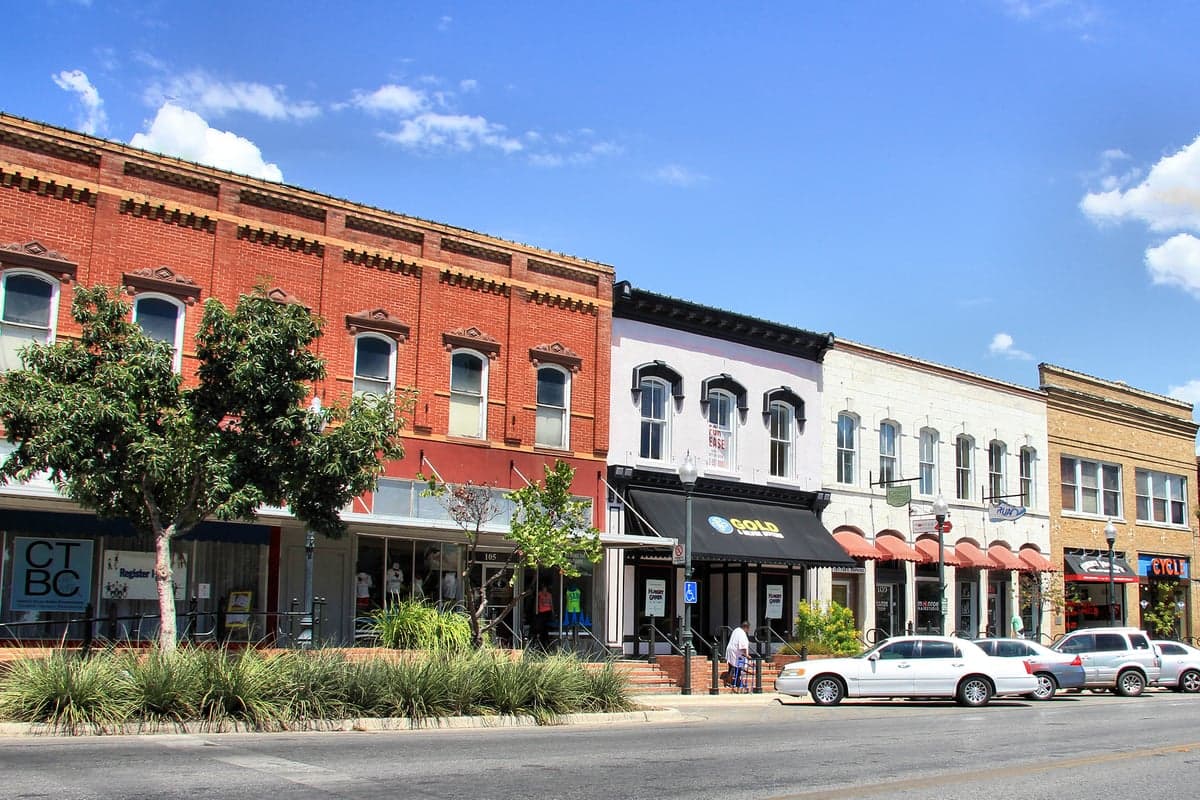
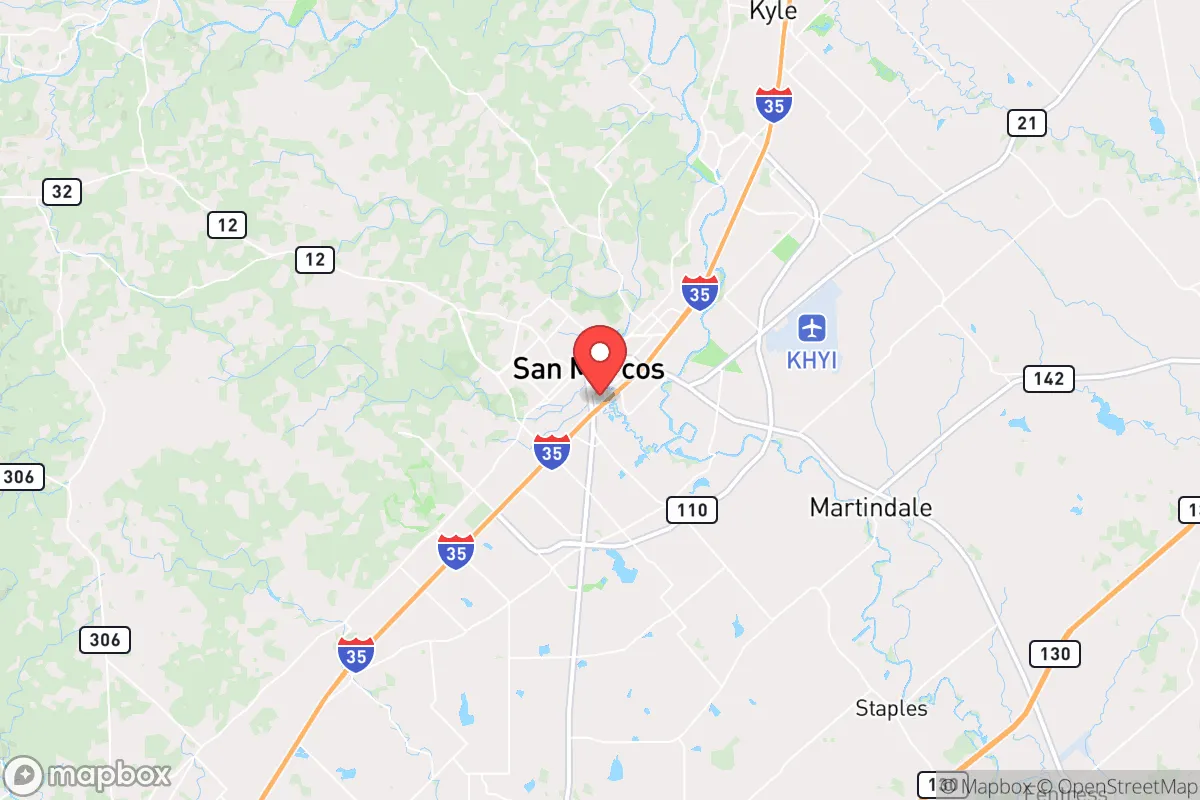
San Marcos has a split personality, and that’s exactly what makes it interesting. One half is a classic Texas Hill Country college town built around Texas State University, buzzing with students, taco joints, and live music. The other half is a rapidly growing bedroom community for commuters heading to Austin (30 minutes north) and San Antonio (45 minutes south), filled with new subdivisions and strip malls. With a median age of just 25.5, it’s undeniably young, but the 68,920 residents also include a growing number of families and retirees drawn by home prices that still feel reasonable compared to the big cities.
Daily Rhythm: College Town Meets Hill Country Commuter Hub
On a typical weekday, the town moves to two different clocks. Texas State students pack coffee shops like Wake the Dead and the square around the courthouse, while commuters trickle out of neighborhoods like Hunter’s Hollow or the newer developments off McCarty Lane. The average commute clocks in at about 24 minutes, which is short by Austin standards but noticeable for a town this size. Shopping means H-E-B on Thorpe Lane for groceries and the Tanger Outlets for clothes—those outlets are a genuine draw, pulling in people from as far as Kyle and Buda. Weekends often revolve around the San Marcos River, where locals tube, kayak, or just lounge on the banks at City Park or Sewell Park. The river is the town’s best natural asset: cool, spring-fed, and free.
Who fits in here? It’s a mix. You’ll find young professionals working remotely or at local employers like Thermon (industrial heating) or Central Texas Medical Center, alongside Texas State faculty and tradespeople building the new subdivisions. The median household income is $51,030, which is modest, but the cost of living index sits at 105—just slightly above the national average. That means you trade lower wages for cheaper rent than Austin, though the gap is shrinking. Families with school-age kids often choose San Marcos for the San Marcos CISD schools, which are a point of pride (and occasional frustration) in local Facebook groups. The high school’s football games at Rattler Stadium are a genuine community event, drawing crowds that include both parents and students who never played a down.
Sports, Festivals, and the Big To-Do
Sports here are a big deal, but not in the pro-sports sense. Texas State Bobcats football and basketball games at Bobcat Stadium and Strahan Arena are the main events, and while the program isn’t a powerhouse, game days bring a tailgating energy that spills onto the square. High school sports—especially football and volleyball—are taken seriously, with San Marcos High’s Rattlers and the San Marcos Academy drawing loyal followings. For pro sports, you drive to Austin for the Longhorns or the Spurs in San Antonio, both about 45 minutes away.
Entertainment punches above the town’s weight. The San Marcos River Festival in June is a chaotic, fun mess of floating, live music, and beer. The Mermaid Festival (yes, mermaids) in October celebrates the town’s quirky identity with a parade and costume contest. Music venues like The Porch and Cheatham Street Warehouse host local and touring acts—Cheatham Street is a historic dive where George Strait once played. For food, Hays City Store serves up Hill Country comfort food in a 19th-century building, while Garcia’s Mexican Food is the go-to for breakfast tacos. The square has a handful of bars—Taproom at the Texas Theater is a favorite for craft beer—and the vibe is casual, not pretentious.
Pros and Cons of Living in San Marcos
Longtime residents love the river access and the small-town feel that still has enough going on. The cost of living is a genuine plus: median home value of $269,700 is about half of Austin’s, and you can still find a decent three-bedroom under $300,000. The weather is classic Hill Country—hot summers, mild winters, and enough blue northers in January to remind you it’s not California. But the frustrations are real. Traffic on I-35 is a daily headache, especially at the Aquarena Springs Drive exit, and the city’s rapid growth has outpaced road infrastructure. The violent crime rate of 412.3 per 100,000 is higher than the national average, and while most of it is concentrated near the university and apartment complexes, it’s a concern families mention. The college party scene—especially during “SMTX” weekends—can be loud and messy for residents near campus.
Culturally, San Marcos is proudly weird but in a more laid-back way than Austin. The town’s slogan, “Everything is Different Here,” plays up the river-and-arts identity. You’ll see bumper stickers for “Keep San Marcos Weird” and a genuine resistance to chain stores taking over the square. The local farmers market on Saturdays is a staple, and the San Marcos Art Center hosts shows that lean eclectic. For conservative-leaning residents, the politics are mixed: Hays County leans red overall, but the city council and university tilt blue. It’s a place where you can find a Trump flag and a “Coexist” sticker in the same parking lot, and most people just shrug and go tubing.

Similar small cities to San Marcos
* Values derived from national, state, county, city and local statistics and may differ in a specific area. Last updated: 2026-05-11T20:36:25.000Z
Narrative content on this page is AI-generated and may contain mistakes. Verify any details that matter before acting on them.
ReloMaps may earn a commission from affiliate links at no extra cost to you.

