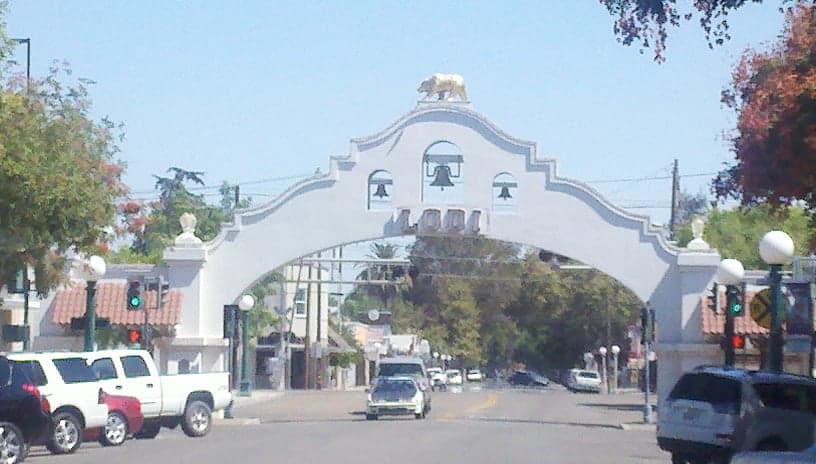
Photo: Wikipedia
Strategic Assessment of Lodi, CA
Multiple tactical vulnerabilities. Population density, target proximity, or disaster risk are likely compounding. A retreat property and exit planning is required.
What does the Strategic Assessment tell us?
Our Strategic Assessment grades tactical survivability of an area. Major population centers, military targets, fallout zones, natural disasters, and border exposure all drive risk — lower exposure means a more defensible position in a crisis.
This is heavily inspired by Joel Skousen's Strategic Relocation book. Highly recommended you checkout the book ($)What does this tell us?
Our Strategic Assessment grades tactical survivability of an area. Major population centers, military targets, fallout zones, natural disasters, and border exposure all drive risk — lower exposure means a more defensible position in a crisis.
This is heavily inspired by Joel Skousen's Strategic Relocation book. Highly recommended you checkout the book ($)Strategic Pillars

Key Distances
Regional Safe Places
Below is our recommended "safe zones" in California and the surrounding area based on our strategic heuristics. For most people, it's unrealistic to live in a “safe zone” full-time due to work, family or other personal reasons. They tend to be more rural. However, many of these areas are perfect for second homes and retreat properties that double as a vacation home or even a short-term rental.

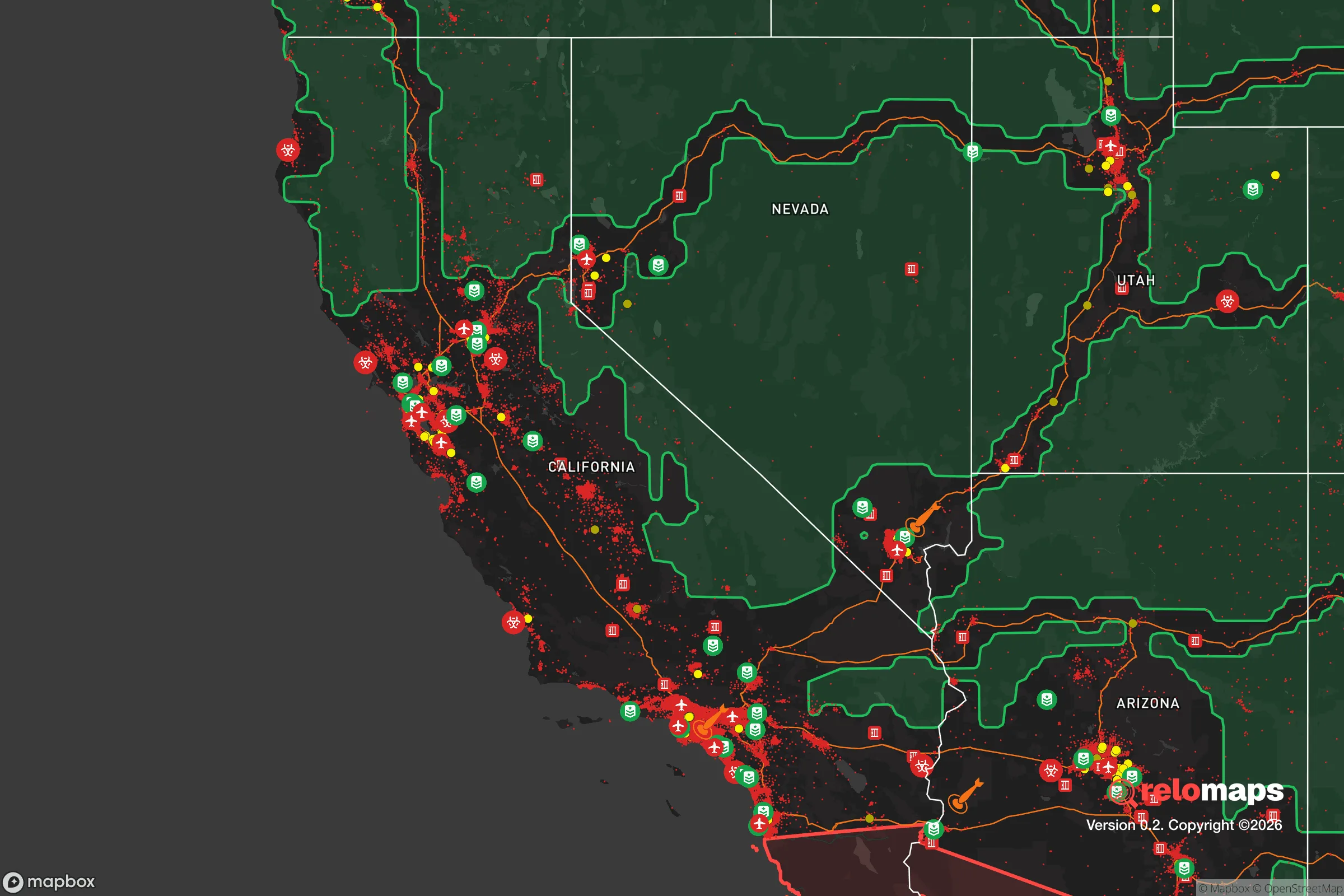


Important Note: For informational purposes only. This does not mean nothing bad ever happens in the green zones. Please use common sense. This is based on public data and modeled with AI. We tried to take a conservative approach but mistakes happen. We update this regularly as new information becomes available.
Solar Generator Recommendations
Backup power matters more here than in safer locations. We've picked three solar generators across budgets and capacity tiers — start with the budget unit if you only need a few essentials, or step up if you want to run a fridge and HVAC for days at a time.

Jackery Portable Power Station Explorer 300
Budget OptionPower on the Go: Weighing only 11 lbs, it's convenient to set up and store with book-sized foldable solar panels

BLUETTI Portable Power Station AC180
Designed for both indoor and outdoor scenarios, AC180 is highly capable as it has a robost capacity and continuous output power.

EF ECOFLOW DELTA Pro Ultra Power Station
Upgraded PickEcoFlow DELTA Pro Ultra is a whole-home energy system designed to grow with your family. Integrated with the Smart Home Panel 2, it scales to meet your evolving energy needs — keeping your home powered, intelligent, and secure through every stage of life.
We earn a commission, at no additional cost to you.
Strategic Assessment Analysis
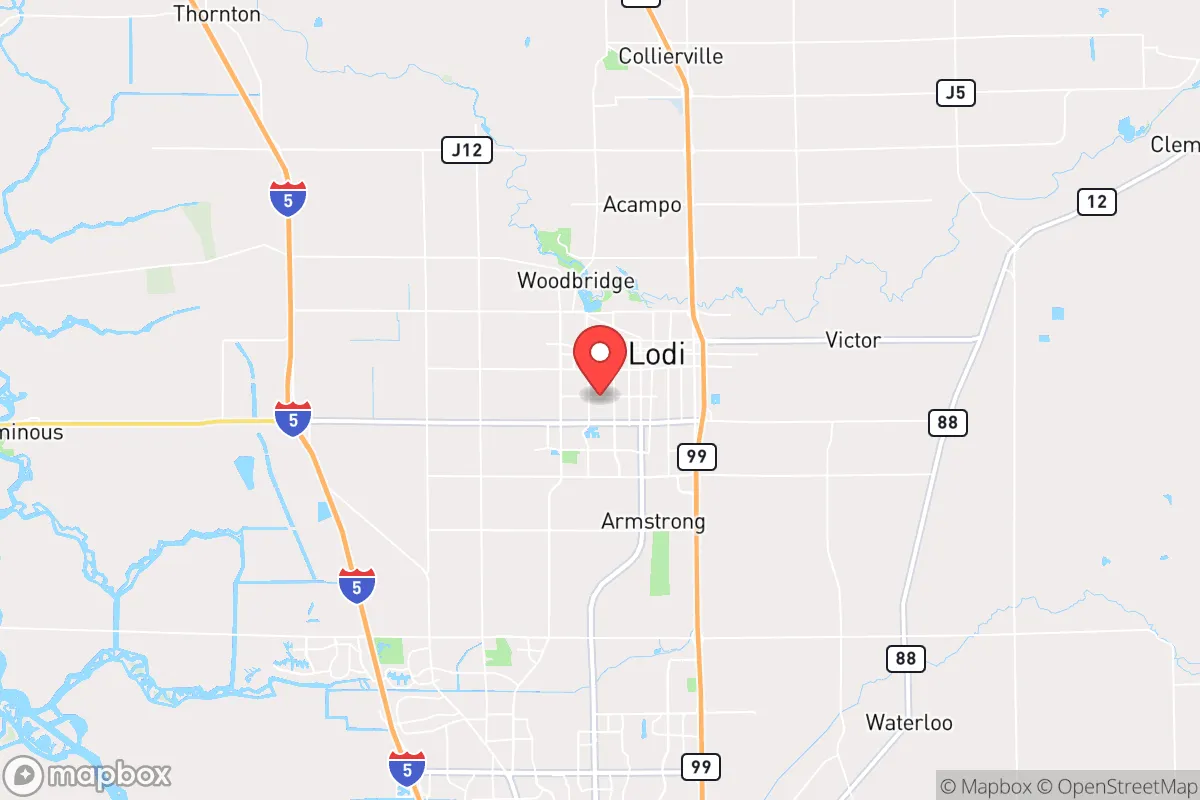
Lodi, California, occupies a strategic position in the Central Valley that offers a blend of agricultural self-sufficiency and relative insulation from the most acute risks facing coastal California, making it a noteworthy option for relocation-minded individuals and families prioritizing resilience. Situated roughly 35 miles south of Sacramento and 70 miles east of the San Francisco Bay Area, Lodi sits at a geographic inflection point where the fertile delta meets the Sierra Nevada foothills. This location provides access to major transportation corridors—Interstate 5 and State Route 99—while maintaining a distinct separation from the densest population centers and their associated vulnerabilities. For a reader weighing disaster readiness and long-term self-sufficiency, Lodi presents a mixed but generally favorable strategic picture, particularly when compared to the Bay Area or Los Angeles basin.
Geographic position and natural advantages for long-term security
Lodi's location in the northern San Joaquin Valley confers several structural advantages for resilience-minded relocators. The city sits at an elevation of approximately 50 feet above sea level, placing it above the flood-prone delta regions immediately to the west while remaining within the productive agricultural heartland of the state. The surrounding topography is predominantly flat, with the Sierra Nevada range rising roughly 60 miles to the east, providing a natural barrier that moderates the most extreme weather patterns. The region benefits from a Mediterranean climate with hot, dry summers and mild, wet winters, which supports year-round agricultural output and reduces the heating and cooling burdens that strain energy grids in more extreme climates. Critically, Lodi lies outside the highest-risk zones for California's most destructive natural hazards: it is not situated on a major active fault line like the San Andreas or Hayward faults, and while the area experiences occasional seismic shaking, the risk of catastrophic ground rupture is substantially lower than in the Bay Area or Los Angeles. The city is also removed from the direct tsunami threat of the coast and the wildfire urban interface that plagues communities in the Sierra foothills and coastal ranges. The Mokelumne River, which flows along Lodi's northern edge, provides a reliable surface water source, and the region's extensive groundwater aquifers—though subject to ongoing management challenges—offer a buffer during drought periods. These geographic fundamentals make Lodi a comparatively stable base for long-term habitation in a state increasingly defined by environmental volatility.
Risk exposures and proximity to fallout-relevant landmarks
No strategic assessment of Lodi would be complete without acknowledging the risks that accompany its location, particularly for a reader concerned with man-made threats and cascading failures. The most significant exposure stems from Lodi's position within the broader Sacramento-San Joaquin Delta region, a critical piece of California's water infrastructure. The delta's aging levees, which channel water to 27 million Californians and millions of acres of farmland, represent a systemic vulnerability. A major levee failure from seismic activity or sustained flooding could disrupt water deliveries, saltwater intrusion could compromise freshwater supplies, and the economic ripple effects would be felt throughout the Central Valley. Lodi itself is not directly in the floodplain of a catastrophic levee breach, but the secondary effects on water availability and regional stability would be substantial. Additionally, Lodi lies within 70 miles of the Sacramento metropolitan area and roughly 90 miles from Travis Air Force Base, a major military logistics hub. In a scenario involving a large-scale conflict or terrorist event targeting critical infrastructure, these proximate assets could become liabilities, drawing secondary effects or straining regional resources. The city is also within 100 miles of the Diablo Canyon Power Plant (though that facility is slated for decommissioning) and within the broader fallout shadow of potential targets in the Bay Area and Sacramento. For the resilience-minded relocator, Lodi's distance from the coast and major urban cores is a net positive, but the delta's fragility and the proximity to Sacramento's political and logistical significance introduce risks that cannot be dismissed. The area's flat terrain also offers little natural defensibility against a determined ground-based threat, though this is a concern shared by most of the Central Valley.
Practical resilience for relocators: food, water, energy, and defensibility
Where Lodi truly distinguishes itself is in the practical, day-to-day resilience factors that matter most to a family or individual building a self-sufficient lifestyle. The city sits at the heart of one of the most productive agricultural regions on earth. The surrounding San Joaquin Valley produces a staggering volume of fruits, vegetables, nuts, and wine grapes—Lodi is particularly famous for its Zinfandel and other wine varietals—meaning that local food security is exceptionally high compared to urban coastal areas. Farmers' markets operate year-round, and the density of small-scale farms and agricultural suppliers within a 30-minute drive means that a relocator with even modest gardening ambitions can access seeds, soil amendments, and expertise readily. Water availability is more nuanced. Lodi draws its municipal water from a combination of the Mokelumne River and groundwater wells, and the city has invested in water conservation infrastructure. However, the broader Central Valley faces chronic groundwater overdraft, and state regulations under the Sustainable Groundwater Management Act (SGMA) are forcing reductions in pumping. For a relocator planning to drill a private well or maintain a large garden, understanding local groundwater basin conditions is essential. The energy picture is moderately favorable: Lodi Municipal Utilities provides electricity and natural gas, offering a degree of local control over grid reliability, though the city is still connected to the broader California grid, which faces periodic strain during heat waves and wildfire seasons. Solar adoption is feasible given the region's high insolation, and many homes in the area already have rooftop solar. Defensibility is a mixed factor. Lodi's suburban and agricultural layout means most properties are not naturally defensible in a tactical sense, but the low crime rate relative to nearby Stockton and the general social cohesion of a mid-sized agricultural community provide a baseline of security. The city's layout—with clear sightlines, open agricultural land, and a relatively sparse population density outside the core—offers advantages for situational awareness that a dense urban environment cannot match.
Overall, Lodi presents a strategic profile that balances genuine agricultural and geographic strengths against the inherent vulnerabilities of California's Central Valley. For the relocator who accepts that no location in California is entirely insulated from the state's systemic risks—drought, seismic activity, grid instability, and proximity to high-value targets—Lodi offers a credible middle ground. It is not a remote mountain redoubt, nor is it a fortified rural compound. It is a functioning agricultural town with access to fresh food, manageable water resources, a moderate climate, and a population that is neither so dense as to create acute vulnerability nor so sparse as to lack essential services and community infrastructure. The city's greatest strategic weakness is its dependence on the broader delta water system and its location within the shadow of Sacramento's regional risks. Its greatest strength is the simple fact that it sits on some of the most productive soil in the world, with a climate that allows for year-round food production and a community that still remembers how to grow things. For a family or individual looking to build a resilient life in California without retreating entirely from civilization, Lodi warrants serious consideration.

* Values derived from national, state, county, city and local statistics and may differ in a specific area. Last updated: 2026-08-23T00:48:20.000Z
Narrative content on this page is AI-generated and may contain mistakes. Verify any details that matter before acting on them.
ReloMaps may earn a commission from affiliate links at no extra cost to you.

