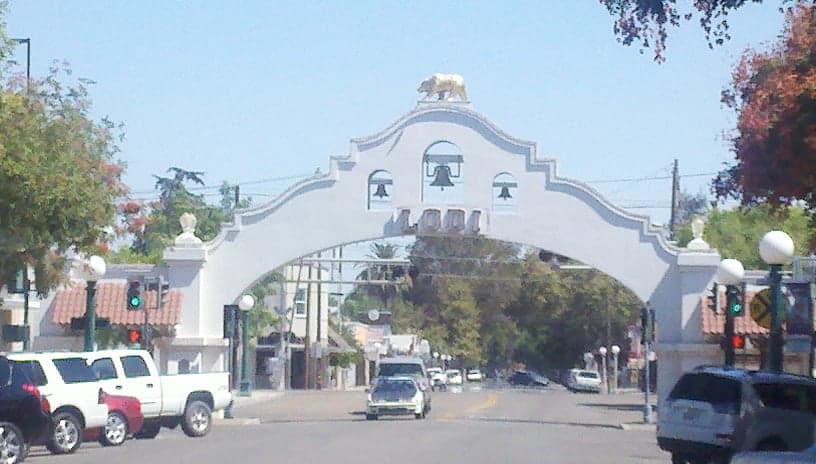
Photo: Wikipedia
Political ClimatePolitical Climate in Lodi, CA
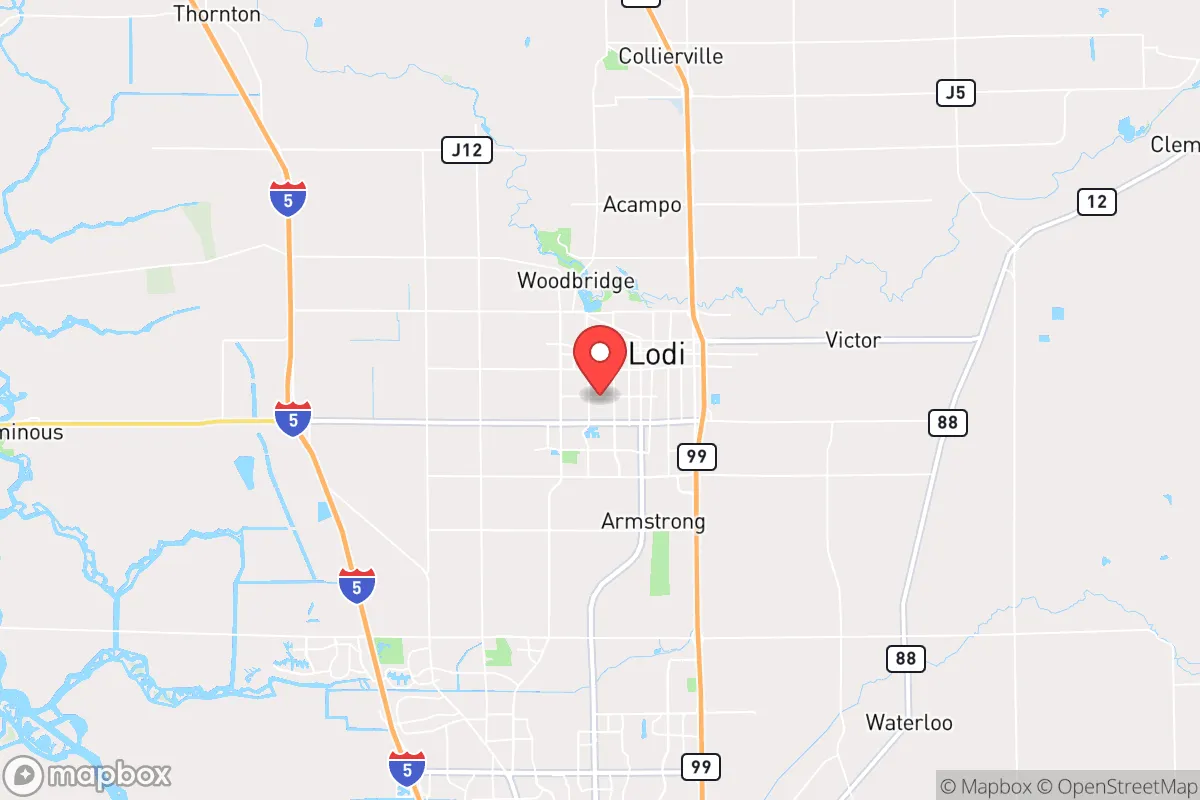
District shown is the primary district for this city’s centroid. Cities may span multiple districts.
Local Political AnalysisPolitical Analysis of Lodi, CA
Lodi’s political climate is a classic Central Valley story: a historically conservative agricultural town that’s slowly shifting left, but still leans right of the state as a whole. The Cook PVI of D+1 means the district is essentially a toss-up—it voted for Biden by a hair in 2020, but local offices and ballot measures often tilt red. If you’ve been here a while, you’ve seen the change: the old guard of farm families and small-business owners still hold sway at city council meetings, but new arrivals from the Bay Area and a growing Latino electorate are nudging the needle. The trajectory is toward purple, not deep blue, and that tension defines daily life here.
How it compares
Compared to California’s coastal strongholds—San Francisco, Los Angeles, or even nearby Stockton—Lodi is noticeably more conservative. San Joaquin County as a whole voted +6 for Trump in 2024, while Lodi’s own precincts were closer to +2 or +3 for Trump, reflecting its D+1 district. That puts it to the right of Stockton (which is solidly blue) but to the left of neighboring Galt (R+8) and the deeply red farm towns like Lockeford and Clements. Statewide, California’s Cook PVI is D+13, so Lodi’s D+1 is a full 12 points more conservative than the state average. In practice, that means you’ll see more Trump signs in yards here than in the Bay Area, but also more Harris-Walz lawn placards than you’d find in, say, Bakersfield. The real contrast is with the Central Valley’s rural core: Lodi feels moderate compared to the hard-right counties of Tulare or Kings.
What this means for residents
For conservatives, Lodi offers a rare pocket of political comfort in a blue state. Local government is still run by moderates and Republicans, so zoning, water rights, and business regulations tend to be more business-friendly than in Sacramento or the coast. You won’t get the same pushback on a new warehouse or housing development that you’d face in Marin. For liberals, the climate is more challenging but not hostile. Progressive candidates can and do win city council seats, especially in the newer subdivisions near Highway 99, and the school board has seen a shift toward more inclusive policies. The practical reality is that most people here get along—neighbors don’t argue about politics at the grocery store. The biggest friction point is housing: conservatives worry about density and traffic from Bay Area transplants, while liberals push for more affordable units and tenant protections. Both sides agree the water supply is a mess, which is the one issue that unites everyone.
Culturally, Lodi stands apart from California’s coastal image. Wine country here is working-class, not Napa-pretty, and the annual Grape Festival is a bigger deal than any political rally. Policy-wise, the city has resisted some state mandates—like strict rent control—but has embraced others, like expanded community policing. The long-term trend is toward a more diverse, younger electorate, which likely means the D+1 district will stay competitive. If you’re moving here, expect a place where your vote actually counts, and where the political temperature is warm but not boiling.

State Political ClimatePolitical Climate in California
State Political AnalysisPolitical Environment in the State
California is a deeply blue state where Democrats hold every statewide office and supermajorities in both legislative chambers, but that monolithic label hides a far more complex reality. The state hasn't voted Republican in a presidential race since 1988, and the Democratic share of the vote has crept from about 54% in 2008 to roughly 60% in 2024. However, that 60% masks a dramatic internal sorting: the coastal metros have shifted sharply left while the Central Valley and inland counties have moved right, creating a state that feels like two different countries depending on where you stand.
Urban vs. rural divide
The political map of California is a story of three distinct regions. The coastal urban crescent — Los Angeles, San Francisco, Oakland, San Jose, and San Diego — generates the vast majority of the state's Democratic votes. In 2024, Los Angeles County gave Kamala Harris a 62% vote share, and San Francisco hit 85% for the Democratic ticket. These metros are the engine of the state's progressive politics, driven by high-density populations, a large union presence, and a tech sector that leans heavily left on social issues. In contrast, the Central Valley — places like Bakersfield, Fresno, and Modesto — has become a Republican stronghold. Kern County (Bakersfield) voted +22 points for Trump in 2024, and Tulare County was +18. The Inland Empire, including Riverside and San Bernardino, is the true battleground: it voted for Biden in 2020 but swung back to Trump in 2024 by a narrow margin, reflecting its mix of working-class Latino voters and exurban conservatives. The state's rural north, from Redding to Yreka, is among the most Republican territory in the nation, with some precincts hitting 80% Trump. What's changed in the last decade is the suburban shift: Orange County, once a GOP bastion, is now reliably blue, while fast-growing inland exurbs like Menifee and Temecula have become reliably red.
Policy environment
California's policy environment is defined by high taxes and heavy regulation. The state has the highest top marginal income tax rate in the nation at 13.3%, and a state sales tax that averages 8.85% when local add-ons are included. Property taxes are capped at 1% of assessed value under Proposition 13, but reassessment upon sale means new buyers face much higher bills than long-term owners. The regulatory posture is aggressive: California has its own environmental review process (CEQA) that can delay or kill development, its own strict emissions standards (CARB), and a state-level Occupational Safety and Health Administration (Cal/OSHA) that goes beyond federal rules. On education, the state spends roughly $23,000 per pupil, among the highest in the nation, but ranks near the bottom in reading and math proficiency. School choice is limited: there is no universal voucher program, and charter school growth has been restricted by recent legislation. Healthcare is dominated by the state's expansion of Medi-Cal, which covers nearly 40% of residents, and the individual mandate for health insurance remains in effect. Election laws are among the most liberal: all active registered voters receive a mail-in ballot, same-day registration is available, and the state has automatic voter registration at the DMV.
Recent policy direction
The last five years have seen California accelerate in a progressive direction across multiple fronts. On gun and self-defense law, the state passed SB 2 in 2023, which effectively bans carrying a concealed firearm in most public places, and it has some of the strictest assault weapon and magazine capacity laws in the country. Parental and education rights have been a flashpoint: the state passed AB 1955 in 2024, which prohibits school districts from requiring parental notification when a child changes their gender identity or pronouns, making it the first state to explicitly ban such policies. On speech, California has maintained its ban on public universities using "loyalty oaths" but has also passed laws targeting hate speech and disinformation, including a 2024 bill requiring social media platforms to label AI-generated content. Privacy and surveillance: the California Consumer Privacy Act (CCPA) and its expansion, the CPRA, give residents broad rights to access and delete personal data held by companies, but law enforcement retains wide latitude for surveillance, including the use of automated license plate readers and drones. Medical and bodily autonomy is fully protected: abortion is codified as a constitutional right under Proposition 1 (2022), and the state has become a sanctuary for gender-affirming care for minors, with laws protecting providers and families from out-of-state prosecution. Property rights are constrained by rent control (the Costa-Hawkins Act was weakened by the Tenant Protection Act of 2019, capping annual rent increases at 5% plus inflation) and by CEQA, which gives neighbors broad standing to sue over new development. Taxation has moved left: Proposition 15, which would have raised commercial property taxes, failed in 2020, but the state has increased taxes on high earners and corporations, including a new wealth tax proposal that is still being debated. Voting and ballot access is extremely easy, but the state has also moved to restrict voter ID requirements, making California one of the few states with no photo ID requirement at the polls.
Civil unrest & political movements
California has a long history of political activism, and recent years have seen both left and right movements flare up. The 2020 George Floyd protests were among the largest and most destructive in the state, particularly in Los Angeles and Oakland, where looting and arson caused billions in damage. The state's sanctuary law, SB 54 (2017), limits local law enforcement cooperation with federal immigration authorities, and California has resisted Trump-era deportation efforts, leading to ongoing legal battles. The "Calexit" secession movement gained traction after the 2016 election but has since fizzled, though a more serious "State of Jefferson" movement persists in the rural north, with several counties voting to explore secession from California. Election integrity has been a major controversy: the state's universal mail-in voting system, adopted permanently after 2020, has been criticized by conservatives for lax signature verification and the counting of ballots received after Election Day (as long as they are postmarked by that date). Visible flashpoints include the ongoing homelessness crisis in San Francisco and Los Angeles, which has become a political battleground between progressive "housing first" advocates and more conservative "law and order" factions. The recall of Governor Gavin Newsom in 2021 failed, but it demonstrated the depth of conservative anger, particularly in the Central Valley and inland areas.
Projection
Over the next 5-10 years, California's political trajectory points toward continued Democratic dominance at the state level, but with growing internal friction. Demographic trends are mixed: the state's population has declined slightly since 2020, with net out-migration to Texas, Arizona, and Nevada, and those leaving tend to be more moderate and conservative. The remaining population is increasingly concentrated in coastal urban areas, which will reinforce the Democratic supermajority. However, the Inland Empire and Central Valley are growing faster than the coast, and these areas are becoming more Republican, which could flip a few congressional seats. The biggest wildcard is housing: if the state actually builds enough housing to bring down costs (which recent legislation like SB 9 and SB 10 attempts to do), it could attract new residents who might shift the political balance. But if housing remains unaffordable, the state will continue to lose middle-class families, making it even more Democratic and more progressive. A new resident moving in now should expect a state where the political culture is firmly progressive on social issues, taxes will likely stay high or increase, and the regulatory environment will remain dense. The practical reality is that California offers a high degree of personal liberty on issues like abortion, gender identity, and drug use, but at the cost of high taxes, expensive housing, and a regulatory system that can make everyday life more complicated.
For a conservative-leaning relocator, the bottom line is that California is not a politically comfortable place if you want to see your values reflected in state policy. You will be in the minority, and you will pay for it through taxes and regulations that you may disagree with. However, if you are willing to live in a red pocket — like Bakersfield, Temecula, or Redding — you can find like-minded communities, lower housing costs, and a lifestyle that is more aligned with your values, even as the state government in Sacramento moves in the opposite direction. For a liberal relocator, California offers a policy environment that is largely aligned with your priorities, but you will face high costs and a competitive housing market that can make it hard to put down roots. Either way, the state's political climate is not something you can ignore — it will shape your daily life, from your tax bill to your children's education to your ability to own a firearm or start a business.
* Values derived from national, state, county, city and local statistics and may differ in a specific area. Last updated: 2026-08-23T00:48:20.000Z
Narrative content on this page is AI-generated and may contain mistakes. Verify any details that matter before acting on them.
ReloMaps may earn a commission from affiliate links at no extra cost to you.

