Photo: Wikipedia
Demographics of Lodi, NJ
Affluence Level in Lodi, NJ
A middle-class area roughly in line with national averages across income, home values, education, and employment.
People of Lodi, NJ
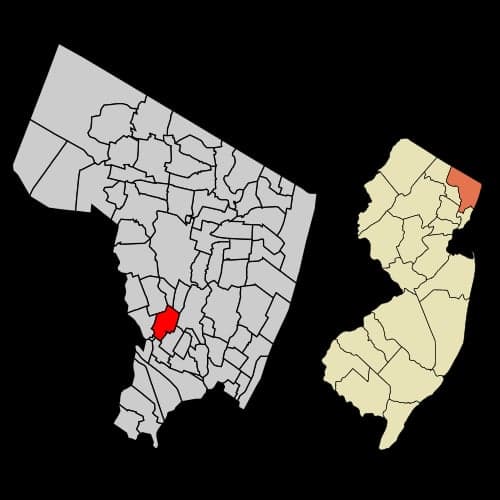
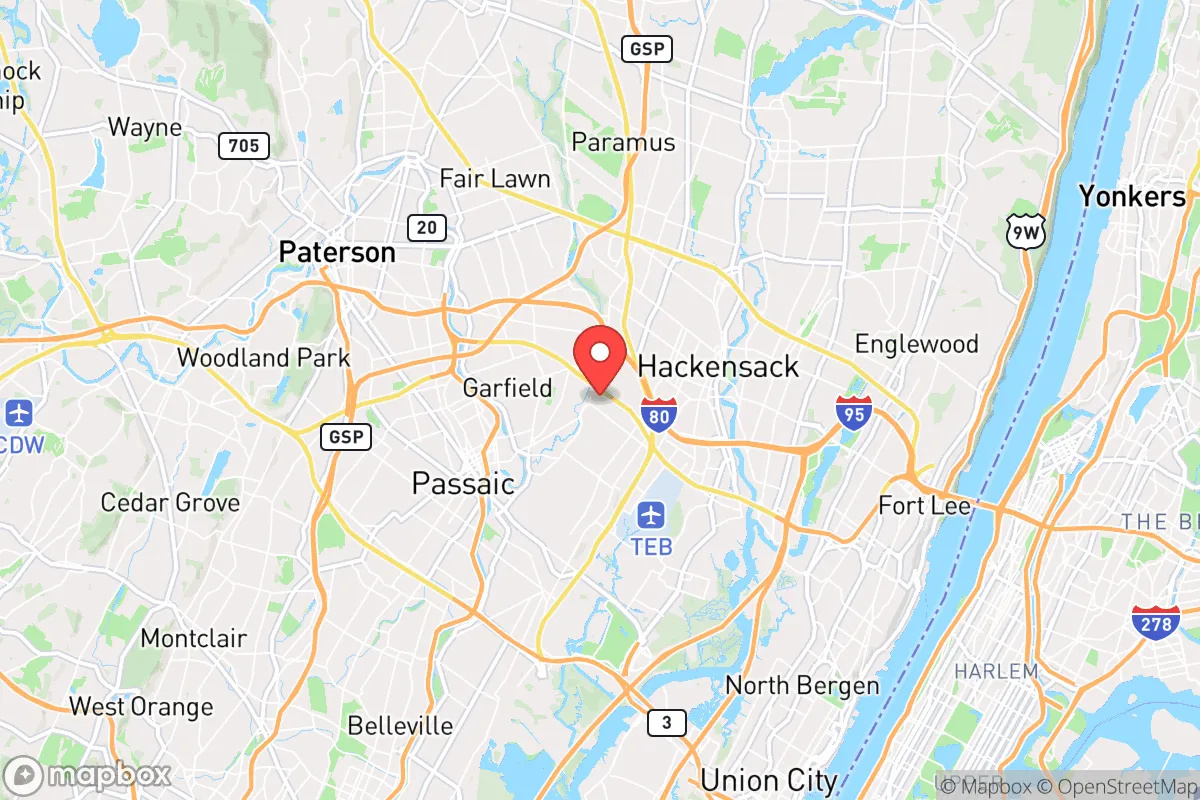
The people of Lodi, New Jersey, today form a densely packed, majority-minority community of roughly 26,000 residents, defined by a near-even split between its white (39.4%) and Hispanic (40.5%) populations. This small Bergen County borough, just two square miles, has transformed from a classic Italian-American and German-American enclave into a working-class hub where Hispanic families now anchor the civic and commercial life, while smaller but growing East/Southeast Asian (4.9%) and Indian-subcontinent (3.1%) communities add further diversity. With 10.6% foreign-born and only 28.2% college-educated, Lodi remains a blue-collar gateway for immigrants and first-generation Americans seeking affordable proximity to New York City.
How the city was settled and grew
Lodi’s population history begins with Dutch and English farmers in the late 17th century, but the city’s real growth started in the mid-19th century with the arrival of the Hackensack and New York Railroad. The opening of the Lodi Chemical Works and several dye factories drew German and Irish laborers, who settled in the South Lodi area near the Saddle River, building the first Catholic and Lutheran churches. By the early 1900s, Italian immigrants from Southern Italy and Sicily arrived in large numbers, working in the borough’s silk mills and chemical plants. They concentrated in Central Lodi, along Main Street and around the Lodi Memorial Park, establishing a dense network of social clubs, bakeries, and the still-prominent St. Joseph’s Church. A smaller wave of Polish and Russian Jewish families settled in the East Lodi section near the Hackensack River, though most later moved to nearby Passaic or Paterson. By 1950, Lodi was overwhelmingly white, with Italian-Americans comprising roughly 60% of the population and Germans most of the remainder.
Modern era (post-1965)
The 1965 Hart-Cellar Act opened the door for new immigration, but Lodi’s demographic shift was gradual. Through the 1970s and 1980s, Italian and German families began moving to larger suburban homes in Bergen County, and their places were taken by Hispanic migrants—first Puerto Ricans, then Dominicans and Colombians. These families settled primarily in West Lodi, west of Route 17, and in the Lodi Gardens neighborhood, where older single-family homes were converted into multi-family rentals. By 2000, the Hispanic share had risen to roughly 25%, and it has since climbed to 40.5%. The white population fell from 85% in 1980 to 39.4% today. More recently, East/Southeast Asian families—primarily Korean and Filipino—have moved into the North Lodi area near the Hasbrouck Heights border, attracted by the borough’s lower home prices and proximity to Korean commercial corridors in Palisades Park. Indian-subcontinent families, mostly Gujarati and Punjabi, have clustered in the South Lodi section near the Garfield line, where a handful of Indian grocery stores and temples have opened. The Black population (8.1%) is more dispersed but has a visible presence in the Lodi Gardens area.
The future
Lodi’s population is likely to continue its Hispanic growth, as the borough’s relatively affordable housing stock and access to low-skilled jobs in warehousing and logistics attract ongoing migration from Central America and the Dominican Republic. The white share will likely fall below 30% within a decade, while the East/Southeast Asian and Indian-subcontinent shares may each rise to 6-7% as families from those groups seek cheaper alternatives to overpriced towns like Fort Lee and Edison. The city is not homogenizing into a single ethnic bloc; rather, it is tribalizing into distinct enclaves—West Lodi and Lodi Gardens remain heavily Hispanic, North Lodi is becoming Asian-majority, and South Lodi is the Indian-subcontinent hub. The Italian-American presence, once dominant, is now concentrated among elderly residents in Central Lodi, with few young families replacing them. The foreign-born share (10.6%) is below the Bergen County average, suggesting that second- and third-generation Hispanic families are stabilizing rather than being replaced by new arrivals.
For a conservative-leaning mover today, Lodi is a solidly working-class, family-oriented borough where Hispanic culture increasingly sets the tone, but where property taxes remain high (around $8,000 annually on average) and the public schools serve a student body that is 55% Hispanic and 30% white. The city is becoming more diverse, not less, and the old Italian-German identity is fading into memory. A new resident should expect a dense, car-dependent environment with strong neighborhood identities, a growing Spanish-language commercial corridor along Main Street, and a political landscape that leans Democratic but with a significant conservative Catholic and evangelical Hispanic minority.

* Values derived from national, state, county, city and local statistics and may differ in a specific area. Last updated: 2026-04-30T01:00:18.000Z
Narrative content on this page is AI-generated and may contain mistakes. Verify any details that matter before acting on them.
ReloMaps may earn a commission from affiliate links at no extra cost to you.

