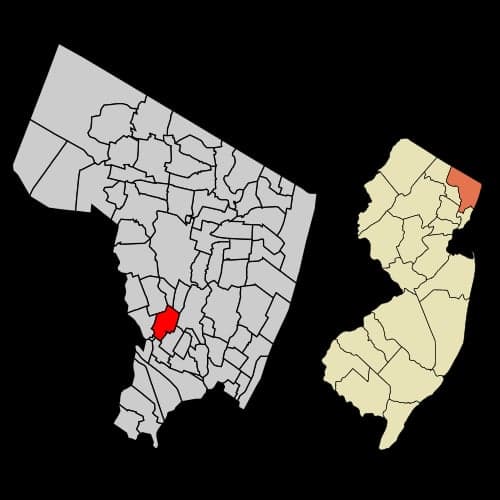
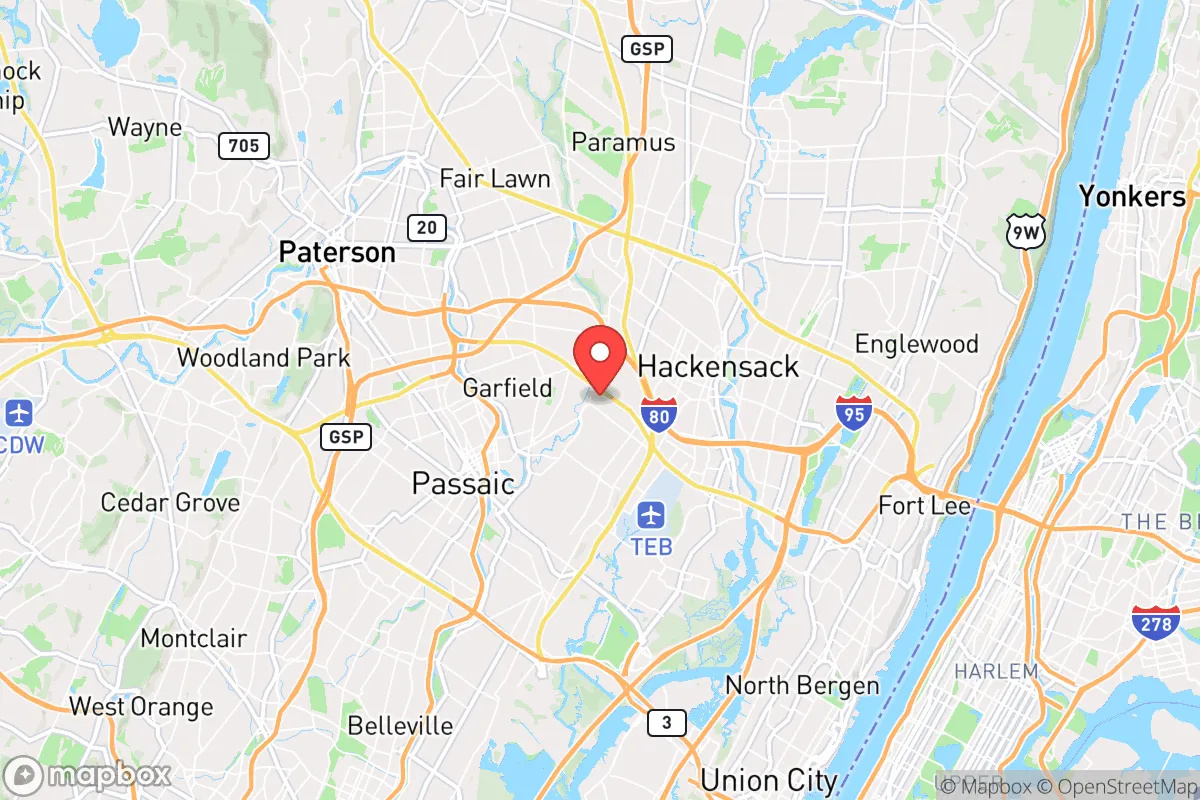
Photo: Wikipedia
Personal Sovereignty in Lodi, NJ
Viable for self-reliance. Generally workable, though some barriers may limit total independence.
What does Personal Sovereignty tell us?
Personal Sovereignty measures your capacity for self-reliance and independence with minimal government friction. Higher scores mean fewer barriers between you and the way you want to live... but it assumes you have the space you need and good neighbors.
What does this tell us?
Personal Sovereignty measures your capacity for self-reliance and independence with minimal government friction. Higher scores mean fewer barriers between you and the way you want to live... but it assumes you have the space you need and good neighbors.
State Policy
Energy independence: Importer (8% of energy produced in-state)
Personal Liberty
Homesteading

Personal Liberty Analysis
For the individual or family prioritizing personal sovereignty, Lodi, New Jersey presents a challenging environment where state-level authority heavily constrains local autonomy. While the borough itself is a small, densely settled community in Bergen County, the overarching legal and regulatory framework is dictated by Trenton, making New Jersey one of the most restrictive states in the nation for those seeking to minimize government overreach. A survivalist or prepper mindset will find the tax burden, gun laws, and land-use regulations to be significant obstacles, though certain aspects of community life and property rights offer limited room for maneuver. This analysis examines the specific constraints and narrow freedoms available to those considering Lodi as a base for self-reliant living.
Tax burden and regulatory posture in Bergen County
New Jersey's tax posture is a primary concern for anyone valuing financial sovereignty. The state consistently ranks among the highest in the nation for property taxes, and Lodi is no exception. The effective property tax rate in Bergen County hovers around 2.3% of assessed home value, meaning a modest $400,000 home carries an annual tax bill of roughly $9,200. This is a permanent, non-negotiable expense that directly funds a state apparatus many conservatives view as overreaching. Income taxes are also steep, with a top marginal rate of 10.75% kicking in at $1 million, but even middle-income earners face rates above 5%. The regulatory environment is equally dense. New Jersey’s state-level building codes, environmental regulations (especially around wetlands and the Hackensack River watershed), and business licensing requirements are among the most stringent in the Northeast. For a prepper looking to run a home-based business, store supplies, or modify a property for resilience, the permitting process is slow, expensive, and often adversarial. The state’s COAH (Council on Affordable Housing) mandates and master plan requirements further limit what a homeowner can do without bureaucratic sign-off. In short, Lodi’s tax and regulatory posture is a heavy anchor on personal financial freedom.
Self-defense and gun law specifics in a restrictive state
For the individual focused on self-defense, New Jersey’s gun laws are among the most prohibitive in the country, and Lodi residents are fully subject to them. The state requires a Firearms Purchaser Identification Card (FPID) for long guns and a separate permit to purchase a handgun, each involving background checks, fingerprinting, and references. The carry permit process, post-Bruen, has become slightly more accessible but remains expensive and administratively burdensome, with local police chiefs (including Lodi’s) retaining significant discretion over "justifiable need" determinations. Magazine capacity is capped at 10 rounds, and so-called "assault weapons" — a broad category that includes many common semi-automatic rifles — are banned. Self-defense in the home is legally recognized, but the "duty to retreat" outside the home is still a factor, meaning you cannot use deadly force in a public place if you can safely avoid the confrontation. For a prepper, this means stockpiling ammunition and firearms for a "grid-down" scenario is legally risky; possession of even a single round of hollow-point ammunition outside the home can be a crime. The state’s overall posture is one of distrust toward armed citizens, making Lodi a poor choice for those who view the Second Amendment as a cornerstone of personal sovereignty.
Self-reliance and homesteading viability: lot sizes, zoning, and off-grid feasibility
Lodi’s dense suburban character severely limits traditional homesteading and off-grid living. The borough is almost entirely built out, with typical lot sizes ranging from 5,000 to 7,500 square feet. Zoning is predominantly residential, with strict prohibitions on keeping livestock, chickens, or bees in most neighborhoods. Backyard gardening is permitted but is limited by small yard space and often restrictive homeowners' association covenants in certain subdivisions. Off-grid feasibility is nearly zero: New Jersey law requires connection to the municipal water and sewer system where available, and Lodi is fully serviced. Solar panels are allowed but subject to state net-metering rules that are less favorable than in many other states, and battery storage for true grid independence is expensive and regulated. Rainwater collection for potable use is heavily restricted by state health codes. For a prepper seeking to grow food, store water, and generate power independently, Lodi offers almost no practical pathway. The best one can do is a small vegetable garden, a few fruit trees, and a backup generator — but true self-reliance is effectively illegal under current zoning and building codes.
Personal liberties: parental rights, medical autonomy, speech, and property
On the spectrum of personal liberties, New Jersey generally leans toward state intervention, and Lodi reflects that. Parental rights in education have been a flashpoint, with the state mandating LGBTQ-inclusive curriculum standards that some conservative parents view as overreach. Opt-out provisions for specific lessons exist but are not guaranteed, and school boards (including Lodi’s) operate under state Department of Education guidelines that limit local control. Medical autonomy is similarly constrained: New Jersey has strict vaccine mandates for school attendance, and during the COVID-19 pandemic, the state imposed some of the nation’s longest-lasting mask and vaccine mandates. Informed consent laws for medical procedures are standard, but the state’s public health authority is broad, meaning emergency orders can quickly override individual choice. Free speech is protected under the First Amendment, but New Jersey has a "bias intimidation" statute that can escalate certain speech into criminal hate crimes, a concern for those who speak bluntly on controversial topics. Property rights are the weakest link: the state’s eminent domain power is robust, and environmental regulations (like the Freshwater Wetlands Protection Act) can effectively prohibit development or modification of land without state approval. For a conservative individual, these constraints create an environment where personal autonomy is constantly balanced against state-defined "public good."
In the broader context of the United States, Lodi, New Jersey ranks very low for personal sovereignty. It sits in a state that actively centralizes power, restricts self-defense, taxes heavily, and limits land use. For a survivalist or prepper, the borough’s only redeeming feature is its proximity to New York City and the dense social networks that can form in a small community — but those are cold comfort when the state can dictate your medical choices, your children’s education, and your ability to defend your home. Compared to areas in the South, Midwest, or Mountain West, Lodi offers a fraction of the autonomy that many conservative-leaning individuals seek. If your priority is to live free from government overreach, this is not a destination — it is a place to leave. For those who must remain, the strategy is one of quiet compliance, careful documentation, and building resilience within the narrow legal channels that remain open.

* Values derived from national, state, county, city and local statistics and may differ in a specific area. Last updated: 2026-04-30T01:00:18.000Z
Narrative content on this page is AI-generated and may contain mistakes. Verify any details that matter before acting on them.
ReloMaps may earn a commission from affiliate links at no extra cost to you.

