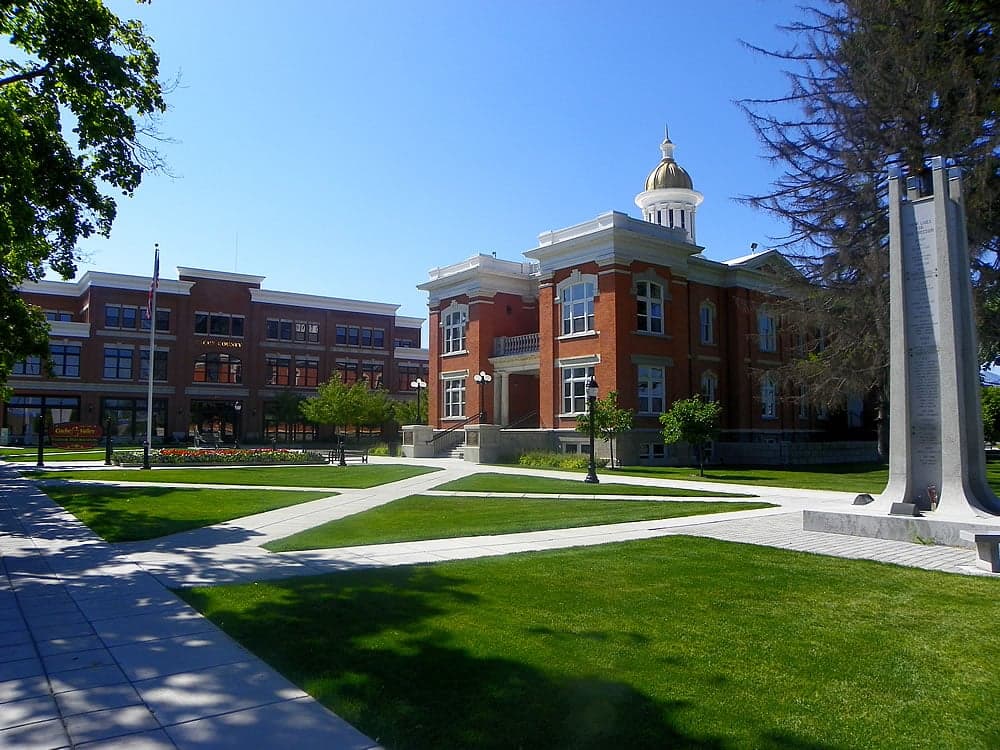
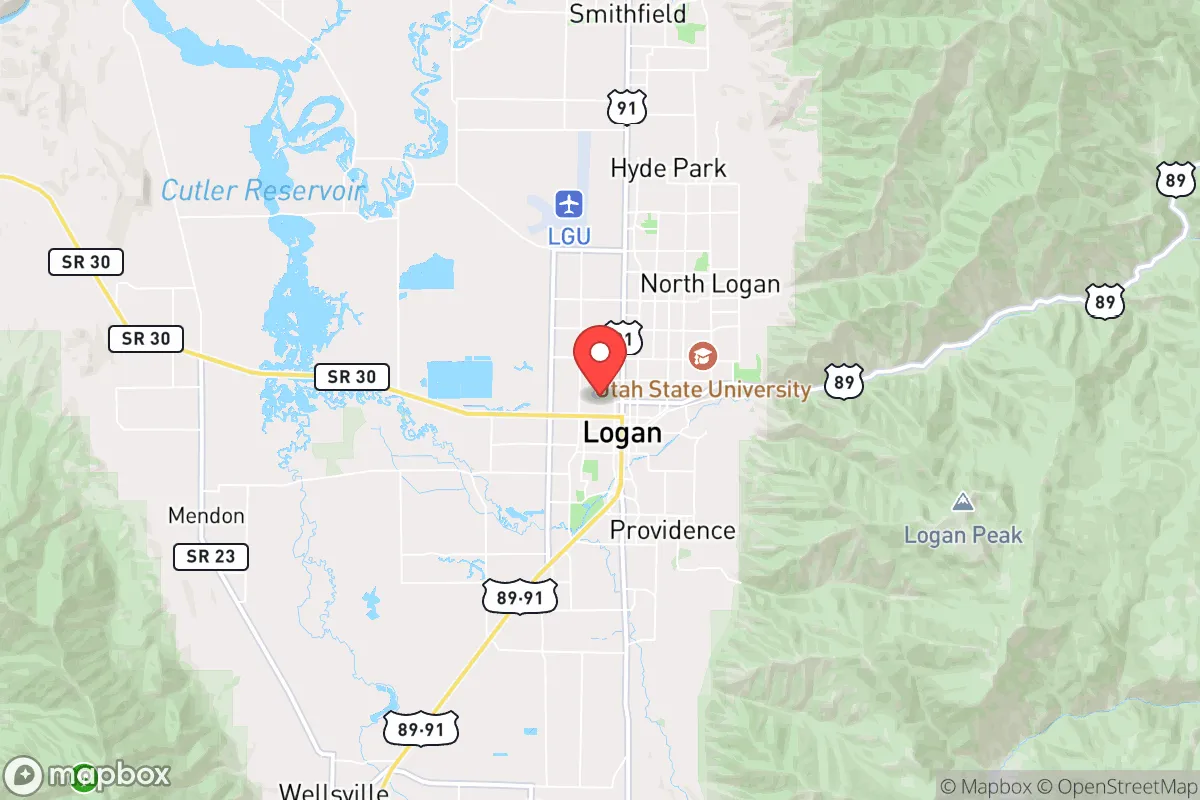
Photo: Wikipedia
Personal Sovereignty in Logan, UT
Viable for self-reliance. Generally workable, though some barriers may limit total independence.
What does Personal Sovereignty tell us?
Personal Sovereignty measures your capacity for self-reliance and independence with minimal government friction. Higher scores mean fewer barriers between you and the way you want to live... but it assumes you have the space you need and good neighbors.
What does this tell us?
Personal Sovereignty measures your capacity for self-reliance and independence with minimal government friction. Higher scores mean fewer barriers between you and the way you want to live... but it assumes you have the space you need and good neighbors.
State Policy
Energy independence: Self-sufficient (80% of energy produced in-state)
Personal Liberty
Homesteading

Personal Liberty Analysis
Logan, Utah, offers a notably high degree of personal sovereignty compared to most of the urbanized West Coast or Northeast, largely because it sits within a state that constitutionally and culturally resists federal overreach. For the survivalist or prepper, this means fewer layers of state-level bureaucracy between you and your decisions about property, family, and self-defense. While no location is a libertarian utopia, Cache Valley’s combination of a strong local economy, a deeply rooted culture of self-reliance, and a state government that actively pushes back against federal mandates creates an environment where an individual can live with significantly more autonomy than in many other regions of the country.
Tax burden and regulatory posture: How Utah’s fiscal policies affect your freedom
Utah’s tax structure is designed to minimize the state’s claim on your income and property, which directly translates to more capital in your hands for prepping, land acquisition, and family needs. The state levies a flat 4.85% individual income tax and a state sales tax of 4.85% (with local options pushing it to around 6-7% in Logan), but there is no state-level tax on Social Security benefits and a partial retirement income credit for those over 65. Property taxes in Cache County are relatively low, averaging roughly 0.6% of assessed value, which is well below the national average. More importantly, Utah’s regulatory climate is consistently ranked among the most business-friendly in the nation, which means fewer occupational licensing hurdles and less red tape for starting a home-based business or a small farm. The state legislature has also passed laws requiring a supermajority to create new state-level regulations that exceed federal standards, a clear signal that the political culture favors individual economic liberty over bureaucratic expansion.
Self-defense and gun law specifics: What you can own and where you can carry
For anyone prioritizing the right to keep and bear arms, Logan is situated in a state that treats the Second Amendment as a fundamental, preemptive right. Utah is a constitutional carry state for residents 21 and older, meaning you can carry a concealed firearm without a permit. For those under 21 or who want reciprocity with other states, a concealed firearm permit is available through a straightforward process with no discretionary denial by local sheriffs. There are no state-level bans on standard-capacity magazines, no assault weapon registry, and no waiting periods for firearm purchases. The state has also passed a preemption law that prohibits cities like Logan from enacting their own gun control ordinances, so you won’t see the patchwork of local restrictions common in states like Colorado or California. Stand-your-ground laws are on the books, and the Castle Doctrine applies to your home, vehicle, and occupied structure. For the prepper, this means you can legally maintain a robust personal armory without fear of sudden state-level confiscation or registration schemes.
Self-reliance and homesteading viability: Lot sizes, zoning, and off-grid feasibility
Logan itself is a compact city of about 55,000, but the surrounding Cache Valley offers a mix of zoning that can accommodate serious self-reliance. Inside city limits, standard residential lots are typically 0.1 to 0.25 acres, which is tight for a full homestead but workable for intensive gardening, small livestock (chickens are generally allowed with some restrictions), and rainwater collection. The real opportunity lies in the unincorporated areas of Cache County and towns like Mendon, Wellsville, or Paradise, where zoning allows for 1- to 5-acre parcels with fewer restrictions on outbuildings, livestock, and alternative energy. Off-grid living is legally feasible in many of these areas, though you’ll need to navigate county building codes for septic and well permits. Utah’s water rights system is complex and seniority-based, so securing a water right on a parcel is critical—don’t assume you can just drill a well. Solar is a strong option, with the valley averaging over 200 sunny days per year, and net metering policies are favorable for grid-tied systems. The county’s agricultural zoning also allows for beekeeping, orchards, and even small-scale aquaculture without the permitting nightmares found in more urbanized states.
Personal liberties: Parental rights, medical autonomy, speech, and property
Utah has been a national leader in codifying parental rights, and this directly impacts daily life in Logan. The state’s Parental Rights in Education law requires schools to notify parents of any curriculum changes involving sexuality or gender identity and prohibits instruction on these topics in K-6 classrooms. Parents also have the right to opt their children out of any instructional activity they find objectionable. Medical autonomy is strong in the sense that Utah has resisted federal vaccine mandates and has laws protecting medical conscience rights for practitioners, though the state does have a mandatory vaccine schedule for school entry (with broad exemption options for medical, religious, and personal belief). On the speech front, Utah is a right-to-work state with no anti-SLAPP laws as robust as some states, but the culture of free expression is generally respected, and there are no state-level hate speech laws that criminalize protected speech. Property rights are reinforced by the state’s eminent domain restrictions, which limit takings to strictly public uses (no economic development takings), and by a strong homestead exemption that protects up to $63,000 of equity in your primary residence from creditors.
When you stack Logan against the broader national landscape, the sovereignty picture is clear: you are trading some of the extreme libertarian edge of places like rural Idaho or Montana for a more stable, community-oriented environment with better infrastructure and a state government that actively fights federal overreach. The trade-offs are real—Utah’s alcohol laws are restrictive, and the dominant LDS culture can feel socially conformist to outsiders—but for the prepper or survivalist focused on legal autonomy, tax freedom, and the right to defend your family, Logan ranks among the top mid-sized cities in the Intermountain West. The state’s constitutional carry, parental rights protections, and low regulatory burden create a foundation where you can build a self-reliant life without constantly looking over your shoulder for the next government mandate.

* Values derived from national, state, county, city and local statistics and may differ in a specific area. Last updated: 2026-05-03T20:34:37.000Z
Narrative content on this page is AI-generated and may contain mistakes. Verify any details that matter before acting on them.
ReloMaps may earn a commission from affiliate links at no extra cost to you.

