Photo: Wikipedia
Strategic Assessment of Logan, UT
Strong survivability profile. Good buffer from population centers, with manageable environmental and tactical risks.
What does the Strategic Assessment tell us?
Our Strategic Assessment grades tactical survivability of an area. Major population centers, military targets, fallout zones, natural disasters, and border exposure all drive risk — lower exposure means a more defensible position in a crisis.
This is heavily inspired by Joel Skousen's Strategic Relocation book. Highly recommended you checkout the book ($)What does this tell us?
Our Strategic Assessment grades tactical survivability of an area. Major population centers, military targets, fallout zones, natural disasters, and border exposure all drive risk — lower exposure means a more defensible position in a crisis.
This is heavily inspired by Joel Skousen's Strategic Relocation book. Highly recommended you checkout the book ($)Strategic Pillars

Key Distances
Regional Safe Places
Below is our recommended "safe zones" in Utah and the surrounding area based on our strategic heuristics. For most people, it's unrealistic to live in a “safe zone” full-time due to work, family or other personal reasons. They tend to be more rural. However, many of these areas are perfect for second homes and retreat properties that double as a vacation home or even a short-term rental.


Important Note: For informational purposes only. This does not mean nothing bad ever happens in the green zones. Please use common sense. This is based on public data and modeled with AI. We tried to take a conservative approach but mistakes happen. We update this regularly as new information becomes available.
Solar Generator Recommendations
Backup power matters more here than in safer locations. We've picked three solar generators across budgets and capacity tiers — start with the budget unit if you only need a few essentials, or step up if you want to run a fridge and HVAC for days at a time.

Jackery Portable Power Station Explorer 300
Budget OptionPower on the Go: Weighing only 11 lbs, it's convenient to set up and store with book-sized foldable solar panels

BLUETTI Portable Power Station AC180
Designed for both indoor and outdoor scenarios, AC180 is highly capable as it has a robost capacity and continuous output power.

EF ECOFLOW DELTA Pro Ultra Power Station
Upgraded PickEcoFlow DELTA Pro Ultra is a whole-home energy system designed to grow with your family. Integrated with the Smart Home Panel 2, it scales to meet your evolving energy needs — keeping your home powered, intelligent, and secure through every stage of life.
We earn a commission, at no additional cost to you.
Strategic Assessment Analysis
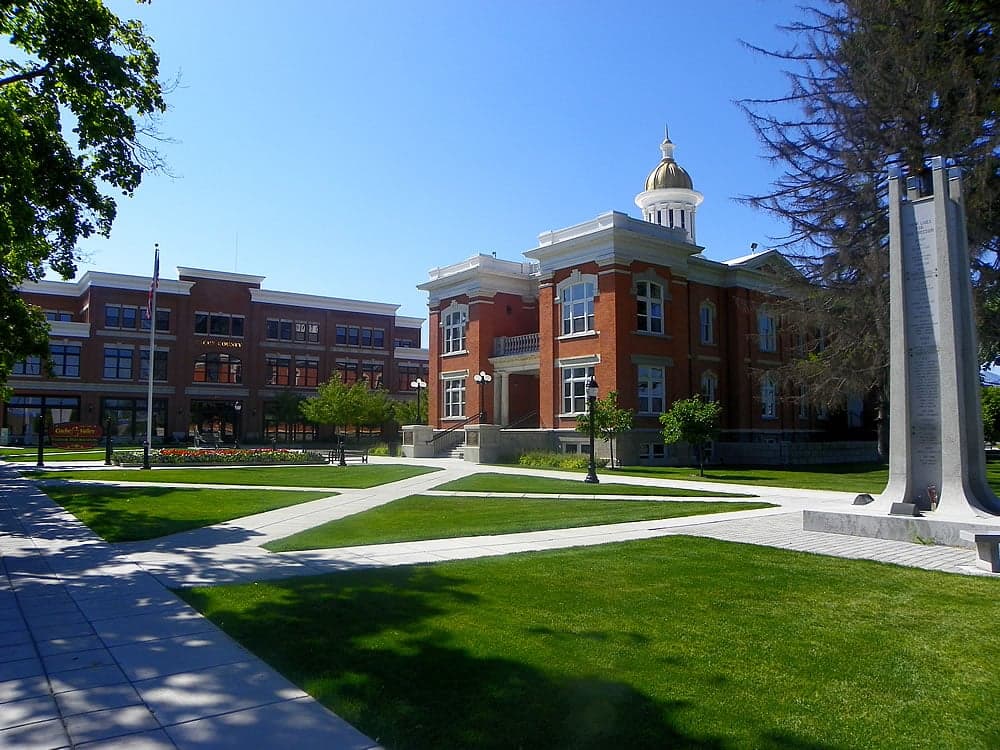
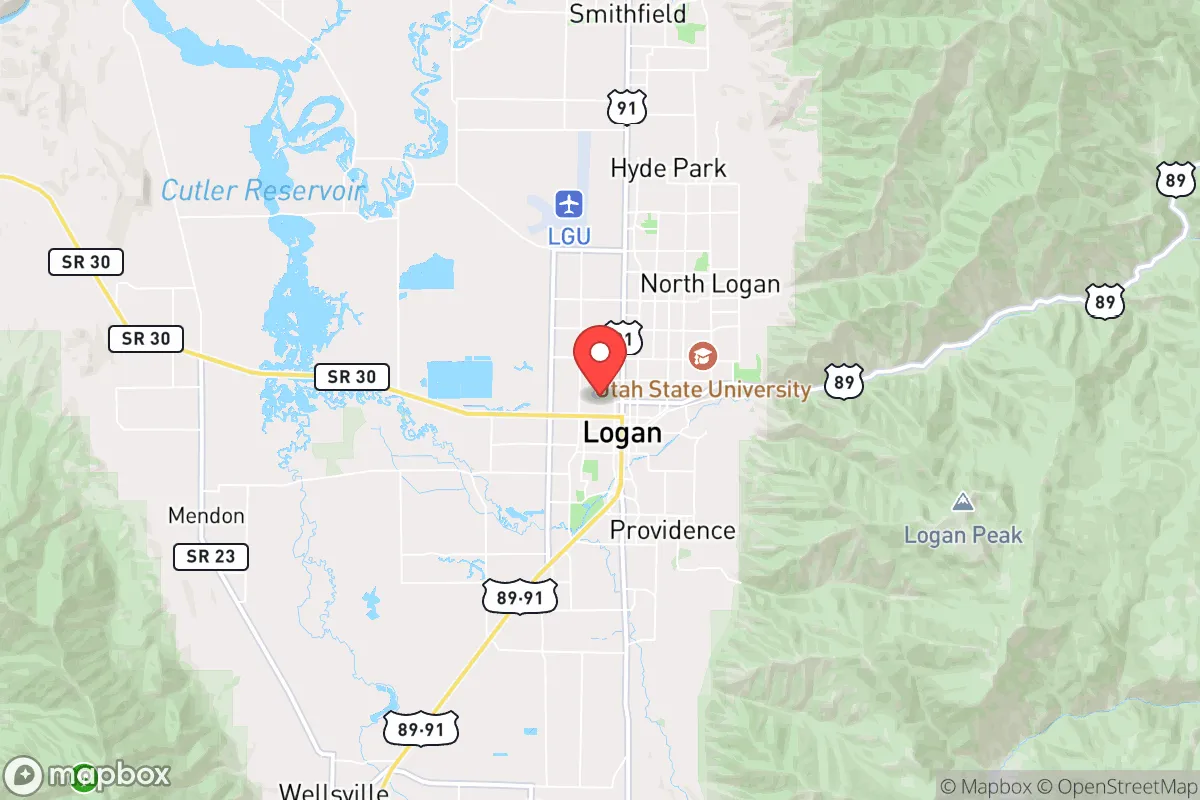
Logan, Utah, offers a compelling blend of geographic isolation and practical self-sufficiency that makes it a serious contender for those prioritizing resilience and strategic relocation. Nestled in the Cache Valley, this city of roughly 55,000 sits over 80 miles north of Salt Lake City, placing it well outside the immediate blast radius and fallout zones of a major metropolitan target, while still being close enough to access critical supplies and medical infrastructure if needed. The surrounding Wasatch-Cache National Forest and the Bear River Range provide natural barriers and resources, but the area’s true strength lies in its agricultural backbone, strong community networks, and a political culture that leans heavily conservative—factors that directly support a prepper or survivalist mindset.
Geographic position and natural advantages for long-term security
Logan’s location is a double-edged sword that, when properly assessed, tilts heavily in favor of the prepared relocator. The city is cradled by mountains on three sides, with Logan Canyon serving as the primary eastern route into the Bear Lake region and Idaho. This natural bowl configuration offers significant defensibility: choke points at canyon entrances and limited road access mean that in a scenario of mass evacuation or civil unrest, controlling movement into the valley becomes feasible. The Cache Valley itself is a high-elevation basin (4,500 feet) with a cold, semi-arid climate, but it sits atop the Cache Valley aquifer, one of the most productive groundwater systems in the Intermountain West. This means water security is a tangible advantage—wells are common, and the local irrigation system (the Logan River and its canals) provides a redundant water source for agriculture and household use. The area’s agricultural heritage is not just historical; Cache County ranks among Utah’s top producers of hay, grain, and livestock, and the presence of Utah State University’s agricultural extension programs means practical knowledge for food production is readily available. For a relocator, this translates to a region where you can realistically grow a significant portion of your own food, with a growing season long enough for cold-hardy crops and root vegetables.
Risks, exposures, and proximity to fallout-relevant landmarks
No location is without vulnerabilities, and Logan’s are worth a hard look. The most obvious risk is its proximity to Hill Air Force Base, located about 70 miles south near Ogden. While not a primary nuclear target like ICBM silos or major command centers, Hill AFB is a key logistics hub for the F-35 program and a potential secondary target in a large-scale conflict. Fallout patterns from a strike on Hill would depend on prevailing winds, which in northern Utah typically blow from the southwest. That means Logan could be downwind of a significant radioactive plume, though the distance and mountain barriers would reduce immediate lethality. More concerning is the Wasatch Fault line, which runs through the valley. A major earthquake (magnitude 7.0 or greater) is a realistic scenario, and many older homes in Logan are unreinforced masonry—a serious risk for structural collapse. The city’s emergency services are adequate for routine events, but a Cascadia-level quake would overwhelm local hospitals and strain supply chains for weeks. Additionally, Logan’s reliance on a single major highway (US-89/91) for north-south travel creates a vulnerability: a landslide or bridge failure in Logan Canyon or near Sardine Canyon could isolate the valley for days. For the prepper, this reinforces the need for multiple evacuation routes and a robust cache of supplies that can sustain you for at least 30 days without external resupply.
Practical resilience for a relocator: food, water, energy, and defensibility
Logan’s practical resilience is where it truly shines for the strategic relocator. Food security is exceptional: the Cache Valley is dotted with small farms, CSAs, and farmers’ markets, and the local food co-op (the Logan Food Co-op) sources heavily from within 100 miles. For those willing to homestead, land prices are still reasonable compared to the Wasatch Front—expect $5,000–$10,000 per acre for raw agricultural land outside city limits. Water security is similarly strong: the Logan River provides a reliable surface water source, and many rural properties have existing wells. The city’s water treatment plant is modern, but a prepper should plan for a hand-pump or gravity-fed filtration system. Energy resilience is a mixed bag. Rocky Mountain Power’s grid is reasonably stable, but winter storms can knock out power for days. Solar is viable (the valley gets over 200 sunny days per year), but snow accumulation on panels is a real issue. A better bet is a wood-burning stove or a propane generator with a buried tank—propane is widely available in the area. Defensibility is aided by the geography: the valley’s limited entry points and the strong community ethos (Cache County has one of the highest rates of church membership and volunteerism in the state) mean that in a crisis, neighbors are more likely to cooperate than compete. That said, the area is not immune to transient crime or drug issues (methamphetamine use is a concern in rural Cache County), so a basic home security system and situational awareness are prudent. For the single individual or family, the key is to buy land with a water source, build or retrofit a home with passive solar and a wood stove, and establish relationships with local farmers and the USU extension office before you need them.
The overall strategic picture for Logan is one of high potential with manageable risks. It is not a bunker—it is a functioning community with schools, a university, and a hospital (Cache Valley Hospital) that can handle routine emergencies but would be strained in a mass casualty event. The conservative political climate (Cache County voted +38 points for Trump in 2020) aligns with a culture of self-reliance, gun ownership, and community preparedness. For the relocator who is serious about resilience, Logan offers a rare combination: a defensible location with abundant natural resources, a strong agricultural base, and a population that values independence. The downsides—earthquake risk, single-road vulnerability, and proximity to a secondary military target—are real but manageable with proper planning. If you are looking for a place to ride out the coming storms, Logan deserves a spot on your short list, provided you arrive with a plan, a well-stocked pantry, and a willingness to integrate into a community that already knows how to take care of its own.

* Values derived from national, state, county, city and local statistics and may differ in a specific area. Last updated: 2026-05-03T20:34:37.000Z
Narrative content on this page is AI-generated and may contain mistakes. Verify any details that matter before acting on them.
ReloMaps may earn a commission from affiliate links at no extra cost to you.

