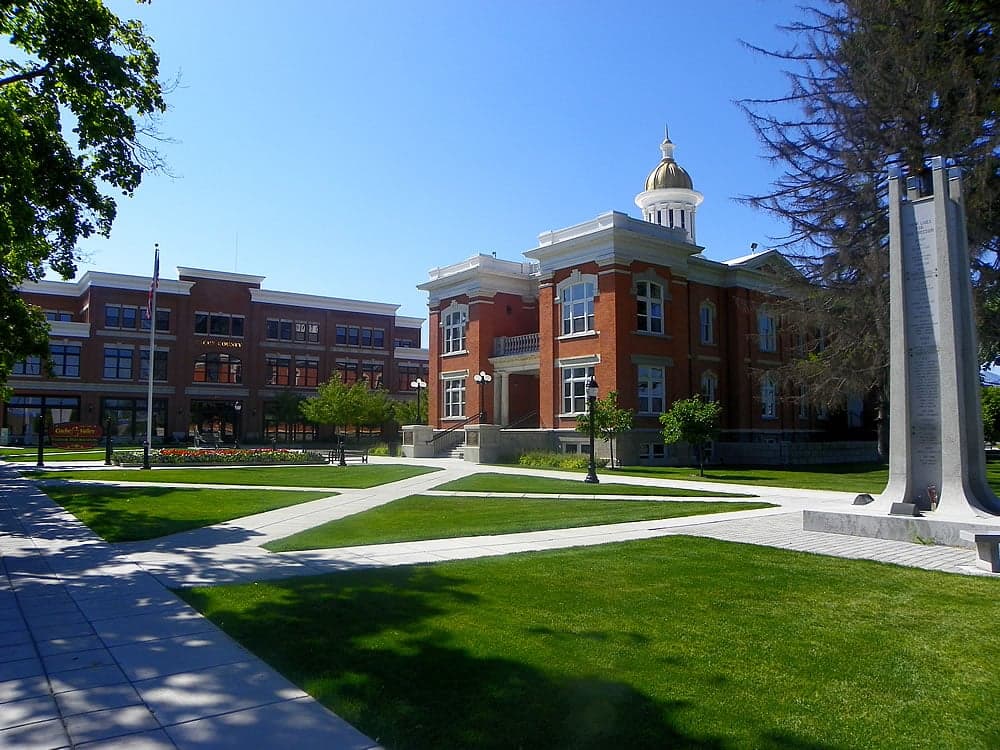
Photo: Wikipedia
Political ClimatePolitical Climate in Logan, UT
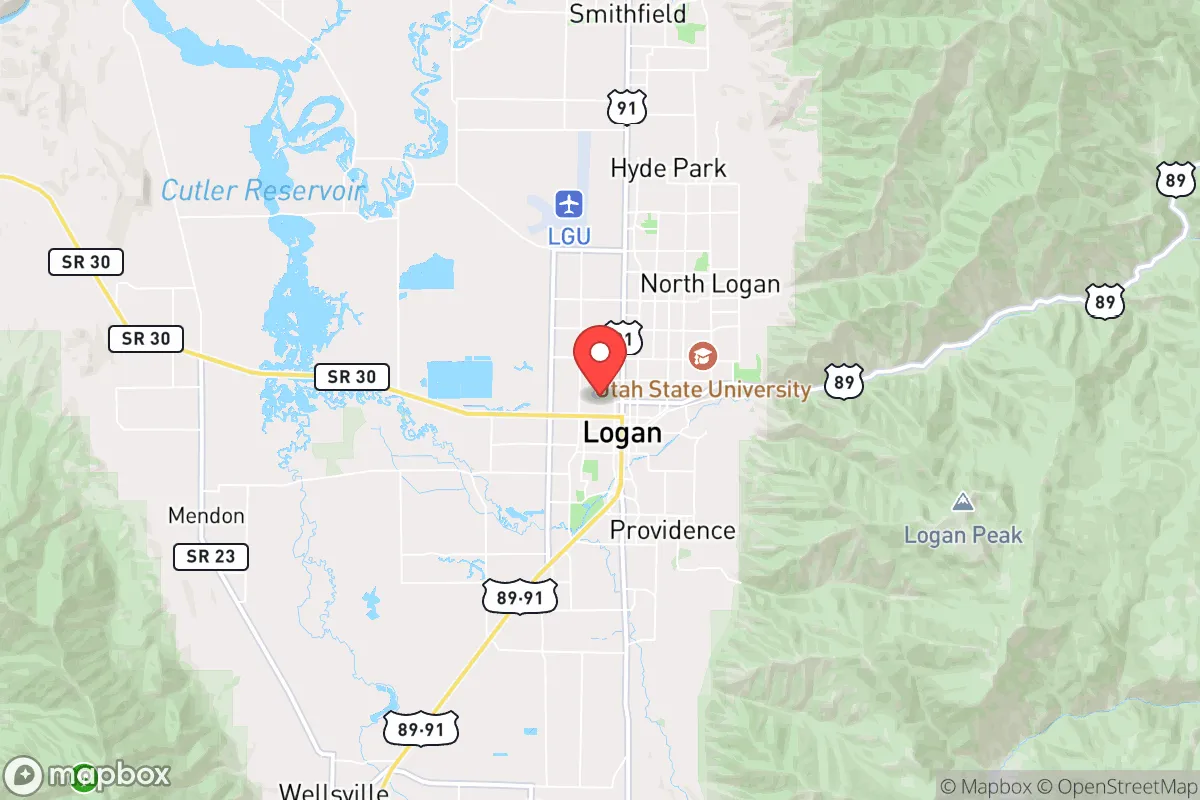
District shown is the primary district for this city’s centroid. Cities may span multiple districts.
Local Political AnalysisPolitical Analysis of Logan, UT
Logan, Utah, sits in the heart of Cache Valley, and for as long as anyone around here can remember, it’s been a solidly conservative place. The Cook PVI of R+10 backs that up, but the real story is in the feel of the place. This isn’t a flashy red; it’s a quiet, steady, family-and-faith-driven red. You’ll see more Trump signs than Harris signs in any given neighborhood, and the local elections usually go to folks who talk about limited government, local control, and keeping taxes low. That said, there’s been a noticeable shift in the last five to ten years, especially as the university (Utah State) brings in more out-of-state students and faculty. The old guard is still firmly in charge, but you can feel the ground starting to tremble a little under the weight of new ideas that don’t always align with the valley’s traditional values.
How it compares
Drive thirty minutes south to Ogden, and you’ll hit a much more mixed bag politically—a purple city with a blue mayor and a lot more visible progressive activism. Logan is nothing like that. It’s closer in spirit to places like Hyrum or Smithfield, the smaller towns to the north, where the county commission is reliably conservative and the biggest political fights are about water rights and growth boundaries, not social issues. The real contrast, though, is with Salt Lake City, which is a whole different planet politically. Logan residents tend to see SLC as a cautionary tale of what happens when a city lets government overreach and progressive ideology take the wheel—higher taxes, more regulations on housing and businesses, and a general feeling that personal freedoms get squeezed. Here, the county sheriff is still a big deal, and the Second Amendment isn’t a talking point; it’s a way of life.
What this means for residents
For the most part, it means you can live your life without a lot of bureaucratic nonsense. Property taxes are reasonable, the school board isn’t pushing radical curriculum changes, and local government tends to stay out of your business. That’s the good part. The concerning part is the slow creep. You see it in the city council meetings where a few vocal residents push for “equity” initiatives or “sustainability” mandates that sound harmless but usually lead to more rules and higher costs. The university’s influence is the biggest wild card—it’s a great economic engine, but it also brings a steady stream of people who think the government should solve every problem. If you’re a long-time resident, you watch the local paper’s letters to the editor and see the tone shifting from “keep government small” to “why isn’t the city doing more?” That’s the red flag.
Culturally, Logan still feels like a place where your word is your bond and neighbors help without being asked. The LDS Church’s presence is huge, and it anchors a lot of the community’s conservative values—family, self-reliance, volunteerism. But there’s a growing tension between that old-school ethos and the new wave of residents who want more government services and “inclusive” policies. The next few years will tell the tale. If the city starts adopting zoning changes that favor developers over homeowners, or if the school board starts pushing DEI training, that’s when you know the old Logan is slipping away. For now, it’s still a great place to raise a family if you value freedom and common sense, but keep an eye on the city council meetings. That’s where the future gets decided.

State Political ClimatePolitical Climate in Utah
State Political AnalysisPolitical Environment in the State
Utah is one of the most reliably conservative states in the nation, with a Republican trifecta controlling the governorship and supermajorities in both legislative chambers. The state has voted for the GOP presidential candidate by double digits in every election since 1968, with Donald Trump winning by 21 points in 2024. However, the political landscape is not monolithic—the Wasatch Front, particularly Salt Lake County, has shown signs of suburban drift toward the center, while rural counties like San Juan and Daggett remain deeply red. Over the past two decades, the state has maintained its conservative core but has seen a slow, steady influx of out-of-state transplants, particularly from California, which has introduced a small but growing progressive minority in the urban core.
Urban vs. rural divide
The political map of Utah is defined by the Wasatch Front, where roughly 80% of the population lives. Salt Lake City itself is the state’s liberal stronghold, consistently voting Democratic in presidential elections—Biden won the city by 30 points in 2020. The surrounding suburbs, however, tell a different story. Provo and Orem in Utah County are among the most conservative cities in the nation, with Trump winning Utah County by 47 points in 2024. The rural counties—like Duchesne, Uintah, and Carbon—are overwhelmingly Republican, often voting 80% or more for the GOP. The divide is stark: the urban core of Salt Lake City is a blue island in a sea of red, while the suburbs and exurbs are reliably conservative. The growing tech and outdoor recreation industries in Park City have created a small but affluent liberal enclave in Summit County, which flipped to Biden in 2020 after voting for Clinton in 2016.
Policy environment
Utah’s policy environment is a model of limited government conservatism. The state has a flat income tax rate of 4.65% (down from 4.95% in 2024) and no state-level property tax on vehicles. Utah is a right-to-work state with no state-level minimum wage law, meaning employers can pay the federal minimum of $7.25. The state has a strong school choice program, including the Utah Fits All Scholarship, which provides up to $8,000 in state funds for private school tuition or homeschooling expenses. On healthcare, Utah expanded Medicaid under the Affordable Care Act in 2019, but the state also passed a law in 2023 requiring parental consent for minors to receive gender-affirming care. Election laws are strict: Utah requires a valid photo ID to vote and has a voter ID law that is among the most secure in the nation. The state also has a constitutional carry law, allowing residents to carry a concealed firearm without a permit since 2021.
Trajectory & freedom
Utah has been trending toward more personal freedom in several key areas, but there are warning signs. On the positive side, the state passed the Utah Firearm Safety Act in 2021, which preempts local governments from enacting stricter gun laws than the state, ensuring uniform Second Amendment protections. The state also passed the Parental Rights in Education Act (HB 331) in 2023, which requires schools to notify parents if a student requests a name or pronoun change and prohibits instruction on sexual orientation or gender identity in grades K-3. However, the state has also seen a push for more government intervention in the name of public health. During the COVID-19 pandemic, Utah was one of the few red states to implement a statewide mask mandate in 2020, though it was lifted in 2021. More concerning for liberty-minded residents, the state passed a law in 2024 requiring all new residential construction to include electric vehicle charging infrastructure, a mandate that some see as government overreach into private property rights. The state’s housing market, driven by rapid population growth, has led to increased zoning regulations in cities like Salt Lake City and Provo, which some argue are limiting property rights.
Civil unrest & political movements
Utah has seen relatively little civil unrest compared to other states, but there have been notable flashpoints. The Black Lives Matter protests in Salt Lake City in 2020 were largely peaceful, but they did lead to some property damage and clashes with police. The state has a strong anti-government and militia presence, particularly in rural areas like San Juan County, where the Bundy family’s 2014 standoff over grazing rights drew national attention. Immigration politics are a hot-button issue: Utah has a sanctuary city movement in Salt Lake City, which declared itself a "welcoming city" in 2017, but the state legislature passed a law in 2023 banning sanctuary policies statewide. Election integrity has been a concern for some conservatives, with the state’s universal mail-in voting system (implemented in 2020) drawing criticism from those who prefer in-person voting. However, Utah’s election system is widely considered secure, with paper ballots and signature verification. The Utah Democratic Party has seen a small resurgence in Salt Lake County, but the state remains deeply red.
Projection
Over the next 5-10 years, Utah is likely to remain a conservative stronghold, but the demographic shifts are worth watching. The state’s population is growing rapidly—Utah added over 500,000 residents between 2010 and 2020, many from California and other blue states. These transplants tend to be younger and more moderate, which could slowly shift the Wasatch Front toward the center. However, the state’s high birth rate (the highest in the nation) and strong religious culture (roughly 60% of residents are members of the Church of Jesus Christ of Latter-day Saints) will likely keep the state’s politics conservative for the foreseeable future. The biggest risk for liberty-minded residents is the potential for more government mandates, particularly on housing, energy, and transportation, as the state tries to manage growth. If the state continues to attract tech workers from California, we could see a push for more progressive policies in Salt Lake County, similar to what happened in Austin, Texas. But for now, Utah remains a safe bet for those seeking a low-tax, high-freedom environment.
For a new resident, the bottom line is this: Utah offers a strong conservative policy environment with low taxes, school choice, and Second Amendment protections. The urban-rural divide means you can find a community that fits your values, whether that’s the deeply red suburbs of Provo or the more moderate outskirts of Salt Lake City. The state is trending toward more personal freedom in many areas, but keep an eye on housing regulations and energy mandates that could signal government overreach. If you’re looking for a place where your rights are respected and your taxes are low, Utah is a solid choice—just be prepared for the rapid growth and the cultural shifts that come with it.
* Values derived from national, state, county, city and local statistics and may differ in a specific area. Last updated: 2026-05-03T20:34:37.000Z
Narrative content on this page is AI-generated and may contain mistakes. Verify any details that matter before acting on them.
ReloMaps may earn a commission from affiliate links at no extra cost to you.

