
Photo: Wikipedia
Strategic Assessment of Lombard, IL
Multiple tactical vulnerabilities. Population density, target proximity, or disaster risk are likely compounding. A retreat property and exit planning is required.
What does the Strategic Assessment tell us?
Our Strategic Assessment grades tactical survivability of an area. Major population centers, military targets, fallout zones, natural disasters, and border exposure all drive risk — lower exposure means a more defensible position in a crisis.
This is heavily inspired by Joel Skousen's Strategic Relocation book. Highly recommended you checkout the book ($)What does this tell us?
Our Strategic Assessment grades tactical survivability of an area. Major population centers, military targets, fallout zones, natural disasters, and border exposure all drive risk — lower exposure means a more defensible position in a crisis.
This is heavily inspired by Joel Skousen's Strategic Relocation book. Highly recommended you checkout the book ($)Strategic Pillars

Key Distances
Regional Safe Places
Below is our recommended "safe zones" in Illinois and the surrounding area based on our strategic heuristics. For most people, it's unrealistic to live in a “safe zone” full-time due to work, family or other personal reasons. They tend to be more rural. However, many of these areas are perfect for second homes and retreat properties that double as a vacation home or even a short-term rental.
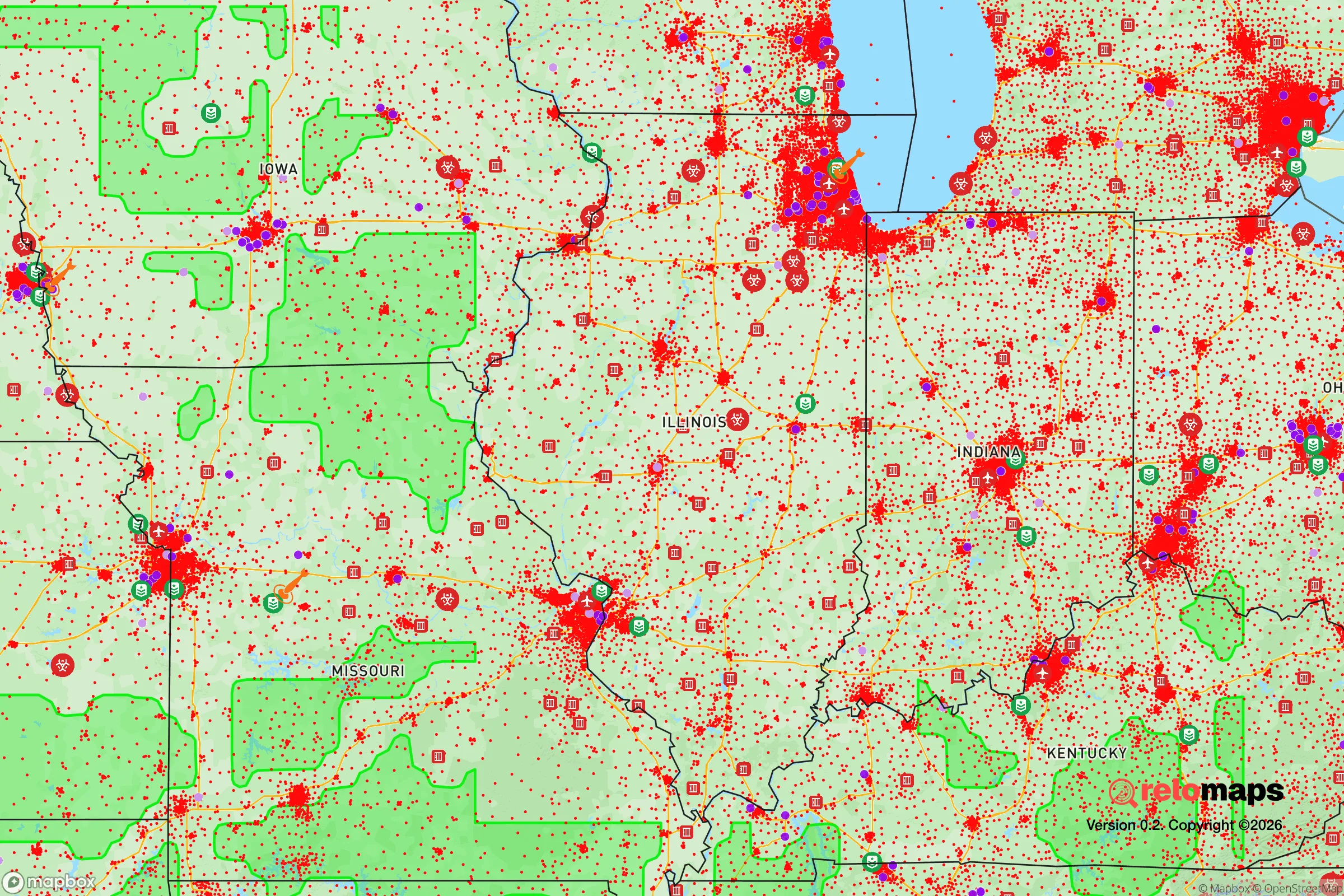
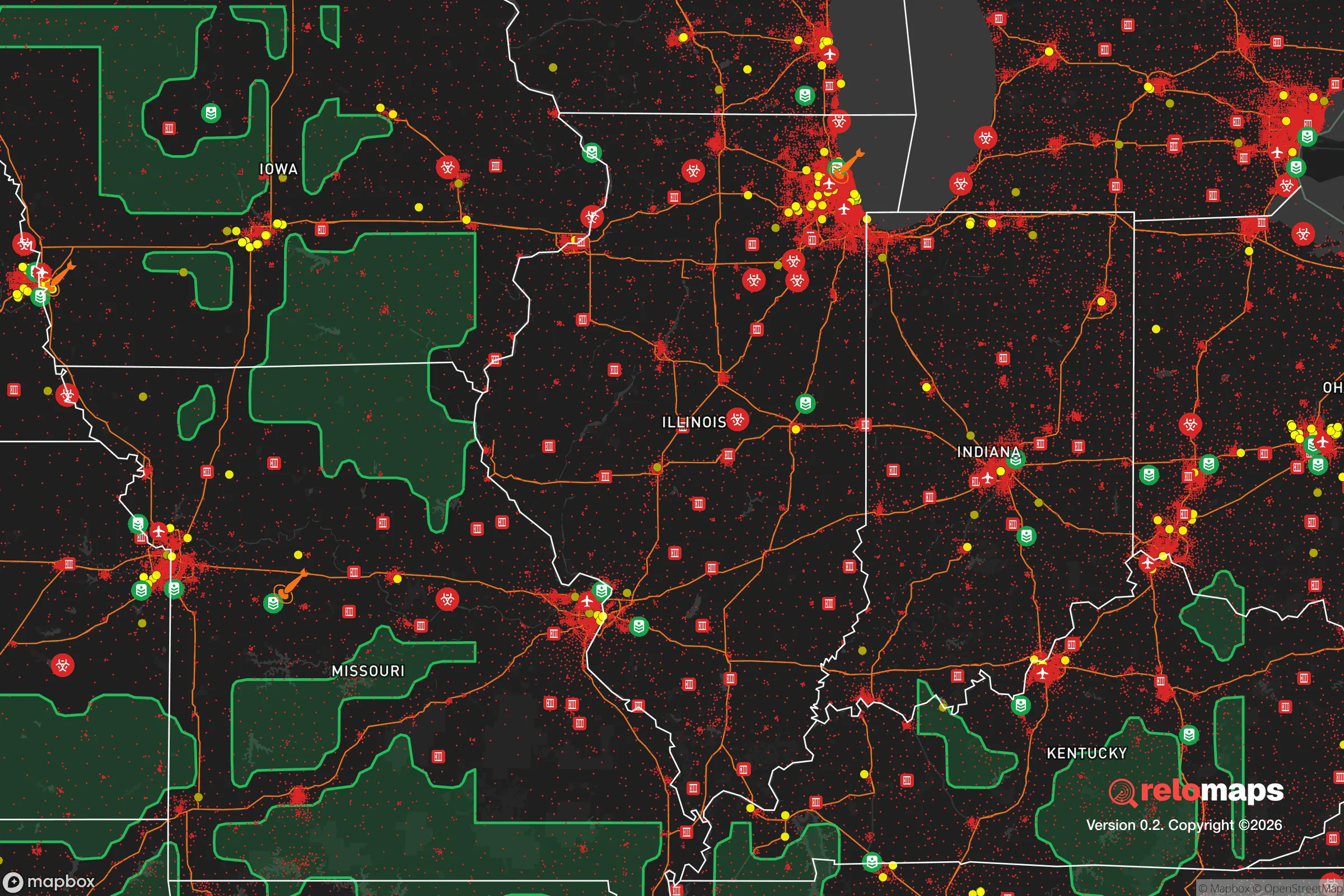


Important Note: For informational purposes only. This does not mean nothing bad ever happens in the green zones. Please use common sense. This is based on public data and modeled with AI. We tried to take a conservative approach but mistakes happen. We update this regularly as new information becomes available.
Solar Generator Recommendations
Backup power matters more here than in safer locations. We've picked three solar generators across budgets and capacity tiers — start with the budget unit if you only need a few essentials, or step up if you want to run a fridge and HVAC for days at a time.

Jackery Portable Power Station Explorer 300
Budget OptionPower on the Go: Weighing only 11 lbs, it's convenient to set up and store with book-sized foldable solar panels

BLUETTI Portable Power Station AC180
Designed for both indoor and outdoor scenarios, AC180 is highly capable as it has a robost capacity and continuous output power.

EF ECOFLOW DELTA Pro Ultra Power Station
Upgraded PickEcoFlow DELTA Pro Ultra is a whole-home energy system designed to grow with your family. Integrated with the Smart Home Panel 2, it scales to meet your evolving energy needs — keeping your home powered, intelligent, and secure through every stage of life.
We earn a commission, at no additional cost to you.
Strategic Assessment Analysis
Lombard, Illinois, sits in a precarious strategic position that demands a clear-eyed assessment for anyone serious about resilience. While its location in the western suburbs of Chicago offers certain logistical advantages, the reality is that this village is firmly within the blast radius of a major metropolitan target, making it a poor choice for those prioritizing long-term survival and self-sufficiency. For the conservative-minded relocator who sees the writing on the wall regarding civic instability, supply chain fragility, and potential mass casualty events, Lombard presents a mixed bag of convenience and vulnerability, with the scales tipping heavily toward risk.
Geographic position and natural advantages for a prepper
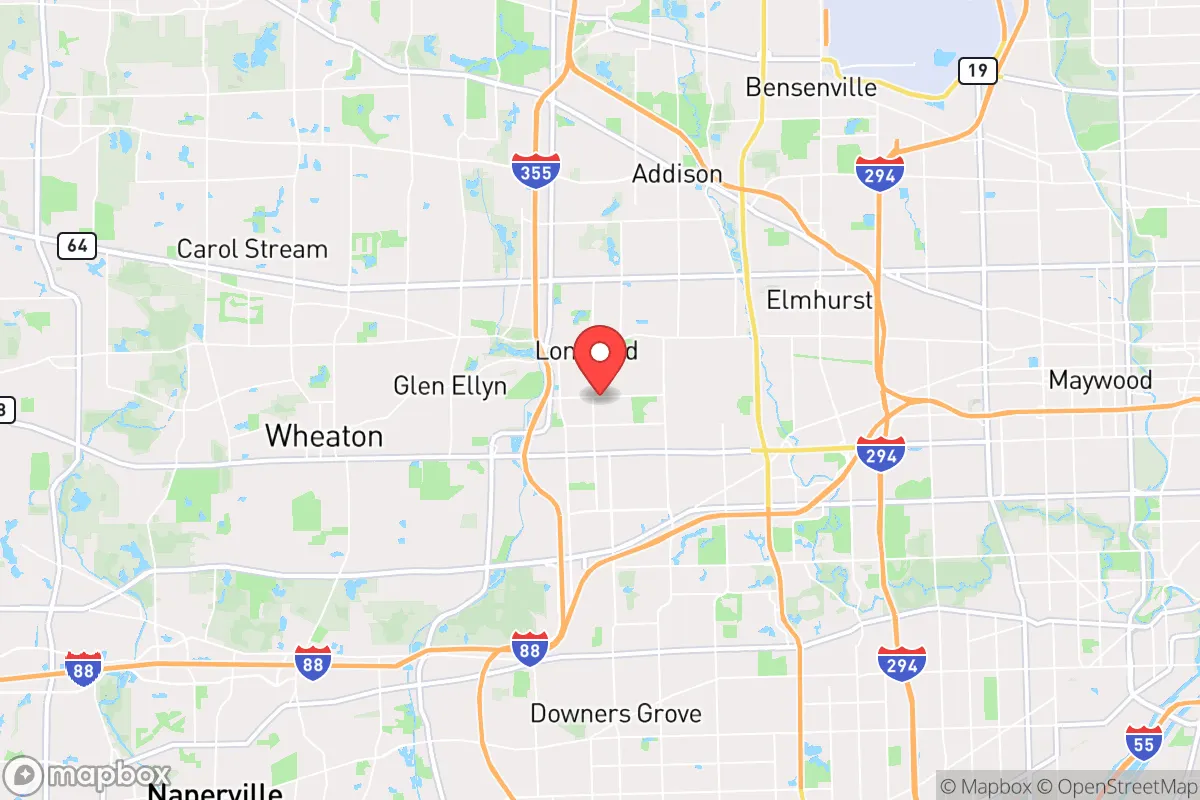
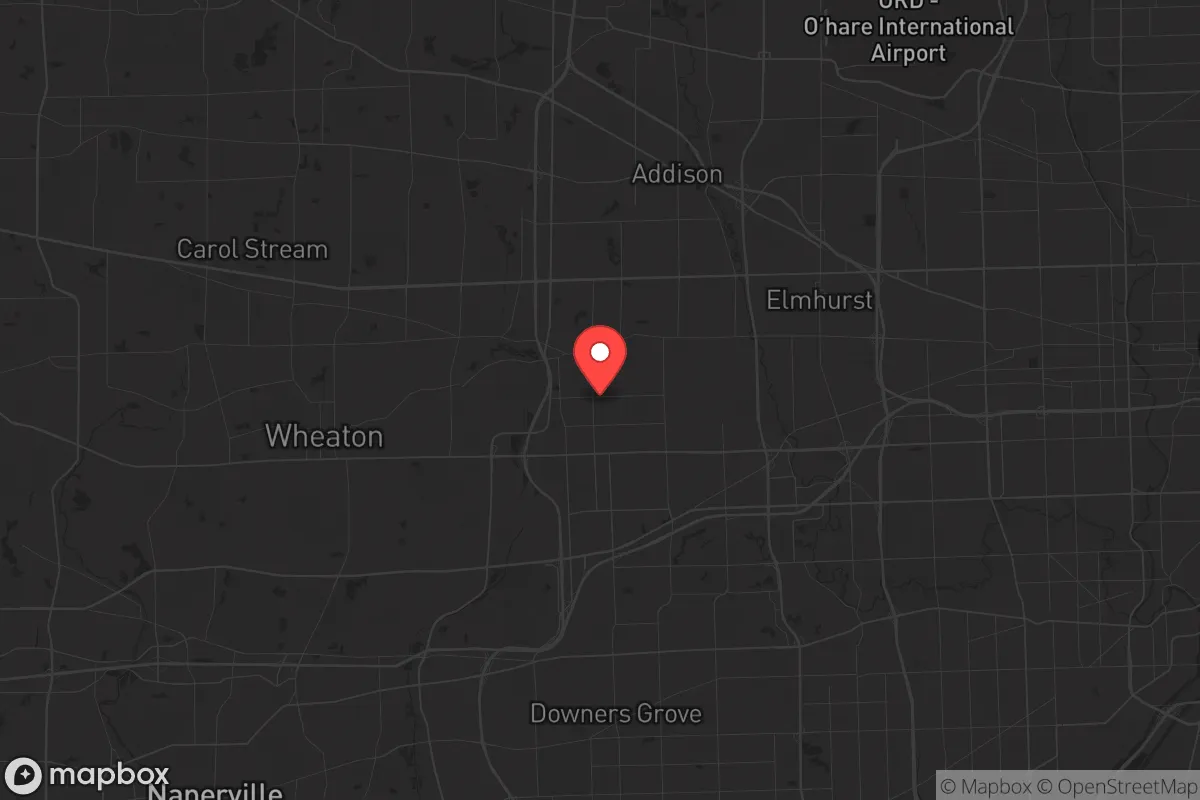
Lombard’s geography is defined by its proximity to Chicago—roughly 20 miles west of the Loop—and its position within the densely populated DuPage County. On the surface, this offers access to major transportation arteries like I-88, I-355, and the Metra rail line, which could be useful for rapid evacuation or supply runs in a pre-crisis window. The area sits on relatively flat, fertile land that was once part of the tallgrass prairie, with decent soil for small-scale gardening if you have the property. The DuPage River runs nearby, providing a potential—though heavily polluted—water source in a pinch. However, the natural advantages are minimal. There are no significant elevation changes for defensible terrain, no dense forests for cover, and the water table is compromised by decades of suburban runoff and industrial contamination. The climate is a double-edged sword: harsh winters can slow down movement and strain heating fuel supplies, but they also discourage large-scale refugee flows from the city during a collapse. In short, the land itself offers little strategic buffer against the threats that would emanate from Chicago.
Risks, exposures, and proximity to fallout-relevant landmarks
The single greatest liability for Lombard is its proximity to Chicago, a Tier 1 target for any nuclear exchange or coordinated terror attack. Lombard lies within the moderate-to-heavy fallout zone for a ground burst on downtown Chicago, with prevailing westerly winds potentially carrying radioactive particles directly over the village. Beyond nukes, consider the cascade of secondary risks. The village is surrounded by critical infrastructure that would become chaos magnets: O'Hare International Airport is 12 miles northeast, a prime target for an EMP or conventional strike; the Argonne National Laboratory is 10 miles south, a research facility with radiological materials; and the entire I-88 corridor is lined with data centers, corporate HQs (including McDonald's and Dover Corporation), and rail yards that would be looted or targeted in unrest. Civic unrest in Chicago—whether from economic collapse, election disputes, or food shortages—would send millions of desperate people west along the Eisenhower Expressway and I-88. Lombard’s police force of roughly 60 officers would be overwhelmed within hours. The village’s dense suburban layout, with its cul-de-sacs and interconnected subdivisions, offers no natural chokepoints for defense, and the population density of over 7,000 people per square mile means you’d be competing with neighbors for every resource.
Practical resilience for a relocator: food, water, energy, and defensibility
For a single individual or family looking to hunker down, Lombard’s practical resilience is poor. The village relies entirely on Lake Michigan water treated by the DuPage Water Commission—a centralized system vulnerable to contamination, sabotage, or pump failure. A single cyberattack on the water authority could leave 800,000 people without potable water. Your options for independent water are limited: shallow wells are rare in this area due to clay soils, and rainwater collection is technically legal in Illinois but restricted by local covenants in many subdivisions. Food resilience is equally grim. Lombard is a food desert for preppers—there are no large-scale farms within a 10-mile radius, and the local grocery stores (Jewel-Osco, Aldi) would be stripped bare within 48 hours of a crisis announcement. The village’s zoning laws are hostile to backyard livestock, and homeowners associations in many neighborhoods ban vegetable gardens visible from the street. Energy is another weak point. The grid is served by ComEd, with overhead lines that are vulnerable to storms, solar flares, or sabotage. Natural gas for heating comes via pipelines from the Gulf, a single point of failure. Solar panels are permitted but face HOA restrictions, and battery storage is expensive. Defensibility is the final nail. Lombard is a flat, open grid with no natural barriers. Your best bet for a secure property would be a corner lot with brick construction and a fenced backyard, but even that offers minimal protection against a determined mob. The village’s proximity to the DuPage County Sheriff’s office and multiple hospitals is a double-edged sword—those same resources would be overwhelmed and become targets themselves.
The overall strategic picture for a conservative relocator
Stepping back, Lombard is a textbook example of a location that looks safe on paper but fails every stress test for a serious prepper. Its advantages—good schools, low violent crime rates, a stable tax base—are peacetime luxuries that evaporate the moment the system cracks. For the conservative individual or family who believes that civil unrest, economic collapse, or a major disaster is not a matter of if but when, Lombard offers false comfort. You are trading a veneer of suburban safety for a front-row seat to the collapse of a major American city. The smart play is to look further west—places like DeKalb, Dixon, or even the Driftless Area of northwestern Illinois, where population density drops, water is more accessible, and you have room to breathe. If you are already in Lombard and cannot leave, your strategy must be one of deep concealment: stockpile supplies for 90 days minimum, invest in a good water filtration system (Berkey or similar), fortify your home’s entry points, and build a network of like-minded neighbors. But do not mistake convenience for security. In a real crisis, Lombard’s location is a liability, not an asset. The prudent move is to relocate to a lower-risk zone while you still have the choice.

* Values derived from national, state, county, city and local statistics and may differ in a specific area. Last updated: 2026-04-30T01:22:31.000Z
Narrative content on this page is AI-generated and may contain mistakes. Verify any details that matter before acting on them.
ReloMaps may earn a commission from affiliate links at no extra cost to you.

