
Photo: Wikipedia
Political ClimatePolitical Climate in Lombard, IL
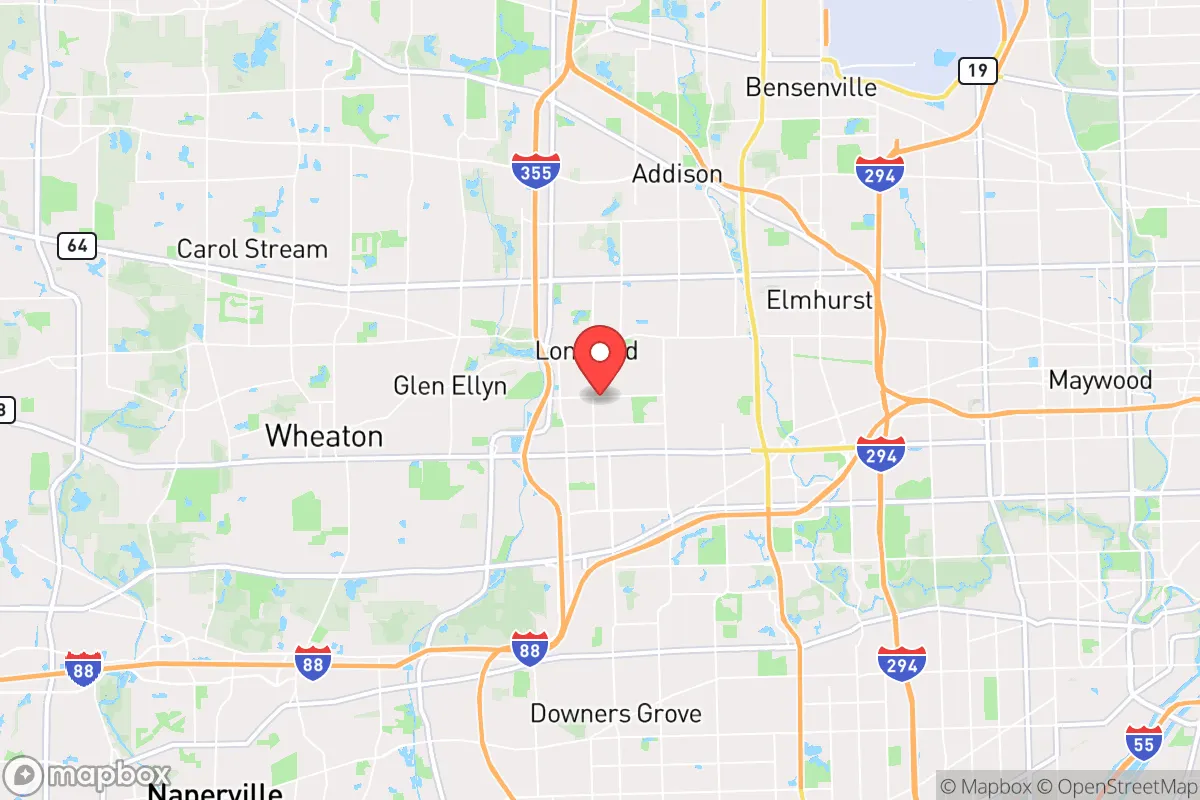
District shown is the primary district for this city’s centroid. Cities may span multiple districts.
Local Political AnalysisPolitical Analysis of Lombard, IL
Lombard, Illinois, sits in DuPage County, an area that was once a rock-solid Republican stronghold but has been shifting leftward for years. The Cook Partisan Voting Index (PVI) for the district covering most of Lombard is D+3, meaning it now leans slightly Democratic compared to the national average. That’s a far cry from the 1990s and early 2000s, when this stretch of the western suburbs reliably sent conservatives to Springfield and Washington. If you’ve lived here as long as I have, you’ve watched the local GOP club lose its grip, precinct by precinct, as new arrivals from Chicago and younger families brought a different set of priorities. The trajectory is clear: Lombard is trending bluer, and the old guard is feeling squeezed.
How it compares
Drive ten minutes west to Glen Ellyn or Wheaton, and you’ll feel a noticeable difference. Those towns still lean more conservative, with Wheaton in particular holding onto a traditionalist, church-going character that Lombard has largely shed. Head east toward Elmhurst or Oak Brook, and you’re in a similar D+3-to-D+5 zone—purple suburbs where the balance is tipping. The real contrast is with nearby Naperville, which has gone full progressive on many cultural issues, or with Chicago proper, just 20 miles east, where the machine politics and one-party rule are a cautionary tale. Lombard sits in a kind of buffer zone: not as red as it used to be, but not yet as blue as its neighbors to the east and south. That middle ground is getting harder to hold.
What this means for residents
For those of us who value limited government and personal freedoms, the shift is more than a political annoyance—it’s a red flag. The village board and county commissions have become more willing to impose mandates on small businesses, from paid leave requirements to zoning restrictions that make it harder to run a home-based operation. Property taxes in DuPage County are already among the highest in the nation, and every new progressive initiative—whether it’s a diversity, equity, and inclusion office or a climate action plan—comes with a price tag that lands on your tax bill. School board meetings have turned into battlegrounds over curriculum transparency and parental rights, with the progressive side pushing for more centralized control over what kids learn. If you believe in local control and the right to live your life without government meddling, Lombard’s direction is worth watching closely.
On the cultural front, Lombard still has some old-school charm—the Lilac Parade, the small downtown, the sense that neighbors know each other—but the policy drift is real. The village has embraced some of the same housing density mandates that have transformed nearby suburbs, and there’s a growing push for “equity” zoning that could override property rights. The long-term outlook depends on whether enough residents push back at the ballot box. If the trend continues, Lombard could look a lot like Naperville in a decade: higher taxes, more regulations, and a government that sees itself as a fixer of every problem rather than a protector of your freedom. For now, it’s still a decent place to raise a family, but the foundation is cracking.

State Political ClimatePolitical Climate in Illinois
State Political AnalysisPolitical Environment in the State
Illinois has been a reliably blue state for decades, but its political climate is far more complicated than a simple partisan label. The Democratic stronghold is almost entirely driven by Chicago and its immediate suburbs, while the rest of the state—downstate and the collar counties—has shifted sharply red. Over the last 10-20 years, the state has moved left on social and fiscal policy, but that shift has been met with growing resistance from rural and exurban communities, creating a deep and widening urban-rural divide that any conservative considering a move here needs to understand.
Urban vs. rural divide
The political map of Illinois is a tale of two worlds. Chicago and Cook County are the engine of the state’s Democratic dominance, delivering massive margins that swamp the rest of the state. Within the city, wards like the 19th and 45th on the Northwest Side have seen some conservative holdouts, but the city council is overwhelmingly progressive. The inner-ring suburbs—places like Evanston, Oak Park, and Skokie—are even more left-leaning than the city itself, often pushing policies on taxes, policing, and education that go beyond state law. In contrast, the collar counties (DuPage, Lake, Kane, McHenry, Will) have been trending red for a decade. McHenry County is now a solid Republican stronghold, while Will County is a genuine swing county that flipped for Trump in 2020 and 2024. Downstate, the divide is stark: Madison County (east of St. Louis) is reliably red, while Champaign County (home to the University of Illinois) is a blue island. The rural counties along the Mississippi and Wabash rivers—Pope, Hardin, Massac—vote 70-80% Republican, but their populations are too small to counterbalance Chicago’s turnout.
Policy environment
Illinois’s policy environment is a mixed bag that leans heavily toward government intervention. The state has a flat income tax rate of 4.95%, but property taxes are among the highest in the nation—averaging over 2% of home value, with some counties like Lake County pushing 2.5%. There is no right-to-work law, and union influence remains strong, especially in construction and public schools. The state’s gun laws are among the strictest in the country: a 2023 law banned the sale of many semi-automatic rifles and high-capacity magazines, and the state requires a Firearm Owner’s Identification (FOID) card and a 72-hour waiting period for handgun purchases. On education, Illinois has a progressive funding formula that funnels more money to Chicago Public Schools, but downstate districts often struggle with declining enrollment and rising pension costs. The state also mandates comprehensive sex education and has expanded Medicaid coverage for non-citizens, a policy that has drawn criticism from fiscal conservatives. Election laws are relatively permissive: same-day voter registration is available, and mail-in ballots are automatically sent to all registered voters, a change made permanent after 2020.
Trajectory & freedom
On the freedom index, Illinois is moving in the wrong direction for conservatives. The 2023 Protect Illinois Communities Act is the most significant expansion of gun control in state history, effectively banning the sale of AR-15s and similar rifles. The state also passed a parental rights law in 2024 that requires schools to notify parents of changes in a student’s health or well-being, but it was watered down from the original version and faces legal challenges from the ACLU. On medical freedom, Illinois was an early adopter of telehealth expansion and Medicaid coverage for gender-affirming care, but it also imposed one of the nation’s strictest vaccine mandates for healthcare workers during the pandemic, a mandate that remains in effect. Property rights are under pressure: the state’s tenant right of first refusal law, passed in 2023, gives renters the chance to buy their building before it goes on the market, a policy that landlords argue chills investment. The state’s pension debt—over $140 billion—is a ticking time bomb that will likely force future tax increases or service cuts, further eroding economic freedom.
Civil unrest & political movements
Illinois has seen its share of political flashpoints. The 2020 George Floyd protests in Chicago were among the largest and most destructive in the country, with looting and arson in the Loop and on the Magnificent Mile. The city’s sanctuary city status has been a persistent source of tension, with the state’s TRUST Act (2017) limiting local law enforcement cooperation with federal immigration authorities. In response, downstate counties like Effingham and Macon have passed resolutions declaring themselves “Second Amendment sanctuaries” or “non-sanctuary” counties for immigration enforcement. The Illinois Freedom Caucus, a group of hardline conservative state representatives, has gained influence in the General Assembly, pushing bills on election integrity, school choice, and parental rights. The 2022 election integrity controversy over the state’s automatic mail-in ballot system led to a lawsuit from the conservative Liberty Justice Center, though the system was upheld. More recently, the 2024 Democratic National Convention in Chicago saw large pro-Palestinian protests that disrupted traffic and led to dozens of arrests, highlighting the city’s role as a national stage for progressive activism.
Projection
Looking ahead 5-10 years, Illinois is likely to become even more polarized. Chicago’s population decline—down about 200,000 since 2020—is accelerating, and the city’s tax base is shrinking. Meanwhile, the collar counties and downstate are seeing modest growth, but not enough to flip the state legislature. The 2021 redistricting gave Democrats a structural advantage in the General Assembly that will be hard to overcome. The state’s pension crisis will force a reckoning: either a massive tax hike (possibly a progressive income tax, which voters rejected in 2020 but could return) or a bankruptcy-like restructuring that would devastate bondholders and public employees. On cultural issues, expect more fights over school curriculum, library books, and transgender policies, with the state government likely siding with progressive activists. The gun ban will face continued legal challenges, but the Illinois Supreme Court is now 5-2 Democratic, so a state-level reversal is unlikely. For conservatives, the best bet is to live in a red county like McHenry or Ogle, where local governments push back against state mandates, but you’ll still pay high taxes and deal with state-level restrictions.
For a conservative considering a move to Illinois, the bottom line is this: you can find like-minded communities in the collar counties and downstate, but you will be fighting an uphill battle against a state government that is increasingly progressive on taxes, guns, education, and social policy. The high property taxes and pension debt are structural problems that won’t be solved soon. If you value low taxes, strong gun rights, and local control, Illinois is a tough sell. But if you need to be in the Midwest for work or family, and you’re willing to pay the price for a blue state’s policies, you can carve out a decent life in the red pockets—just know that the state’s trajectory is not on your side.
* Values derived from national, state, county, city and local statistics and may differ in a specific area. Last updated: 2026-04-30T01:22:31.000Z
Narrative content on this page is AI-generated and may contain mistakes. Verify any details that matter before acting on them.
ReloMaps may earn a commission from affiliate links at no extra cost to you.

