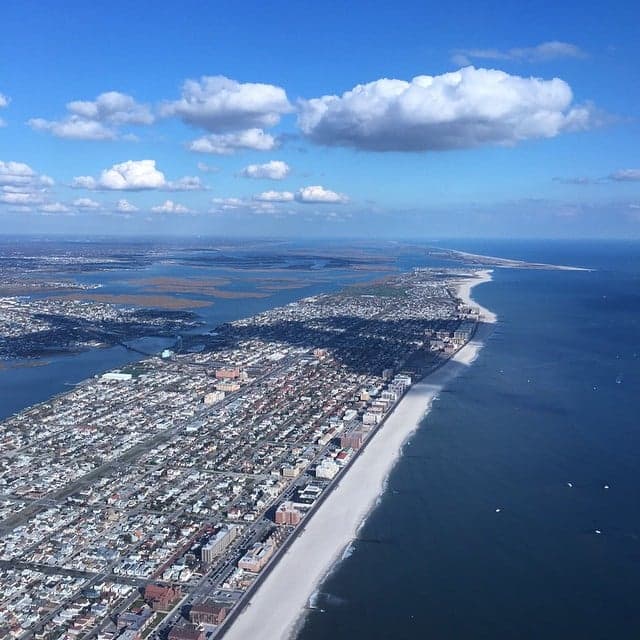
Photo: Wikipedia
Strategic Assessment of Long Beach, NY
High tactical risk. This location is likely close to major population centers, strategic targets, or sits in a high-disaster corridor. A retreat property and careful exit planning is required.
What does the Strategic Assessment tell us?
Our Strategic Assessment grades tactical survivability of an area. Major population centers, military targets, fallout zones, natural disasters, and border exposure all drive risk — lower exposure means a more defensible position in a crisis.
This is heavily inspired by Joel Skousen's Strategic Relocation book. Highly recommended you checkout the book ($)What does this tell us?
Our Strategic Assessment grades tactical survivability of an area. Major population centers, military targets, fallout zones, natural disasters, and border exposure all drive risk — lower exposure means a more defensible position in a crisis.
This is heavily inspired by Joel Skousen's Strategic Relocation book. Highly recommended you checkout the book ($)Strategic Pillars

Key Distances
Regional Safe Places
Below is our recommended "safe zones" in New York and the surrounding area based on our strategic heuristics. For most people, it's unrealistic to live in a “safe zone” full-time due to work, family or other personal reasons. They tend to be more rural. However, many of these areas are perfect for second homes and retreat properties that double as a vacation home or even a short-term rental.
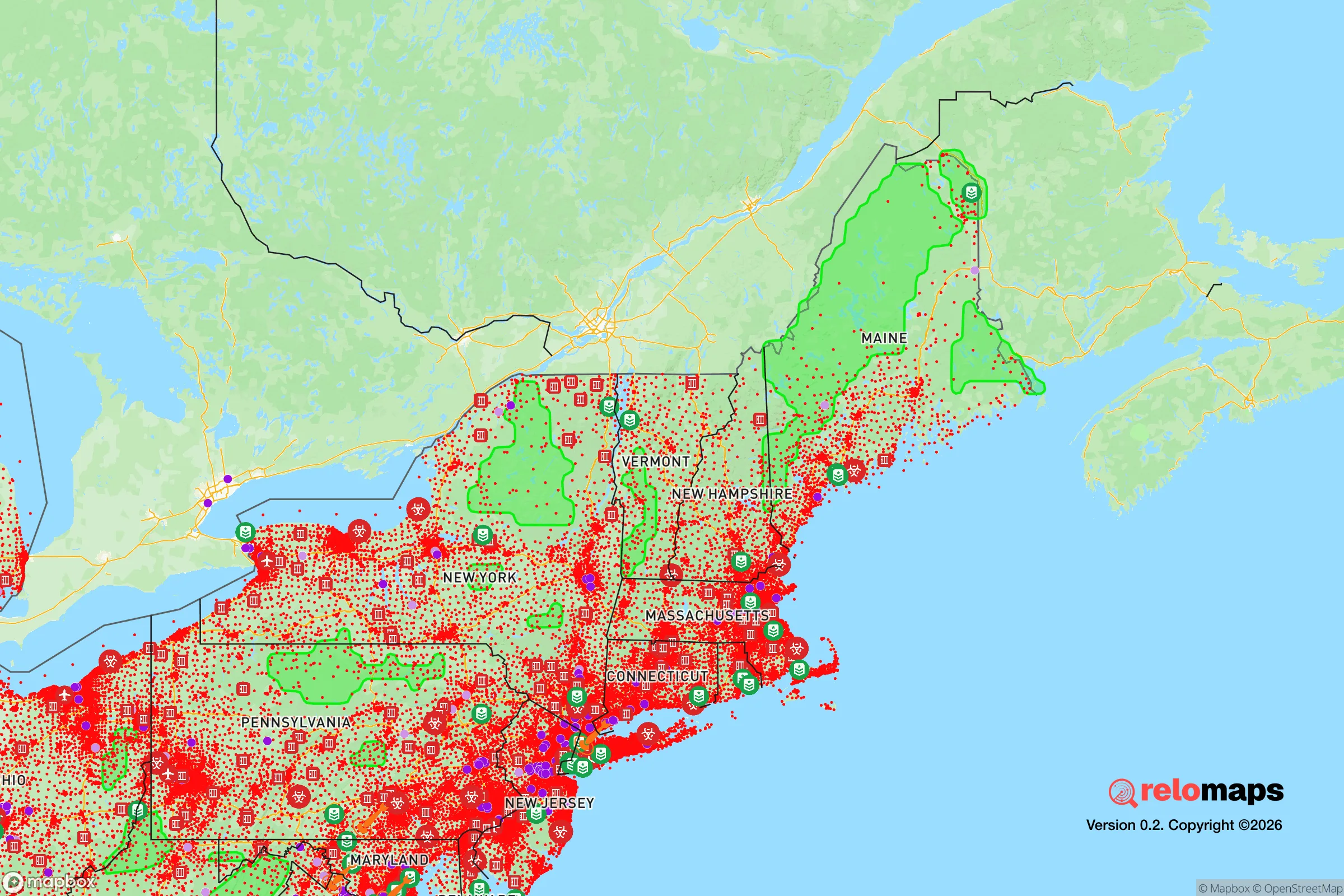
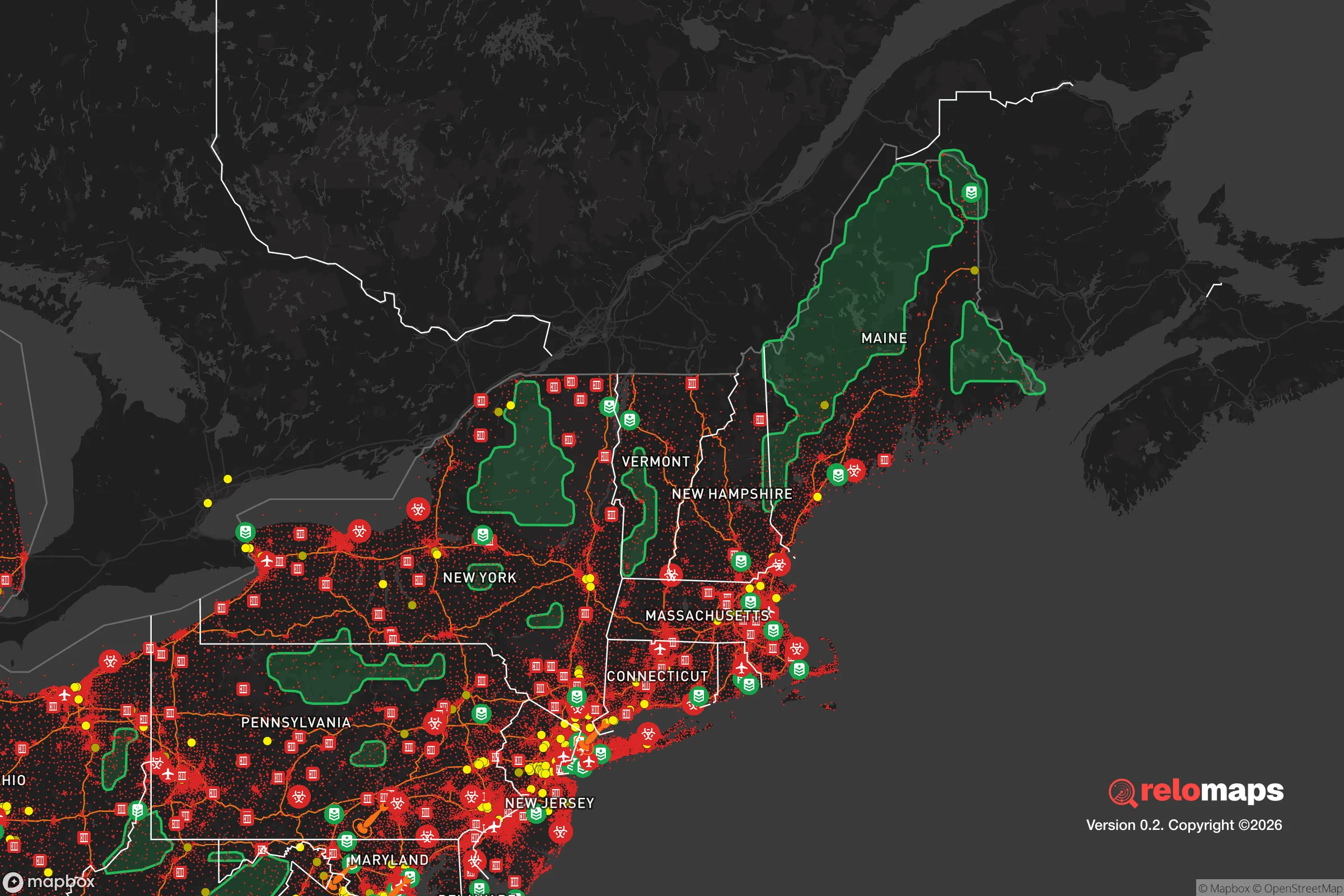


Important Note: For informational purposes only. This does not mean nothing bad ever happens in the green zones. Please use common sense. This is based on public data and modeled with AI. We tried to take a conservative approach but mistakes happen. We update this regularly as new information becomes available.
Solar Generator Recommendations
Backup power matters more here than in safer locations. We've picked three solar generators across budgets and capacity tiers — start with the budget unit if you only need a few essentials, or step up if you want to run a fridge and HVAC for days at a time.

Jackery Portable Power Station Explorer 300
Budget OptionPower on the Go: Weighing only 11 lbs, it's convenient to set up and store with book-sized foldable solar panels

BLUETTI Portable Power Station AC180
Designed for both indoor and outdoor scenarios, AC180 is highly capable as it has a robost capacity and continuous output power.

EF ECOFLOW DELTA Pro Ultra Power Station
Upgraded PickEcoFlow DELTA Pro Ultra is a whole-home energy system designed to grow with your family. Integrated with the Smart Home Panel 2, it scales to meet your evolving energy needs — keeping your home powered, intelligent, and secure through every stage of life.
We earn a commission, at no additional cost to you.
Strategic Assessment Analysis
Long Beach, New York, presents a complex strategic picture for the conservative prepper or survivalist. Its primary advantage—a narrow barrier island on the South Shore of Long Island—is also its most glaring vulnerability. While the city boasts a tight-knit community and a history of weathering storms, its location within the New York City metropolitan area, proximity to major infrastructure targets, and inherent geographic fragility make it a high-risk, high-maintenance location for anyone serious about long-term resilience. This analysis focuses on the hard realities of living here when the grid goes down or the social order frays.
Geographic position and natural advantages for a prepper
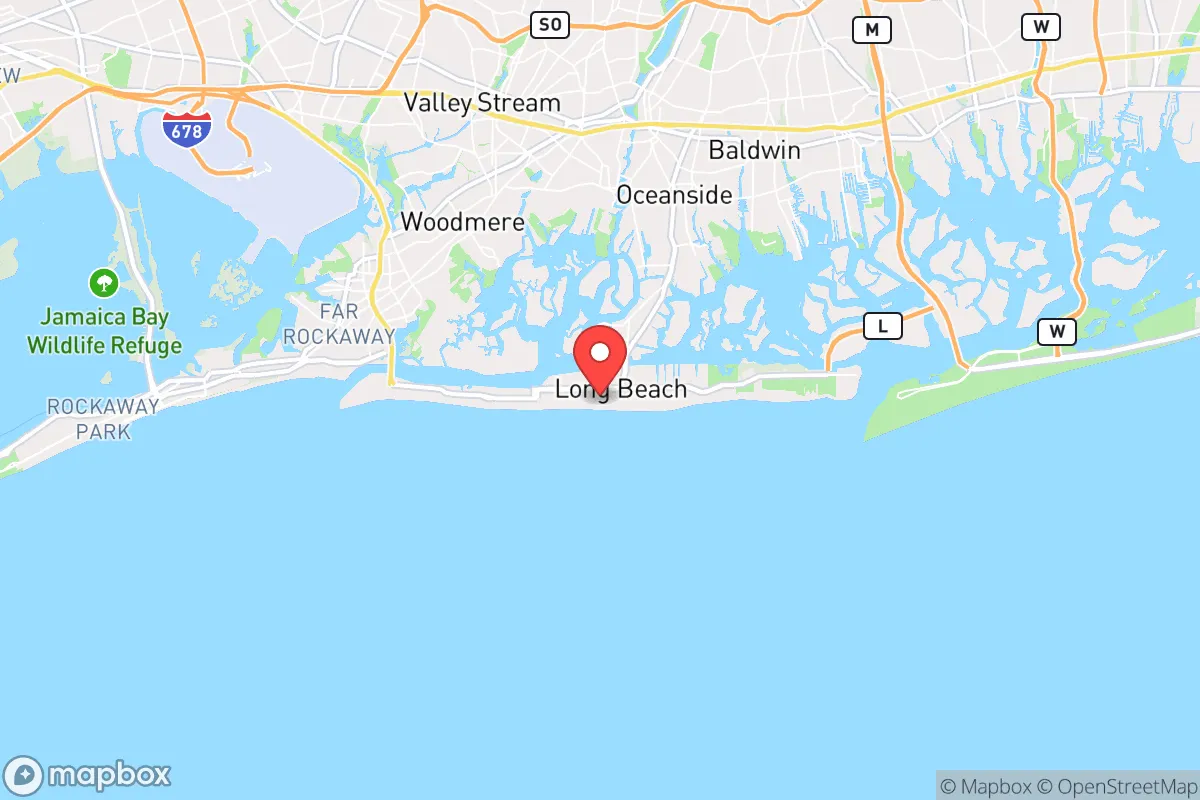
Long Beach sits on a 4.5-mile-long barrier island, separated from the mainland by Reynolds Channel. This isolation is a double-edged sword. On the positive side, the island’s geography provides a natural choke point. There are only a handful of bridges and a single causeway (the Long Beach Bridge) connecting it to the rest of Nassau County and, by extension, the mainland. In a scenario of civil unrest or mass evacuation, these access points can be monitored or, if necessary, defended by a determined community. The city’s layout—a dense grid of streets with a central business district—also lends itself to neighborhood watch and localized security. The ocean and bay provide a constant source of water (though requiring desalination or filtration) and a potential food source via fishing and crabbing. The maritime climate moderates temperature extremes, reducing heating and cooling demands compared to inland areas. For a relocator, the sense of being “off the beaten path” while still having a dense, walkable core is a genuine strategic asset—it’s easier to know your neighbors and build a mutual aid network in a city of roughly 33,000 than in a sprawling suburb.
Risks, exposures, and proximity to fallout-relevant landmarks
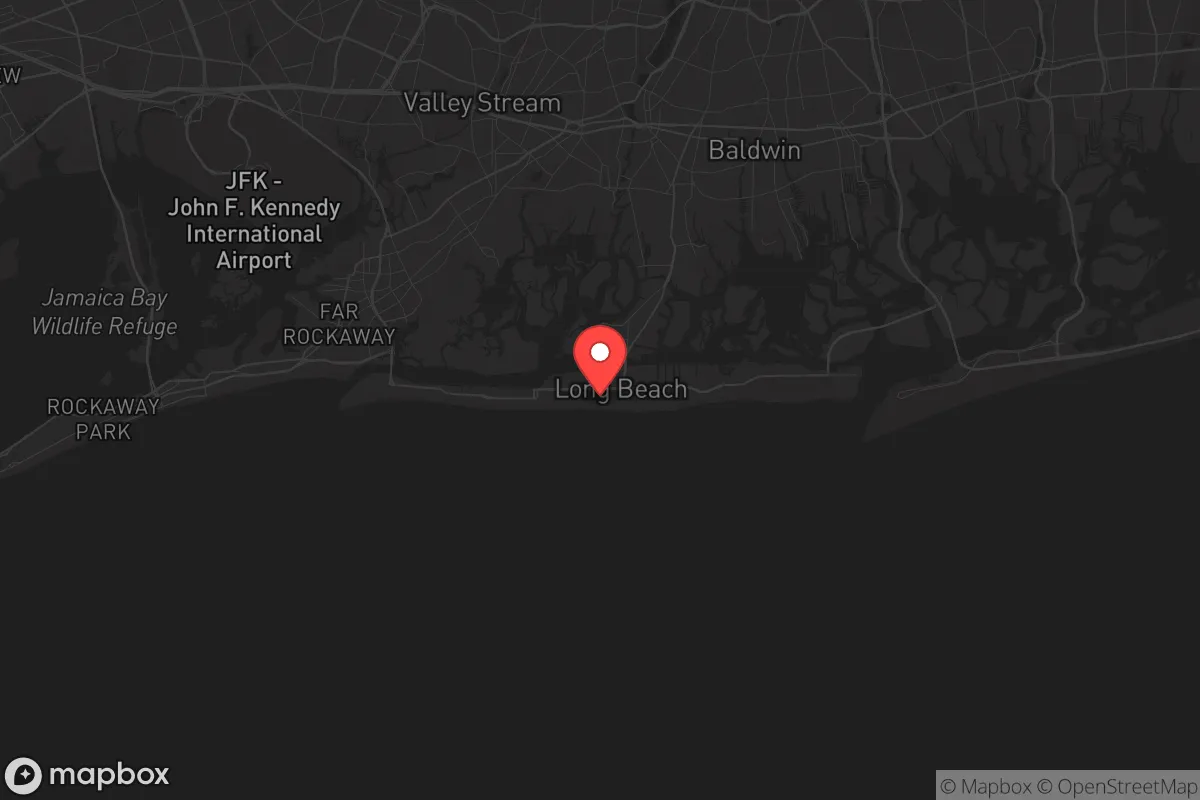
The negatives are substantial and, for many preppers, disqualifying. Long Beach is a prime target for natural disasters, specifically hurricanes and nor’easters. The island is barely above sea level, and storm surge from the Atlantic can inundate the entire city. Superstorm Sandy in 2012 demonstrated this brutally: the city was flooded, homes were destroyed, and power was out for weeks. FEMA flood maps place most of Long Beach in high-risk zones (AE and VE), meaning mandatory flood insurance and a constant need for evacuation planning. But the man-made risks are arguably worse. Long Beach is less than 30 miles from Manhattan, a primary target for any state-level actor or terrorist group. The city lies directly under the flight paths of JFK and LaGuardia airports, and is within the blast radius of the Indian Point nuclear facility (though decommissioned, the spent fuel remains on site). More immediately, the Long Island Rail Road (LIRR) runs through the city, and the nearby Jones Beach and Atlantic Beach areas are home to critical power substations and water treatment plants. In a grid-down or EMP scenario, the island’s dependence on mainland power and water infrastructure becomes a fatal flaw. The bridges and causeway are single points of failure; if they are blocked, damaged, or contested, the city becomes a trap. For a conservative relocator concerned with societal collapse, being within a 45-minute drive of the largest population center in the country is a liability, not an asset.
Practical resilience for a relocator: food, water, energy, and defensibility
Let’s get practical. Water is the first critical issue. Long Beach’s tap water comes from the mainland via the Nassau County water system. If that system fails—due to power loss, contamination, or sabotage—the city has no backup. Residents must rely on stored water, rainwater collection (which is feasible given the island’s rainfall), or desalination of bay/ocean water. A portable reverse osmosis system or a Berkey filter with saltwater capability is non-negotiable. Food is a mixed bag. The city has several supermarkets (Key Food, Stop & Shop) and a farmers market in season, but these are vulnerable to supply chain disruptions. A prepper should plan for at least 90 days of stored food. Fishing and crabbing in the bay are viable but require knowledge of local pollution levels (the bay has industrial runoff issues). Energy is a major vulnerability. The grid is old and exposed. Solar panels are a good investment, but the city’s building codes and historic district restrictions can make installation difficult. A small, quiet generator (with fuel stored safely) is essential for short-term outages. For long-term grid-down scenarios, a wind turbine or a small solar array with battery storage is the gold standard, but space is limited on most lots. Defensibility is the hardest factor. The city is dense, with row houses and apartments. A single-family home with a fenced yard is a premium. The best defensive posture is to be part of a neighborhood watch or a prepper co-op. The geography works against you: the island is flat, with few natural hiding spots. In a riot or looting scenario, the main drag (Long Beach Boulevard) would be a target. The police force is competent but small (around 100 officers), and response times will be long during a citywide emergency. The best bet for a relocator is to buy a home on the west end (near the bridge) or the east end (near the Lido Beach border), where density is lower and access to the mainland is slightly better.
The overall strategic picture for Long Beach is one of calculated risk. It is not a bug-out location; it is a live-in location that demands constant vigilance and significant investment in self-sufficiency. For a single individual or a family willing to put in the work—storing supplies, building community ties, hardening a home against flood and intrusion—it offers a unique blend of coastal living and urban proximity. But for anyone seeking a true retreat from the chaos of the modern world, the island’s vulnerabilities outweigh its advantages. The bridges are a lifeline, but they are also a leash. The ocean is a resource, but it is also a threat. If you are prepared to treat every day as a drill for the next Sandy—or something worse—Long Beach can work. If you want peace of mind, look further inland, away from the coast and the shadow of the city. This is a place for the hardcore, not the faint of heart.

* Values derived from national, state, county, city and local statistics and may differ in a specific area. Last updated: 2026-05-01T06:12:36.000Z
Narrative content on this page is AI-generated and may contain mistakes. Verify any details that matter before acting on them.
ReloMaps may earn a commission from affiliate links at no extra cost to you.

