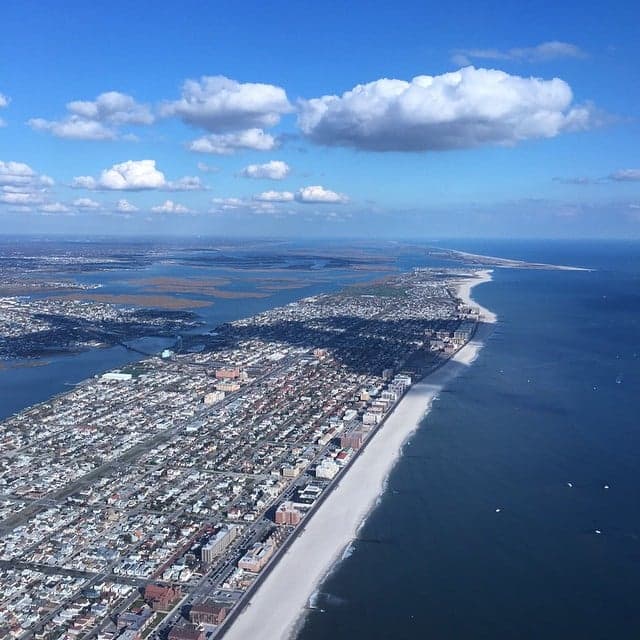
Photo: Wikipedia
Political ClimatePolitical Climate in Long Beach, NY
District shown is the primary district for this city’s centroid. Cities may span multiple districts.
Local Political AnalysisPolitical Analysis of Long Beach, NY
Long Beach, NY, has a Cook PVI of D+2, meaning it leans slightly Democratic compared to the national average, but don't let that number fool you—this city has a long, proud history of being a politically mixed bag, especially for a coastal enclave in Nassau County. For decades, Long Beach was a classic swing town where you'd find as many Republican yard signs as Democratic ones, with a strong independent streak that valued local control over personal matters. Lately, though, the progressive wave has been washing in harder, and the old-school balance is tipping in a way that has a lot of us long-time residents worried about government overreach creeping into our daily lives.
How it compares
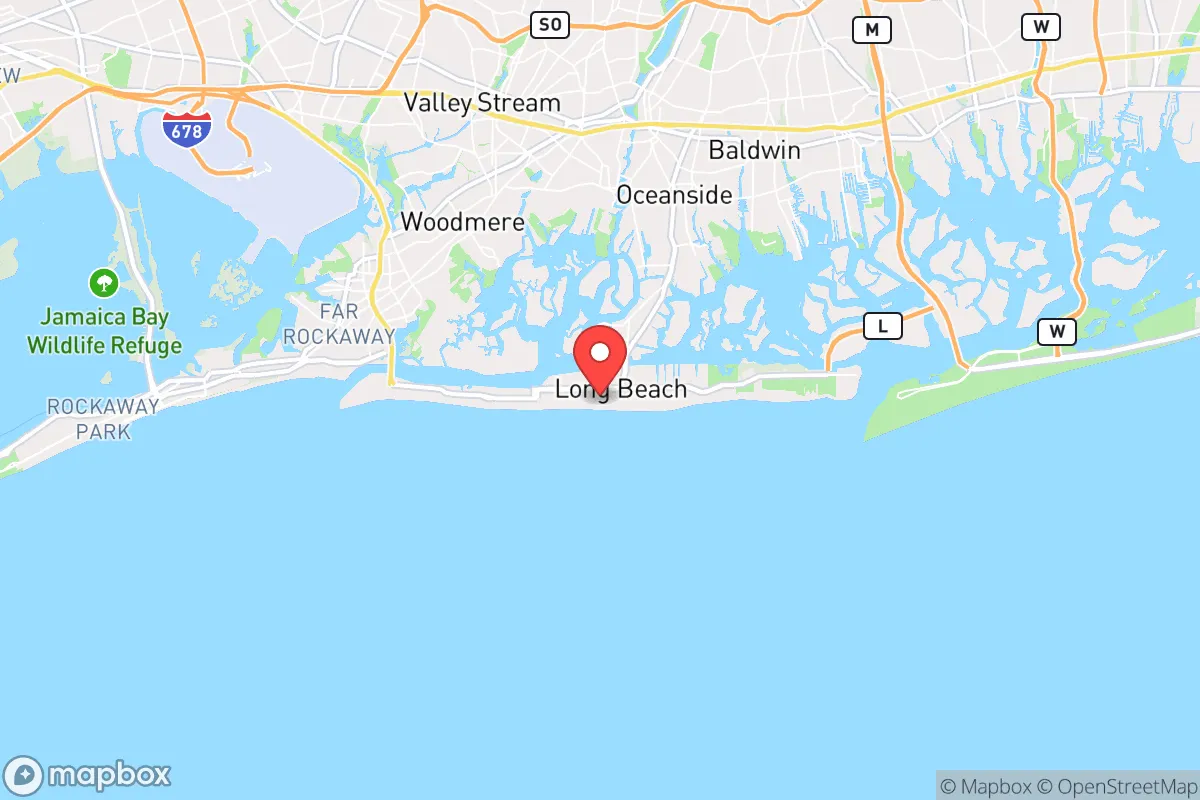
To get a real feel for Long Beach's political climate, you have to look at the neighbors. Head east to Jones Beach or south to Point Lookout, and you're in deep-red territory—places where the Second Amendment is a given and property taxes are the only thing people complain about. Cross the bridge into Island Park or Oceanside, and you'll find a more conservative, family-oriented vibe that values fiscal restraint and local policing. But Long Beach itself? It's become an island of blue in a sea of red, especially since the 2020 election. The city council has shifted left, pushing policies like sanctuary city status and stricter rental regulations that feel like a direct intrusion on property rights. Compare that to Lido Beach just west, where the politics are more libertarian-leaning—people there still believe you should be able to do what you want on your own property without a dozen permits.
What this means for residents
For those of us who remember when Long Beach was a place where you could grill in your backyard without a noise complaint or run a small business out of your home without a zoning battle, the recent shifts are concerning. The push for higher density housing and rent control measures feels like a direct attack on the single-family home lifestyle that made this city great. You're seeing more government involvement in everything from beach access fees to mask mandates in local shops, and it's getting harder to just live your life without someone in city hall telling you how to do it. If you're a conservative or even a moderate who values personal freedom, you'll find yourself increasingly at odds with the local bureaucracy. The school board has also become a battleground, with progressive curriculum changes and DEI initiatives that many parents feel are overstepping into family values.
Culturally, Long Beach still has that laid-back beach town charm, but the policy distinctions are sharpening. The city's ban on single-use plastics and its aggressive parking enforcement are small examples of a bigger trend: a government that wants to manage your choices rather than let you make them. The long-term trajectory, if it keeps going this way, is a place where the cost of living rises, property rights shrink, and the independent spirit that defined this community gets buried under red tape. For now, it's still a great place to live if you keep your head down, but the political winds are blowing in a direction that should make any freedom-loving person think twice before settling here permanently.

State Political ClimatePolitical Climate in New York
State Political AnalysisPolitical Environment in the State
New York State has long been a Democratic stronghold, but the reality on the ground is far more complicated than the statewide numbers suggest. Since the 2010s, the state has shifted decisively leftward, driven by New York City’s massive population and its five boroughs, which alone deliver roughly 40% of the state’s vote. The rest of the state—from the Hudson Valley to the North Country and Western New York—has trended redder, but not fast enough to offset the urban machine. Over the past 10-20 years, the Democratic margin in presidential elections has widened from about 22 points in 2012 to 23 points in 2020, with the state’s congressional delegation now holding a 15-11 Democratic edge. For a conservative considering relocation, the key takeaway is that your vote matters most outside the NYC metro, but the state government in Albany will almost certainly be hostile to your values.
Urban vs. rural divide
The political map of New York is a tale of two states. New York City and its immediate suburbs—Westchester, Nassau, and Suffolk counties—are the engine of Democratic power, with Manhattan and Brooklyn delivering margins of 80% or more for Democratic candidates. Upstate, the picture flips dramatically. Erie County (Buffalo) and Monroe County (Rochester) are blue islands in a sea of red, but the vast majority of counties north of the Hudson Valley vote Republican by wide margins. Oneida County (Utica) and Broome County (Binghamton) have become reliably red, while Staten Island remains the only NYC borough that can swing Republican in local races. The real battlegrounds are the suburban counties that have drifted left: Westchester and Nassau were once competitive but now vote Democratic by 15-20 points, driven by affluent, college-educated voters who prioritize social issues over taxes. Meanwhile, Orange County and Sullivan County in the Hudson Valley are trending red as NYC transplants seeking lower taxes clash with the existing conservative base. The divide isn’t just geographic—it’s cultural. Upstate residents feel ignored by Albany, and the state’s political machinery is designed to keep it that way.
Policy environment
New York’s policy environment is a textbook case of progressive governance that conservatives find suffocating. The state has the highest combined state and local tax burden in the nation, with income tax rates topping out at 10.9% and property taxes among the steepest in the country—especially in the NYC suburbs, where a median home can carry $15,000+ annually in property taxes. The regulatory posture is aggressive: the state’s Climate Leadership and Community Protection Act mandates a 85% reduction in greenhouse gas emissions by 2050, driving up energy costs and banning new gas hookups in new construction. Education policy is dominated by the teachers’ unions, with school funding heavily skewed toward NYC districts, leaving rural schools underfunded. Healthcare is heavily regulated, with the state expanding Medicaid under the Affordable Care Act and imposing strict mandates on private insurers. Election laws are among the most liberal in the nation: no-excuse absentee voting, same-day registration, and automatic voter registration have made it easy to vote, but also raised concerns about ballot security. The state’s gun control laws are among the strictest, including the SAFE Act of 2013, which banned assault weapons and high-capacity magazines, and the 2022 law requiring a concealed carry permit and banning guns in “sensitive locations” like Times Square. For a conservative, the policy environment feels like a constant battle against government overreach.
Trajectory & freedom
New York is becoming less free by almost any measure, and the trend has accelerated since 2020. The state’s response to COVID was among the most restrictive in the nation, with Governor Andrew Cuomo’s nursing home order causing thousands of deaths and his lockdowns lasting longer than most states. Since then, Albany has doubled down. The 2022 gun law, passed after the Supreme Court’s Bruen decision, effectively created a “sensitive locations” list that includes parks, public transit, and even private businesses unless the owner explicitly allows guns. Parental rights have been eroded: the state’s Education Department has pushed “gender-inclusive” curricula and policies that allow students to change their names and pronouns without parental consent. Medical autonomy took a hit with the state’s strict vaccine mandates for healthcare workers and schoolchildren, though the mandate for schoolchildren was eventually dropped after legal challenges. Property rights are under pressure from rent control laws in NYC and the Hudson Valley, which cap rent increases and make it difficult for landlords to evict non-paying tenants. The state’s tax burden continues to rise, with the 2021 budget increasing the top income tax rate to 10.9% and adding a new surcharge on high earners. On the positive side, the state has not enacted a “red flag” law that allows confiscation without due process, though it has a “risk protection order” law that functions similarly. For a conservative, the trajectory is clear: more regulation, higher taxes, and less personal autonomy.
Civil unrest & political movements
New York has been a flashpoint for political unrest, particularly in the NYC metro area. The 2020 George Floyd protests saw massive demonstrations in Manhattan, Brooklyn, and Buffalo, with some turning violent and leading to looting in SoHo and Midtown. The state’s sanctuary policies—which limit cooperation between local law enforcement and federal immigration authorities—have been a source of tension, with Governor Kathy Hochul defending them even as the border crisis has strained resources in upstate cities like Rochester and Syracuse. On the right, the “New York State of Mind” movement has gained traction, with groups like the New York State Rifle & Pistol Association fighting gun laws in court and the “Moms for Liberty” chapter in Suffolk County pushing back against school curricula. Secession talk has been more than rhetoric: in 2021, a group of upstate counties, including Oneida and Broome, considered a “New York State of Freedom” proposal to break away from the downstate region, though it never gained legislative traction. Election integrity has been a hot-button issue, with the state’s 2020 mail-in voting expansion leading to lawsuits over ballot harvesting and signature verification. The 2022 gubernatorial race saw Republican Lee Zeldin come within 6 points of Hochul, the closest margin in decades, driven by anger over crime and taxes. For a new resident, the political climate is tense, with visible protests and a sense that the state is deeply divided.
Projection
Over the next 5-10 years, New York is likely to become more Democratic and more progressive, but the margin of control may narrow. Demographic trends are working against conservatives: the NYC metro area continues to attract young, college-educated immigrants and transplants from abroad, while upstate’s population is aging and declining. The 2020 census cost the state a congressional seat, and the trend is expected to continue. However, the 2022 election showed that a Republican can be competitive if they focus on crime and taxes—Zeldin’s strong performance in the suburbs and upstate suggests that the GOP can win if they can turn out the base and peel off moderate Democrats. The state’s fiscal situation is precarious: the $200 billion+ budget is propped up by Wall Street bonuses, and a recession could trigger a fiscal crisis that forces tax hikes or spending cuts. On freedom, expect more battles: a push for a “public option” health insurance plan, stricter environmental regulations, and possibly a wealth tax. For a conservative moving in now, the next decade will likely mean higher taxes, more regulation, and a continued erosion of Second Amendment rights. The best bet is to live in a red county like Oneida or Broome, where local government is more aligned with your values, but you’ll still be fighting Albany every step of the way.
For a conservative considering New York, the bottom line is this: you’ll be paying some of the highest taxes in the nation, dealing with some of the strictest gun laws, and living under a government that is actively hostile to your values. The state’s natural beauty, economic opportunities, and cultural institutions are real, but they come at a steep price. If you’re willing to fight for your freedoms and can afford the cost of living, there are pockets of conservative life—especially in the upstate counties and the Hudson Valley exurbs—where you can find community. But don’t expect the state to change for you. New York is what it is, and it’s only going to get more progressive from here.
* Values derived from national, state, county, city and local statistics and may differ in a specific area. Last updated: 2026-05-01T06:12:36.000Z
Narrative content on this page is AI-generated and may contain mistakes. Verify any details that matter before acting on them.
ReloMaps may earn a commission from affiliate links at no extra cost to you.

