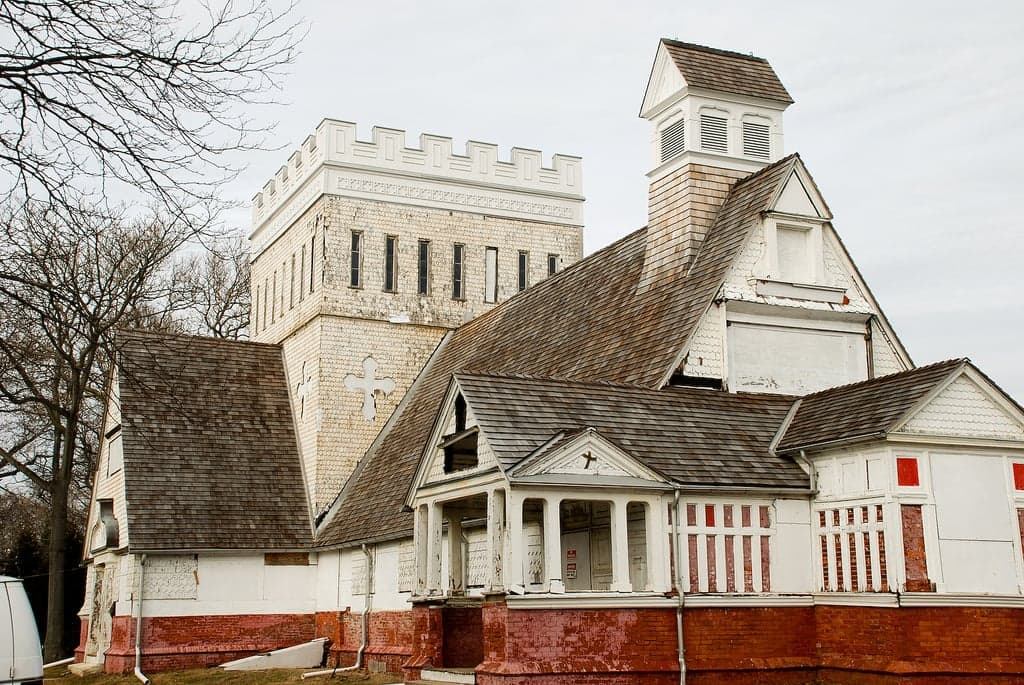
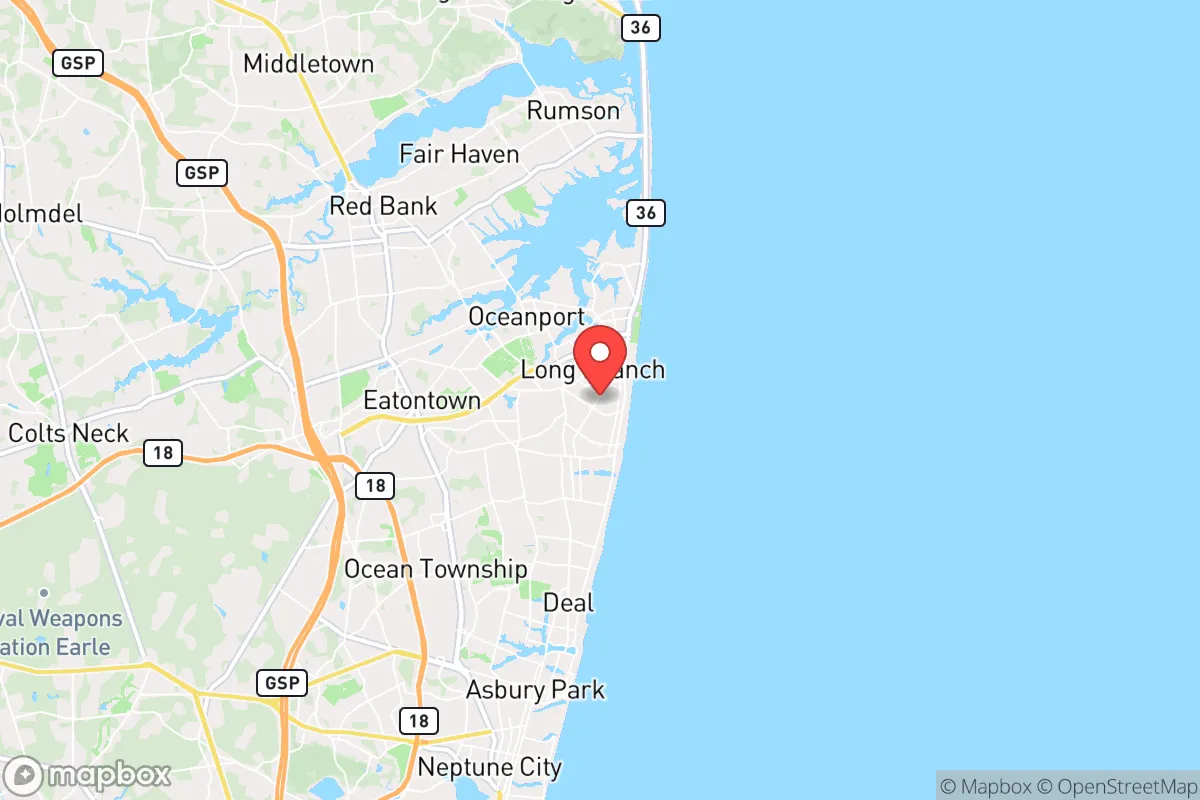
Photo: Wikipedia
Demographics of Long Branch, NJ
Affluence Level in Long Branch, NJ
A middle-class area roughly in line with national averages across income, home values, education, and employment.
People of Long Branch, NJ
The people of Long Branch, New Jersey, today form a dense, diverse community of 32,184 residents, shaped by over a century of immigration waves and coastal development. The city is a majority-minority population, with a White share of 53.3%, a Hispanic share of 23.1%, a Black share of 11.5%, and a foreign-born population of 16.6%—a figure that reflects ongoing international migration. Long Branch’s identity is a blend of historic beachfront resort character, working-class roots, and recent redevelopment, making it a distinctively mixed-income, multi-ethnic city on the Jersey Shore.
How the city was settled and grew
Long Branch’s original population was drawn by its coastal location and the arrival of the railroad in the 1860s, which transformed it into a premier summer resort for wealthy families from New York and Philadelphia. The city’s early growth was driven by the hotel and tourism industry, with grand hotels like the Ocean Hotel and West End Hotel attracting Gilded Age elites, including President Ulysses S. Grant. The original workforce was largely Irish and German immigrants, who settled in the Lower Broadway area near the ocean and the North End around the railroad depot, building the service infrastructure for the resort economy. By the early 20th century, Italian immigrants arrived in significant numbers, establishing a strong presence in the Elberon and West End neighborhoods, where they worked as fishermen, builders, and hotel staff. The city’s population peaked at around 30,000 in the 1930s, supported by a mix of seasonal tourism and year-round manufacturing, including the Long Branch Shirt Company and other garment factories.
Modern era (post-1965)
After the 1965 Hart-Cellar Act, Long Branch experienced significant demographic shifts as new immigrant groups arrived and domestic migration patterns changed. The city’s Black population grew from a small minority to 11.5% today, concentrated in the Broadway corridor and the South End near the Monmouth Park racetrack, as African American families moved from the South during the Great Migration and later from nearby cities. Hispanic immigration, primarily from Puerto Rico and the Dominican Republic, accelerated in the 1970s and 1980s, with many settling in the Lower Broadway and West End neighborhoods, where affordable housing and proximity to service jobs in hotels and restaurants provided a foothold. The Hispanic share now stands at 23.1%, making it the largest minority group. East and Southeast Asian communities (1.2%) and Indian subcontinent residents (0.8%) are smaller but growing, with families drawn to the city’s relatively lower housing costs compared to northern New Jersey suburbs, settling in the Elberon and North End areas. The White population, once dominant, has declined to 53.3%, with many older Italian and Irish families moving to inland Monmouth County suburbs, though a new wave of younger, college-educated professionals (34.5% college educated) has moved into redeveloped waterfront condos in the Pier Village district since the 2000s.
The future
Long Branch’s population is heading toward greater diversity and a slight increase in density, driven by ongoing redevelopment and immigration. The city’s foreign-born share of 16.6% is likely to grow, with Hispanic immigration from Central America and the Caribbean continuing to reinforce the Lower Broadway and West End enclaves, while East and Southeast Asian and Indian families may increase as professionals seek affordable alternatives to pricier towns like Red Bank and Middletown. The city is not homogenizing; instead, it is tribalizing into distinct enclaves—the Pier Village area is becoming a wealthier, whiter, and more transient zone of young renters and second-home owners, while the Broadway corridor remains a working-class, majority-minority hub. The Black population share has stabilized, and the White share may continue a slow decline as older residents age out and are replaced by younger, more diverse cohorts. The next 10-20 years will likely see Long Branch become a more polarized city—a beachfront playground for the affluent and a service-economy base for immigrant families, with limited middle-ground integration.
For someone moving in now, Long Branch offers a rare mix: a historic shore town with genuine ethnic diversity and a redeveloped waterfront, but also a city where economic and racial divides are visible neighborhood by neighborhood. It is becoming a place of two worlds—one of condos and cafes in Pier Village, the other of bodegas and multi-generational homes in Lower Broadway—making it a strategic choice for those who value diversity but want to understand the trade-offs in school quality, safety, and community cohesion.

* Values derived from national, state, county, city and local statistics and may differ in a specific area. Last updated: 2026-05-02T14:35:09.000Z
Narrative content on this page is AI-generated and may contain mistakes. Verify any details that matter before acting on them.
ReloMaps may earn a commission from affiliate links at no extra cost to you.

