Photo: Wikipedia
Political ClimatePolitical Climate in Long Branch, NJ
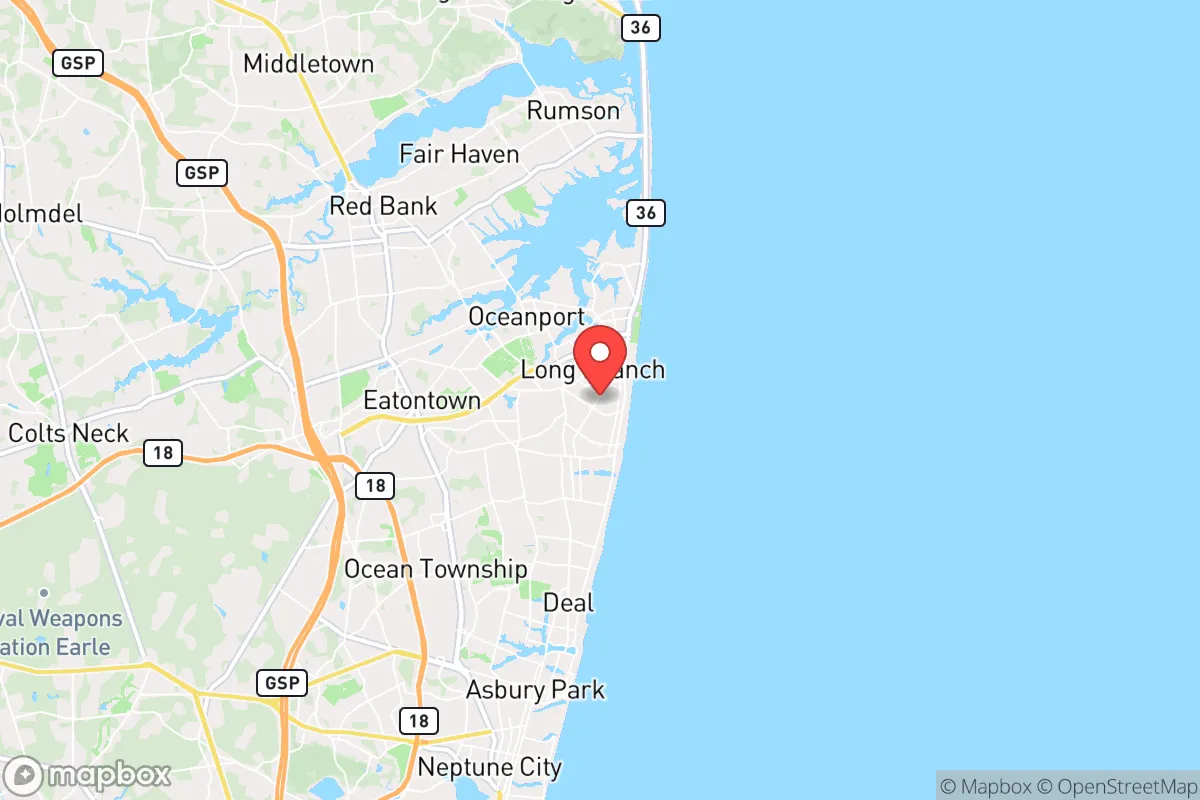
District shown is the primary district for this city’s centroid. Cities may span multiple districts.
Local Political AnalysisPolitical Analysis of Long Branch, NJ
Long Branch has a Cook PVI of D+5, meaning it leans about five points more Democratic than the national average, but that number doesn’t tell the whole story if you’ve lived here a while. The city used to be a lot more balanced politically, with a strong working-class base that didn’t automatically vote the party line. Over the last decade or so, you’ve seen a steady shift leftward, driven by an influx of out-of-state transplants and a growing reliance on state-level progressive policies that often feel disconnected from what locals actually want. It’s not a deep-blue stronghold like Newark or Jersey City, but the trajectory is heading that way, and that’s worth keeping an eye on.
How it compares
When you look at the surrounding towns, the contrast is pretty stark. Head west a few miles to Ocean Township or Oakhurst, and you’ll find communities that still vote reliably red in local races, with a focus on property rights and lower taxes. Up the coast, Monmouth Beach and Rumson are more conservative-leaning too, especially on fiscal issues. But Long Branch itself has become a sort of progressive island in Monmouth County, with city council and school board seats increasingly going to candidates who push things like diversity, equity, and inclusion initiatives and zoning changes that favor high-density development. The D+5 rating actually understates the local tilt because it’s based on presidential elections; in municipal elections, the progressive wing has been gaining ground faster than the national numbers suggest.
What this means for residents
For folks who value personal freedom and minimal government interference, the changes here are real and growing. You’re seeing more ordinances that regulate everything from short-term rentals to what you can do with your own property. The city has gotten aggressive with rental inspections and licensing fees, which sounds fine on paper but ends up being a hassle for small landlords and homeowners who just want to rent out a room. There’s also been a push for higher minimum wages and paid leave mandates that go beyond state law, which sounds nice but hits small businesses hard. Property taxes are already among the highest in the state, and every new program or mandate adds another layer of cost. If you’re someone who likes to be left alone to run your life and your business without a lot of red tape, you’ll feel the squeeze more every year.
On the cultural side, Long Branch has always been a diverse, blue-collar beach town, but the vibe is shifting. The old-school Italian and Irish families who ran the local shops and civic groups are being replaced by a younger, more activist crowd that’s less interested in tradition and more focused on social justice campaigns. School board meetings have gotten contentious, with debates over curriculum and library books that would have been unthinkable twenty years ago. The city’s also been aggressive about pursuing state grants for affordable housing and transit-oriented development, which sounds progressive but often means more density and less parking for existing residents. If you’re looking for a place where local government stays out of your way, Long Branch is moving in the opposite direction, and it’s probably not going to reverse course anytime soon.

State Political ClimatePolitical Climate in New Jersey
State Political AnalysisPolitical Environment in the State
New Jersey has shifted from a classic swing state to a reliably blue stronghold over the past two decades, with Democrats now holding every statewide office and both chambers of the legislature. The state hasn't voted Republican for president since 1988, and in 2024, Joe Biden carried it by roughly 16 points, though that margin was notably narrower than Hillary Clinton's 14-point win in 2016 or Biden's own 16-point margin in 2020. The real story, however, is the growing tension between the deep-blue urban corridors and the increasingly frustrated, tax-burdened suburbs and rural areas that feel left behind by Trenton's one-party rule.
Urban vs. rural divide
The political map of New Jersey is a tale of two worlds. The northern half of the state, anchored by Newark, Jersey City, and Paterson, is the engine of Democratic dominance — these cities deliver massive vote margins thanks to dense populations, strong union ties, and a heavy reliance on public-sector jobs and social services. Hudson County, home to Jersey City, routinely gives Democrats 70-80% of the vote. Meanwhile, Essex County (Newark) and Passaic County (Paterson) are similarly lopsided. The suburban ring around New York City — Bergen County, Middlesex County, and Union County — has also trended blue as affluent professionals and immigrant communities align with the Democratic Party on social issues and climate policy. In contrast, the southern and western parts of the state tell a different story. Ocean County, home to Toms River and the Jersey Shore, is a Republican stronghold, voting +20 points for Trump in 2020. Sussex County in the northwest and Hunterdon County in the west are also reliably red, driven by rural values, gun rights, and a deep distrust of Trenton's tax-and-spend approach. The divide isn't just geographic — it's cultural. In places like Montclair or Maplewood, you'll find progressive activism and high property taxes funding excellent schools; in Flemington or Newton, you'll find conservative voters who feel their voices are drowned out by the urban machine.
Policy environment
New Jersey's policy environment is a textbook case of progressive governance with a heavy price tag. The state has the highest property taxes in the nation, averaging over $9,500 per year, and a progressive income tax that tops out at 10.75% for earners over $1 million. The regulatory posture is aggressive: businesses face some of the strictest environmental rules in the country, a $15 minimum wage that's already law, and a paid family leave program that mandates up to 12 weeks off. Education policy is dominated by the teachers' union, the New Jersey Education Association (NJEA), which is a political powerhouse — the state spends over $20,000 per pupil, among the highest in the U.S., yet outcomes vary wildly between wealthy suburbs and struggling urban districts. Healthcare is heavily regulated, with the state running its own health insurance exchange and expanding Medicaid under the Affordable Care Act. Election laws are among the most liberal: no-excuse mail-in voting, automatic voter registration, and same-day registration are all in place. For a conservative, the policy environment feels like a one-party state where the levers of power are used to entrench Democratic control — the legislature has even passed laws to strip local control from towns that try to resist state mandates on affordable housing or sanctuary policies.
Trajectory & freedom
Over the past five years, New Jersey has become less free by almost any measure a conservative would care about. On gun rights, the state passed some of the strictest carry laws in the nation after the Bruen decision, requiring a "justifiable need" standard that effectively bans most concealed carry — a law that's currently being challenged in court. On parental rights, the state has moved aggressively to enshrine LGBTQ+ curriculum mandates in public schools, requiring that instruction include contributions of LGBTQ+ individuals and that schools adopt policies supporting transgender students, including allowing them to use bathrooms and locker rooms matching their gender identity. On speech, the state has no campus free-speech protections for conservative students, and the attorney general has used consumer fraud laws to target pro-life pregnancy centers. On medical autonomy, New Jersey expanded abortion access to the point of allowing late-term procedures and requires insurance to cover abortion with no copay. Property rights are under constant assault from the state's affordable housing mandates, which force towns to zone for high-density development regardless of local wishes. The only bright spot for freedom advocates is that the state has not imposed a statewide rent control law, though several cities have their own. The trajectory is clear: Trenton is not slowing down.
Civil unrest & political movements
New Jersey has seen its share of political flashpoints. The Black Lives Matter protests in the summer of 2020 were large and sometimes violent in Newark and Jersey City, leading to property damage and a heavy police response. More recently, the state has become a battleground over immigration policy. New Jersey is a sanctuary state, with a 2018 executive order from Governor Phil Murphy limiting cooperation between state law enforcement and federal immigration authorities. This has created tension in towns like Elizabeth and Perth Amboy, where immigrant populations are large and federal raids have occurred. On the right, the New Jersey Firearms Coalition and local gun rights groups have organized large rallies at the statehouse in Trenton, drawing thousands of protesters against the carry restrictions. There's also a growing school board activism movement, particularly in suburban counties like Morris and Monmouth, where parents have packed meetings to protest critical race theory and LGBTQ+ curriculum mandates. Election integrity remains a hot-button issue: the state's widespread use of mail-in voting in 2020 led to allegations of fraud, though no major cases were proven, and the legislature has since made mail-in voting permanent. A new resident would notice that political signs are rare in many neighborhoods — people keep their views private to avoid conflict, which says a lot about the social climate.
Projection
Looking ahead 5-10 years, New Jersey is likely to become even more blue, but with growing internal friction. The demographic trends are clear: the state's population is aging, and younger, more progressive voters are moving into the urban cores, while conservative families are increasingly looking to exit to Pennsylvania, Florida, or the Carolinas. The 2020 census showed New Jersey growing at just 5.7%, well below the national average, and net domestic migration has been negative for years — more people are leaving than arriving. The state's high cost of living and tax burden are pushing out the very families that might have provided a political counterweight. The Republican Party is becoming more rural and more Trump-aligned, which makes it harder to win back the suburban voters it needs. Expect more one-party rule in Trenton, more progressive legislation on climate, housing, and social issues, and a continued exodus of middle-class families. For someone moving in now, the realistic expectation is that the state will feel increasingly like a progressive laboratory, with fewer checks and balances, and that the political culture will become more polarized between the urban machine and the rural resistance.
Bottom line for a conservative considering New Jersey: You're moving into a state where your vote for statewide office will likely be irrelevant, your taxes will be among the highest in the nation, and your cultural values will be under constant pressure from state policy. The trade-offs are real — excellent schools in the right suburbs, proximity to New York and Philadelphia, and beautiful natural areas — but the political climate is hostile to traditional conservative priorities. If you're a single professional who values career opportunities and doesn't mind the progressive tilt, you can make it work. If you're a parent concerned about your kids' education and your family's freedom, you'll want to look very carefully at which town you choose, and be prepared to fight for your values at the local level. The state is not getting more conservative anytime soon.
* Values derived from national, state, county, city and local statistics and may differ in a specific area. Last updated: 2026-05-02T14:35:09.000Z
Narrative content on this page is AI-generated and may contain mistakes. Verify any details that matter before acting on them.
ReloMaps may earn a commission from affiliate links at no extra cost to you.

