
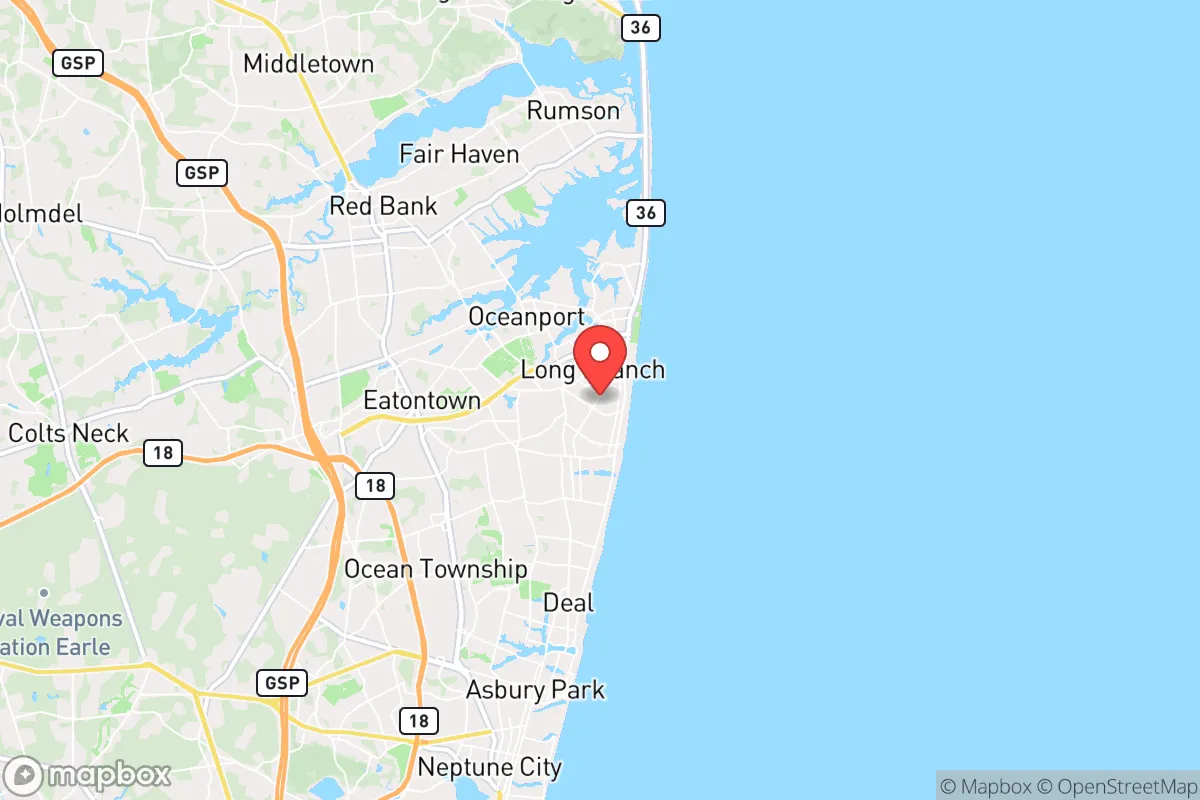
Photo: Wikipedia
Personal Sovereignty in Long Branch, NJ
Viable for self-reliance. Generally workable, though some barriers may limit total independence.
What does Personal Sovereignty tell us?
Personal Sovereignty measures your capacity for self-reliance and independence with minimal government friction. Higher scores mean fewer barriers between you and the way you want to live... but it assumes you have the space you need and good neighbors.
What does this tell us?
Personal Sovereignty measures your capacity for self-reliance and independence with minimal government friction. Higher scores mean fewer barriers between you and the way you want to live... but it assumes you have the space you need and good neighbors.
State Policy
Energy independence: Importer (8% of energy produced in-state)
Personal Liberty
Homesteading

Personal Liberty Analysis
Long Branch, New Jersey, presents a challenging environment for personal sovereignty, where the state's dense regulatory framework and high tax burden significantly constrain individual autonomy. For a conservative-leaning individual or family prioritizing self-reliance and minimal government overreach, this coastal city offers limited breathing room compared to less restrictive states. The combination of New Jersey's aggressive tax policies, strict gun laws, and expansive local ordinances means that daily life is heavily mediated by government mandates, from property use to personal defense. While the area has its merits for those who value proximity to the ocean and urban amenities, anyone with a survivalist or prepper mindset should approach Long Branch with clear eyes, understanding that personal freedom here is a negotiated privilege, not a guaranteed right.
Tax burden and regulatory posture: how much of your income and property does the state control?
New Jersey's tax burden is among the highest in the nation, and Long Branch residents feel this acutely. The state's income tax rates range from 1.4% to 10.75%, with the top bracket hitting incomes over $1 million—a steep climb that affects high earners and small business owners alike. Property taxes in Monmouth County average around 2.3% of assessed value, one of the highest effective rates in the country, meaning a $400,000 home could carry an annual tax bill of roughly $9,200. This is not a place where you can easily hold land without the state taking a significant cut. The regulatory posture extends beyond taxes: New Jersey's state-level building codes, environmental regulations, and business licensing requirements are among the most stringent in the Northeast. For a prepper looking to establish a self-sufficient homestead, every modification—from installing a rainwater catchment system to building a root cellar—may require permits and inspections that can delay or outright block projects. The state's COAH (Council on Affordable Housing) mandates also force municipalities to zone for high-density development, limiting the availability of large, private lots where one could operate with less oversight. In short, Long Branch's regulatory environment is designed for compliance, not autonomy.
Self-defense and gun law specifics: what are your rights to protect yourself and your family?
New Jersey's gun laws are among the most restrictive in the United States, and Long Branch residents must navigate a complex web of requirements to exercise their Second Amendment rights. The state requires a Firearms Purchaser Identification Card (FPID) for long guns and a separate permit for each handgun purchase, with a 30-day waiting period between handgun transactions. Concealed carry is governed by a "justifiable need" standard that, even after the Bruen decision, remains difficult to satisfy in practice; the state's application process demands references, background checks, and a demonstrated threat, and local police chiefs have significant discretion. Assault weapons and magazines holding more than 10 rounds are banned, and "ghost guns" (unserialized firearms) are illegal. For a prepper, this means building a robust personal arsenal for home defense or SHTF scenarios is legally cumbersome and expensive. Self-defense in the home is generally protected under the state's "Castle Doctrine," but there is no "Stand Your Ground" law; you have a duty to retreat if safely possible outside your home. The practical effect is that Long Branch residents face a higher barrier to armed self-reliance than those in states like Texas or Florida. If personal protection is a top priority, this city—and New Jersey as a whole—will feel like a significant infringement on your sovereignty.
Self-reliance and homesteading viability: lot sizes, zoning, and off-grid feasibility
Long Branch is a densely developed urban and suburban city, with most residential lots ranging from 5,000 to 10,000 square feet—far too small for serious homesteading or off-grid living. Zoning ordinances are strict: raising livestock (chickens, goats, etc.) is generally prohibited in residential zones, and even backyard vegetable gardens may be subject to setback rules and HOA covenants in planned communities. The city's proximity to the Atlantic Ocean also brings coastal zone regulations under the Coastal Area Facility Review Act (CAFRA), which can restrict construction, grading, and water use on properties near the shore. Off-grid feasibility is extremely low: New Jersey mandates connection to the municipal water and sewer grid in most areas, and solar panel installations require permits and utility interconnection agreements. Rainwater harvesting is legal but limited to non-potable uses, and composting toilets face regulatory hurdles. For a prepper seeking true self-reliance—growing food, storing water, generating power independently—Long Branch is a poor fit. The best you can hope for is a small suburban garden and a backup generator, but full independence is effectively illegal. If you want acreage and freedom to build without government permission, look inland to less regulated counties in Pennsylvania or upstate New York.
Personal liberties: parental rights, medical autonomy, speech, and property
Parental rights in New Jersey are generally strong, but the state has a history of progressive policies that can conflict with conservative values. The New Jersey Department of Education mandates LGBTQ-inclusive curriculum in public schools, and parents have limited opt-out options for sex education or controversial materials. Medical autonomy is constrained: New Jersey has strict vaccine mandates for school attendance (including COVID-19 for healthcare workers in some settings), and the state's Medical Aid in Dying for the Terminally Ill Act reflects a broader acceptance of government involvement in end-of-life decisions. During the pandemic, New Jersey imposed some of the nation's longest-lasting emergency orders, including mask mandates and business closures, which many conservatives viewed as overreach. Free speech is protected under the First Amendment, but local noise ordinances and public assembly permits can be used to restrict protests or gatherings. Property rights are heavily regulated: the state's Eminent Domain laws have been used aggressively for redevelopment projects, and Long Branch itself has seen multiple urban renewal initiatives that displaced long-time residents. For a property owner, this means your land is never truly yours—the government can take it for a "public purpose" with compensation that may not reflect its full value. Overall, personal liberties in Long Branch are subject to a dense web of state and local controls that prioritize collective goals over individual autonomy.
In the broader landscape of personal sovereignty, Long Branch ranks low compared to more liberty-friendly regions. The combination of high taxes, restrictive gun laws, limited homesteading potential, and expansive government oversight creates an environment where self-reliance is difficult to achieve. For a survivalist or prepper, this city is best viewed as a temporary location or a base for those who prioritize coastal living over freedom. If you value minimal government interference in your life, your money, and your family's decisions, states like New Hampshire, Texas, or Idaho offer far more breathing room. Long Branch is a place where you can live comfortably within the system, but not one where you can easily live outside it.

* Values derived from national, state, county, city and local statistics and may differ in a specific area. Last updated: 2026-05-02T14:35:09.000Z
Narrative content on this page is AI-generated and may contain mistakes. Verify any details that matter before acting on them.
ReloMaps may earn a commission from affiliate links at no extra cost to you.

