 Popular
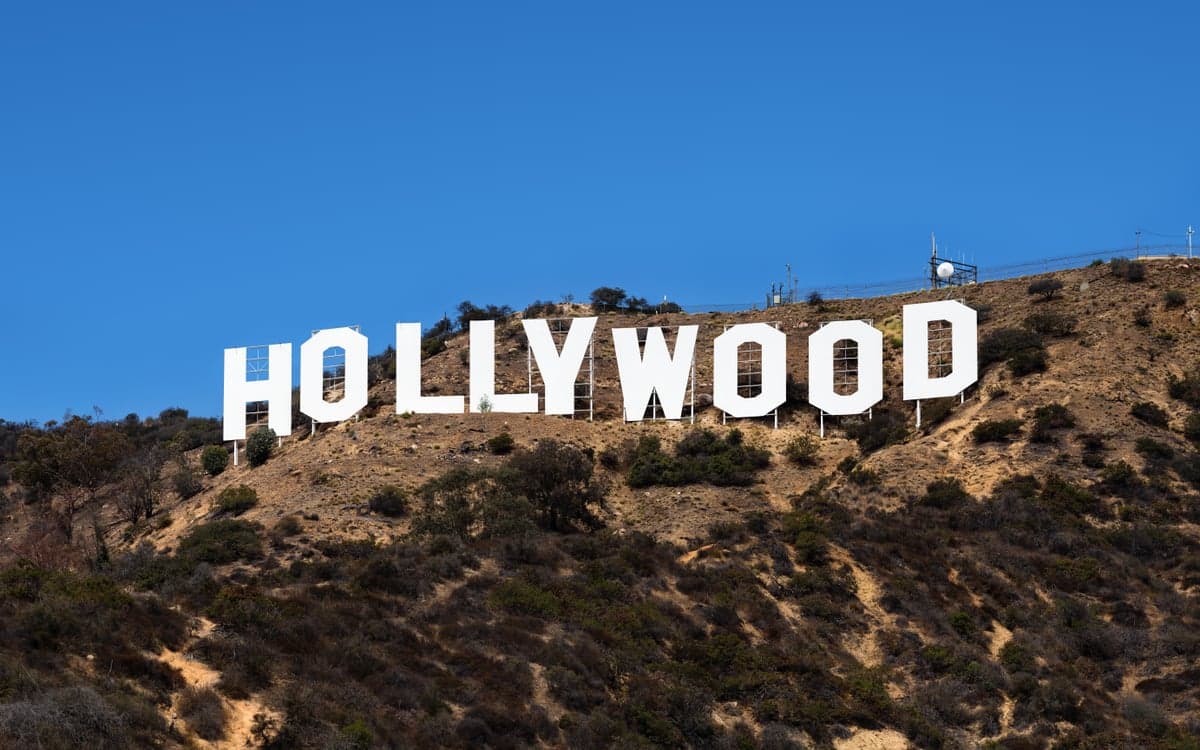
Photo: Wikipedia
Demographics of Los Angeles, CA
Affluence Level in Los Angeles, CA
An upper-middle-class area. Household wealth, education levels, and homeownership run ahead of national benchmarks.
People of Los Angeles, CA
Los Angeles today is a sprawling, majority-minority city of 3.86 million, defined by its deep ethnic enclaves and a population that is 47.2% Hispanic, 28.3% White, 10.4% East/Southeast Asian, 8.2% Black, and 1.4% Indian (subcontinent). The city's character is less a melting pot than a patchwork of distinct neighborhoods, each with its own cultural and economic identity. With 17.8% foreign-born and 37.8% college-educated, Los Angeles is simultaneously a gateway for new immigrants and a magnet for domestic professionals, creating a dense, polyglot urban environment unlike any other in the United States.
How the city was settled and grew
Los Angeles was founded in 1781 by Spanish colonists under the Pueblo de Los Ángeles system, with the original 44 settlers—mostly of mixed Indigenous, African, and Spanish heritage—receiving land grants. The city remained a small ranching outpost under Mexican control until the U.S. annexation in 1848. The first major population boom came with the transcontinental railroad in 1876, which brought Anglo-American migrants from the Midwest and East Coast, followed by a wave of Midwesterners during the 1880s land boom. The discovery of oil in the 1890s and the rise of the film industry in the 1910s drew further domestic migrants. Historic Boyle Heights became the city's first major immigrant gateway, housing Jewish, Japanese, Mexican, and Russian communities in the early 20th century. Little Tokyo formed as the center of Japanese-American life, while Chinatown consolidated the city's Chinese population after the 1871 anti-Chinese massacre drove them from the original downtown enclave. By 1940, Los Angeles was already a diverse, working-class city, but its racial geography was sharply divided by restrictive covenants and redlining.
Modern era (post-1965)
The 1965 Hart-Cellar Immigration Act fundamentally reshaped Los Angeles. The law eliminated national-origin quotas, triggering massive immigration from Asia and Latin America. Koreatown, centered on Olympic Boulevard, emerged as the densest neighborhood west of Chicago, absorbing Korean immigrants who arrived after 1965 and later became a hub for Central American and Mexican populations as well. Thai Town and Historic Filipinotown formed along the eastern edge of Hollywood, serving as anchors for Southeast Asian communities. The Hispanic population surged from roughly 15% in 1970 to 47.2% today, driven by Mexican and Central American immigration, with East Los Angeles (an unincorporated county area) and South Central becoming predominantly Latino. The Black population peaked at 18% in 1980 but declined to 8.2% by 2026, as middle-class Black families moved to the Inland Empire and suburbs like Lancaster and Palmdale. White flight accelerated after the 1965 Watts riots and 1992 Rodney King uprising, with many white Angelenos relocating to the San Fernando Valley or Orange County. The Indian (subcontinent) population, while small at 1.4%, has concentrated in Artesia's Little India and the western San Gabriel Valley, distinct from the larger East/Southeast Asian communities in Monterey Park and Alhambra.
The future
Los Angeles is becoming more homogenized in some ways and more tribalized in others. The Hispanic share of the population has plateaued after decades of growth, while the White share has stabilized after a long decline. The East/Southeast Asian population continues to grow modestly, driven by Chinese and Korean immigration, but the city's overall foreign-born share has dipped slightly from its 2000 peak of 41%. Gentrification is reshaping core neighborhoods: Boyle Heights and Echo Park are seeing an influx of white and Asian professionals, displacing long-standing Latino and Black residents. The Black population is projected to continue its slow decline, while the Indian subcontinent population is growing from a small base, particularly in the western San Gabriel Valley and Cerritos. The next 10-20 years will likely see Los Angeles become more economically stratified, with high-cost coastal neighborhoods becoming whiter and more affluent, while the inland and southern parts of the city remain heavily Latino and working-class. The city is not homogenizing into a single identity but rather solidifying into distinct, economically segregated enclaves.
For a conservative-leaning individual or family considering a move to Los Angeles, the city offers immense cultural and economic opportunity but also significant challenges: high housing costs, strained public services, and a political culture that leans heavily progressive. The population trajectory suggests that the city will remain a magnet for immigrants and young professionals, but the middle-class exodus to the suburbs and exurbs will continue. The kind of place Los Angeles is becoming is a dense, expensive, and deeply segmented global city—rewarding for those who can afford its better neighborhoods, but increasingly out of reach for the working and middle classes who built it.

* Values derived from national, state, county, city and local statistics and may differ in a specific area. Last updated: 2026-04-15T19:25:49.000Z
Narrative content on this page is AI-generated and may contain mistakes. Verify any details that matter before acting on them.
ReloMaps may earn a commission from affiliate links at no extra cost to you.

