 Popular
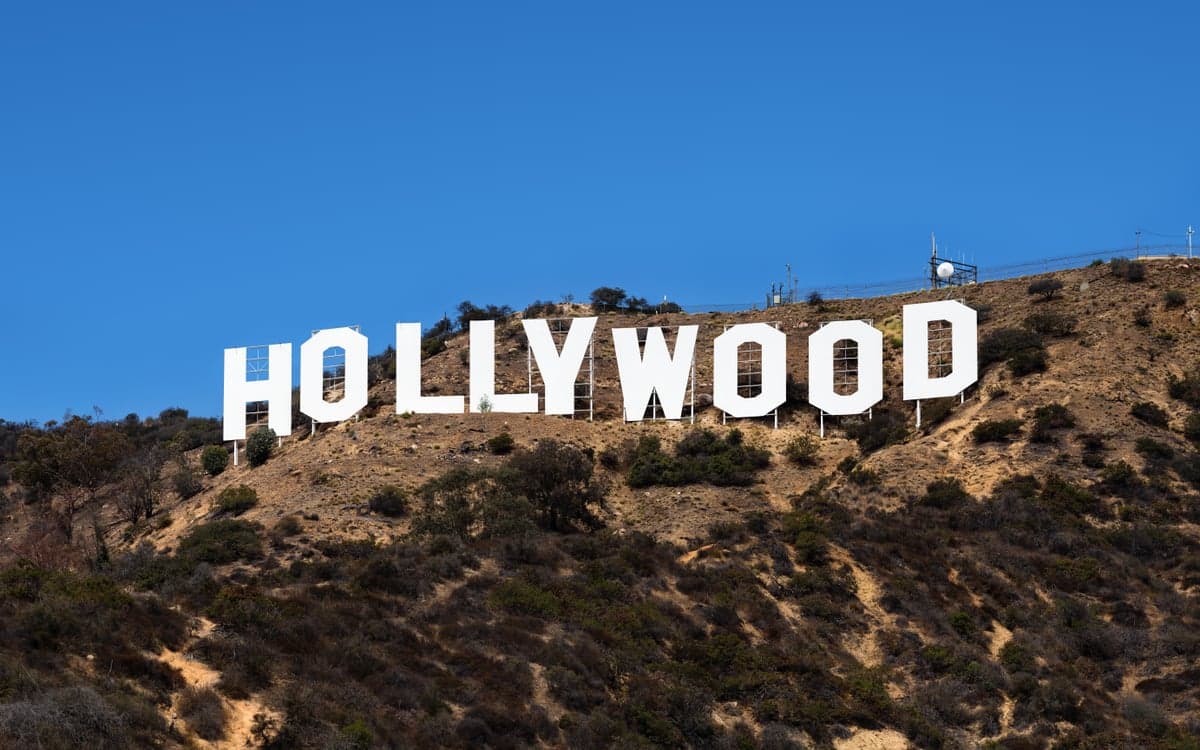
Photo: Wikipedia
Strategic Assessment of Los Angeles, CA
High tactical risk. This location is likely close to major population centers, strategic targets, or sits in a high-disaster corridor. A retreat property and careful exit planning is required.
What does the Strategic Assessment tell us?
Our Strategic Assessment grades tactical survivability of an area. Major population centers, military targets, fallout zones, natural disasters, and border exposure all drive risk — lower exposure means a more defensible position in a crisis.
This is heavily inspired by Joel Skousen's Strategic Relocation book. Highly recommended you checkout the book ($)What does this tell us?
Our Strategic Assessment grades tactical survivability of an area. Major population centers, military targets, fallout zones, natural disasters, and border exposure all drive risk — lower exposure means a more defensible position in a crisis.
This is heavily inspired by Joel Skousen's Strategic Relocation book. Highly recommended you checkout the book ($)Strategic Pillars

Key Distances
Regional Safe Places
Below is our recommended "safe zones" in California and the surrounding area based on our strategic heuristics. For most people, it's unrealistic to live in a “safe zone” full-time due to work, family or other personal reasons. They tend to be more rural. However, many of these areas are perfect for second homes and retreat properties that double as a vacation home or even a short-term rental.

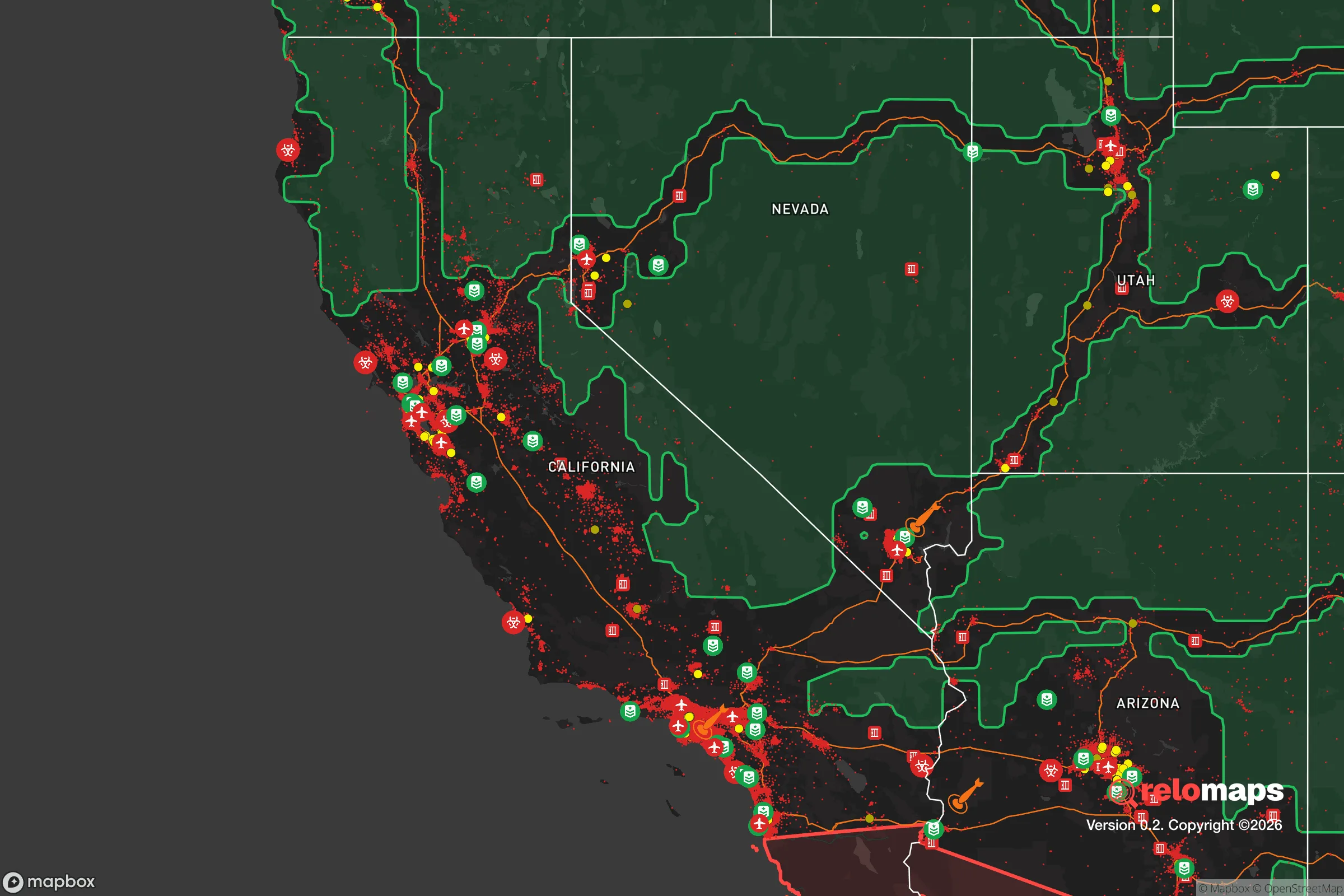


Important Note: For informational purposes only. This does not mean nothing bad ever happens in the green zones. Please use common sense. This is based on public data and modeled with AI. We tried to take a conservative approach but mistakes happen. We update this regularly as new information becomes available.
Solar Generator Recommendations
Backup power matters more here than in safer locations. We've picked three solar generators across budgets and capacity tiers — start with the budget unit if you only need a few essentials, or step up if you want to run a fridge and HVAC for days at a time.

Jackery Portable Power Station Explorer 300
Budget OptionPower on the Go: Weighing only 11 lbs, it's convenient to set up and store with book-sized foldable solar panels

BLUETTI Portable Power Station AC180
Designed for both indoor and outdoor scenarios, AC180 is highly capable as it has a robost capacity and continuous output power.

EF ECOFLOW DELTA Pro Ultra Power Station
Upgraded PickEcoFlow DELTA Pro Ultra is a whole-home energy system designed to grow with your family. Integrated with the Smart Home Panel 2, it scales to meet your evolving energy needs — keeping your home powered, intelligent, and secure through every stage of life.
We earn a commission, at no additional cost to you.
Strategic Assessment Analysis
Los Angeles presents a paradox for the strategic relocator: it offers immense natural advantages in terms of climate and logistics, but its density, political fragility, and proximity to high-value targets make it one of the most precarious major metro areas in the country for long-term resilience. For the conservative-minded prepper, LA is not a place to hunker down, but it can be a place to stage from—if you understand the terrain, the risks, and the exit routes. The city’s location on the Pacific Rim, its massive port complex, and its Mediterranean climate create a unique set of opportunities and vulnerabilities that demand a clear-eyed assessment before committing to a move.
Geographic position and natural advantages for a staging area
Los Angeles sits in a coastal basin ringed by mountain ranges—the San Gabriel, San Bernardino, and Santa Monica Mountains—which create natural choke points and defensible terrain for those who know how to use them. The climate is arguably the best in the continental US for year-round outdoor living: average highs in the 70s and 80s, minimal freezing, and no snow removal burden. This means solar panels, rainwater catchment, and gardening are viable 12 months a year. The Port of Los Angeles and Long Beach together handle roughly 40% of all containerized cargo entering the United States, making this a critical node for supply chains. For a relocator with resources, that port access means you can source gear, food, and materials from global markets—if you have the connections and cash. The region also sits atop the San Fernando Valley aquifer, and while groundwater is heavily managed, it’s a potential water source for those with deep wells or filtration systems. The mountains provide elevation, cooler temperatures, and line-of-sight observation points for anyone looking to establish a remote retreat within a two-hour drive of the city.
Risks, exposures, and proximity to high-value targets
From a prepper’s perspective, LA’s risk profile is dominated by three categories: natural disasters, infrastructure fragility, and target density. The city sits on the Pacific Ring of Fire, with dozens of active fault lines including the San Andreas, which runs just north of the metro area. A major earthquake (7.0 or higher) would collapse freeways, rupture gas and water mains, and trigger fires across the basin—exactly the kind of cascading failure that leads to weeks or months of grid-down conditions. Wildfire season now runs nearly year-round, with the 2025 Palisades and Eaton fires demonstrating that even affluent neighborhoods are not immune. Then there’s the human-caused risk: Los Angeles is home to major military and aerospace installations—Edwards Air Force Base, Vandenberg Space Force Base, Naval Base Ventura County, and the Los Angeles Air Force Base—all of which are potential targets in a conflict scenario. The city also hosts the largest concentration of entertainment and media infrastructure in the world, which could become a flashpoint during civil unrest. The 1992 riots and 2020 protests showed that LA can erupt with little warning, and the sheer density of people (roughly 10 million in the county) means that any disruption—natural or man-made—will trigger mass panic and gridlock on the few major evacuation routes (I-5, I-10, US-101, CA-14). For a conservative relocator, the political climate is also a factor: LA County voted 71% for Biden in 2020, and local governance is heavily progressive, meaning that self-reliance is not just a lifestyle choice but a necessity when public services are overwhelmed or redirected.
Practical resilience for a relocator: food, water, energy, and defensibility
If you decide to locate in or near LA, you need a plan that accounts for the city’s weaknesses. Water is the most critical issue: the city imports roughly 60% of its water from the Colorado River and the Sierra Nevada snowpack, both of which are under long-term stress from drought and interstate legal battles. A serious earthquake could sever the aqueducts, leaving the basin with only local groundwater and stored reserves—enough for maybe a few weeks. For a relocator, this means you must have at least 30 days of stored water per person, plus a filtration system (Berkey, Sawyer, or a UV unit) and knowledge of local water sources like the Los Angeles River, which is mostly concrete-lined but carries runoff. Food is easier: the region has a year-round growing season, and community gardens, farmers’ markets, and bulk suppliers (e.g., Smart & Final, Restaurant Depot) are abundant. But don’t rely on the grocery supply chain during a crisis—the 2020 panic buying emptied shelves in 48 hours. Energy is a mixed bag: solar is excellent here, with average of 284 sunny days per year, but net metering rules have been tightened, and the grid is notoriously fragile (see the 2025 Eaton fire-related outages). A home battery system (Tesla Powerwall or similar) plus a backup generator is non-negotiable. Defensibility is the hardest variable. Urban LA is a nightmare for security—dense, with thousands of entry points and a police force that is understaffed and politically constrained. The better play is to live in the foothills or mountain communities (e.g., La Cañada Flintridge, Sierra Madre, or Acton) where you have natural terrain barriers, fewer neighbors, and line-of-sight warning. Even then, you’re within an hour of the city’s chaos, so your vehicle should be a reliable 4x4 with a full emergency kit, and you should have a secondary retreat location at least 200 miles away (e.g., the Owens Valley or the Mojave Desert) for when the city becomes untenable.
The overall strategic picture for Los Angeles is that it is a high-risk, high-reward location for the prepared conservative relocator. You get unmatched climate, port access, and economic opportunity, but you also get earthquake and fire hazards, a politically hostile environment, and a target-rich setting for both natural and man-made disasters. The smart play is not to live in the urban core but to use the region as a base of operations—a place to earn income, build skills, and stockpile resources—while maintaining the ability to bug out to a more defensible location within a few hours. If you are looking for a place to ride out the coming storms in comfort and security, LA is not that place. But if you are looking for a place to stage, train, and network with like-minded individuals while staying close to critical infrastructure, it can work—provided you treat it as a temporary hub, not a final destination. The key is to never become dependent on the city’s systems; treat them as a bonus, not a lifeline.

* Values derived from national, state, county, city and local statistics and may differ in a specific area. Last updated: 2026-04-15T19:25:49.000Z
Narrative content on this page is AI-generated and may contain mistakes. Verify any details that matter before acting on them.
ReloMaps may earn a commission from affiliate links at no extra cost to you.

