 Popular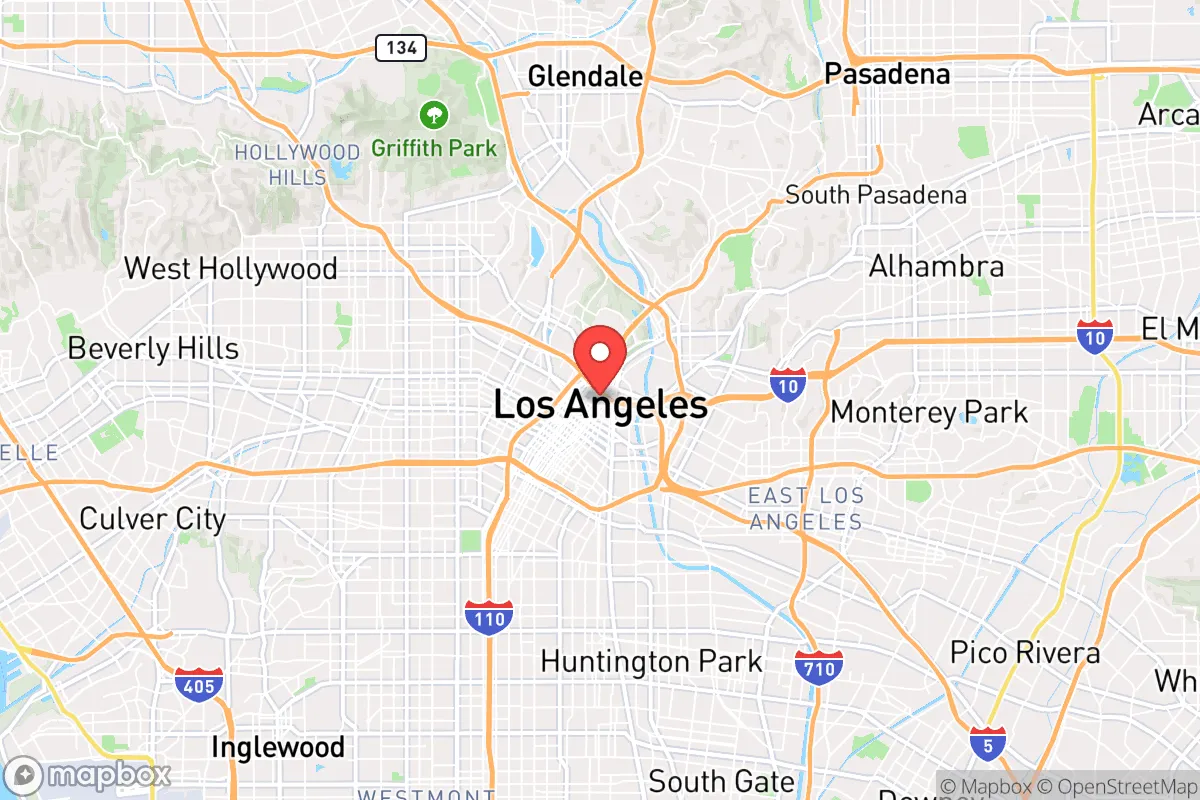
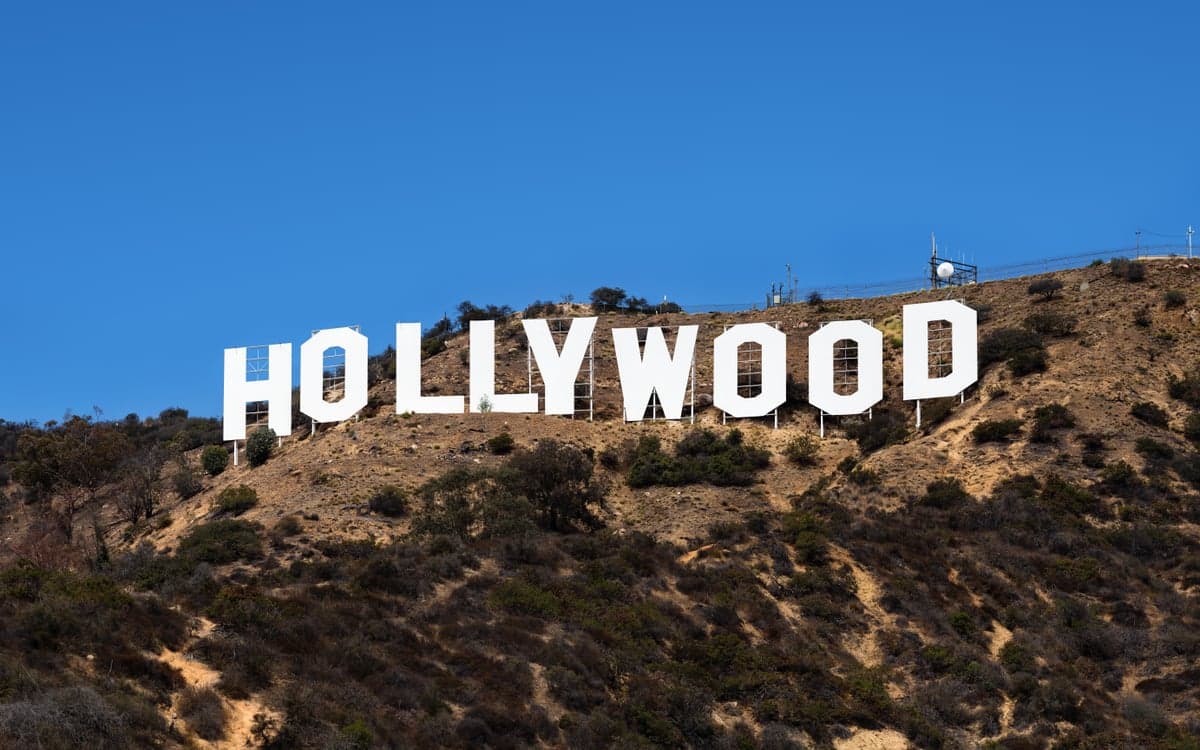
Photo: Wikipedia
Political ClimatePolitical Climate in Los Angeles, CA
District shown is the primary district for this city’s centroid. Cities may span multiple districts.
Local Political AnalysisPolitical Analysis of Los Angeles, CA
Los Angeles is about as deep blue as it gets, with a Cook PVI of D+28, meaning Democrats hold a massive 28-point advantage over Republicans in federal elections. That number has only grown over the past decade as the city has shifted further left, and if you’ve lived here as long as I have, you’ve watched the political center of gravity move from moderate pragmatism to a much more progressive, activist-driven agenda. The trajectory is clear: what was once a place where you could have a reasonable debate about taxes or development is now a city where any deviation from the party line can get you labeled an outcast.
How it compares
If you drive just an hour north to places like Santa Clarita or Lancaster, you’ll find a completely different political reality—those areas lean more Republican, with voters who are far more skeptical of the kind of one-party rule you see in LA proper. Even within the county, the contrast is stark: Orange County to the south used to be a conservative stronghold, and while it’s purpled in recent years, it still feels like a breath of fresh air compared to the echo chamber of LA city politics. The surrounding suburbs like Glendale and Burbank are also blue, but they tend to be more moderate, with a focus on local business and public safety rather than the sweeping social experiments you see coming out of the city council.
What this means for residents
For the average person living here, the political climate translates directly into your daily life—and not always in a good way. You’ve got a city government that’s increasingly comfortable with overreach, from mask mandates that dragged on longer than almost anywhere else in the state to zoning changes that make it harder to own a single-family home without jumping through endless bureaucratic hoops. Property rights feel like they’re under constant attack, and if you run a small business, you’ve probably dealt with new fees, labor rules, or health orders that seem designed to squeeze you out. The schools are another sore spot: the teachers’ union holds enormous sway, and parents who want a say in their kid’s education often find themselves shouted down at school board meetings. It’s gotten to the point where many longtime residents I know are quietly looking at moving to places like Temecula or even out of state, just to get some breathing room from the constant political pressure.
What this means for residents
On a cultural level, LA has always been a place of creative energy and diversity, but the current political climate has a way of making you feel like you’re walking on eggshells. There’s a strong push for progressive policies on everything from homelessness (which has only gotten worse despite billions spent) to policing, where the defund movement gained real traction before reality set in. The city council has flirted with rent control expansions and even a soda tax, and the general vibe is that government knows better than you do. Looking ahead, I don’t see this changing anytime soon—the political machine here is self-reinforcing, with deep-pocketed donors and activist groups keeping the pressure on. If you value personal freedom, a lighter regulatory touch, and the ability to live your life without a politician in your business, Los Angeles is going to feel like a tough place to call home for the foreseeable future.

State Political ClimatePolitical Climate in California
State Political AnalysisPolitical Environment in the State
California is a one-party Democratic superstate where Republicans have become an endangered species in statewide elections, but the reality on the ground is far more fractured than the blue veneer suggests. The state hasn’t voted for a Republican presidential candidate since 1988, and Democrats hold every statewide office and supermajorities in both legislative chambers. However, that 30-point margin in presidential races masks a state that is rapidly splitting between a handful of ultra-liberal coastal metros and a vast, increasingly conservative interior that feels like a different country entirely.
Urban vs. rural divide
The political map of California is essentially a tale of two states. The entire political gravity is generated by the coastal megalopolis stretching from San Francisco through Los Angeles down to San Diego. These three metros alone account for roughly 60% of the state’s population and deliver Democratic margins of 40 to 60 points. San Francisco’s Board of Supervisors is functionally a socialist caucus, while Los Angeles County has become a laboratory for progressive governance, from rent control to defund-the-police experiments. Inland, the story flips completely. The Central Valley — places like Bakersfield, Fresno, and Visalia — votes as red as any district in Texas or Oklahoma. In 2024, Kern County (Bakersfield) voted +26 Republican, while Tulare County (Visalia) hit +30. Even Orange County, once the heart of California conservatism, has flipped purple-to-blue as Asian and Latino voters shifted left on immigration and social issues. The only reliably red strongholds left are the Central Valley, the Inland Empire east of Los Angeles, and the far northern counties like Shasta and Siskiyou, where secession talk is common.
Policy environment
California’s policy environment is the most aggressively progressive in the nation, and it shows in every aspect of daily life. The state income tax tops out at 13.3%, the highest in the country, and the sales tax can exceed 10% in cities like Los Angeles. Property taxes are capped by Prop 13, but recent ballot measures have chipped away at that protection for commercial properties. The regulatory state is immense: California has its own environmental review process (CEQA) that can delay any construction project for years, and the California Air Resources Board (CARB) effectively sets emissions standards for the entire U.S. auto industry. On education, the state has banned parental notification for student gender transitions, a flashpoint that has driven thousands of families to leave for states like Texas and Florida. Healthcare is dominated by the state’s massive Medi-Cal system, and a single-payer push is always simmering in the legislature. Election laws are among the most liberal: universal mail-in voting, same-day registration, and no voter ID requirement — all of which have fueled ongoing trust issues among conservatives.
Trajectory & freedom
California is becoming less free by any objective measure, especially for conservatives. The trend is accelerating. In 2023, Governor Gavin Newsom signed a package of bills that effectively banned concealed carry in most public places (SB 2), a law that is currently tied up in federal court but signals the legislature’s intent. The same year, the state passed AB 1078, which prohibits school boards from banning books that discuss race or gender — but also allows the state to override local decisions on curriculum, a direct assault on parental rights. On medical freedom, California was one of the first states to mandate COVID-19 vaccines for schoolchildren (though implementation was paused), and it maintains some of the strictest vaccine requirements in the country. Property rights are under constant pressure: rent control has been expanded statewide (AB 1482), and the legislature has repeatedly tried to weaken Prop 13. The only area where freedom has expanded is on drug policy — the state has effectively decriminalized most hard drugs through Prop 47, which has led to open-air drug markets in San Francisco and Oakland that most residents consider a crisis, not a liberty.
Civil unrest & political movements
California has been ground zero for political flashpoints that define the national culture war. The 2020 George Floyd protests in Los Angeles and Oakland were among the most destructive in the country, with billions in damage and a lasting “defund the police” movement that has left the LAPD and Oakland PD chronically understaffed. Immigration politics are a constant pressure point: California is a “sanctuary state” (SB 54), meaning local law enforcement cannot cooperate with federal immigration authorities, a policy that has created tension between state government and interior counties like Riverside and San Bernardino. The “Calexit” secession movement, while fringe, has a real presence in the state’s far north, where the “State of Jefferson” movement has been trying to break away for decades. Election integrity is a persistent concern among conservatives: the state’s universal mail-in system, combined with no voter ID and ballot harvesting, has led to widespread distrust, though no major fraud has been proven. The most visible flashpoint for a new resident would be the homelessness crisis in every major city — a direct result of progressive policies on housing, mental health, and drug enforcement that have made public spaces feel unsafe.
Projection
Over the next 5-10 years, California will likely become more Democratic and more progressive, but the state will also continue to shrink in population. The 2020 census cost California a congressional seat for the first time in history, and the exodus of middle-class families — especially conservatives and moderates — to Texas, Arizona, and Idaho is accelerating. The demographic trends favor Democrats: the state’s growing Latino population leans left, and the white working-class voters who once made the Central Valley competitive are aging out. However, the state’s progressive overreach may create a ceiling. The housing crisis is so severe that even liberal tech workers are fleeing San Francisco and San Jose for Austin and Miami. If the state continues to raise taxes and regulate everything, the economic base will erode further. A new resident moving in now should expect a decade of higher taxes, more regulation, and a political environment where conservative viewpoints are increasingly marginalized in law and culture. The practical reality is that California will remain a place where you can make a lot of money — but keeping it and living freely will become harder every year.
For a conservative individual or family considering relocation, California offers unmatched natural beauty and economic opportunity, but at a steep price in terms of personal freedom, tax burden, and cultural alienation. The state’s political trajectory is clear: more government control, less local autonomy, and a relentless push toward progressive orthodoxy. If you value low taxes, parental rights, gun ownership, and a community that shares your values, California is likely a poor fit. If you are wealthy enough to insulate yourself in a gated community in Orange County or San Diego and can afford the tax hit, you might find it tolerable — but the long-term trend is not in your favor.
* Values derived from national, state, county, city and local statistics and may differ in a specific area. Last updated: 2026-04-15T19:25:49.000Z
Narrative content on this page is AI-generated and may contain mistakes. Verify any details that matter before acting on them.
ReloMaps may earn a commission from affiliate links at no extra cost to you.

