Photo: Wikipedia
Demographics of Webster County
Affluence Level in Webster County
A below-average socioeconomic profile. Incomes, home values, and educational attainment trail the U.S., with higher poverty and unemployment.
People of Webster County
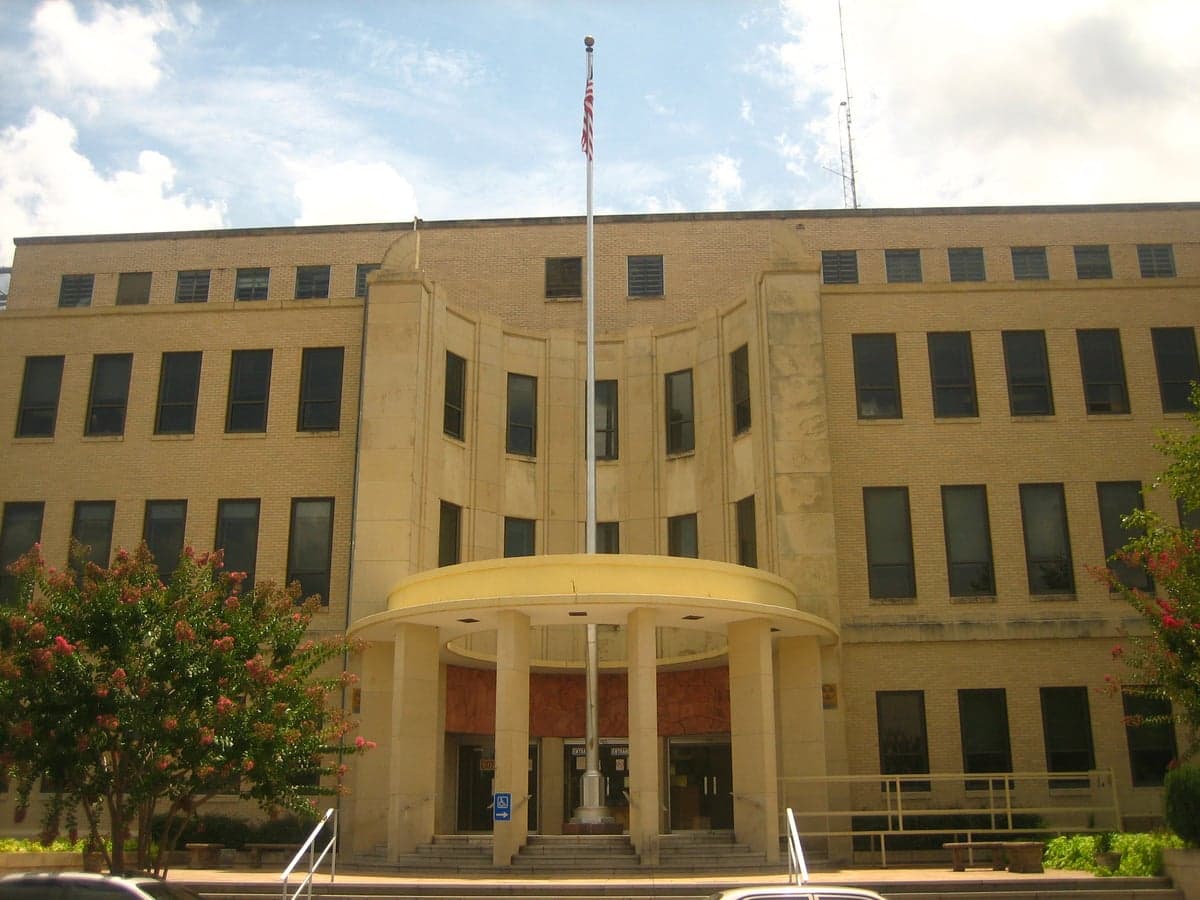
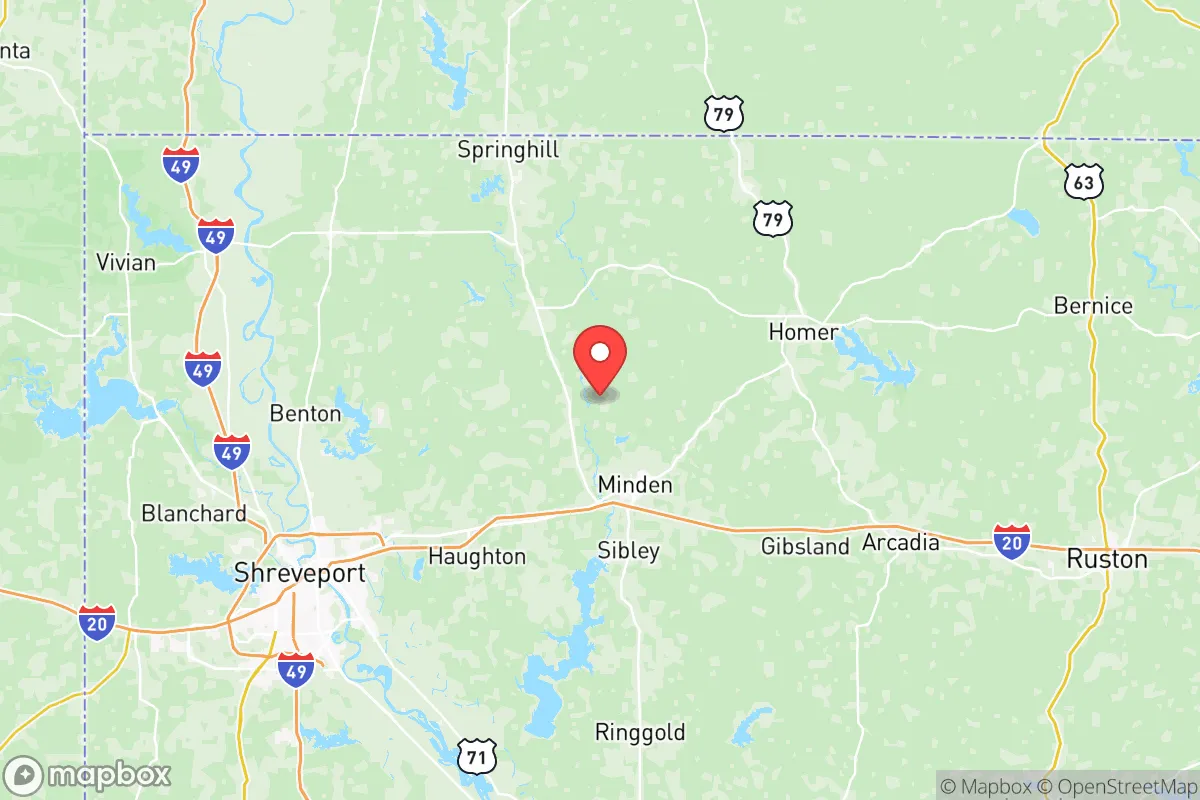
The people of Webster Parish, Louisiana, today number roughly 36,189, forming a community that is predominantly white (61.7%) and Black (33.3%), with a very small Hispanic (2.2%) and East/Southeast Asian (0.3%) presence. The foreign-born population is negligible at 0.6%, and only 12.8% of adults hold a college degree, reflecting a deeply rooted, native-born population with strong ties to the land and local industries. The parish's identity is shaped by its rural character, its history as a timber and oil region, and a cultural conservatism that is typical of north Louisiana, with the towns of Minden, Springhill, and Homer serving as the primary population centers.
Settlement & growth (pre-1960)
Before American settlement, the area that is now Webster Parish was part of the traditional territory of the Caddo Confederacy, a group of Native American tribes who lived in settled villages along the Red River and its tributaries. The Caddo were largely displaced by the 1830s through treaties and forced removal, opening the land to Anglo-American settlers. The parish itself was created in 1871 from parts of Claiborne, Bienville, and Bossier parishes, named after the statesman Daniel Webster, and its early population was almost entirely of British Isles descent—primarily English and Scots-Irish—who moved into the area from older Southern states like Georgia, the Carolinas, and Tennessee.
The first major wave of settlement came in the 1830s and 1840s, with farmers drawn to the fertile piney woods and bottomlands for cotton cultivation. The town of Minden, founded in 1836, became the parish seat and the commercial hub, attracting merchants and professionals. A second wave arrived after the Civil War, during Reconstruction, when freedmen from surrounding plantations established communities in and around Minden, Springhill, and Cullen, forming the foundation of the parish's substantial Black population. By 1900, the population was roughly 60% white and 40% Black, a ratio that has remained relatively stable for over a century.
The timber industry drove the next major demographic shift. In the late 19th and early 20th centuries, vast pine forests drew logging companies and sawmills, bringing in a small number of workers from other parts of the South. The town of Springhill grew rapidly after the discovery of oil in the 1930s, attracting workers from Texas and Oklahoma. The discovery of the Cotton Valley oil field in the 1920s also spurred growth in Cotton Valley and Sarepta, creating a boom-and-bust cycle that shaped the parish's economy. During the Great Depression and World War II, the population remained stable, with many residents working in timber, oil, and agriculture. The post-war period saw a modest suburbanization around Minden, but the parish remained overwhelmingly rural and insular, with little in-migration from outside the South.
Modern era (post-1965)
The 1965 Hart-Cellar Act, which dramatically increased immigration from Asia, Latin America, and Africa, had almost no effect on Webster Parish. The foreign-born population today is just 0.6%, one of the lowest rates in Louisiana. Unlike much of the Sun Belt, Webster Parish did not experience a wave of Rust Belt migration or coastal flight. Instead, the modern era has been defined by out-migration of young adults seeking jobs in larger cities like Shreveport, Dallas, and Houston, and a gradual aging of the population.
The Hispanic population, at 2.2%, is a recent and small addition, primarily consisting of Mexican and Central American workers drawn to the poultry processing plants in Minden and the timber industry in Springhill. These workers have not formed distinct ethnic enclaves but are dispersed across the parish, often living in rental housing near industrial sites. The East/Southeast Asian population, at 0.3%, is even smaller, with a handful of families in Minden and Homer who are mostly connected to the medical and academic sectors. The Indian subcontinent population is effectively zero.
The most significant demographic shift since 1965 has been the decline in the white population's share, from roughly 65% in 1970 to 61.7% today, while the Black population has held steady at around 33%. This is not due to immigration but to a slightly higher birth rate among Black families and a higher rate of white out-migration to suburban areas of Shreveport and Bossier City. The parish has also seen a modest influx of retirees from other parts of Louisiana, drawn by low property taxes and a slower pace of life, particularly in the lake communities around Lake Bistineau and Caney Lake.
The future
The population of Webster Parish is projected to remain stable or decline slightly over the next 10-20 years, as out-migration of young adults continues to offset any natural increase. The parish is not homogenizing into a single cultural identity; rather, it is tribalizing along racial lines, with white and Black communities maintaining distinct social and residential patterns. The small Hispanic population is likely to grow slowly, as poultry and timber industries continue to attract labor, but it will remain a minor presence. The East/Southeast Asian population is unlikely to grow significantly, given the lack of professional job opportunities that typically draw Asian immigrants.
The cultural identity of the parish is being shaped by the absorption of newcomers into the existing conservative, rural Southern culture, rather than by newcomers changing it. The low college attainment rate (12.8%) and the dominance of blue-collar industries mean that the parish will likely remain a place of modest economic opportunity, with a population that values tradition, family, and local autonomy. For someone moving in now, Webster Parish offers a stable, slow-changing community where the population is deeply rooted and the pace of life is determined by the rhythms of timber, oil, and small-town commerce.
In summary, Webster Parish is becoming a quieter, older version of itself—a place where the population is stable, the racial composition is entrenched, and the cultural identity is resistant to change. For a conservative-leaning individual or family seeking a low-cost, low-crime, and low-diversity environment with strong community ties, the parish remains a viable option, but it offers little of the dynamism or demographic variety found in growing parts of the Sun Belt.

* Values derived from national, state, county, city and local statistics and may differ in a specific area. Last updated: 2026-05-24T16:09:50.000Z
Narrative content on this page is AI-generated and may contain mistakes. Verify any details that matter before acting on them.
ReloMaps may earn a commission from affiliate links at no extra cost to you.

