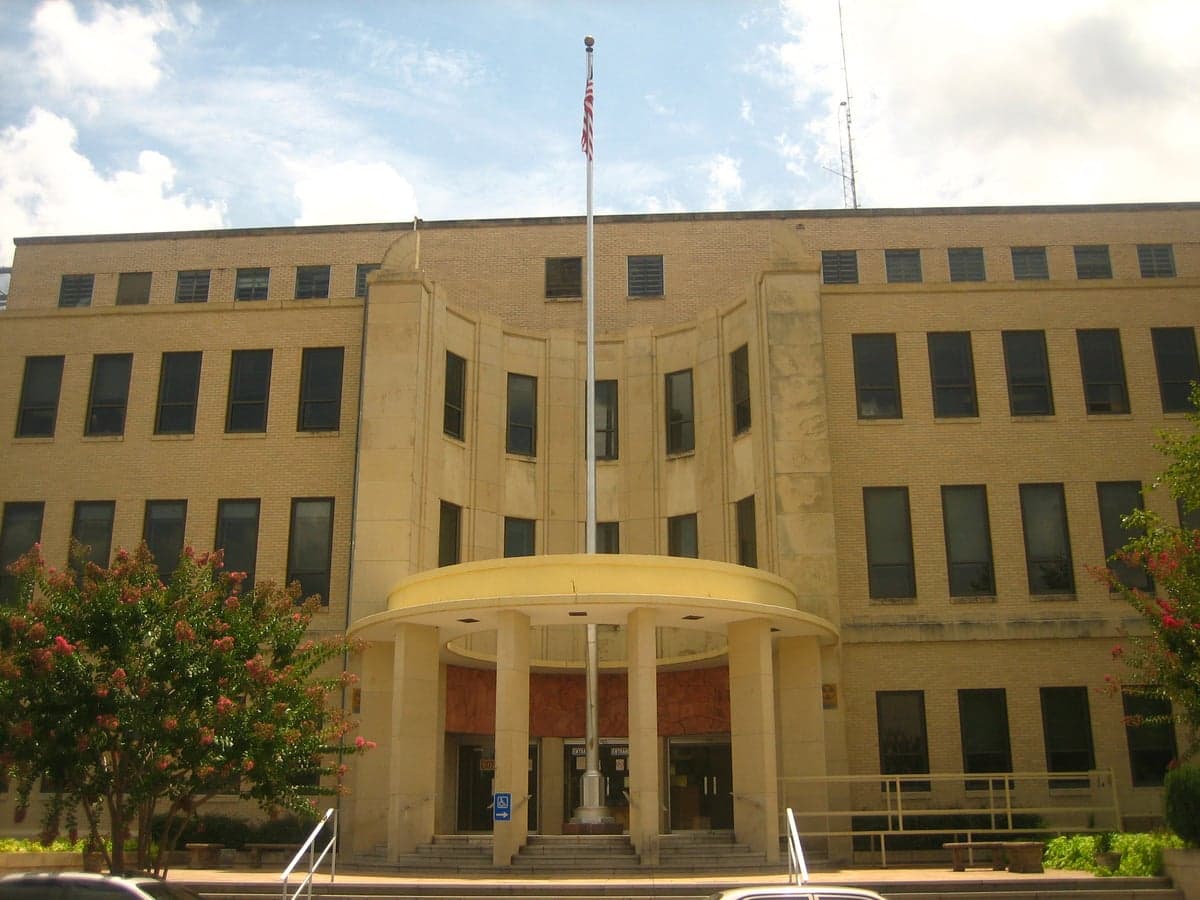
Photo: Wikipedia
Personal Sovereignty in Webster County
Strong independent fundamentals that actively favor personal liberty and low regulation.
What does Personal Sovereignty tell us?
Personal Sovereignty measures your capacity for self-reliance and independence with minimal government friction. Higher scores mean fewer barriers between you and the way you want to live... but it assumes you have the space you need and good neighbors.
What does this tell us?
Personal Sovereignty measures your capacity for self-reliance and independence with minimal government friction. Higher scores mean fewer barriers between you and the way you want to live... but it assumes you have the space you need and good neighbors.
State Policy
Energy independence: Net exporter (280% of energy produced in-state)
Personal Liberty
Homesteading

Personal Liberty Analysis
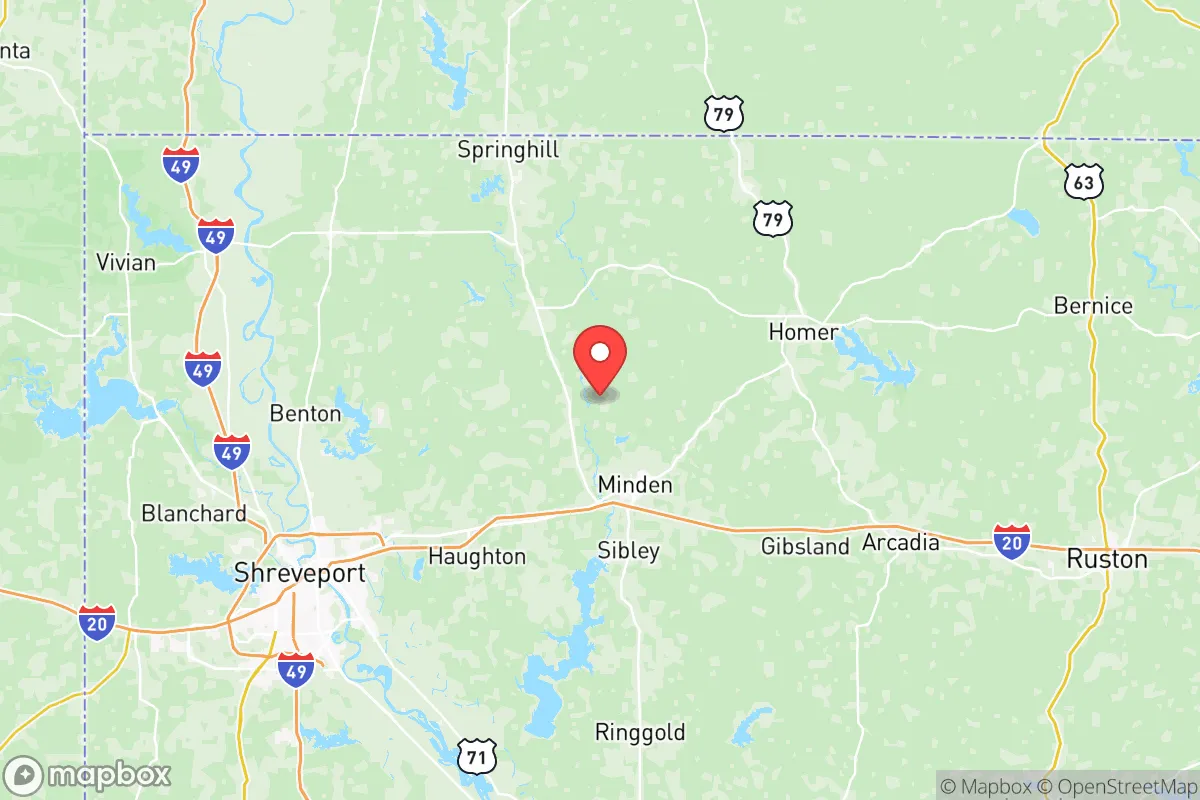
Webster Parish, Louisiana, offers a notably high degree of personal sovereignty compared to much of the coastal South and urban centers like Shreveport or Baton Rouge, largely due to its rural character, light-touch local governance, and deep-rooted traditions of self-reliance. For the individual or family prioritizing autonomy—whether in financial decisions, self-defense, or daily lifestyle—this corner of northwest Louisiana presents a strategic environment where government overreach is minimal and community norms favor personal responsibility. The area’s political culture is consistently conservative, with local officials generally resistant to state-level mandates that infringe on property rights, firearm ownership, or parental authority. However, the degree of sovereignty varies across the parish, with towns like Minden, Springhill, and Sibley each offering distinct trade-offs in regulatory posture and community enforcement.
Tax burden and regulatory posture: How Webster County compares to Louisiana’s coastal cities
Webster Parish’s tax environment is a clear advantage for those seeking to minimize government extraction. Louisiana’s state income tax is a flat 3% for individuals, with no local income tax in Webster, meaning residents keep more of their earnings than in states with progressive brackets. Property taxes are among the lowest in the state, with the parish’s effective rate hovering around 0.45% of assessed value—roughly half the rate in Caddo Parish (Shreveport) and a fraction of what you’d pay in Orleans or Jefferson parishes. Sales tax is moderate at 9.45% (state + parish + local), but this is offset by the absence of inventory taxes on personal property like vehicles or boats, a common burden in more regulated states. Regulatory posture is equally favorable: Webster has no county-level zoning in unincorporated areas, meaning you can build, repair, or operate a home-based business without navigating a thicket of permits. Towns like Minden and Springhill do have zoning codes, but they are far less restrictive than those in Shreveport or Baton Rouge—no historic district overlays, no tree ordinances, and no noise curfews that would hamper a prepper’s workshop or livestock operation. The parish’s economic development office actively courts small-scale manufacturing and agricultural enterprises, signaling a pro-business, anti-red-tape stance that aligns with a survivalist mindset.
Self-defense and gun law specifics: What Webster County offers for armed preparedness
Louisiana is a shall-issue state for concealed carry, and Webster Parish fully embraces that framework. The parish sheriff’s office processes permits efficiently, with no local ordinances that restrict magazine capacity, firearm types, or ammunition sales—a stark contrast to states like California or New York. Open carry is legal without a permit for anyone 18 or older who can legally possess a firearm, and the state’s “stand your ground” law applies with no duty to retreat in any place where you have a right to be. Webster’s rural geography amplifies these rights: in unincorporated areas like the communities of Cotton Valley, Heflin, or Dubberly, there are no noise ordinances that would prevent target practice on your own property, and no restrictions on building a private shooting range. The local gun culture is robust, with Minden hosting multiple gun shops and a well-attended annual gun show at the Webster Parish Fairgrounds. For those concerned about government overreach, it’s worth noting that the parish sheriff has publicly stated he will not enforce federal red-flag laws or magazine bans, a stance common among rural Louisiana sheriffs. The only practical limitation is that NFA items (suppressors, short-barreled rifles) require federal approval, but local dealers are experienced in handling Form 4 transfers. In towns like Springhill, where the population is smaller and more homogenous, you’ll find even less scrutiny of firearm ownership—neighbors assume you’re armed, and that’s considered normal.
Self-reliance and homesteading viability: Lot sizes, zoning, and off-grid feasibility in Webster Parish
Webster Parish is a prime location for homesteading and off-grid living, with land costs and regulatory barriers that are among the lowest in the South. Unincorporated areas have no county zoning, meaning you can raise livestock, build a root cellar, install solar panels, or drill a well without permits—as long as you meet state health codes for septic systems. Lot sizes vary widely: you can find 1- to 5-acre parcels near Minden for $3,000–$5,000 per acre, while larger tracts (20–100 acres) in the rural southern part of the parish, around Sibley and Dubberly, often sell for under $2,000 per acre. Off-grid feasibility is high: the parish has no building codes in unincorporated areas, so you can construct a cabin, yurt, or earthship without inspections. Solar is practical, with average annual sunlight of 218 days, and the local utility, SWEPCO, allows net metering for grid-tied systems. Water is accessible via shallow wells (typically 50–150 feet deep) with good yields, and rainwater catchment is unrestricted. The only regulatory hurdle is the Louisiana Department of Health’s septic system requirements, which mandate a soil test and permit (around $200), but this is a minor cost for the autonomy gained. In towns like Cotton Valley and Heflin, you’ll find a strong DIY culture—neighbors trade skills like welding, mechanics, and animal husbandry—and the local feed stores in Minden stock everything from chicks to fencing to grain. For preppers, the lack of HOA enforcement in rural areas is critical: no one will fine you for storing supplies, keeping a generator running, or maintaining a visible garden. The only exception is within the city limits of Minden and Springhill, where zoning restricts livestock to parcels over 1 acre and prohibits certain outbuildings near property lines, but even these rules are loosely enforced compared to suburban Houston or Dallas.
Personal liberties: Parental rights, medical autonomy, speech, and property in Webster County
Webster Parish’s cultural and legal environment strongly supports parental rights, medical freedom, and property autonomy. Louisiana law gives parents broad authority over their children’s education, healthcare, and religious upbringing, with no state-level mandates for vaccine passports or school mask requirements—a stance that local school boards in Minden, Springhill, and Sibley have upheld. Homeschooling is straightforward: you simply submit a simple notice to the parish school board, with no curriculum approval or testing requirements, making it a viable option for families who want to avoid government influence in their children’s education. Medical autonomy is similarly robust: Louisiana has no state-level restrictions on alternative treatments, and Webster Parish has no local ordinances limiting the sale of supplements, herbs, or over-the-counter remedies. The parish’s two hospitals—Minden Medical Center and Springhill Medical Center—are small but functional, and for those seeking more control, the state’s “right to try” law allows terminally ill patients to access experimental treatments without FDA interference. Free speech is protected by a strong local culture of open debate; town hall meetings in Minden and Cotton Valley are well-attended, and residents are not shy about confronting officials on issues like property taxes or school policies. Property rights are the bedrock of Webster’s sovereignty: the parish has no eminent domain abuse cases on record, and the local assessor’s office is known for fair valuations. The only notable limitation is that Louisiana is a community property state, which can complicate estate planning for married couples, but this is a state-level issue, not a local one. For the survivalist, the key takeaway is that Webster Parish’s social fabric still values individual judgment over collective mandates—a rarity in an era of increasing federal and state overreach.
Overall, Webster Parish ranks among the top 10% of Louisiana parishes for personal sovereignty, offering a combination of low taxes, minimal zoning, strong gun rights, and a culture of self-reliance that is increasingly hard to find in the United States. Compared to the heavily regulated environments of Shreveport or Baton Rouge, or even the more suburban parishes like Bossier or Ouachita, Webster provides a buffer against government intrusion that appeals directly to the prepper and conservative mindset. The trade-off is limited access to specialized medical care, fewer job opportunities in high-tech fields, and a slower pace of life that may not suit everyone. But for those who value autonomy over convenience, and who are willing to invest sweat equity into land and community, Webster Parish offers a strategic base where you can live largely on your own terms—without the constant threat of new regulations, taxes, or restrictions that plague more populated areas. The key is to choose your location carefully: unincorporated areas near Sibley or Dubberly offer maximum freedom, while towns like Minden and Springhill provide a middle ground with basic services but still light governance. For the serious prepper or sovereignty-minded individual, Webster Parish is a strong contender in the search for a refuge from the expanding reach of the state.

* Values derived from national, state, county, city and local statistics and may differ in a specific area. Last updated: 2026-05-24T16:09:50.000Z
Narrative content on this page is AI-generated and may contain mistakes. Verify any details that matter before acting on them.
ReloMaps may earn a commission from affiliate links at no extra cost to you.

