Photo: Wikipedia
Political ClimatePolitical Climate in Webster County
Showing district-level results — no local-only data available.
Local Political AnalysisPolitical Analysis of Webster County
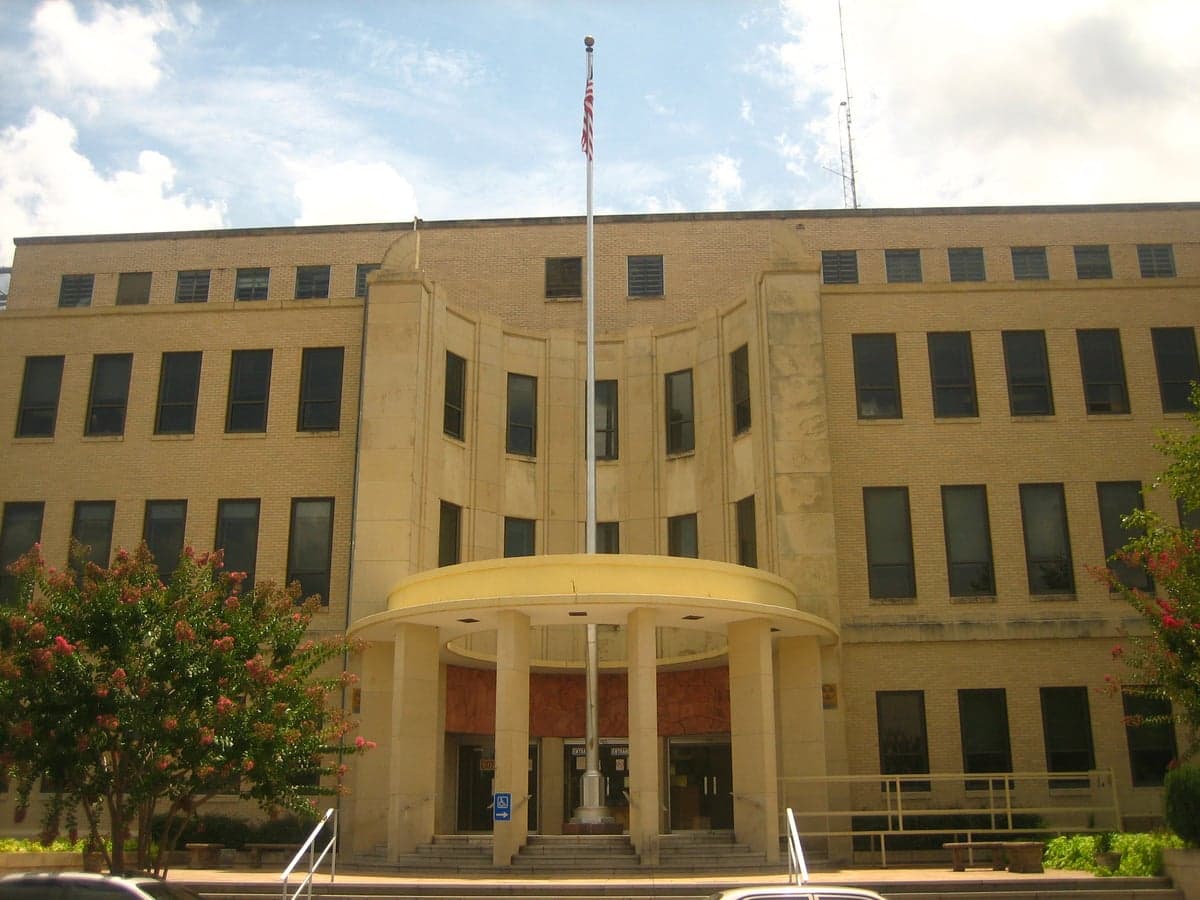
Webster Parish is about as reliably red as it gets in Louisiana, and I’ve watched that hold true for decades. The Cook PVI sits at R+26, which is a full 16 points more conservative than the state’s already solid R+10 rating. You don’t see much swing here—this is Trump +40 to +50 territory in most precincts, and the local Democratic Party is basically a ghost town outside of a few holdouts in Minden and the historically Black communities around Cotton Valley. The trajectory hasn’t budged an inch since the 1990s, and honestly, I don’t expect it to shift much in the next ten years. The people here value their Second Amendment rights, their low taxes, and their freedom to live without a bunch of government telling them how to run their lives.
How it compares
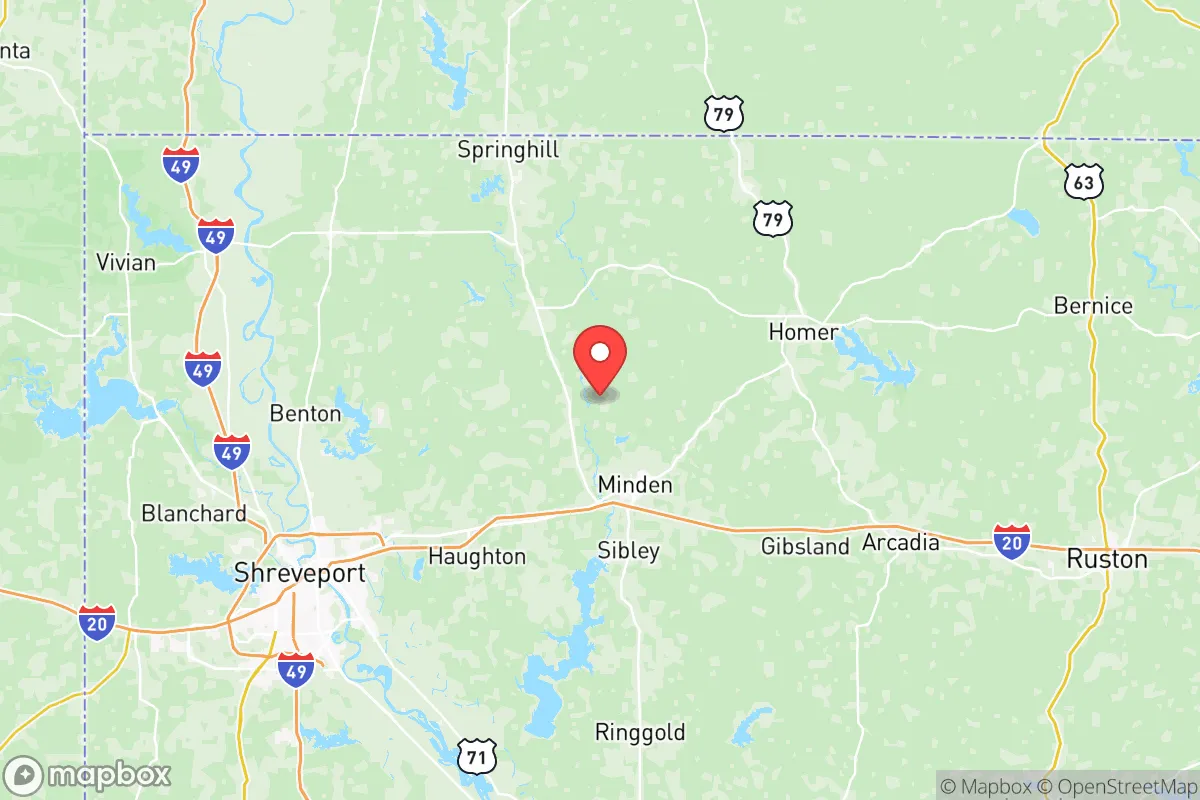
Compared to Louisiana as a whole, Webster Parish is a different animal. The state’s R+10 PVI is driven by places like Baton Rouge and New Orleans, which lean blue and drag the average left. Here in Webster, you’ve got towns like Minden (the parish seat) that vote about 65-70% Republican in most elections, but even that’s a moderate outlier. Head out to Sibley or Dixie Inn, and you’re looking at 80%+ GOP margins. The only real blue pockets are in Cotton Valley and parts of Minden’s Ward 1 and Ward 2 precincts, where African-American voters make up a significant share—those areas might go 60-70% Democrat in a presidential race. But those are small, isolated precincts. The swing precincts? There aren’t many. Springhill used to be a bit more competitive, but it’s trended hard red over the last decade as the old industrial base faded and new residents moved in from more conservative rural areas. Statewide, Louisiana’s R+10 means you get a mix of conservative and moderate Democrats in some local offices, but here in Webster, even the “Democrats” running for parish council are often pro-gun, pro-life, and anti-tax. It’s a whole different ballgame.
What this means for residents
For folks living here, the political climate means you can pretty much count on local government staying out of your business. The parish council and school board are dominated by conservatives who aren’t interested in pushing progressive social agendas or raising taxes. You don’t see mask mandates, vaccine passports, or DEI initiatives being forced on schools or businesses here—that kind of overreach gets shut down fast. The downside is that if you’re hoping for big government programs or handouts, you’re in the wrong place. The local economy runs on timber, oil and gas, and small manufacturing, and the attitude is that you work for what you get. There’s a strong sense of personal responsibility, and people tend to look out for each other through churches and community groups rather than expecting the state to step in. That said, the lack of political diversity can make it feel a bit insular. If you’re a progressive moving in, you’ll find the culture shock real—and you might not feel all that welcome at the local diner.
One thing that stands out culturally is how much the parish values its independence. You see it in the way they fought the federal government over the Red River water project back in the 2000s, and in how the local sheriffs have always been vocal about not enforcing federal gun laws they see as unconstitutional. The policy distinctions between Webster and the rest of Louisiana are subtle but real: the parish has stricter local ordinances on things like short-term rentals and noise, but it’s also quicker to push back on state mandates that feel like overreach. If you’re looking for a place where the government stays small and the people stay free, Webster Parish is about as close as you’ll get in Louisiana. Just don’t expect it to change anytime soon—and honestly, most of us hope it doesn’t.

State Political ClimatePolitical Climate in Louisiana
State Political AnalysisPolitical Environment in the State
Louisiana is a deeply red state with a Cook PVI of R+10, but its political landscape is far from monolithic. The state has been reliably Republican in presidential elections since 2000, but a strong Democratic tradition persists in New Orleans and the Mississippi River parishes, creating a dynamic where statewide races are often competitive but the overall trajectory has been steadily rightward over the past two decades. The shift is driven by the exodus of moderate white Democrats to the GOP and the growing influence of conservative rural and suburban voters, though the state’s unique Cajun and Creole cultures still produce occasional populist crossovers.
Urban vs. rural divide
The political map of Louisiana is a classic story of urban islands in a rural red sea. New Orleans (Orleans Parish) is the state’s Democratic stronghold, consistently delivering 80%+ of its vote to Democratic presidential candidates, powered by a coalition of Black voters, progressive whites, and younger transplants. Baton Rouge (East Baton Rouge Parish) is a battleground, with the city core voting blue while the sprawling suburbs like Prairieville and Central vote overwhelmingly red. Lafayette is a fascinating microcosm: the city itself leans slightly Democratic, but the surrounding Acadiana parishes (Lafayette, St. Martin, Vermilion) are solidly Republican, driven by oil-and-gas workers and cultural conservatives. Shreveport (Caddo Parish) is another blue dot, but the rest of northwest Louisiana, including Bossier City and the Ark-La-Tex region, is deeply red. The rural parishes—like Winn, LaSalle, and Beauregard—routinely vote 80%+ Republican, powered by evangelical churches, gun culture, and a fierce distrust of federal authority. The divide isn’t just about race; it’s about economic base. The oil, gas, and petrochemical industries anchor the rural and suburban GOP vote, while the service and tourism economy of New Orleans fuels its Democratic lean.
Policy environment
Louisiana’s policy environment is a mixed bag for conservatives. On the plus side, the state has no state property tax, and the homestead exemption is generous—the first $75,000 of a home’s value is exempt from parish property taxes. The income tax is a flat 3% for individuals, down from a progressive rate just a few years ago, thanks to 2021 tax reform. Sales taxes are high, often pushing 10% in parishes like Orleans and Jefferson, but the overall tax burden is low. Regulation is generally light, especially for oil and gas, though the coastal erosion crisis has led to some state-level environmental oversight that industry groups grumble about. Education policy is a bright spot: Louisiana has a robust school choice program, including the Louisiana Scholarship Program and a thriving charter school sector, especially in New Orleans, which is now nearly all-charter. Healthcare is a sore point—the state expanded Medicaid under the Affordable Care Act in 2016, a decision that many conservatives view as a federal overreach, though it has dramatically reduced the uninsured rate. Election laws are solid: voter ID is required, and the state has no widespread mail-in voting, though early voting is available. The legislature is firmly GOP-controlled, with a veto-proof supermajority in both chambers since 2024.
Trajectory & freedom
Louisiana has been on a clear trajectory toward greater personal freedom in several key areas, but with some worrying countercurrents. Gun rights are robust: the state passed constitutional carry in 2021, allowing permitless concealed carry for anyone 18 or older who can legally possess a firearm. The 2024 legislative session saw a bill to ban “gun-free zones” on public property, though it stalled. Parental rights got a major win with the 2023 “Parents’ Bill of Rights”, which requires schools to notify parents of any medical or mental health services offered to their child and prohibits instruction on sexual orientation or gender identity in K-12 classrooms. This is a direct response to the progressive overreach seen in other states. On the downside, medical freedom took a hit during COVID: Governor John Bel Edwards, a Democrat, imposed mask mandates, business closures, and a vaccine passport system that many conservatives viewed as an infringement on bodily autonomy. The current governor, Jeff Landry (R), has reversed course, signing an executive order banning vaccine mandates for state employees and contractors. Property rights are generally strong, but the state’s use of eminent domain for coastal restoration projects has raised eyebrows. The biggest freedom concern is the state’s high incarceration rate—the highest in the nation—which many conservatives see as a failure of criminal justice reform, though the 2017 Justice Reinvestment Initiative has begun to reduce the prison population.
Civil unrest & political movements
Louisiana has a history of political flashpoints, but recent years have been relatively calm compared to other states. The 2020 George Floyd protests in New Orleans and Baton Rouge saw some property damage and clashes with police, but they were smaller and shorter than in Portland or Seattle. The state’s strong police culture and the presence of the Louisiana National Guard kept things from spiraling. Immigration politics are less heated here than in border states, but the 2023 legislative session saw a bill to ban “sanctuary cities,” though no Louisiana city has declared itself one. The most visible political movement is the rise of the “Cajun Navy,” a grassroots volunteer group that has become a symbol of self-reliance and community resilience after hurricanes. On the right, the Louisiana Republican Party has been increasingly influenced by the “MAGA” wing, with Landry’s 2023 election seen as a victory for that faction. On the left, the New Orleans-based “Louisiana Progress” network pushes for criminal justice reform and Medicaid expansion. Election integrity is a live issue: the 2020 election saw no major scandals, but the legislature passed a 2022 law requiring stricter voter ID and banning ballot harvesting. The most visible flashpoint for a new resident would be the constant debate over coastal restoration taxes and the state’s reliance on oil and gas revenue—a tension that plays out in every election cycle.
Projection
Over the next 5-10 years, Louisiana is likely to become more Republican and more culturally conservative. The in-migration patterns are telling: people are moving to the state from California, New York, and Illinois, drawn by low taxes and a slower pace of life, and they tend to be conservative-leaning. The growth areas are the suburbs of Baton Rouge (Ascension, Livingston, and Tangipahoa parishes) and the Lake Charles area, which is booming with LNG export facilities. New Orleans will continue to be a blue island, but its population is stagnant or declining, reducing its statewide influence. The biggest wildcard is climate change: if coastal erosion accelerates, it could force a massive relocation of people from the southern parishes, potentially reshaping the political map. The state’s aging population—Louisiana has one of the oldest median ages in the South—means that younger, more diverse voters could shift things slightly leftward in the long run, but for the next decade, the trend is clearly red. Expect more school choice expansion, further tax cuts, and continued resistance to federal mandates on everything from energy to education.
Bottom line for a new resident: If you’re moving to Louisiana for the low taxes, strong gun rights, and traditional values, you’ll find a state that’s largely aligned with your priorities. The urban-rural divide means you’ll need to choose your parish carefully—stick to the suburbs or rural areas if you want to avoid the progressive politics of New Orleans. The state government is actively working to expand personal freedom, but you’ll still have to deal with high sales taxes, a crumbling coastal infrastructure, and a healthcare system that’s heavily reliant on federal dollars. It’s a place where your vote matters, and where the culture war is being won by conservatives—for now.
* Values derived from national, state, county, city and local statistics and may differ in a specific area. Last updated: 2026-05-24T16:09:50.000Z
Narrative content on this page is AI-generated and may contain mistakes. Verify any details that matter before acting on them.
ReloMaps may earn a commission from affiliate links at no extra cost to you.

