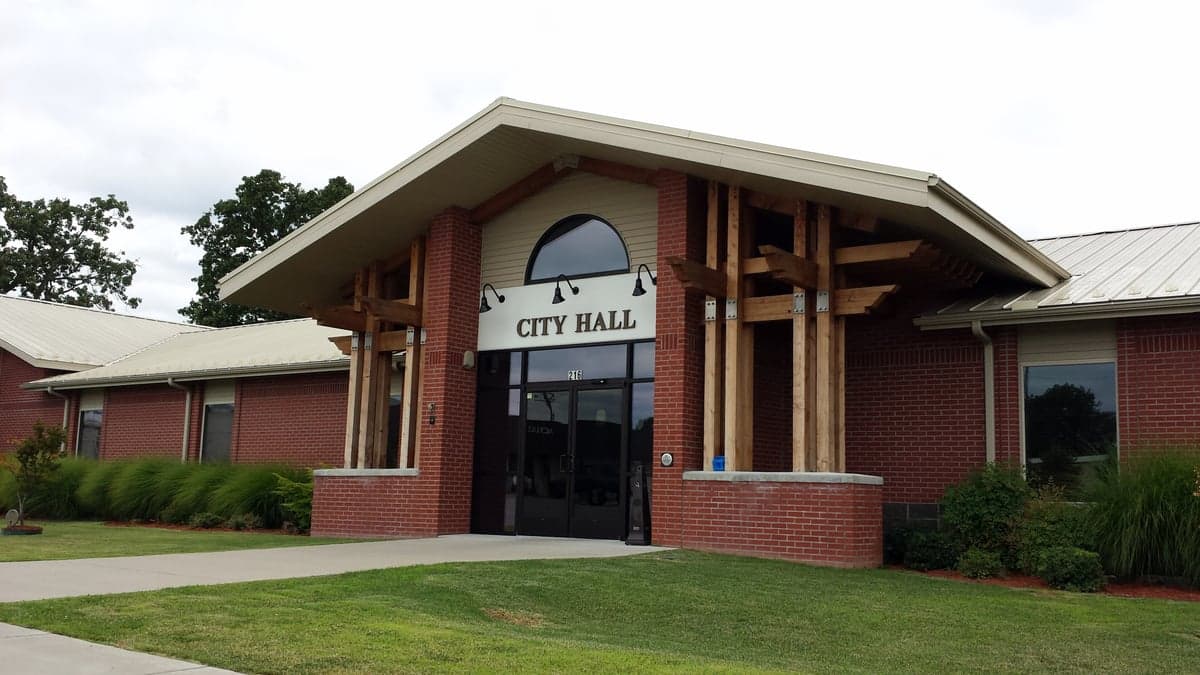
Photo: Wikipedia
Personal Sovereignty in Lowell, AR
Viable for self-reliance. Generally workable, though some barriers may limit total independence.
What does Personal Sovereignty tell us?
Personal Sovereignty measures your capacity for self-reliance and independence with minimal government friction. Higher scores mean fewer barriers between you and the way you want to live... but it assumes you have the space you need and good neighbors.
What does this tell us?
Personal Sovereignty measures your capacity for self-reliance and independence with minimal government friction. Higher scores mean fewer barriers between you and the way you want to live... but it assumes you have the space you need and good neighbors.
State Policy
Energy independence: Importer (35% of energy produced in-state)
Personal Liberty
Homesteading

Personal Liberty Analysis
Lowell, Arkansas, offers a notably high degree of personal sovereignty, particularly when viewed through a lens of self-reliance and limited government interference. Nestled in the northwest corner of the state, this community benefits from a state-level legal framework that actively prioritizes individual autonomy over collective mandates, making it a compelling option for those seeking to minimize government overreach in their daily lives. The environment here is one where the default assumption leans toward personal responsibility, not bureaucratic permission, which is a stark contrast to many coastal and urban jurisdictions.
Tax burden and regulatory posture: How Arkansas law protects your income and property
Arkansas maintains a consistently low-tax posture that directly enhances personal financial sovereignty. The state’s income tax is a flat 4.4% as of 2025, with a path toward further reduction, and there is no state-level tax on Social Security benefits. For preppers and survivalists, this means more capital retained for land, supplies, and infrastructure rather than funding state programs. Property taxes in Benton County, where Lowell sits, are among the lowest in the nation, typically hovering around 0.5% to 0.7% of assessed value. This low burden means owning a larger parcel of land—critical for self-sufficiency—is financially feasible without the crushing annual tax bills seen in states like Texas or Illinois. On the regulatory front, Arkansas is a right-to-work state with minimal business licensing requirements, and there are no state-level building codes in unincorporated areas of the county, though Lowell’s city limits do enforce some zoning. The key takeaway: the state government’s hands-off approach to both taxation and regulation gives residents a strong foundation for building independent, self-directed lives.
Self-defense and gun law specifics: Constitutional carry and castle doctrine in practice
Arkansas is a constitutional carry state, meaning no permit is required to carry a concealed firearm for anyone legally allowed to possess one. This is a foundational element of personal sovereignty for the prepper mindset—the right to self-defense is not contingent on government permission or a fee. The state’s castle doctrine is robust, with no duty to retreat in any place where a person is lawfully present. This extends to vehicles and workplaces, not just the home. For those considering Lowell, the legal environment is unambiguous: the use of deadly force is presumed justified if an intruder unlawfully enters your dwelling or occupied vehicle. Additionally, Arkansas law preempts local governments from enacting stricter gun ordinances than the state, so Lowell’s city council cannot impose magazine bans or waiting periods. This uniformity means your rights are consistent whether you’re in downtown Lowell or on a rural homestead in the county. For the survivalist, this legal clarity removes a layer of uncertainty when planning defensive strategies.
Self-reliance and homesteading viability: Lot sizes, zoning, and off-grid feasibility in Lowell
Lowell sits at the edge of the Ozarks, offering a mix of suburban convenience and rural possibility. Within city limits, lot sizes vary, but many newer subdivisions feature quarter-acre to half-acre lots, which are sufficient for substantial vegetable gardens, small orchards, and even a few chickens—though city ordinances do restrict livestock. The real opportunity lies just outside Lowell’s borders in unincorporated Benton County, where zoning is minimal and lot sizes can range from one to twenty acres. Here, off-grid living is legally feasible: there are no state mandates requiring grid connection for water or power. Rainwater catchment, solar arrays, and composting toilets are all permissible, provided they meet basic health department standards for septic systems. The county’s building codes are largely absent for agricultural structures, meaning a pole barn, root cellar, or workshop can be erected without permits. However, note that the city of Lowell does enforce some subdivision covenants that may restrict things like vehicle storage or exterior appearance, so those seeking maximum autonomy should prioritize land outside city limits but within the school district. The soil in this region is rocky but workable, and the growing season is long enough for most staple crops, making true subsistence farming a realistic goal.
Personal liberties: Parental rights, medical autonomy, speech, and property protections
Arkansas has been a national leader in protecting parental rights, with a state law that explicitly affirms parents’ fundamental right to direct the upbringing, education, and healthcare of their children. This means no government-mandated vaccine schedules for school attendance beyond standard requirements, and parents can opt out of any curriculum they find objectionable. Medical autonomy is similarly strong: Arkansas has some of the most restrictive laws on vaccine mandates in the country, prohibiting employers and government entities from requiring COVID-19 vaccines, and the state does not participate in federal vaccine databases that could track individual medical decisions. On speech, Arkansas is a strong free-speech state, with no hate speech laws that criminalize political or social commentary, and the state has passed laws protecting citizens from social media censorship. Property rights are enshrined in the state constitution, with strong protections against eminent domain abuse—the state cannot seize land for private economic development. For the prepper, this means your property is your castle in the truest sense: you can build, store, and live as you see fit, without fear of government seizure for a shopping mall or solar farm.
In the broader context of American personal sovereignty, Lowell, Arkansas, ranks among the most favorable environments for those prioritizing autonomy. Compared to the Pacific Northwest or the Northeast, where regulatory overreach on firearms, land use, and medical choice is pervasive, Northwest Arkansas offers a legal landscape that actively supports self-reliance. The combination of constitutional carry, low taxes, minimal zoning outside city limits, and strong parental rights creates a rare trifecta for the survivalist-minded individual or family. While no location is perfect—city ordinances in Lowell itself do impose some constraints—the overall trajectory of state law is toward expanding, not restricting, personal sovereignty. For those looking to build a resilient, independent life in a community that respects your right to make your own choices, this area warrants serious consideration.

* Values derived from national, state, county, city and local statistics and may differ in a specific area. Last updated: 2026-04-30T07:59:41.000Z
Narrative content on this page is AI-generated and may contain mistakes. Verify any details that matter before acting on them.
ReloMaps may earn a commission from affiliate links at no extra cost to you.

