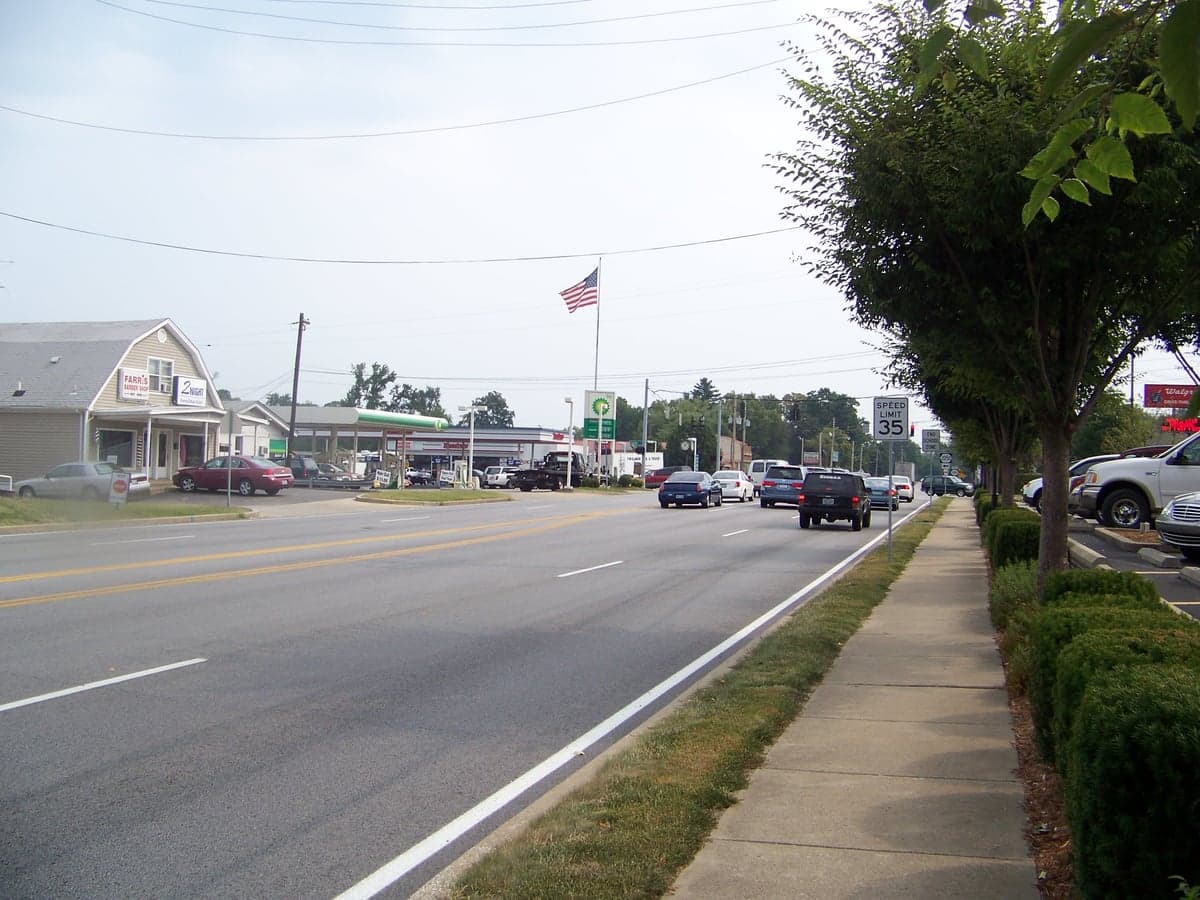

Photo: Wikipedia
Political ClimatePolitical Climate in Lyndon, KY
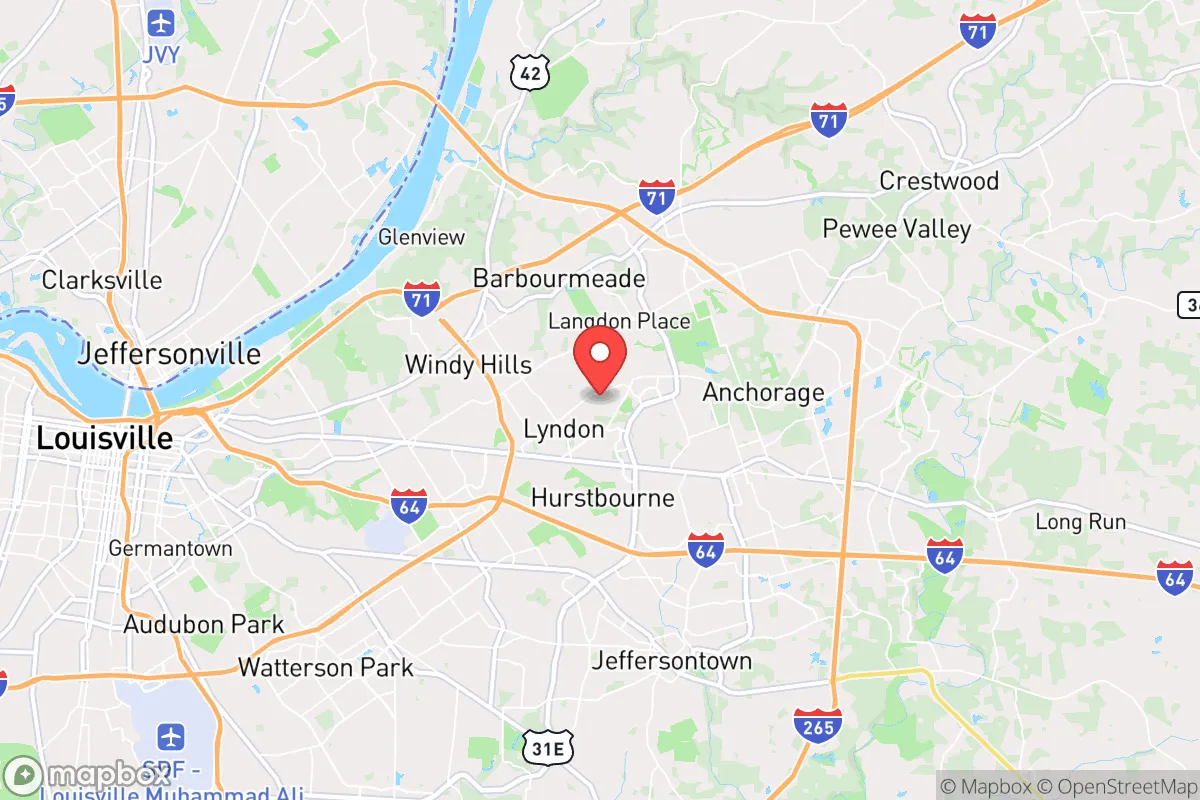
District shown is the primary district for this city’s centroid. Cities may span multiple districts.
Local Political AnalysisPolitical Analysis of Lyndon, KY
Lyndon, Kentucky, sits in a D+10 Cook PVI district, which means it leans reliably Democratic in federal elections, but that number doesn't tell the whole story for those of us who've lived here a while. The political climate has shifted noticeably over the past decade, with a steady creep of progressive policies that feel out of step with the traditional, self-reliant values many of us grew up with. You'll see it in local zoning battles, school board decisions, and the way some folks in city hall seem more interested in national trends than in what actually works for our neighborhoods. The trajectory is concerning—what was once a quiet, middle-class suburb where people minded their own business is now a place where government involvement in daily life feels heavier every year.
How it compares
Drive ten minutes west to Anchorage or Prospect, and you'll find communities that lean more conservative, with lower taxes and a stronger emphasis on property rights and local control. Those towns have resisted the kind of density-boosting zoning changes that Lyndon has embraced, which often bring more traffic and less privacy. Head east toward Middletown or Jeffersontown, and you'll see a similar pattern—more development, more regulations, and a political culture that tends to favor collective solutions over individual freedom. The contrast is stark: in Lyndon, you're more likely to hear talk of "equity" and "inclusion" at public meetings, while in the surrounding suburbs, the conversation stays focused on keeping government out of your backyard and your wallet. That D+10 rating reflects a voting base that's increasingly comfortable with expanding the role of government, which is a red flag for anyone who values personal autonomy.
What this means for residents
For families and long-time residents, the practical effects are real. Property taxes have crept up as the city funds new programs and studies, and there's a growing list of ordinances that tell you what you can do with your own land—from short-term rental restrictions to tree preservation rules that limit how you maintain your property. School policies have also shifted, with more emphasis on social-emotional learning and diversity initiatives that can feel like they're pushing a particular worldview rather than focusing on academics. If you're someone who believes in limited government and personal responsibility, you'll find yourself increasingly at odds with the direction of local leadership. The silver lining is that many of us have learned to stay engaged—showing up at council meetings, voting in every local election, and building networks with like-minded neighbors who remember when Lyndon was a place where you could live your life without someone in an office telling you how to do it.
Culturally, Lyndon still has a strong sense of community—the Fourth of July parade, the local diners, the way people wave at each other on the street—but there's an undercurrent of tension between the old guard and the newcomers who bring big-city ideas about governance. The most telling distinction is in how the city handles public safety and business regulation: while neighboring towns keep a light touch, Lyndon has added more layers of oversight, from business licensing fees to noise ordinances that can feel like overreach. If the trend continues, the next five to ten years could see Lyndon become a place where personal freedoms are increasingly secondary to government priorities—a shift that should give any freedom-minded resident pause.

State Political ClimatePolitical Climate in Kentucky
State Political AnalysisPolitical Environment in the State
Kentucky has long been a reliably Republican state in federal elections, but its political climate is far more nuanced than a simple red-state label suggests. The commonwealth has shifted rightward over the past 20 years, with the GOP now holding supermajorities in both chambers of the General Assembly and all but one statewide office. However, this conservative dominance masks a deep urban-rural divide, with the state’s two major metros—Louisville and Lexington—pulling in opposite directions, while the rest of the state has become increasingly solid for the GOP. For a conservative-leaning individual or family considering relocation, Kentucky offers a generally favorable policy environment, but the trajectory is not without its warning signs.
Urban vs. rural divide
The political map of Kentucky is a study in contrasts. Jefferson County, home to Louisville, is the state’s most populous county and a Democratic stronghold, delivering about 60% of its vote to Joe Biden in 2020. Fayette County, containing Lexington, is similarly blue, though slightly less so, with Biden winning around 57% there. These two urban islands are surrounded by a sea of deep red. The state’s third-largest city, Bowling Green, is a reliably Republican area, while Northern Kentucky—the suburban counties of Boone, Kenton, and Campbell across the Ohio River from Cincinnati—has shifted from swing territory to solidly GOP. The real engine of Republican dominance, however, is rural Kentucky. Counties like Pikeville in the east and Paducah in the west routinely vote 70-80% Republican. The Louisville suburbs, particularly Oldham County, are among the most conservative in the state, often voting 65%+ GOP. The divide is stark: the Bluegrass region around Lexington is a mix of horse farms and college-town liberalism, while the Appalachian east and the western Purchase region are culturally and politically traditional. This geographic split means that a new resident’s experience of Kentucky’s politics will depend heavily on which city or county they choose.
Policy environment
Kentucky’s policy environment is broadly favorable for conservatives. The state has a flat income tax rate of 4.5%, which is scheduled to drop to 4.0% by 2026 under a phased reduction plan passed in 2022. There is no state-level property tax on real estate, though local governments levy their own. The regulatory climate is business-friendly, with a right-to-work law (enacted in 2017) and a tort reform system that caps non-economic damages in medical malpractice cases. On education, Kentucky has a robust school choice movement: the state passed a charter school law in 2017 (though no charters have yet opened), and in 2022 it enacted the “Education Opportunity Account Act,” which provides tax credits for donations to scholarship funds for private school tuition. However, the state’s public school system remains a mixed bag, with rural districts often underfunded. On healthcare, Kentucky expanded Medicaid under the Affordable Care Act in 2014, a decision that remains controversial among conservatives. The state has not, however, pursued a state-based exchange or other progressive healthcare expansions. Election laws are moderately conservative: Kentucky requires a photo ID to vote, has no-excuse absentee voting (expanded temporarily during COVID but now restricted), and has a 14-day early voting period. The state does not have a “sanctuary city” policy; in fact, a 2020 law requires local law enforcement to cooperate with federal immigration authorities. Overall, the policy environment leans conservative but is not as aggressively libertarian as some Sun Belt states.
Trajectory & freedom
Kentucky’s trajectory on personal freedom is a mixed bag, with some notable expansions and a few concerning contractions. On the positive side, the state has become a leader in Second Amendment rights. In 2019, Kentucky passed a “constitutional carry” law, allowing permitless carry of concealed firearms for adults 21 and older. The state also has a “Stand Your Ground” law (enacted in 2006) and preempts local gun ordinances, meaning Louisville and Lexington cannot enact their own stricter gun laws. On parental rights, Kentucky passed a “Parents’ Bill of Rights” in 2022, requiring schools to notify parents of any changes to a student’s health or well-being and to obtain parental consent before providing any medical or mental health services. The state also banned transgender athletes from participating in girls’ sports in 2022. On medical autonomy, Kentucky has a near-total abortion ban (triggered by the Dobbs decision in 2022), with exceptions only to save the mother’s life. However, the state has not expanded medical freedom in other areas; for example, it has not passed a broad religious exemption for vaccine mandates. On property rights, Kentucky has a relatively strong “right to farm” law protecting agricultural operations from nuisance lawsuits. The biggest red flag for conservatives is the state’s tax burden: while the income tax is being reduced, Kentucky has one of the highest sales tax rates in the region (6%), and the state’s gas tax is indexed to inflation, meaning it rises automatically. Overall, Kentucky is becoming more free on cultural and gun issues, but the tax and regulatory environment is only slowly improving.
Civil unrest & political movements
Kentucky has seen its share of political flashpoints. The most notable was the 2020 protests in Louisville following the death of Breonna Taylor, which escalated into weeks of demonstrations, property damage, and a heavy police presence. The city’s Democratic mayor, Greg Fischer, faced criticism from both the left (for police tactics) and the right (for allowing the protests to spiral). The state legislature responded in 2021 with a law banning “no-knock” warrants in most cases—a direct legislative outcome of the Taylor case. More recently, the state has seen organized conservative activism around school board meetings, particularly in Boone County and Oldham County, where parents have protested critical race theory and mask mandates. The Kentucky Right to Life organization remains politically powerful, and the state’s Republican Party has become more aligned with the national MAGA movement. There is no significant secessionist or nullification movement in Kentucky, though some rural counties have passed symbolic “Second Amendment sanctuary” resolutions. Immigration is a low-profile issue in Kentucky, as the state has a small foreign-born population (about 4%), but the 2020 law requiring local cooperation with ICE has been largely uncontroversial. Election integrity has been a topic of debate, with the state’s Republican Secretary of State, Michael Adams, implementing voter ID and cleaning up voter rolls, but also defending the 2020 election results as secure—a position that has drawn criticism from some on the far right. For a new resident, the political climate is generally calm, but the urban-rural divide means that Louisville and Lexington have a more visible activist presence, while the rest of the state is quieter and more traditional.
Projection
Over the next 5-10 years, Kentucky is likely to remain a solidly Republican state, but with some important shifts. The biggest demographic trend is the continued growth of the Louisville suburbs and Northern Kentucky, which are attracting families from more expensive states like Illinois and Ohio. These newcomers tend to be fiscally conservative but socially moderate, which could push the state’s GOP toward a more suburban, Chamber of Commerce-style politics. At the same time, rural Kentucky is aging and losing population, which will slowly reduce its electoral weight. The state’s flat income tax reduction will continue, likely reaching 3.5% or lower by 2030, making Kentucky more competitive for business relocation. However, the state’s infrastructure—particularly in rural areas—is aging, and the opioid crisis has left deep scars in eastern Kentucky. The biggest wildcard is the state’s education system: if school choice expands significantly, it could attract more conservative families; if not, the state may struggle to retain young professionals. On cultural issues, expect continued battles over transgender rights, school curriculum, and abortion, but with the GOP supermajority, the trajectory will remain conservative. For a new resident, the Kentucky of 2035 will likely be slightly more suburban, slightly less rural, and still reliably Republican, but with a more pragmatic, less populist flavor.
For a conservative-leaning individual or family, Kentucky offers a solid foundation: low taxes (and getting lower), strong gun rights, parental control in schools, and a generally traditional culture. The main trade-offs are the state’s relatively weak economy outside of a few metros, the lingering effects of the opioid crisis in rural areas, and the urban-liberal enclaves of Louisville and Lexington. If you choose a suburb like Oldham County or Boone County, you’ll find a community that matches your values. If you pick Louisville proper, you’ll be in a blue city with all the attendant frustrations. The bottom line: Kentucky is a good bet for conservatives who want a low-cost, culturally traditional state, but it’s not a libertarian paradise—the government is still deeply involved in healthcare, education, and taxation. Do your homework on the specific county, and you’ll likely be satisfied.
* Values derived from national, state, county, city and local statistics and may differ in a specific area. Last updated: 2026-04-21T09:09:29.000Z
Narrative content on this page is AI-generated and may contain mistakes. Verify any details that matter before acting on them.
ReloMaps may earn a commission from affiliate links at no extra cost to you.

