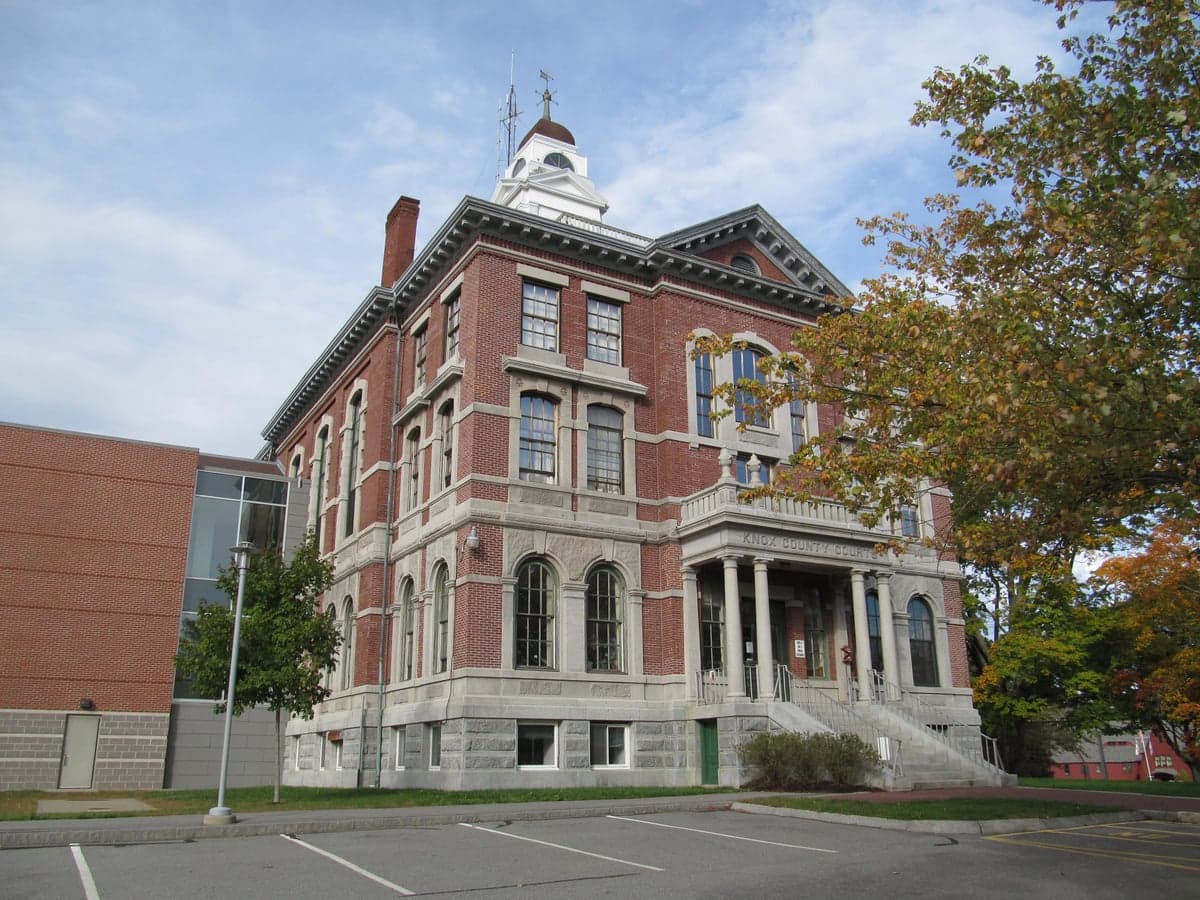
Photo: Wikipedia
Demographics of Knox County
Affluence Level in Knox County
A middle-class area roughly in line with national averages across income, home values, education, and employment.
People of Knox County
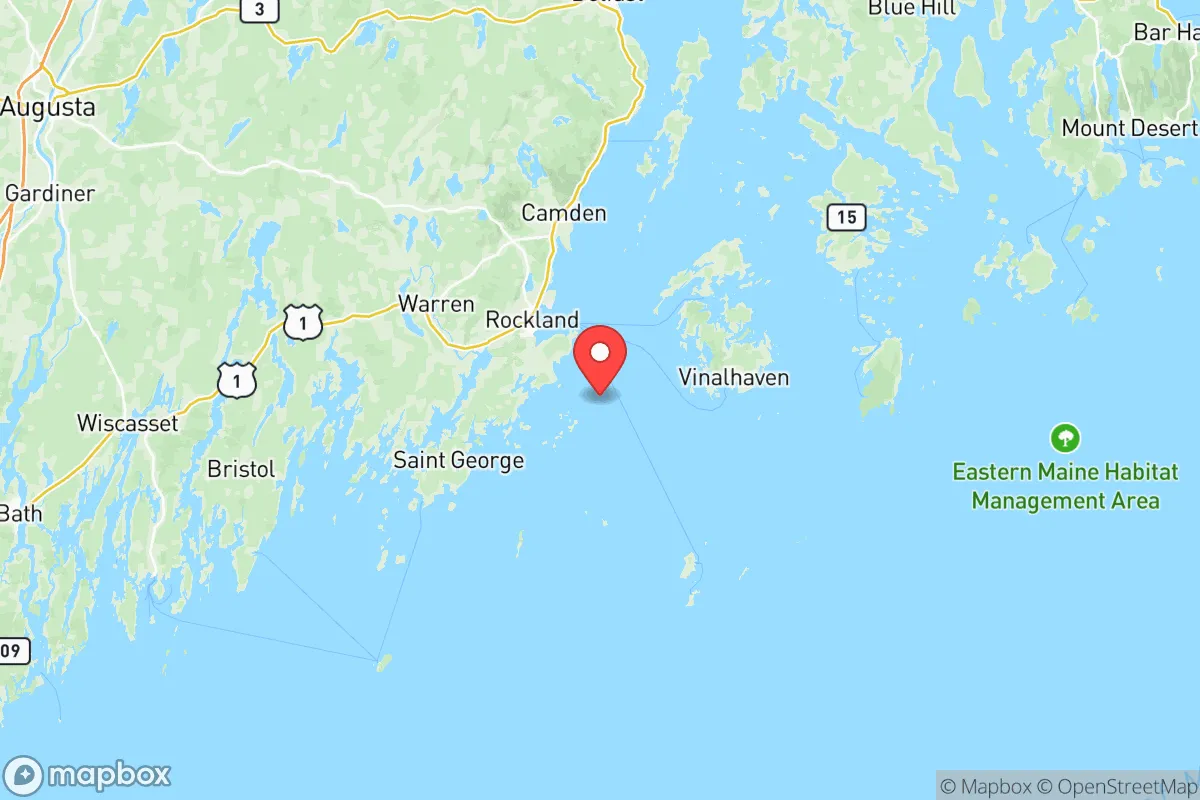
Knox County, Maine, is a predominantly white, older, and well-educated coastal community of roughly 40,860 residents, defined by its deep-rooted Yankee heritage, working waterfront, and a growing seasonal population. With a population that is 94.1% white and only 1.4% foreign-born, the county remains one of the least ethnically diverse in New England, a direct legacy of its settlement history. The people here are characterized by a blend of old-stock fishing and farming families, a significant cohort of retirees and second-home owners from southern New England, and a small but stable creative class drawn to the natural beauty of the midcoast region. The county's identity is anchored in its historic towns—Rockland, Camden, and Rockport—each with a distinct economic and social character.
Settlement & growth (pre-1960)
The human history of Knox County begins with the Wabanaki Confederacy, particularly the Penobscot and Abenaki peoples, who inhabited the coastal and island areas for thousands of years, relying on the rich fisheries and forests. European contact began in the early 1600s with French and English explorers, but permanent settlement was slow due to conflicts and the region's rugged terrain. The first significant wave of English settlers arrived after the French and Indian War (1763), primarily from Massachusetts and other parts of New England, drawn by land grants and the promise of timber, shipbuilding, and fishing. These settlers were largely of English and Scots-Irish descent, establishing the foundational Yankee culture that persists today.
By the early 19th century, the region's economy boomed around shipbuilding and the granite quarrying industry, particularly in the towns of Rockland, Camden, and Rockport. Rockland became a major port for lime production, attracting a small influx of Irish laborers in the 1840s and 1850s, who worked in the kilns and quarries. This was the largest single immigrant wave in the county's history, but it was modest compared to other parts of New England. The Irish settled primarily in Rockland's south end, near the waterfront, and their descendants remain a visible part of the community today. A smaller number of French-Canadian families arrived later in the 19th century, working in the mills and forests, settling in Union and Washington.
The late 19th and early 20th centuries saw the rise of summer tourism, with wealthy families from Boston and New York building "cottages" in Camden and Rockport, establishing a pattern of seasonal wealth that continues. The fishing industry, particularly lobster, became the economic backbone for coastal villages like Tenants Harbor and Port Clyde, sustaining generations of families. The county's population peaked around 1900 at roughly 44,000, then declined through the mid-20th century as shipbuilding and quarrying faded, and young people left for urban centers. By 1960, the population had dropped to about 32,000, reflecting a classic rural Maine pattern of out-migration.
Modern era (post-1965)
The post-1965 period brought no major new immigrant waves to Knox County, unlike much of the United States. The county's foreign-born population remains at just 1.4%, far below the national average. The demographic shifts that did occur were driven almost entirely by domestic migration. Beginning in the 1970s, a steady stream of "back-to-the-landers"—young, often college-educated people from out of state—moved to the area, seeking a simpler, rural lifestyle. They settled in inland towns like Appleton, Hope, and Warren, bringing new energy and a more liberal political bent that sometimes clashed with the established conservative Yankee culture.
Simultaneously, the county's coastal appeal grew as a retirement and second-home destination. Wealthy retirees from Massachusetts, Connecticut, and New York purchased properties in Camden, Rockport, and on the islands like Vinalhaven and North Haven, driving up real estate prices and shifting the local economy toward services, tourism, and healthcare. This influx has made the county older than the state average—the median age is roughly 48—and has contributed to the high college-educated rate of 39.1%, as many of these newcomers are professionals. The year-round population has grown modestly, from about 39,000 in 2000 to 40,860 today, but the seasonal population swells significantly in summer.
Racially, the county has remained overwhelmingly white. The Hispanic population is just 1.8%, the Black population 0.4%, and East/Southeast Asian communities 0.3%. There is no measurable Indian subcontinent population. The small non-white populations are concentrated in Rockland, the county's largest and most diverse town, where a handful of immigrant-owned businesses—mostly Latin American and Southeast Asian—have opened in recent years, serving a niche but growing demand. However, these communities remain tiny and dispersed, with no distinct ethnic enclaves.
The future
Knox County's population is likely to continue its slow, modest growth, driven primarily by domestic in-migration of retirees and remote workers, rather than by natural increase or international immigration. The county's birth rate is below replacement level, and the population is aging. The trend toward more diverse newcomers is real but incremental: the Hispanic and Asian shares are expected to rise slowly, possibly reaching 3-4% each by 2040, as service-sector jobs in hospitality and healthcare attract a slightly more diverse workforce. However, the county will remain one of the least diverse in Maine, and the cultural identity will stay firmly rooted in its Yankee and Irish-descended heritage.
The biggest demographic pressure point is housing affordability. The influx of wealthy newcomers and second-home buyers is pricing out younger, working-class families, particularly in coastal towns like Camden and Rockport. This is pushing year-round residents inland to Union, Washington, and Warren, where land is cheaper. The county's future character will likely be a tale of two populations: a wealthy, older, seasonal coastal community and a more modest, younger, year-round inland population. The lobster industry, while still vital, faces challenges from climate change and labor shortages, which may accelerate the shift toward a tourism-and-retirement economy.
For someone moving in now, Knox County offers a stable, safe, and beautiful environment with strong community ties, excellent schools in some districts, and a low-crime reputation. The trade-off is a lack of racial and ethnic diversity, a high cost of living relative to inland Maine, and a cultural conservatism that can feel insular to outsiders. The county is becoming more of a destination for those seeking a quiet, nature-oriented life rather than a place of economic dynamism or demographic change. It remains, at its core, a deeply rooted Yankee community with a working waterfront, a growing seasonal population, and a future that looks much like its recent past.

* Values derived from national, state, county, city and local statistics and may differ in a specific area. Last updated: 2026-08-18T17:54:33.000Z
Narrative content on this page is AI-generated and may contain mistakes. Verify any details that matter before acting on them.
ReloMaps may earn a commission from affiliate links at no extra cost to you.

