Photo: Wikipedia
Demographics of Malvern, AR
Affluence Level in Malvern, AR
A below-average socioeconomic profile. Incomes, home values, and educational attainment trail the U.S., with higher poverty and unemployment.
People of Malvern, AR
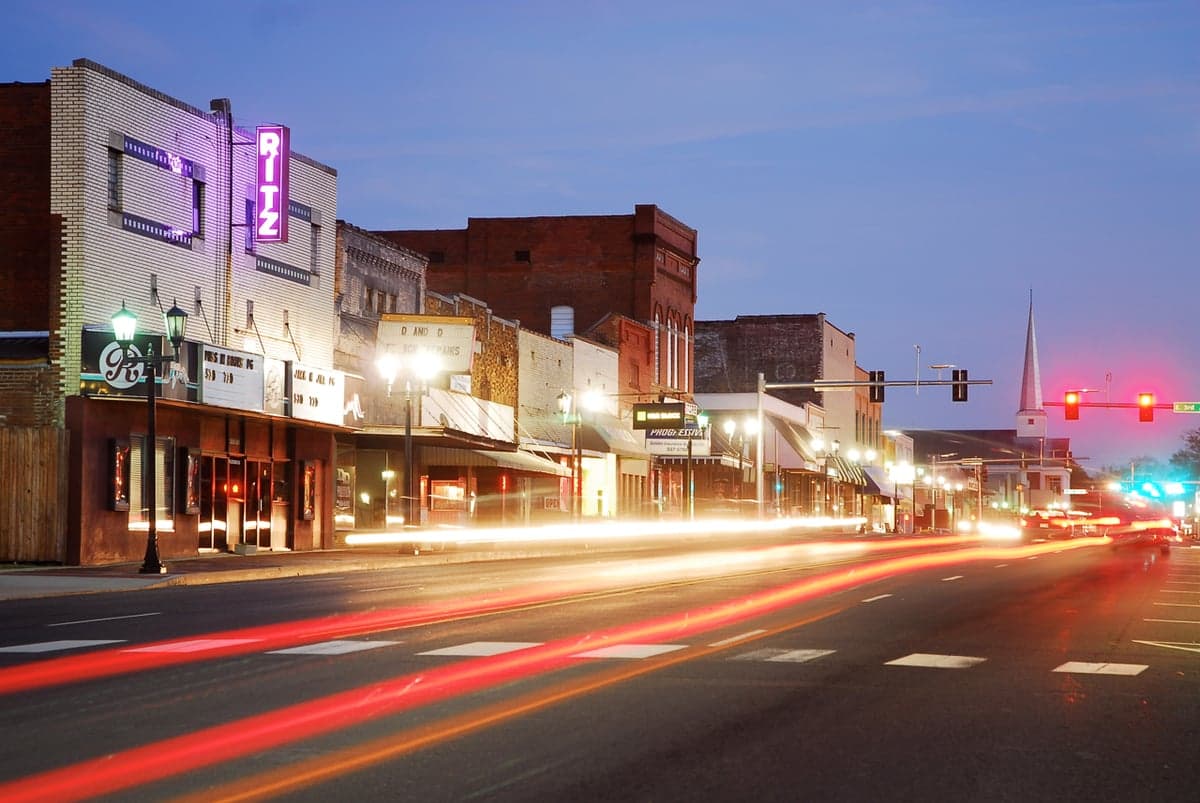
The people of Malvern, Arkansas, today number 10,938, forming a small, predominantly working-class city with a distinctive biracial character: 60.5% White and 32.2% Black, with a negligible foreign-born population of just 0.4%. The city’s identity is rooted in its industrial past, with a low college attainment rate of 10.7% reflecting a workforce historically tied to manufacturing and the railroad. Malvern is a place where generational roots run deep, and the population is notably stable, with little recent in-migration from outside the region.
How the city was settled and grew
Malvern’s population history begins with its founding in the 1870s as a railroad town on the Cairo and Fulton Railroad (later the Missouri Pacific). The original settlers were largely White families from the surrounding rural areas of Hot Spring County, drawn by jobs in rail yards and the emerging timber industry. The city’s early growth was modest but steady, with a small Black population arriving during the Reconstruction era to work as laborers on the railroad and in nearby cotton fields. These early Black families settled in what is now known as the South Malvern neighborhood, a historically Black district south of the railroad tracks that remains a core of the city’s African American community today. By the early 20th century, the discovery of the nearby Magnet Cove mineral deposits (including titanium and vanadium) brought a wave of White miners and industrial workers, who established the North Malvern area around the industrial sites. The city’s population grew to roughly 3,000 by 1910 and remained predominantly White and Black through the mid-20th century, with no significant immigrant influx.
Modern era (post-1965)
After the 1965 Hart-Cellar Act, Malvern saw virtually no new foreign-born population—the current 0.4% foreign-born share is among the lowest in Arkansas. Instead, the post-1965 era was defined by domestic shifts. The city’s Black population, which had been concentrated in South Malvern, began a gradual movement into previously all-White neighborhoods like West Malvern (near the high school) and East End (along Highway 67) during the 1970s and 1980s, though de facto residential segregation persists in parts of the city. The White population, meanwhile, saw modest out-migration to newer subdivisions on the city’s northern fringe, such as Lake Malvern Estates, a development built around the 1970s that attracted families seeking larger lots and newer homes. The Hispanic population, now at 3.0%, began arriving in the 1990s, primarily as laborers in the poultry processing plants and construction trades, settling in a small cluster near the Industrial Park Road area on the city’s eastern edge. This group remains small and has not formed a distinct ethnic enclave. The Asian and Indian populations are effectively zero, reflecting the city’s lack of professional or tech-sector employment that might attract such groups.
The future
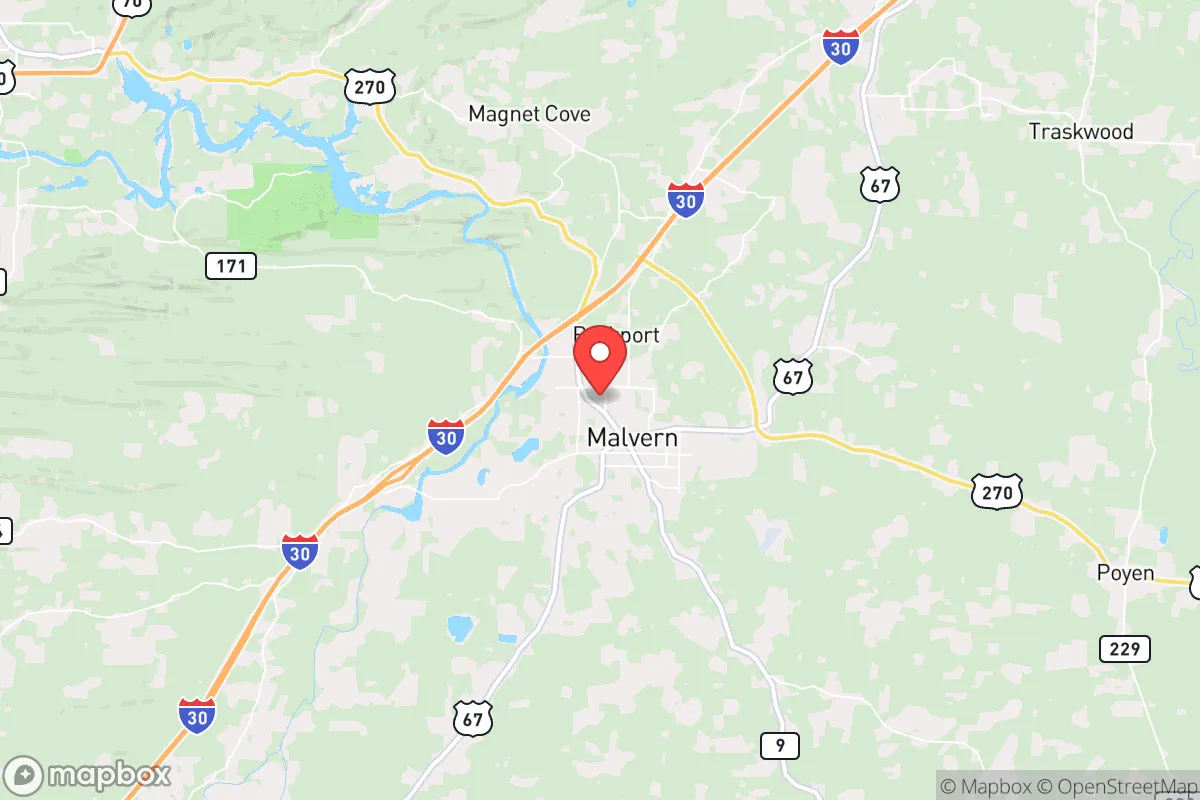
Malvern’s population is projected to remain stable or decline slightly over the next decade, mirroring trends in rural Arkansas. The city is not homogenizing into a single identity but rather tribalizing into distinct, stable enclaves: the White population is concentrated in North Malvern and the newer subdivisions, while the Black population remains anchored in South Malvern and parts of East End. The Hispanic community is growing slowly but is likely to plateau at 4–5% due to limited economic opportunities and no established chain migration network. The foreign-born share will likely stay below 1%, as the city lacks the industries—tech, academia, healthcare—that attract immigrants. The low college attainment rate (10.7%) suggests that younger, educated residents continue to leave for larger cities like Little Rock (45 miles north) or Hot Springs (20 miles west), reinforcing an aging, less mobile population base.
For someone moving in now, Malvern offers a stable, deeply rooted community where racial lines are clear but not volatile, and where the population is overwhelmingly native-born and long-established. It is a place for those seeking a quiet, affordable, and predictable small-town environment, not a dynamic or diversifying one. The city’s future is one of slow demographic continuity, with little change expected in its racial or ethnic makeup over the next two decades.

* Values derived from national, state, county, city and local statistics and may differ in a specific area. Last updated: 2026-04-30T03:13:21.000Z
Narrative content on this page is AI-generated and may contain mistakes. Verify any details that matter before acting on them.
ReloMaps may earn a commission from affiliate links at no extra cost to you.

