Photo: Wikipedia
Demographics of Manalapan, FL
Affluence Level in Manalapan, FL
An elite concentration of wealth — high incomes, strong home values, advanced degrees, and minimal poverty signal a top-tier socioeconomic profile.
People of Manalapan, FL
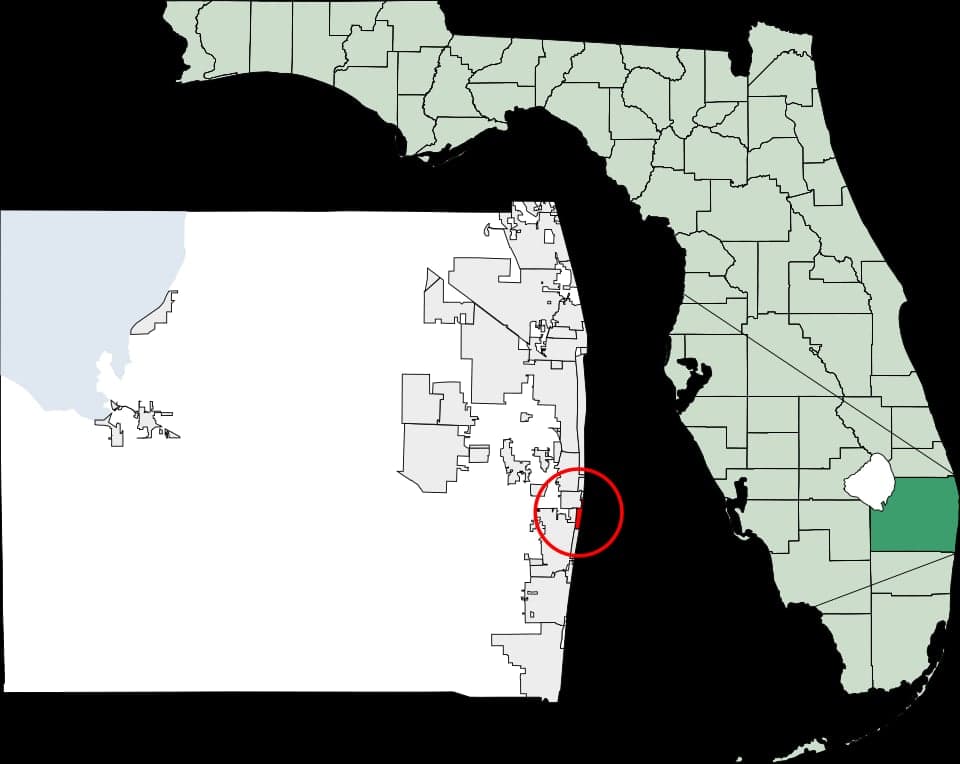
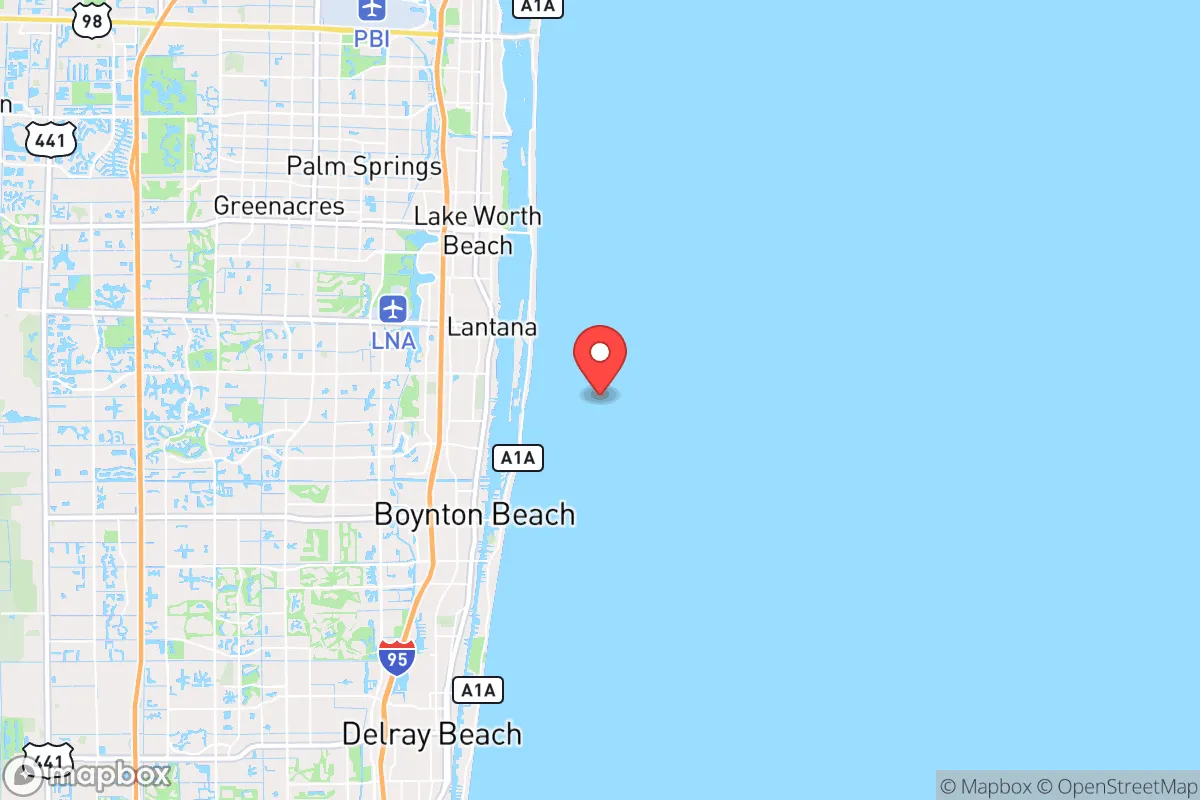
The 359 residents of Manalapan, Florida form one of the most exclusive and demographically distinctive communities in Palm Beach County. With a 74.0% college-educated population and a foreign-born share of just 0.8%, the city is overwhelmingly native-born, highly affluent, and predominantly white (80.2%). Its character is defined by low-density oceanfront estates, strict zoning, and a population that values privacy and stability over growth.
How the city was settled and grew
Manalapan was not a product of pioneer settlement or agricultural land grants. The area was largely undeveloped barrier island until the early 20th century, when wealthy northern industrialists and financiers began acquiring oceanfront property for winter estates. The town was officially incorporated in 1931, driven by a small group of landowners who wanted to control development and maintain the area's exclusive character. The original population consisted almost entirely of wealthy white families from the Northeast, many of whom built large homes along the ocean in what is now the Ocean Boulevard corridor. No significant immigrant or working-class wave ever settled here; the city's founding population was a deliberate, self-selected enclave of the elite. The Point Manalapan neighborhood, at the southern tip of the island, became the most prestigious address, with estates directly on the Atlantic and the Intracoastal Waterway.
Modern era (post-1965)
After the 1965 Hart-Cellar Act reshaped American immigration, Manalapan saw virtually no change in its demographic composition. The foreign-born share remained negligible, and the city did not absorb any of the Cuban, Central American, or Asian immigrant waves that transformed nearby communities like Lake Worth or Boynton Beach. Instead, Manalapan's modern era has been defined by consolidation of wealth and the gradual replacement of older estates with even larger, more expensive homes. The Hypoluxo Island section, a gated community within the town limits, attracted a mix of corporate executives and retirees, but remained overwhelmingly white and native-born. The small Black population (4.7%) and East/Southeast Asian population (5.0%) are concentrated among household staff and a handful of professional families living in the town's limited non-waterfront properties, such as those along State Road A1A north of the Manalapan Recreation Center. The Indian-subcontinent population (4.5%) is similarly small and dispersed, with no distinct ethnic enclave forming. The Hispanic share (2.5%) is the lowest in Palm Beach County, reflecting the town's lack of service-economy housing and its deliberate exclusion of multifamily development.
The future
Manalapan's population is heading toward further homogenization, not diversification. The town's strict zoning code, which prohibits apartments, condominiums, and most commercial development, ensures that only high-net-worth individuals can afford to live here. As older estates are purchased and demolished by even wealthier buyers, the population is becoming more uniformly affluent and older. The small East/Southeast Asian and Indian-subcontinent populations are likely to plateau or grow only marginally, as these groups are represented primarily by professionals who can afford the town's entry-level homes—a very narrow demographic. The Hispanic and Black shares are unlikely to increase significantly, as there is no affordable housing stock to attract working-class families. The most notable trend is the gradual replacement of longtime white residents (many of whom are aging in place) with younger, equally wealthy white families from the Northeast and Midwest. The Manalapan Shores neighborhood, a small cluster of homes near the northern boundary, may see the most turnover as heirs sell inherited properties. For the foreseeable future, Manalapan will remain a demographically static, ultra-high-income enclave—a place where population change is measured in property values, not people.
For a relocating individual or family, Manalapan offers an environment of extreme exclusivity, racial and ethnic homogeneity, and minimal population turnover. It is not a community that is growing or diversifying; it is a carefully preserved enclave where the population is defined by wealth and privacy. Anyone moving here should expect a social environment that is overwhelmingly white, native-born, and college-educated, with little of the demographic dynamism found in nearby coastal cities.

* Values derived from national, state, county, city and local statistics and may differ in a specific area. Last updated: 2026-10-10T16:28:10.000Z
Narrative content on this page is AI-generated and may contain mistakes. Verify any details that matter before acting on them.
ReloMaps may earn a commission from affiliate links at no extra cost to you.

