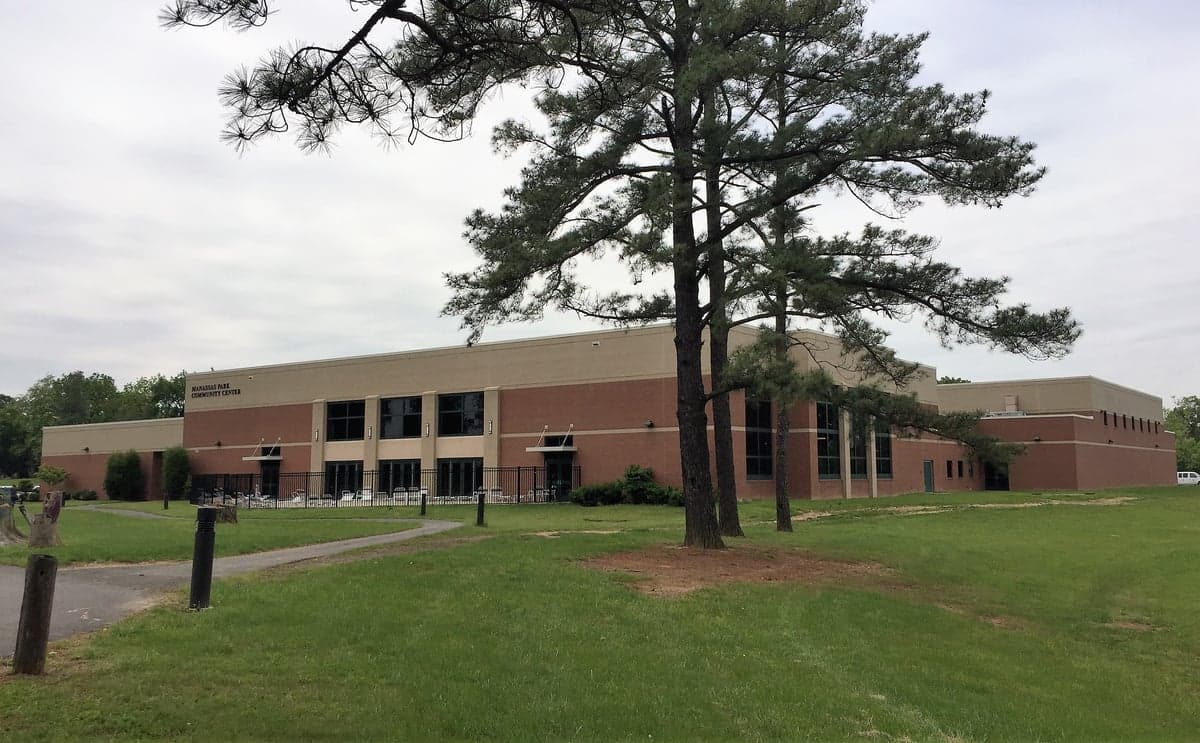
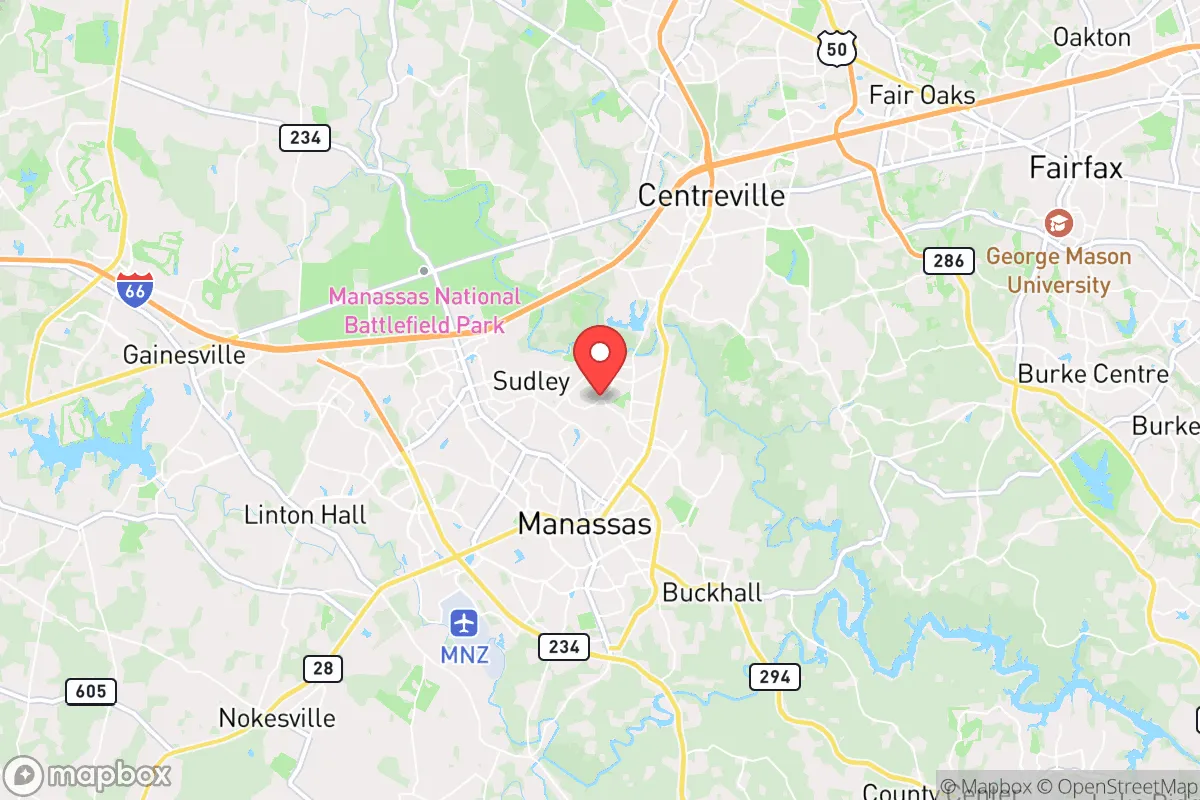
Photo: Wikipedia
Demographics of Manassas Park, VA
Affluence Level in Manassas Park, VA
An upper-middle-class area. Household wealth, education levels, and homeownership run ahead of national benchmarks.
People of Manassas Park, VA
Manassas Park, Virginia, is a dense, majority-minority city of 16,923 residents where Hispanic residents make up the largest single group at 45.9% of the population, followed by White (27.4%), Black (10.9%), East/Southeast Asian (6.4%), and Indian-subcontinent (4.1%) communities. The city is one of the most ethnically diverse in Northern Virginia, with a foreign-born population of 17.4% and a relatively young median age driven by immigrant families and first-generation Americans. Despite its small geographic footprint—just over two square miles—Manassas Park has a distinct blue-collar, suburban character that sets it apart from the more affluent, white-collar communities of neighboring Fairfax and Loudoun counties. The city’s identity is shaped by its rapid post-1965 growth, its role as an affordable entry point into the Washington, D.C. metro area, and a population that is increasingly Hispanic and working-class.
How the city was settled and grew
Manassas Park is a thoroughly 20th-century creation, with no colonial or antebellum settlement to speak of. The land was originally part of Prince William County’s rural farm and timber tracts, with the Manassas Gap Railroad spurring limited development in the late 1800s. The city’s true founding came in the 1940s and 1950s, when developers began building modest, single-family homes and small apartment complexes to house workers employed at the expanding Manassas rail yards and the nearby Quantico Marine Corps Base. The original population was overwhelmingly White, native-born, and working-class, drawn by cheap land and proximity to federal employment in Washington. The earliest neighborhoods—such as Manassas Park Village (the original core around Park Avenue) and Signal Hill (a post-war subdivision of small ranches and Cape Cods)—were built by local contractors and filled by railroad employees, mechanics, and lower-level federal clerks. The city incorporated in 1975, at which point its population was roughly 85% White and under 7,000 residents.
Modern era (post-1965)
The 1965 Hart-Cellar Act, combined with the expansion of the Washington-area service economy, transformed Manassas Park’s population from the 1970s onward. The city’s affordable housing stock—especially its garden apartments and older single-family homes—became a magnet for new immigrant groups. The first major wave was Hispanic, primarily Salvadoran and Guatemalan, who arrived in the 1980s and 1990s fleeing Central American civil wars and seeking construction, landscaping, and hospitality jobs in the booming Northern Virginia suburbs. These families concentrated in the Blooms Crossing and Manassas Park Station areas, where older apartment complexes offered low rents and proximity to bus lines. A second wave of East/Southeast Asian immigrants—Vietnamese and Filipino families—arrived in the 1990s and 2000s, settling in the Westview and Park Center neighborhoods, often in duplexes and townhomes. More recently, Indian-subcontinent families (from India, Pakistan, and Bangladesh) have moved into the Linden Park and Manassas Park Estates subdivisions, drawn by the city’s lower home prices compared to Fairfax County and its proximity to tech jobs in the Dulles Corridor. By 2020, the White share had fallen to 27.4%, while the Hispanic share had risen to 45.9%, making Manassas Park one of the most Hispanic cities in Virginia. The Black population, at 10.9%, is largely native-born African American families who moved from Washington, D.C. and Prince George’s County in the 2000s, seeking quieter suburban streets and better schools.
The future
Manassas Park’s population is likely to continue its trajectory toward a Hispanic-majority, working-class city, but with increasing internal diversity. The Hispanic community is not monolithic: second-generation Salvadoran and Guatemalan families are beginning to move out to more spacious suburbs in Prince William and Stafford counties, while newer arrivals from Honduras and Mexico are filling the apartments they leave behind. The East/Southeast Asian and Indian-subcontinent populations are small but stable, with many families choosing to stay long-term due to the city’s strong community ties and affordable housing. The White population, now a minority, is aging and shrinking, as younger White families are priced out or choose larger homes in neighboring counties. The city is not tribalizing into distinct enclaves—neighborhoods like Blooms Crossing and Westview are increasingly mixed—but economic stratification is growing, with newer immigrants concentrated in apartments and longer-established families in single-family homes. Over the next 10-20 years, Manassas Park will likely become more Hispanic (potentially exceeding 55%), more foreign-born, and slightly younger, while remaining a relatively low-cost, blue-collar alternative to the rest of Northern Virginia.
For a conservative-leaning individual or family moving in now, Manassas Park offers a dense, diverse, and affordable community with a strong sense of place, but it is not a typical suburban enclave—it is a working-class city where immigrant entrepreneurship, family networks, and local churches (both Catholic and evangelical) anchor daily life. The schools are improving but remain below the Northern Virginia average in test scores, and the city’s small size means limited retail and entertainment options. The bottom line: Manassas Park is a place of upward mobility for immigrant families, but for those seeking a more homogeneous, high-amenity suburb, neighboring Manassas City or Bristow may be a better fit.

* Values derived from national, state, county, city and local statistics and may differ in a specific area. Last updated: 2026-04-19T10:20:42.000Z
Narrative content on this page is AI-generated and may contain mistakes. Verify any details that matter before acting on them.
ReloMaps may earn a commission from affiliate links at no extra cost to you.

