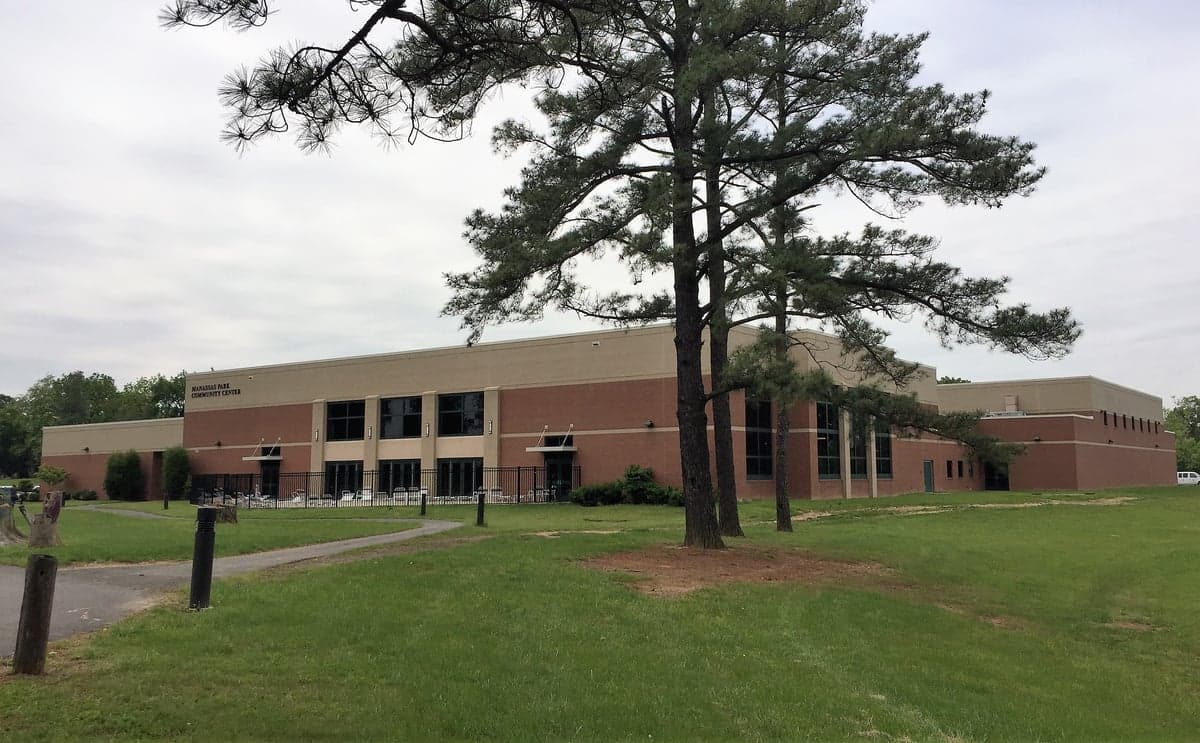

Photo: Wikipedia
Political ClimatePolitical Climate in Manassas Park, VA
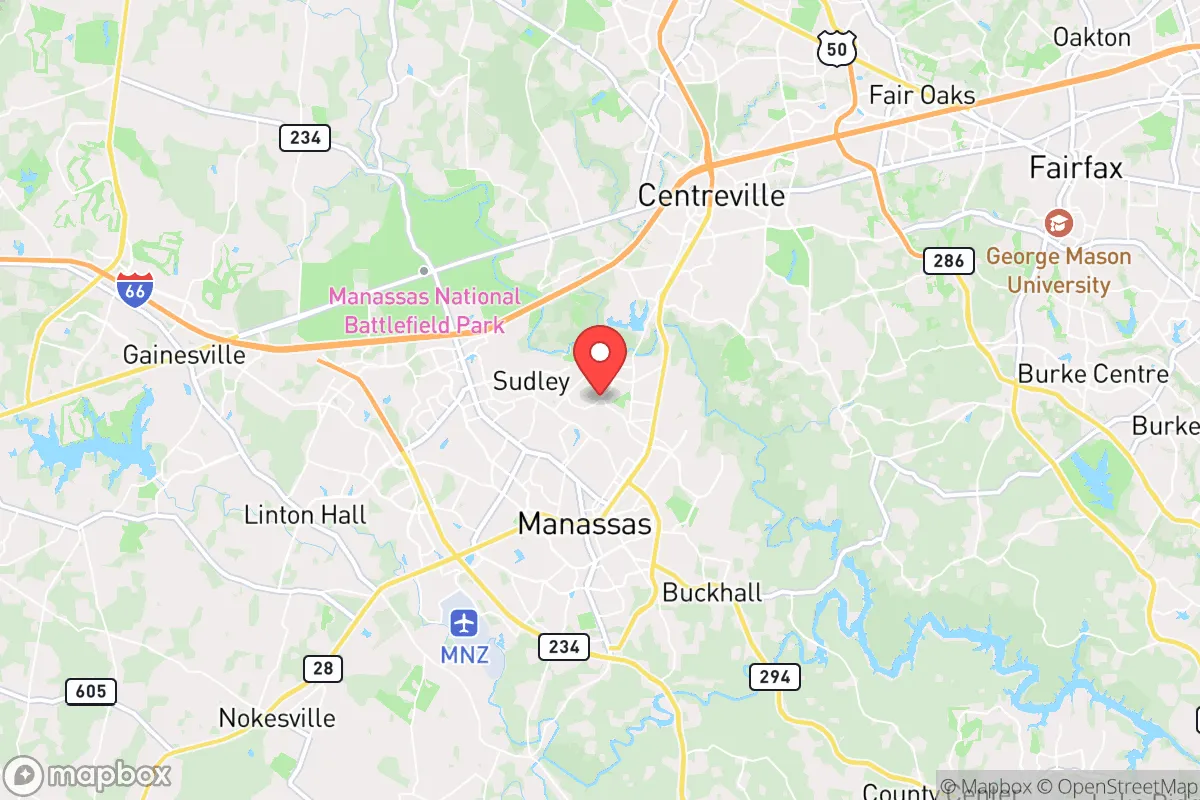
District shown is the primary district for this city’s centroid. Cities may span multiple districts.
Local Political AnalysisPolitical Analysis of Manassas Park, VA
Manassas Park, Virginia, has shifted noticeably leftward over the past decade, and its current Cook Partisan Voting Index of D+6 tells you a lot about where things stand today. This isn't the same small, tight-knit community it was twenty years ago—back then, you could count on local elections being a toss-up, with a healthy mix of conservative and moderate voices. Now, the political lean is solidly Democratic, and the trajectory suggests it's only going to get bluer as more folks move in from D.C. and the surrounding suburbs. If you're someone who values limited government and personal freedoms, this change is something to keep a close eye on.
How it compares
Manassas Park is a bit of an outlier compared to its neighbors. Just a few miles west, the city of Manassas itself leans more moderate, with a Cook PVI of R+1, and the surrounding Prince William County as a whole is D+3—still left-leaning, but not as aggressively so. Drive a little further out to places like Haymarket or Gainesville, and you'll find communities that are reliably conservative, where local officials are more likely to push back on state overreach. The contrast is stark: Manassas Park's politics feel more aligned with Arlington or Alexandria than with the rest of Northern Virginia's outer suburbs. That's a red flag for anyone who worries about one-size-fits-all policies being imposed from Richmond or D.C., because the local government here has been increasingly willing to adopt progressive priorities without much debate.
What this means for residents
For folks living in Manassas Park, the shift means you're seeing more government involvement in daily life—things like stricter zoning rules, higher local taxes to fund expanded social programs, and a school board that's more focused on equity initiatives than on academic rigor. The city council has pushed through measures that feel like overreach, like mandating specific diversity training for small businesses and tightening rental regulations in ways that make it harder for landlords to manage their own property. If you value the freedom to run your life without a bureaucrat looking over your shoulder, these trends are concerning. The long-term outlook? Unless the demographic trends reverse—which seems unlikely given the influx of younger, more progressive residents—expect more of the same: higher costs, more red tape, and a local government that sees its role as shaping behavior rather than protecting rights.
Culturally, Manassas Park has always had a strong sense of community, but that's fraying a bit as politics becomes more divisive. You used to be able to disagree with a neighbor over a backyard fence and still share a beer at the VFW. Now, local Facebook groups are full of arguments over mask mandates and school policies. The city's small size—just over 17,000 people—means these fights hit close to home. One notable distinction: Manassas Park has its own independent school system, separate from Prince William County, which has allowed it to experiment with policies that sometimes feel out of step with what parents want. If you're considering moving here, just know that the political climate isn't neutral—it's actively shifting, and if you lean conservative, you'll likely find yourself in the minority more often than not. Keep an eye on the next few election cycles; if the trend holds, this little city could become a blueprint for progressive governance in the region.

State Political ClimatePolitical Climate in Virginia
State Political AnalysisPolitical Environment in the State
Virginia has transformed from a reliably conservative Southern state into a competitive battleground that now leans blue at the statewide level, driven largely by explosive growth in the Washington D.C. suburbs. Over the past 20 years, the state has shifted from voting Republican in every presidential election from 1968 to 2004 to becoming a solid blue presidential pick since 2008, with Democrats now controlling the governorship and both chambers of the legislature as of 2026. The dominant coalition is a mix of well-educated, affluent suburbanites in Northern Virginia and a growing progressive base in Richmond and Hampton Roads, while the rest of the state—from the Shenandoah Valley to Southside—remains deeply conservative and increasingly frustrated with one-party rule from Richmond.
Urban vs. rural divide
The political map of Virginia is a tale of two commonwealths. Northern Virginia—specifically Arlington, Alexandria, and Fairfax County—is the engine of Democratic power, producing massive vote margins that swamp the rest of the state. These areas are home to federal employees, defense contractors, and tech workers who lean heavily progressive on social issues and favor high taxes for expanded government services. Richmond and Norfolk add to the blue column, while Virginia Beach remains a purple swing city with a strong military and veteran presence that keeps it competitive. Outside the I-95 corridor, the landscape flips dramatically: Lynchburg, Roanoke, and Harrisonburg anchor conservative strongholds, while rural counties like Lee, Wise, and Buchanan in far Southwest Virginia vote Republican by 70-80% margins. The divide is so stark that a Republican can win the governorship (like Glenn Youngkin in 2021) by running up huge numbers in the rural crescent and the exurbs, but that coalition is getting harder to sustain as Northern Virginia grows faster than the rest of the state.
Policy environment
Virginia’s policy landscape has shifted leftward significantly since Democrats took full control in 2020. The state income tax is a flat 5.75%, but property taxes are set locally and can be steep in high-demand areas like Northern Virginia. The regulatory posture has tightened: the Virginia Clean Economy Act mandates a 100% carbon-free electric grid by 2050, which has driven up energy costs and pushed some manufacturers to reconsider expansions. On education, Virginia has become a flashpoint: the state eliminated its Standards of Learning graduation requirements in favor of a more subjective "profile of a graduate" system, and school boards in blue counties have embraced critical race theory-inspired curricula despite parental pushback. Election laws have been loosened—no-excuse absentee voting, same-day registration, and a permanent absentee voter list are now law, which conservatives argue undermines election integrity. The state also expanded Medicaid under Obamacare in 2018, a move that initially had bipartisan support but has since ballooned costs. On the plus side, Virginia has no "red flag" gun law as of 2026, though Democrats have passed universal background checks and a one-handgun-per-month limit.
Trajectory & freedom
On balance, Virginia is becoming less free for conservatives, especially on issues of parental rights, gun rights, and taxation. The 2020 General Assembly passed the Virginia Values Act, which added sexual orientation and gender identity to the state’s nondiscrimination laws and effectively compelled speech in some business contexts. The same session abolished the death penalty and legalized marijuana, but also passed a sweeping gun control package that included a ban on "assault weapons" in some localities. Parental rights took a hit in 2022 when the state board of education adopted model policies that require schools to affirm a student’s chosen gender identity without notifying parents—a direct challenge to family authority. Governor Youngkin’s 2023 executive order on "restoring excellence in education" pushed back on some of this, but the Democratic legislature has blocked most of his agenda. On the tax front, Youngkin did manage to cut the grocery tax and increase the standard deduction, but the overall tax burden remains high compared to neighboring states like Tennessee and North Carolina. Property rights are under pressure from the state’s aggressive land-use planning and environmental regulations, particularly in the Chesapeake Bay watershed.
Civil unrest & political movements
Virginia has been a national epicenter of political conflict. The 2017 Unite the Right rally in Charlottesville left a lasting scar and led to the removal of Confederate statues across the state, but also galvanized both the left-wing antifa movement and a resurgent conservative grassroots. In 2020, Richmond saw weeks of protests over the Robert E. Lee statue, with the city becoming a flashpoint for the broader racial justice movement. The "Parents Matter" movement exploded in 2021-2022, with thousands of parents packing school board meetings in Loudoun County and Fairfax County to protest critical race theory, mask mandates, and transgender policies—this backlash directly fueled Youngkin’s upset victory. Immigration politics are less visible than in border states, but Northern Virginia has become a sanctuary jurisdiction, with Fairfax County explicitly limiting cooperation with ICE. Election integrity remains a hot-button issue: the 2020 election in Virginia was relatively smooth, but the 2021 gubernatorial race saw razor-thin margins in some districts, and the state’s new voting laws have drawn lawsuits from both sides. A new resident would notice the "Youngkin for Governor" signs still dotting rural roads and the "Defund the Police" graffiti in Richmond—the cultural war is very much alive.
Projection
Over the next 5-10 years, Virginia is likely to continue its slow drift leftward, but not without a fight. The key demographic driver is Northern Virginia, which is adding population faster than the rest of the state and is becoming more diverse and more liberal with each election cycle. The 2030 redistricting cycle will likely lock in Democratic advantages in the state legislature, making it harder for Republicans to win back control. However, the exurban and rural backlash is real: counties like Spotsylvania, Stafford, and Culpeper are flipping from purple to red as families flee Northern Virginia’s high costs and progressive policies. The wild card is the military and veteran population—Virginia has the highest concentration of active-duty military of any state, and these voters tend to be socially conservative but fiscally moderate. If the national Democratic party continues to shift left on cultural issues, Virginia could see a repeat of the 2021 Youngkin wave, where a moderate Republican can win by focusing on education and economic freedom. But the long-term trend lines favor the blue team, especially as the state’s economy becomes more dependent on federal spending and tech.
For a conservative considering a move to Virginia, the bottom line is this: you can still find a great life here, but you need to choose your county carefully. If you want a conservative community with good schools and lower taxes, look at Hanover County (north of Richmond), Rockingham County (near Harrisonburg), or the Roanoke Valley. Avoid Northern Virginia and Richmond city proper unless you’re prepared for high taxes, progressive politics, and constant cultural friction. The state’s natural beauty, strong economy, and military-friendly environment are real assets, but the political climate is increasingly hostile to traditional values. If you’re willing to fight for your rights at the local level and vote in every election, Virginia can still work—but don’t expect the state to get more conservative anytime soon.
* Values derived from national, state, county, city and local statistics and may differ in a specific area. Last updated: 2026-04-19T10:20:42.000Z
Narrative content on this page is AI-generated and may contain mistakes. Verify any details that matter before acting on them.
ReloMaps may earn a commission from affiliate links at no extra cost to you.

