
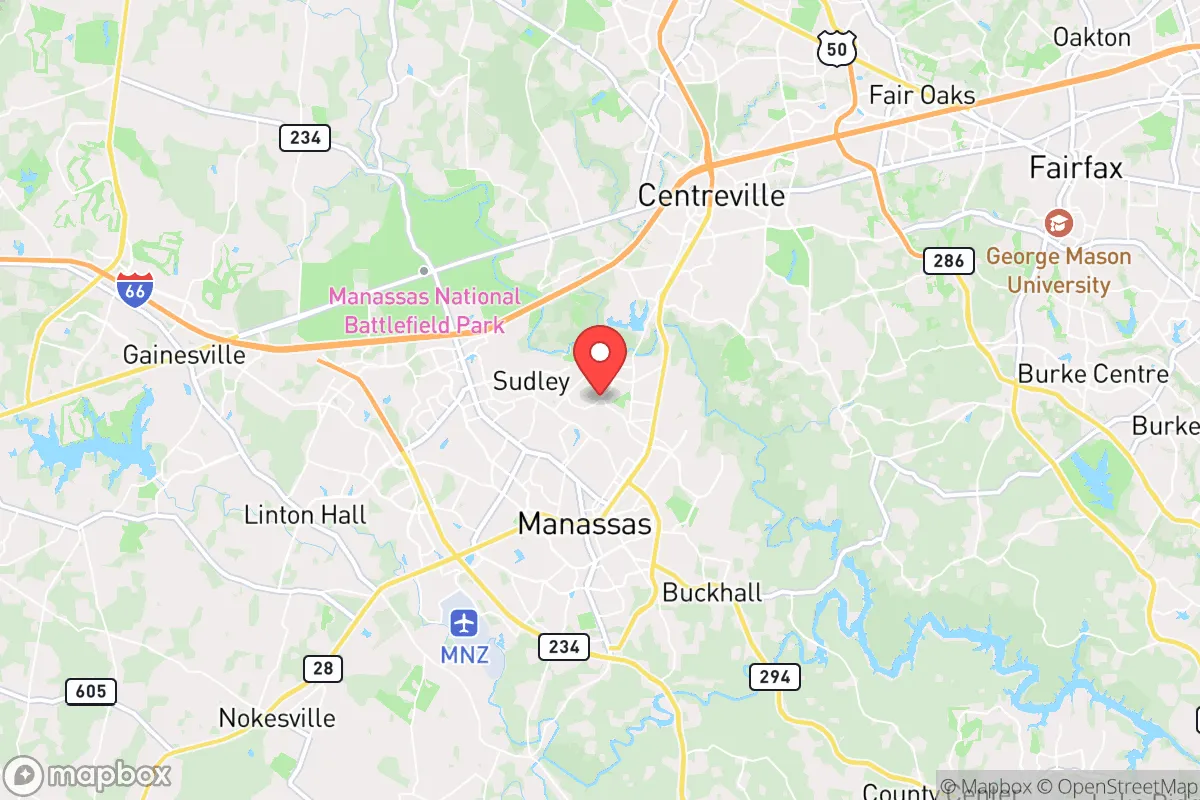
Photo: Wikipedia
Quality of Life in Manassas Park, VA
A high quality of life with strong walkability, manageable living costs, healthy neighborhood signals, and solid amenity access.
What does Quality of Life tell us?
Quality of Life blends cost of living, nearby amenities, socioeconomic signals, and neighborhood character. City-level scores represent the whole municipality; individual neighborhoods can differ.
What does this tell us?
Quality of Life blends cost of living, nearby amenities, socioeconomic signals, and neighborhood character. City-level scores represent the whole municipality; individual neighborhoods can differ.
Cost of Living
66% above national average
The Real Cost of Living in Manassas Park, VA for 2026
| Tier | Individual | Family (4) |
|---|---|---|
| Survival | $35k | $65k |
| Comfortable | $74k | $109k |
| Luxury | $146k+ | $227k+ |
| Elite (Top 5%) | $172k+ | $267k+ |
92%
The Area Signal
A metric tracking the socioeconomic signals of the area.


Hobbies
Explore the areaGroceries
2 within 10 miles
Gas
0 within 10 miles
Hospital
3 within 20 miles
Airport
DCA — Ronald Reagan Washington National
Post Office
USPS — Merrifield, VA
Critical Amenities
Quality-of-Life Analysis
Manassas Park, Virginia, presents a quality-of-life profile defined by its position as a moderately affluent, family-oriented suburb within the Washington, D.C. metropolitan area. With a cost of living index of 166—66 percent above the national average—the city attracts a demographic of professionals, government employees, and military-affiliated households who prioritize proximity to the capital over lower expenses. The population skews younger and more diverse than the national average, with a median age of around 34 and a significant Hispanic and Asian community, reflecting the area’s role as a gateway for first- and second-generation immigrants seeking economic opportunity.
Cost of living, housing affordability, and how Manassas Park compares to nearby cities
Housing is the primary driver of Manassas Park’s elevated cost of living. The median home value of $381,200 is roughly 40 percent higher than the national median but notably lower than neighboring Arlington ($750,000+) or Alexandria ($600,000+), making it one of the more attainable entry points inside the Beltway orbit. Median rent sits at $2,175, which undercuts Fairfax County averages by about 15 percent but still represents a significant monthly outlay for most households. The average one-way commute of 38.7 minutes is longer than the national average of 26 minutes, a trade-off many residents accept for the ability to live in a single-family home or townhouse rather than a high-rise apartment closer to D.C. Property taxes in Manassas Park are moderate for Northern Virginia, with a rate of roughly $1.08 per $100 of assessed value, though combined state and local income taxes push the effective tax burden higher than in nearby Prince William County.
What daily life is like for families: schools, parks, and local amenities
Daily life in Manassas Park centers on a compact, walkable core and a strong public school system. The city’s independent school division, Manassas Park City Schools, serves roughly 2,800 students and has earned above-average ratings from GreatSchools, with Manassas Park High School offering Advanced Placement courses and a career-and-technical education track. Parks and recreation are a standout feature: the city maintains over 200 acres of green space including Signal Hill Park, which offers sports fields, a spray park, and a community center, and the 80-acre Manassas Park Community Center with a gym, indoor pool, and senior programs. For shopping and dining, residents rely heavily on the adjacent City of Manassas’s historic downtown—a 10-minute drive—which provides independent restaurants, a farmers market, and retail. The Manassas Park VRE station offers direct rail service to Washington Union Station in about 50 minutes, a practical alternative to the congested I-66 corridor. Healthcare access is solid, with Novant Health UVA Prince William Medical Center located 4 miles away in Manassas.
Manassas Park is best suited for families and professionals who value a suburban lifestyle with strong schools and reasonable (by regional standards) housing costs, and who are willing to accept a longer commute and higher overall expenses in exchange for proximity to D.C. employment. Empty-nesters and retirees may find the tax burden and commute less appealing, while young singles without children often gravitate toward Arlington or D.C. proper for a more urban social scene. For those who prioritize space, safety, and community amenities over nightlife and walkability, Manassas Park offers a stable, well-resourced environment that consistently ranks among Northern Virginia’s more affordable family enclaves.

Crime in Manassas Park, VA
Lower crime rates than 90% of comparable U.S. locations.
Violent CrimeViolent Crime Analysis
Property CrimeProperty Crime Analysis
Crime Analysis
Manassas Park, Virginia, reports a violent crime rate of 36.3 per 100,000 residents and a property crime rate of 435.8 per 100,000, figures that place it well below national averages for both categories. While these statistics suggest a relatively safe environment on paper, the city's location within the broader Northern Virginia metro area introduces systemic risks tied to progressive prosecutorial policies that can undermine public safety. Residents should weigh the low local incident numbers against the regional justice environment, which often prioritizes offender rehabilitation over victim protection and incarceration.
Crime in context
Manassas Park's violent crime rate of 36.3 per 100,000 is roughly one-quarter the national average of approximately 380 per 100,000, while its property crime rate of 435.8 per 100,000 sits about 30% below the U.S. median. These numbers compare favorably to neighboring jurisdictions like Manassas City (which reports higher rates) and the broader Prince William County area. However, context matters: the entire Northern Virginia region operates under the influence of the Commonwealth's Attorney for Prince William County and Manassas, an office that has adopted progressive charging and sentencing policies. These include diversion programs for property crimes and reduced bond requirements for non-violent offenders, which critics argue embolden repeat criminal activity and erode deterrence. The low local rates may partly reflect underreporting or displacement of crime to adjacent areas, rather than genuine safety.
What residents experience
Daily life in Manassas Park is shaped by the tension between low reported crime and the regional justice system's leniency. Property crimes—primarily theft from vehicles, package theft, and occasional burglaries—are the most common incidents residents encounter. The 435.8 per 100,000 property crime rate translates to roughly 4-5 incidents per 1,000 households annually, a manageable but not negligible figure. Violent crime is rare, with the 36.3 per 100,000 rate representing fewer than 10 reported violent incidents per year in a city of about 18,000. Yet residents express concern about the revolving-door effect of progressive bail reform and sentencing guidelines: offenders arrested in Manassas Park often face minimal consequences, with many released on personal recognizance or offered plea deals that avoid jail time. This creates a perception that the justice system prioritizes offender needs over community safety, particularly for property crimes that affect daily quality of life.
Neighborhood-level variation is modest but notable. The older, denser areas near Manassas Park Drive and the Manassas Park City Schools campus see slightly higher property crime rates due to foot traffic and proximity to commercial zones. The newer single-family home subdivisions on the city's western edge, near Signal Hill Road, report fewer incidents. Overall, the city lacks the extreme block-by-block disparities seen in larger cities, but residents in any part of Manassas Park should remain vigilant about securing vehicles and packages, as the regional justice environment provides little deterrent for opportunistic theft.
* Values derived from national, state, county, city and local statistics and may differ in a specific area. Last updated: 2026-04-19T10:20:42.000Z
Narrative content on this page is AI-generated and may contain mistakes. Verify any details that matter before acting on them.
ReloMaps may earn a commission from affiliate links at no extra cost to you.

