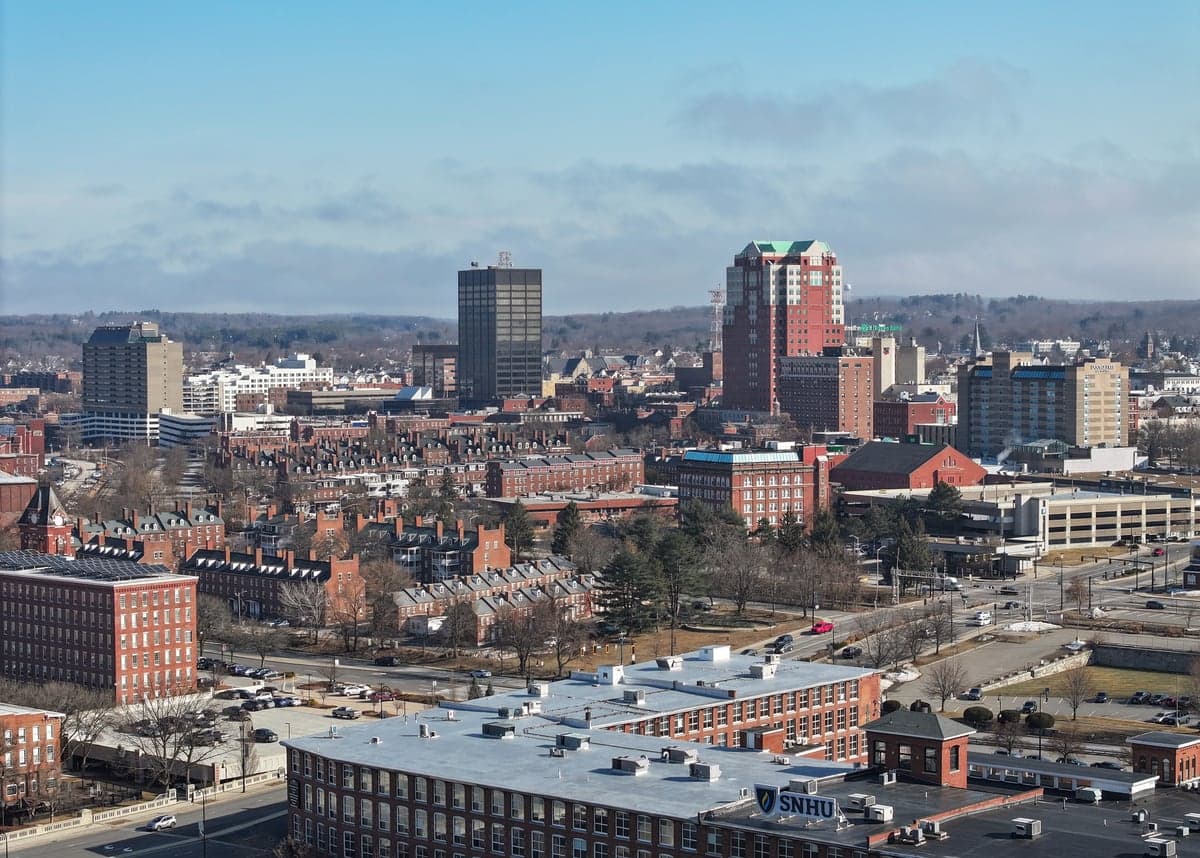
Photo: Wikipedia
Political ClimatePolitical Climate in Manchester, NH
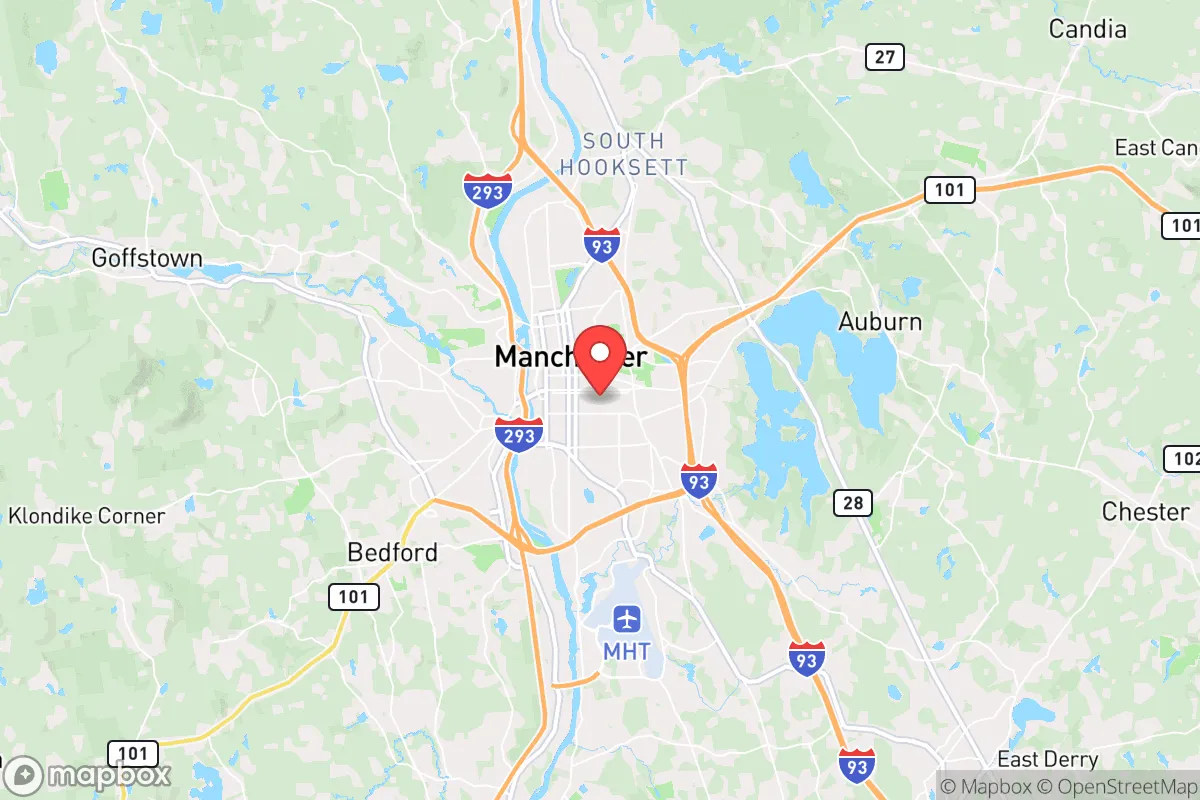
District shown is the primary district for this city’s centroid. Cities may span multiple districts.
Local Political AnalysisPolitical Analysis of Manchester, NH
Manchester, New Hampshire, has a Cook PVI of D+2, meaning it leans slightly Democratic compared to the national average, but don't let that number fool you into thinking it's a solid blue stronghold. This is a city that has shifted noticeably leftward over the past decade, and if you've been around here long enough, you can feel it in the local politics and daily life. The old-school, live-and-let-live New Hampshire spirit is still hanging on in the outskirts, but inside the city limits, you're seeing more government involvement in things that used to be left to personal choice—from zoning to school policies to how businesses operate.
How it compares
Drive ten minutes outside Manchester, and you're in a completely different political world. Towns like Bedford, Londonderry, and Hooksett lean heavily Republican, with many residents voting red by double-digit margins. Even Goffstown and Auburn, just a few miles away, feel more like the New Hampshire of twenty years ago—where the attitude was "mind your own business" and taxes were kept low. Inside Manchester, though, the city council and school board have been trending progressive, especially on social issues and spending. The contrast is stark: you can live in a conservative town, commute to Manchester for work, and feel like you crossed a political border. That D+2 rating masks a city that's becoming more polarized internally, with the urban core voting blue and the surrounding suburbs staying red.
What this means for residents
For those of us who value personal freedom and limited government, the trend in Manchester is concerning. You're seeing more regulations on short-term rentals, stricter noise ordinances, and a school district that's pushing curriculum changes that many parents feel bypass their input. Property taxes have crept up as the city takes on more social programs and infrastructure projects that feel like they're solving problems that didn't exist a few years ago. The local government's appetite for "equity initiatives" and climate action plans sounds good on paper, but it often translates into mandates that small business owners and homeowners have to navigate. If you're someone who believes the best government is the one that stays out of your way, Manchester's trajectory is something to watch closely—especially as the state legislature in Concord sometimes reins in these local overreaches, but not always.
On the cultural side, Manchester still has its charms—the old mills, the minor league baseball, the sense of community in neighborhoods like the North End. But the political climate is shifting faster than many long-time residents are comfortable with. The city's embrace of progressive policies on housing, policing, and education feels like it's moving away from the "New Hampshire advantage" of low taxes and high personal liberty. If you're considering a move here, I'd recommend looking at the surrounding towns first, unless you're ready to get involved in local politics to push back against the overreach. The next few years will tell us whether Manchester doubles down on this path or remembers its roots as a place where people were left alone to live their lives.

State Political ClimatePolitical Climate in New Hampshire
State Political AnalysisPolitical Environment in the State
New Hampshire has long been known as a fiercely independent state, but its political lean has shifted from a classic swing state to a solidly Republican-leaning one over the past decade. The dominant coalition is now a mix of fiscal conservatives, libertarian-leaning independents, and culturally conservative voters from the more rural north and west. While the state still elects a Democratic governor (Chris Sununu, who is more moderate than his national party), the state legislature and executive council have been under GOP control for most of the last ten years. The 2024 election saw Republicans sweep all four congressional seats and maintain supermajorities in both chambers of the General Court, a stark contrast to the purple reputation of the 2000s.
Urban vs. rural divide
The political map of New Hampshire is a textbook case of the urban-rural split. The southeastern corner, anchored by Manchester and Nashua, is the state’s blue stronghold. These two cities, along with Portsmouth and Concord, drive the Democratic vote, fueled by out-of-state transplants, younger professionals, and union households. In 2024, Manchester’s Ward 5 and Ward 6 went 65% for Biden, while the surrounding suburbs like Bedford and Londonderry flipped back to red after trending purple in 2020. The real action is in the rural north and west. Berlin and Coos County are now deep red, with Trump winning Coos by 18 points in 2024—a massive shift from 2016 when it was a toss-up. The Lakes Region, including Meredith and Wolfeboro, has become reliably conservative as retirees and second-home owners from Massachusetts move in. The Dartmouth College area in Hanover remains a liberal island, but it’s increasingly isolated.
Policy environment
New Hampshire’s policy environment is a mixed bag for conservatives, but the trend is positive. The state has no income tax and no sales tax, a major draw for freedom-minded individuals. Property taxes are high (averaging 1.8% of home value), but the state’s reliance on local funding keeps government closer to the people. The regulatory posture is generally light—no state-level minimum wage above the federal $7.25, and right-to-work laws are not on the books, but union power is weak outside of public sector jobs. Education policy is a bright spot: the state passed a universal school choice program in 2023, allowing any family to use public funds for private or homeschool expenses. Healthcare is a concern—the state expanded Medicaid under the Affordable Care Act, and the insurance market is dominated by a few carriers. Election laws are solid: same-day voter registration is allowed, but voter ID is required, and the state has no early voting by mail without an excuse. The 2024 election saw no major controversies, a testament to the state’s clean election infrastructure.
Trajectory & freedom
New Hampshire is becoming more free in several key areas, but there are warning signs. On the positive side, the state passed a constitutional carry law in 2017, allowing permitless concealed carry, and has repeatedly blocked red flag laws. In 2023, the legislature passed a parental rights bill (HB 10) that requires schools to notify parents of any curriculum related to sexual orientation or gender identity, and allows parents to opt their children out. This was a direct response to progressive overreach in school districts like Concord and Portsmouth. On the negative side, the state’s vaccine mandate for healthcare workers was only repealed in 2024 after a two-year fight, and the governor’s emergency powers during COVID were used to shut down businesses and churches—a lesson in how quickly freedom can erode. Property rights are strong, with no statewide zoning mandates, but local boards in Durham and Keene have imposed restrictive growth policies. The trajectory is toward more freedom, but it requires constant vigilance.
Civil unrest & political movements
New Hampshire has seen its share of political activism, but it’s generally more civil than neighboring states. The Free State Project, a movement of libertarians who moved to the state to shrink government, has been a major force since the early 2000s. They’ve successfully pushed for constitutional carry, marijuana decriminalization (though full legalization is stalled), and tax caps. Their annual Porcupine Freedom Festival in Lancaster draws thousands. On the left, the Indivisible movement has been active in Portsmouth and Nashua, organizing against Trump and for abortion rights. The state’s sanctuary city debate is a flashpoint: Manchester and Concord have resisted cooperating with ICE, while the state legislature passed a law in 2024 prohibiting local sanctuary policies—a win for rule of law. Election integrity protests were minimal in 2024, but the 2020 election saw a small but vocal group of activists in Salem and Derry demanding audits. The overall vibe is one of active, engaged citizenship, not violent unrest.
Projection
Over the next 5-10 years, New Hampshire is likely to become more conservative but with a libertarian flavor. The in-migration from Massachusetts, New York, and Connecticut is accelerating, and these newcomers are often fleeing high taxes and progressive policies—they’re not bringing blue-state voting habits with them. The Seacoast region (Portsmouth, Exeter) may trend blue as remote workers move in, but the interior and north will stay red. The state’s demographic profile is aging, which favors conservative turnout. The biggest risk is a future Democratic governor who could veto the legislature’s conservative bills, but the GOP’s supermajority can override vetoes. The school choice program will expand, property tax reform may finally happen, and marijuana legalization is likely within five years. A new resident moving in now should expect a state that is freer than most, but with constant political battles over local control versus state mandates.
For a conservative individual or family considering relocation, New Hampshire offers a rare combination of low taxes, strong gun rights, and a growing school choice system. The key is to choose your town carefully: stick to the rural north or the conservative suburbs of Bedford, Londonderry, or Windham to avoid the progressive enclaves of Portsmouth and Hanover. The state’s political culture rewards active participation—town meetings, school board races, and state representative elections are where the real decisions are made. If you’re willing to get involved, you’ll find a state that respects your freedom and your wallet. Just keep an eye on the governor’s mansion and the courts, because the fight for liberty never ends.
* Values derived from national, state, county, city and local statistics and may differ in a specific area. Last updated: 2026-05-01T23:54:22.000Z
Narrative content on this page is AI-generated and may contain mistakes. Verify any details that matter before acting on them.
ReloMaps may earn a commission from affiliate links at no extra cost to you.

