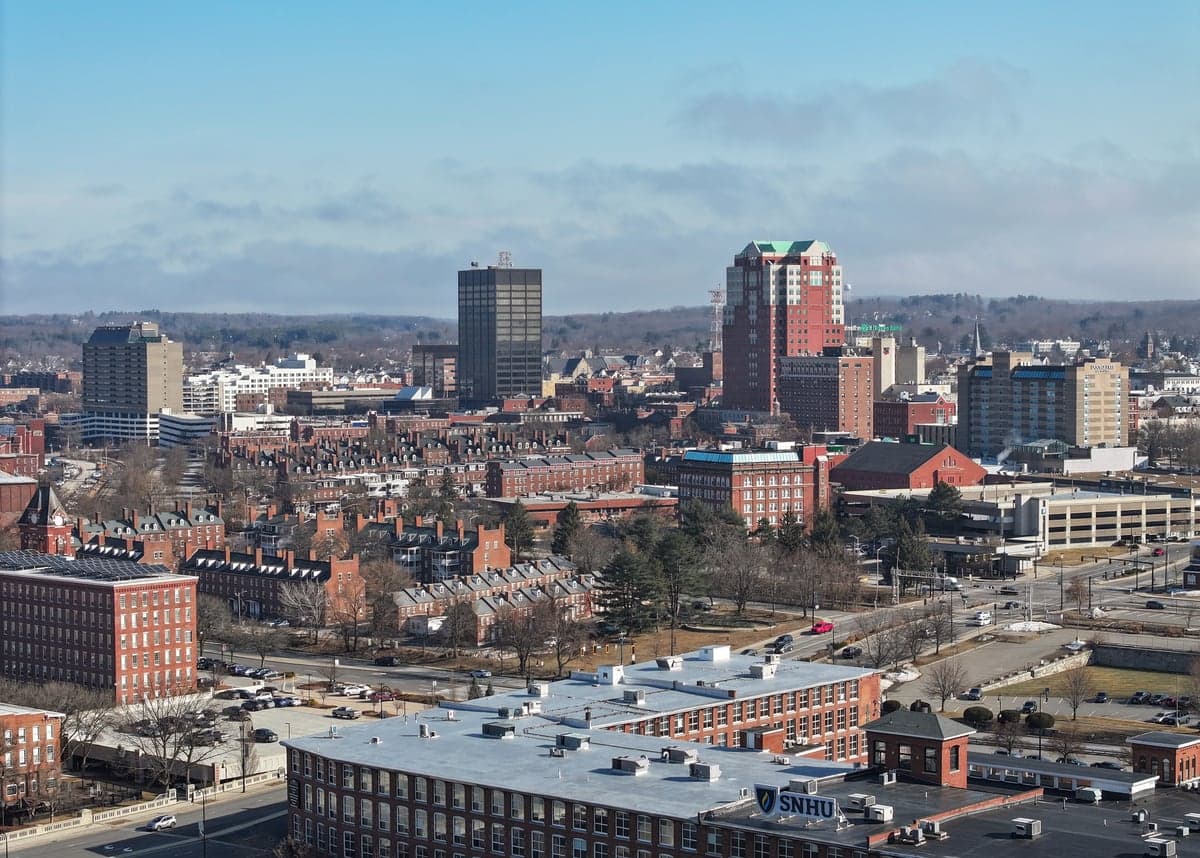
Photo: Wikipedia
Strategic Assessment of Manchester, NH
Multiple tactical vulnerabilities. Population density, target proximity, or disaster risk are likely compounding. A retreat property and exit planning is required.
What does the Strategic Assessment tell us?
Our Strategic Assessment grades tactical survivability of an area. Major population centers, military targets, fallout zones, natural disasters, and border exposure all drive risk — lower exposure means a more defensible position in a crisis.
This is heavily inspired by Joel Skousen's Strategic Relocation book. Highly recommended you checkout the book ($)What does this tell us?
Our Strategic Assessment grades tactical survivability of an area. Major population centers, military targets, fallout zones, natural disasters, and border exposure all drive risk — lower exposure means a more defensible position in a crisis.
This is heavily inspired by Joel Skousen's Strategic Relocation book. Highly recommended you checkout the book ($)Strategic Pillars

Key Distances
Regional Safe Places
Below is our recommended "safe zones" in New Hampshire and the surrounding area based on our strategic heuristics. For most people, it's unrealistic to live in a “safe zone” full-time due to work, family or other personal reasons. They tend to be more rural. However, many of these areas are perfect for second homes and retreat properties that double as a vacation home or even a short-term rental.
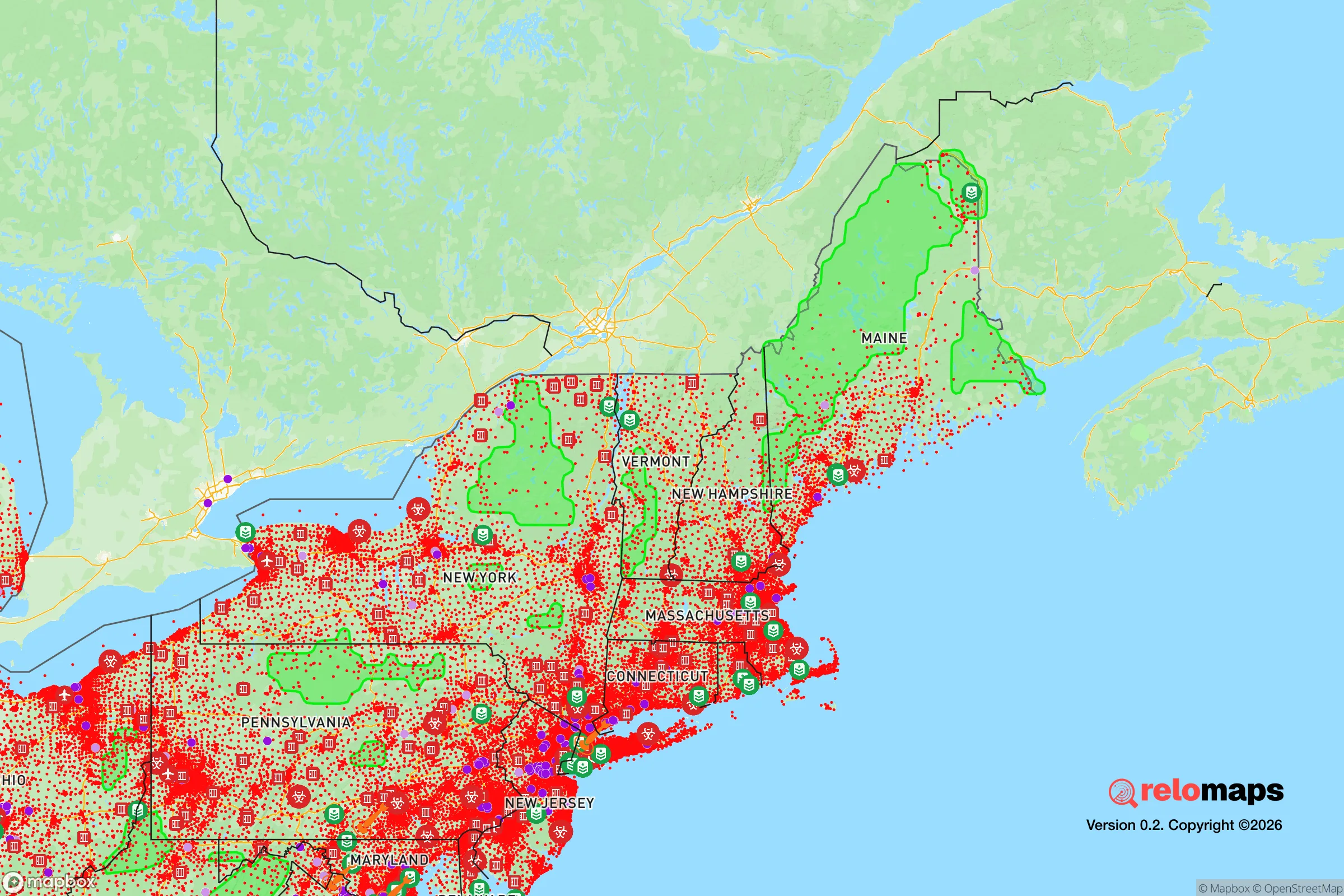
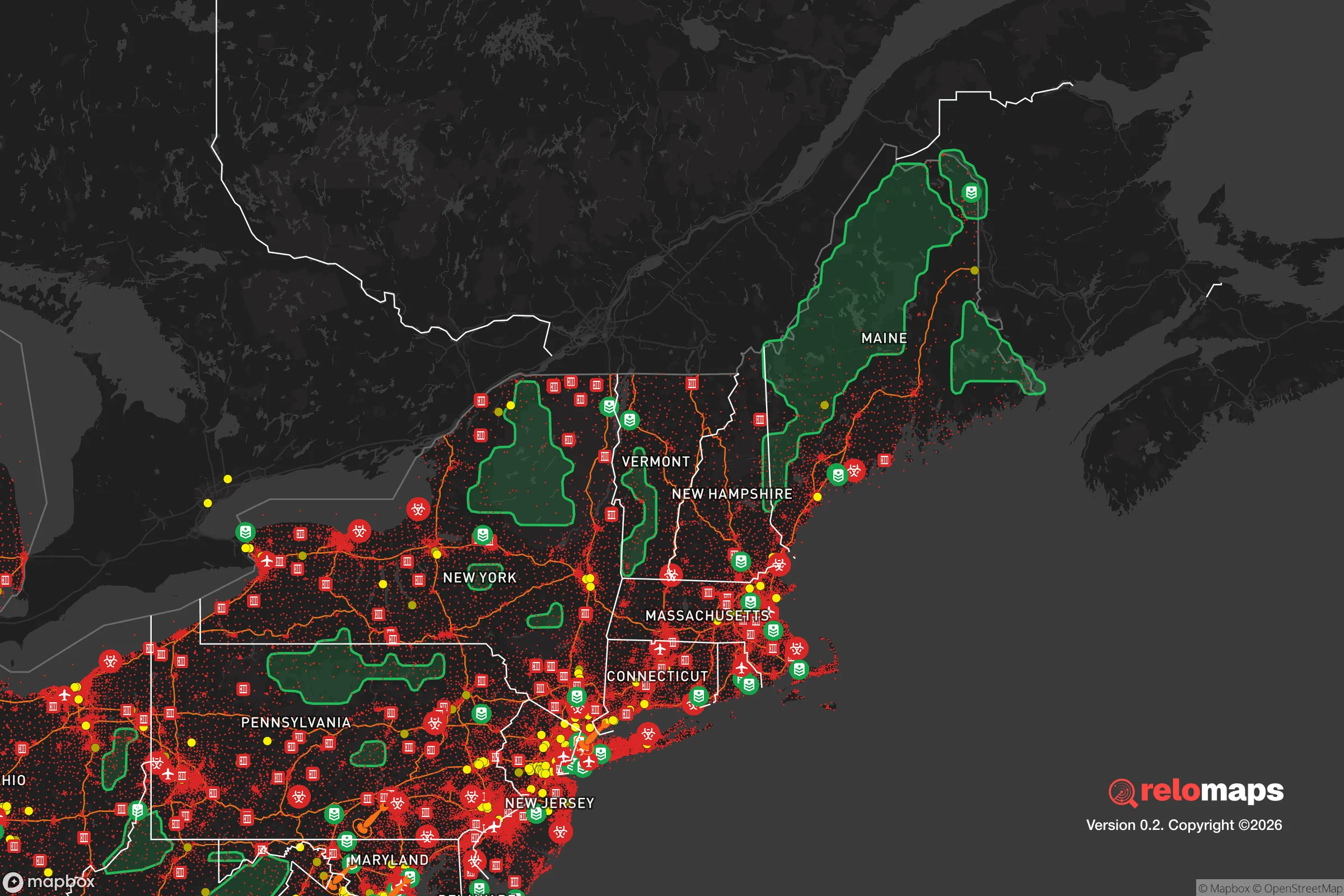


Important Note: For informational purposes only. This does not mean nothing bad ever happens in the green zones. Please use common sense. This is based on public data and modeled with AI. We tried to take a conservative approach but mistakes happen. We update this regularly as new information becomes available.
Solar Generator Recommendations
Backup power matters more here than in safer locations. We've picked three solar generators across budgets and capacity tiers — start with the budget unit if you only need a few essentials, or step up if you want to run a fridge and HVAC for days at a time.

Jackery Portable Power Station Explorer 300
Budget OptionPower on the Go: Weighing only 11 lbs, it's convenient to set up and store with book-sized foldable solar panels

BLUETTI Portable Power Station AC180
Designed for both indoor and outdoor scenarios, AC180 is highly capable as it has a robost capacity and continuous output power.

EF ECOFLOW DELTA Pro Ultra Power Station
Upgraded PickEcoFlow DELTA Pro Ultra is a whole-home energy system designed to grow with your family. Integrated with the Smart Home Panel 2, it scales to meet your evolving energy needs — keeping your home powered, intelligent, and secure through every stage of life.
We earn a commission, at no additional cost to you.
Strategic Assessment Analysis
Manchester, New Hampshire, offers a mixed strategic picture for the conservative prepper: its location provides a buffer from the most immediate fallout of a coastal collapse, yet its proximity to Boston and the I-93 corridor introduces significant vulnerabilities. The city sits roughly 50 miles north of Boston, placing it outside the likely blast radius of a major metropolitan nuclear or dirty-bomb event, but well within the zone of secondary effects—mass evacuation, supply chain disruption, and civil unrest. For a relocator prioritizing resilience, Manchester’s advantages lie in its access to northern New England’s natural resources and its status as a regional hub, but those same factors make it a target for population displacement and resource strain during a crisis.
Geographic position and natural advantages for long-term survival
Manchester’s geographic position is a double-edged sword, but the natural advantages are real. The city sits in the Merrimack River Valley, with the river itself providing a reliable freshwater source—critical for any extended grid-down scenario. The surrounding terrain is a mix of rolling hills, forested areas, and agricultural land, offering opportunities for hunting, foraging, and small-scale farming. The White Mountains lie about two hours north, providing a rugged retreat zone for those willing to relocate further. The region’s climate is temperate but harsh in winter, which acts as a natural deterrent to unprepared migrants from warmer states. Manchester’s elevation (roughly 200 feet above sea level) and inland position mean it is largely immune to coastal storm surges and sea-level rise, a growing concern for East Coast relocators. The city’s water supply, drawn from Lake Massabesic and the Merrimack River, is generally reliable, though treatment plants are vulnerable to cyberattack or contamination. For a prepper, the key takeaway is that Manchester offers a solid base of operations—provided you have the means to secure your own water and food sources, as municipal systems will be the first to fail under stress.
Risks, exposures, and proximity to fallout-relevant landmarks
The most glaring risk for Manchester is its proximity to Boston, a prime target for any adversary seeking to cripple the U.S. Northeast. A single nuclear detonation in Boston would send a wave of evacuees north along I-93 and I-95, overwhelming Manchester’s infrastructure within hours. The city’s own population of roughly 115,000 could double or triple overnight, straining food, fuel, and medical supplies. Manchester-Boston Regional Airport, while not a major military target, could become a choke point for relief efforts or a vector for disease. The city is also within 100 miles of the Seabrook Nuclear Power Plant in New Hampshire and the Pilgrim Nuclear Power Station in Massachusetts—both aging facilities that could become targets or sources of radiological release in a conflict. Manchester sits in a zone where prevailing winds from the southwest would carry fallout from a Boston or Seabrook event directly over the city. Additionally, the city’s industrial history has left behind Superfund sites and contaminated soils, though these are less of a concern than acute threats. For the strategic relocator, the calculus is clear: Manchester is too close to high-value targets and population centers to be a safe primary retreat. It functions better as a staging area or a temporary hub before moving deeper into New Hampshire’s North Country or Maine.
Practical resilience for a relocator: food, water, energy, and defensibility
On the practical side, Manchester’s resilience is a mixed bag. The city has a robust local food scene—farmers’ markets, community gardens, and a growing number of CSAs—but these are fragile in a crisis. Most of the region’s food supply is trucked in via the I-93 corridor, meaning a fuel shortage or road blockade would empty grocery shelves within 72 hours. For a prepper, this means you need at least a three-month supply of non-perishables, plus the means to grow your own. The growing season is short (roughly 120 days), but cold-hardy crops like potatoes, kale, and root vegetables do well. Water is more promising: the Merrimack River is a reliable surface source, but you’ll need filtration and boiling capacity, as upstream industrial runoff and sewage overflows are common. Energy is a weak point. Manchester’s grid is tied to the New England power system, which is vulnerable to cyberattack, ice storms, and demand spikes. Solar is viable but limited by winter cloud cover; a backup generator with a 200-gallon propane tank is a near-necessity. Defensibility is the biggest concern. Manchester is a city of dense neighborhoods, strip malls, and industrial parks—hard to secure and easy to infiltrate. The surrounding suburbs (Bedford, Goffstown, Hooksett) offer more defensible terrain, with larger lots, tree cover, and fewer entry points. For a single individual or family, the smart play is to buy property on the outskirts, not in the city core. Manchester’s police and fire services are professional but underfunded; in a prolonged crisis, you cannot rely on them for protection.
Overall, Manchester is a strategic compromise. It offers access to northern New England’s resources and a buffer from coastal chaos, but its proximity to Boston and its own urban density make it a high-risk location for a long-term survival scenario. For the conservative prepper, the city is best viewed as a logistics hub—a place to establish a foothold, build networks, and stockpile supplies before moving to a more defensible rural property further north. If you are determined to settle in Manchester, prioritize a location on the northern or eastern edges, secure your own water and power, and maintain a low profile. The city will survive a moderate crisis, but it will not thrive in a collapse. Your best bet is to use it as a base, not a bunker.

* Values derived from national, state, county, city and local statistics and may differ in a specific area. Last updated: 2026-05-01T23:54:22.000Z
Narrative content on this page is AI-generated and may contain mistakes. Verify any details that matter before acting on them.
ReloMaps may earn a commission from affiliate links at no extra cost to you.

