Photo: Wikipedia
Quality of Life in Manchester, NH
Above-average quality of iife. The area offers a reasonable cost of living, decent mobility, and a mix of neighborhood amenities.
What does Quality of Life tell us?
Quality of Life blends cost of living, nearby amenities, socioeconomic signals, and neighborhood character. City-level scores represent the whole municipality; individual neighborhoods can differ.
What does this tell us?
Quality of Life blends cost of living, nearby amenities, socioeconomic signals, and neighborhood character. City-level scores represent the whole municipality; individual neighborhoods can differ.
Cost of Living
23% above national average
The Real Cost of Living in Manchester, NH for 2026
| Tier | Individual | Family (4) |
|---|---|---|
| Survival | $23k | $44k |
| Comfortable | $65k | $96k |
| Luxury | $130k+ | $201k+ |
| Elite (Top 5%) | $152k+ | $236k+ |
81%
The Area Signal
A metric tracking the socioeconomic signals of the area.
Hobbies
Explore the areaGroceries
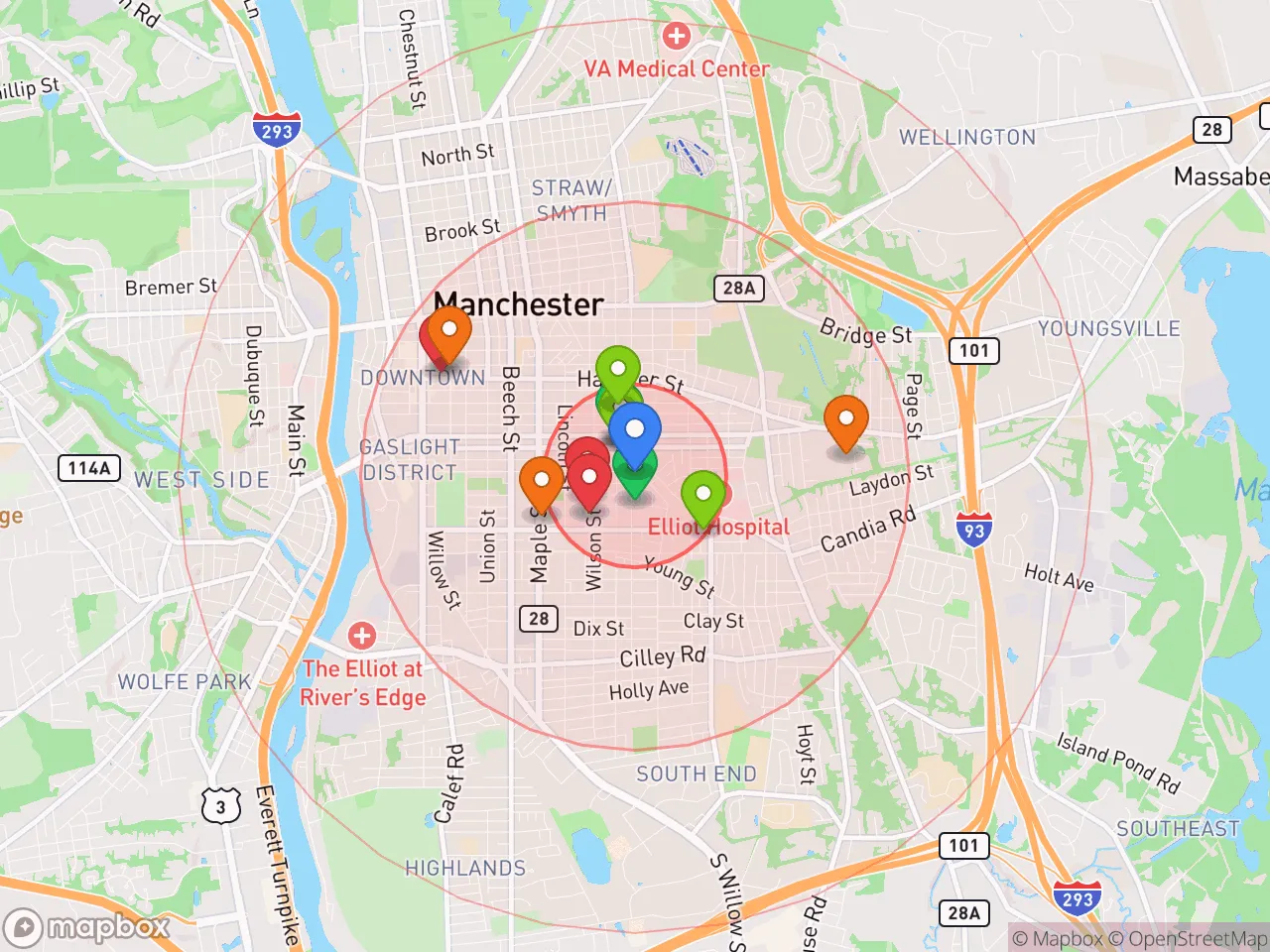
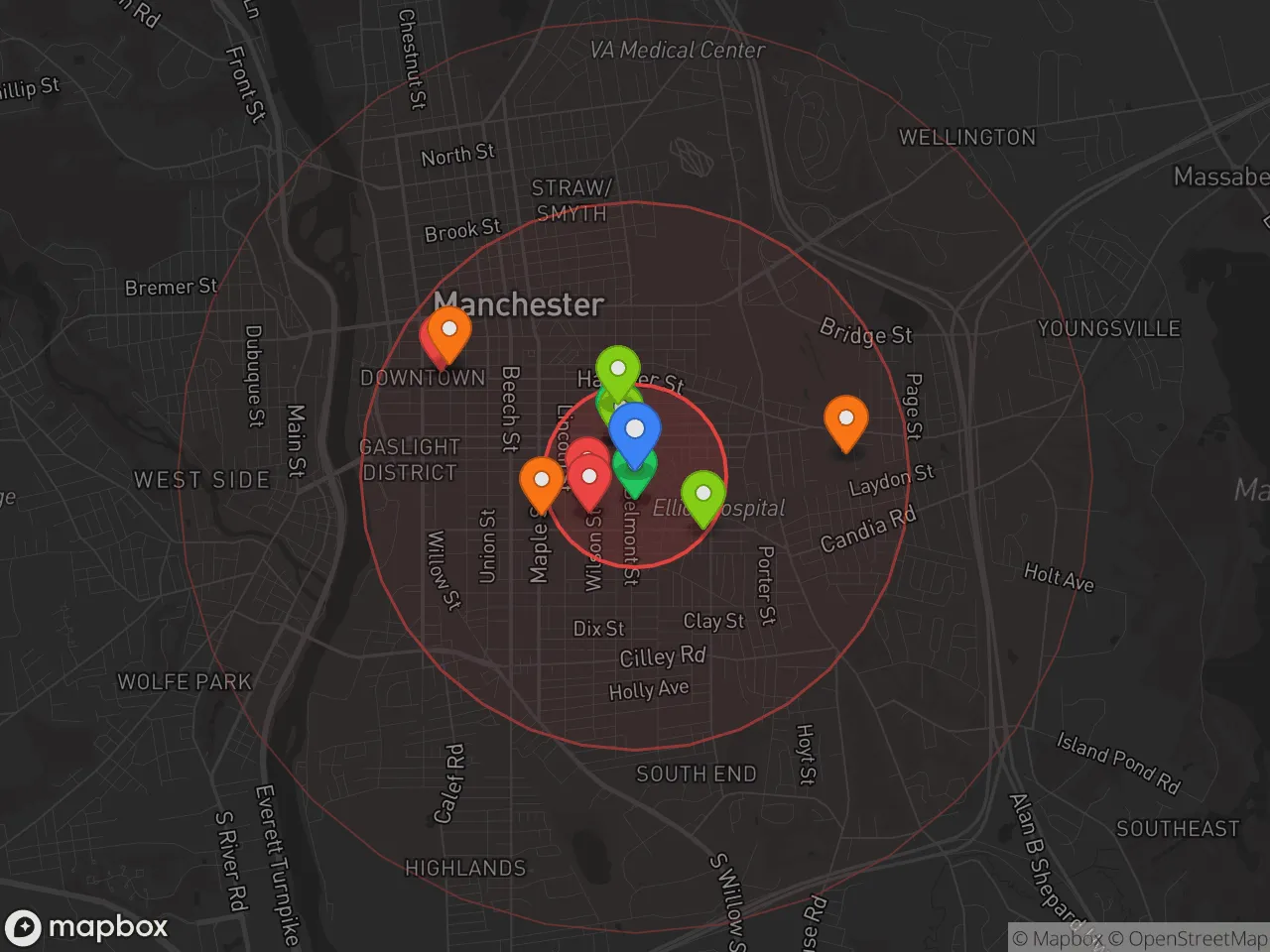
7 within 10 miles
Gas
20 within 10 miles
Hospital
11 within 20 miles
Airport
PDX — Portland International Jetport
Post Office
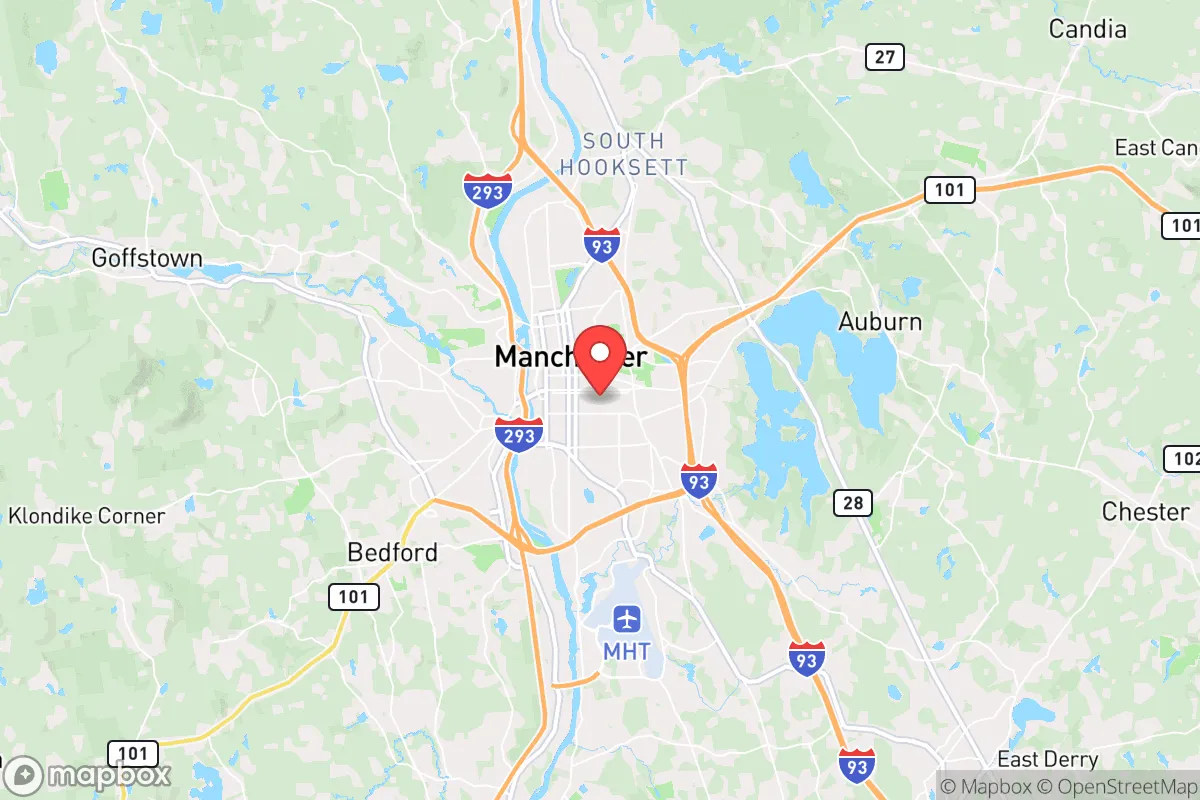
USPS — 955 Goffs Falls Road, Manchester
Critical Amenities
Quality-of-Life Analysis
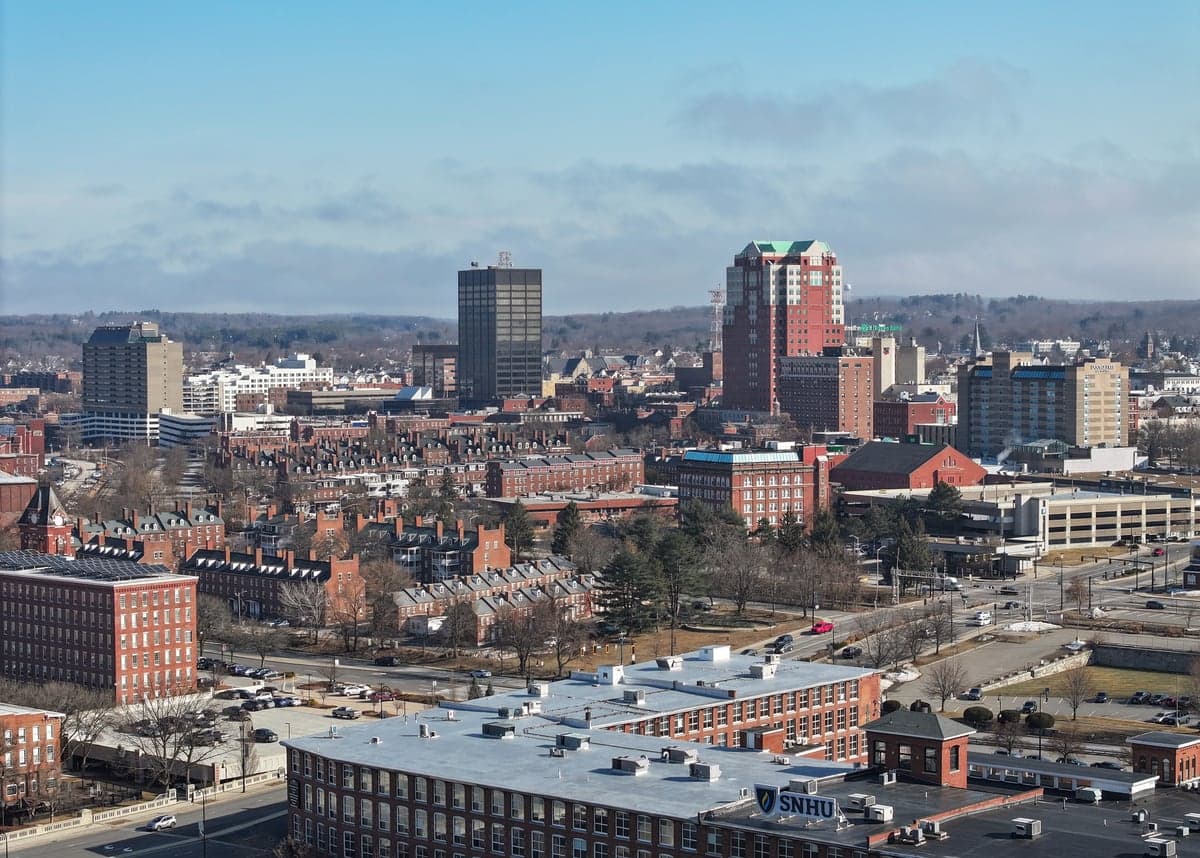
Manchester, New Hampshire, presents a quality of life defined by a cost of living index of 123 (23% above the U.S. average) and a median home value of $336,300, positioning it as a more affordable alternative to the Boston metro area while still commanding a premium over much of rural New England. The city attracts a mix of young professionals drawn to its growing tech and healthcare sectors, families seeking strong public schools, and former Massachusetts residents priced out of the Greater Boston market. With a median household income that consistently outpaces the national figure, Manchester offers a middle-to-upper-middle-class lifestyle where trade-offs between urban amenities and suburban space are a daily reality.
Cost of living, housing affordability, and how Manchester compares to nearby areas
Manchester’s cost of living index of 123 is significantly lower than Boston’s index of 163, but notably higher than the New Hampshire state average of 100. The median home value of $336,300 is roughly half that of the Boston metro, yet it is about 15% above the national median, reflecting sustained demand from out-of-state buyers. Median rent sits at $1,465, which is competitive compared to southern New Hampshire towns like Nashua ($1,550) but higher than more rural areas like Concord ($1,250). The average commute of 23.8 minutes is a key advantage: it is shorter than the national average of 26 minutes and far below the 30+ minute commutes common in the Boston suburbs, thanks to Manchester’s compact layout and limited traffic congestion. However, property taxes in New Hampshire are among the highest in the nation (no state income or sales tax), so the effective monthly housing cost can be higher than the sticker price suggests.
Schools, amenities, and what daily life feels like for residents
Daily life in Manchester blends small-city convenience with access to big-city culture. The Manchester School District operates 16 elementary schools, four middle schools, and three high schools, with Manchester Memorial High School and Manchester Central High School both offering robust Advanced Placement programs and career-technical pathways. The city is home to the Currier Museum of Art, the Palace Theatre, and the Manchester Monarchs (ECHL hockey), providing cultural and entertainment options uncommon for a city of its size (population ~115,000). Outdoor recreation is a major draw: the Merrimack River runs through downtown, and the 1,200-acre Massabesic Lake is a 10-minute drive for swimming and hiking. The Manchester-Boston Regional Airport offers direct flights to major hubs, making business travel efficient. The city’s walkability is moderate—downtown is pedestrian-friendly, but most errands require a car. The food scene has grown in recent years, with a concentration of breweries and farm-to-table restaurants along Elm Street.
Manchester is best suited for professionals and families who want access to Boston’s job market (a 50-minute drive or 1.5-hour commuter rail ride) without paying Boston prices, and who value a four-season outdoor lifestyle. It is less ideal for those seeking a vibrant nightlife scene or extensive public transit, as the city’s bus system is limited and ride-hailing is the primary alternative to driving. Retirees on fixed incomes may find the property tax burden challenging, but the absence of state income tax is a strong offset. Overall, Manchester offers a balanced, middle-ground quality of life—more affordable and less congested than the Boston suburbs, yet more urban and amenity-rich than most of northern New England.

Crime in Manchester, NH
Generally safer than 61% of comparable U.S. locations.
Violent CrimeViolent Crime Analysis
Property CrimeProperty Crime Analysis
Crime Analysis
Manchester, New Hampshire, presents a crime picture that warrants careful consideration, particularly for those relocating from safer suburban or rural areas. The city's violent crime rate stands at 320.7 incidents per 100,000 residents, while property crime occurs at a rate of 1,522.2 per 100,000. These figures place Manchester above both the New Hampshire state average and the national median, making it the most crime-prone city in the state by a significant margin.
Crime in context
To understand Manchester's safety profile, it is essential to compare its rates to broader benchmarks. The national violent crime rate is roughly 380 per 100,000, meaning Manchester's 320.7 is slightly below the U.S. average but nearly double New Hampshire's statewide violent crime rate of approximately 170 per 100,000. Property crime in Manchester, at 1,522.2 per 100,000, is about 50% higher than the national average of roughly 1,000 per 100,000 and far exceeds the state's much lower property crime rate. A key factor driving these elevated numbers is the influence of progressive justice policies in Hillsborough County. Liberal-leaning judges and district attorneys, while sympathetic to offenders, have implemented policies that prioritize diversion and reduced incarceration. This approach, however well-intentioned, directly contributes to more criminals remaining on the street, which negatively impacts public safety and justice for victims. Repeat offenders cycle through the system with minimal consequences, a pattern visible in Manchester's persistent property crime and drug-related offenses.
What residents experience
For those living in Manchester, the statistical reality translates into tangible daily concerns. Property crime is the most common issue, with vehicle break-ins, package thefts, and residential burglaries occurring frequently, especially in neighborhoods near downtown and major thoroughfares. Violent crime, while less common, is concentrated in specific areas and often linked to drug trafficking and gang activity. Residents report that the Elm Street corridor and areas around the Queen City Bridge see higher instances of disorder and theft. The city's police department has increased patrols and community outreach, but the underlying challenge remains the justice system's leniency. Victims of property crime often express frustration when perpetrators are released quickly or face minimal charges, a direct consequence of the progressive prosecutorial philosophy that dominates the region.
Neighborhood-level variation is significant. The North End, particularly around the Manchester-Boston Regional Airport and along the Merrimack River, is generally considered safer, with lower crime rates and more family-oriented housing. In contrast, the central city neighborhoods, including parts of the West Side and the area around the Mall of New Hampshire, experience higher crime density. Prospective residents should research specific blocks and consult local police crime maps, as safety can change dramatically within a few streets. Overall, while Manchester offers economic and cultural opportunities, its crime landscape—shaped by progressive judicial policies—demands vigilance and a clear-eyed assessment of personal risk tolerance.
* Values derived from national, state, county, city and local statistics and may differ in a specific area. Last updated: 2026-05-01T23:54:22.000Z
Narrative content on this page is AI-generated and may contain mistakes. Verify any details that matter before acting on them.
ReloMaps may earn a commission from affiliate links at no extra cost to you.

