Photo: Wikipedia
Demographics of Mandan, ND
Affluence Level in Mandan, ND
A middle-class area roughly in line with national averages across income, home values, education, and employment.
People of Mandan, ND
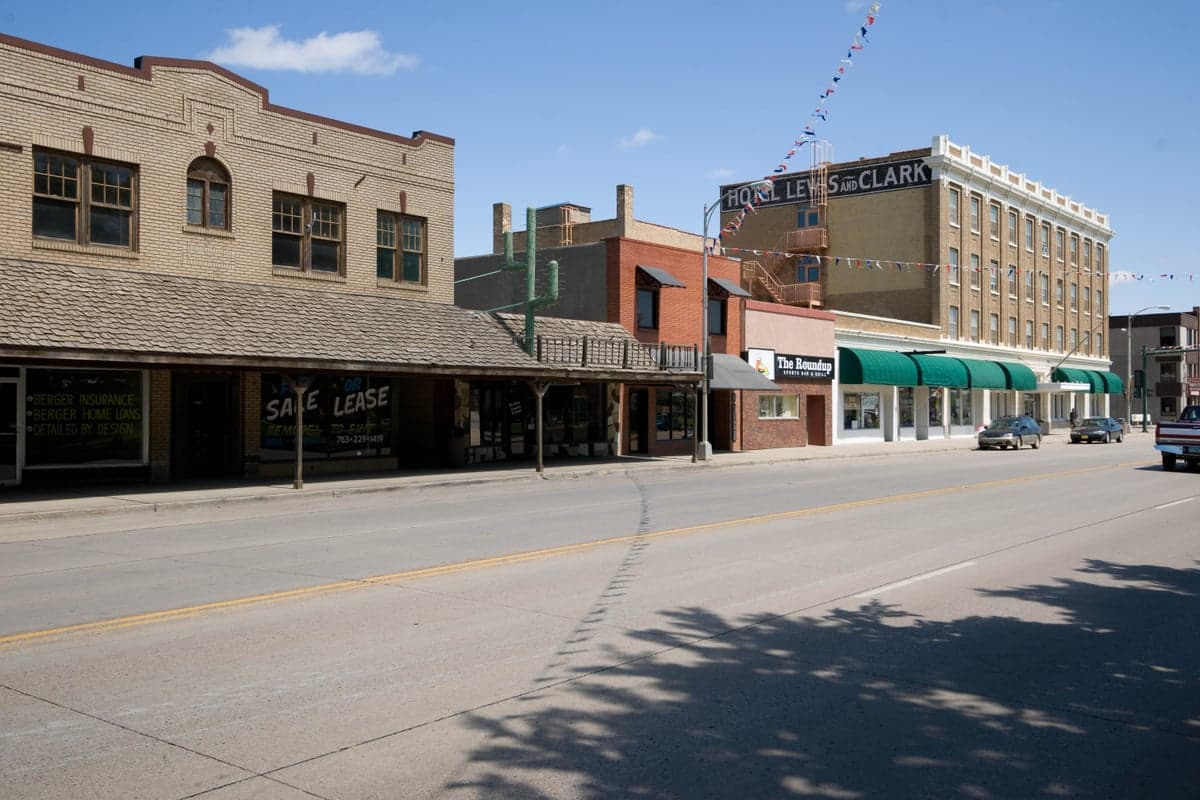
The people of Mandan, North Dakota today number 24,293, forming a predominantly white (85.0%) community with a notably low foreign-born share of just 0.4%. The city’s identity is rooted in its role as a stable, family-oriented satellite of Bismarck, with a blue-collar and agricultural heritage that remains visible in its older neighborhoods. Despite modest Hispanic (5.4%) and Black (2.4%) populations, Mandan remains one of the most ethnically homogeneous cities in the upper Midwest, a character shaped by its distinct settlement history and limited recent immigration.
How the city was settled and grew
Mandan’s human history begins with the Mandan and Hidatsa tribes, who established earth-lodge villages along the Missouri River centuries before European contact. The modern city, however, was founded in 1879 as a Northern Pacific Railroad terminus, drawing a wave of German-Russian immigrants, Norwegian settlers, and Irish railroad workers. These groups built the city’s earliest neighborhoods: Dykshoorn (named for a Dutch-German farming family) became a hub for German-Russian homesteaders, while South Hill housed railroad laborers in modest frame houses. The 1880s land boom, fueled by the railroad’s promise of cheap farmland, brought Scandinavian families who settled the West Mandan area, establishing Lutheran churches and cooperative grain elevators. By 1910, the population had reached 3,000, with a near-total European-origin composition. The city’s growth stalled during the Dust Bowl and Great Depression, but a second wave arrived during World War II, when the Northern Pump Company and the Mandan Refinery (built 1954) drew workers from the rural Midwest. These newcomers filled the Riverside neighborhood, a post-war subdivision of ranch-style homes built for refinery and factory employees.
Modern era (post-1965)
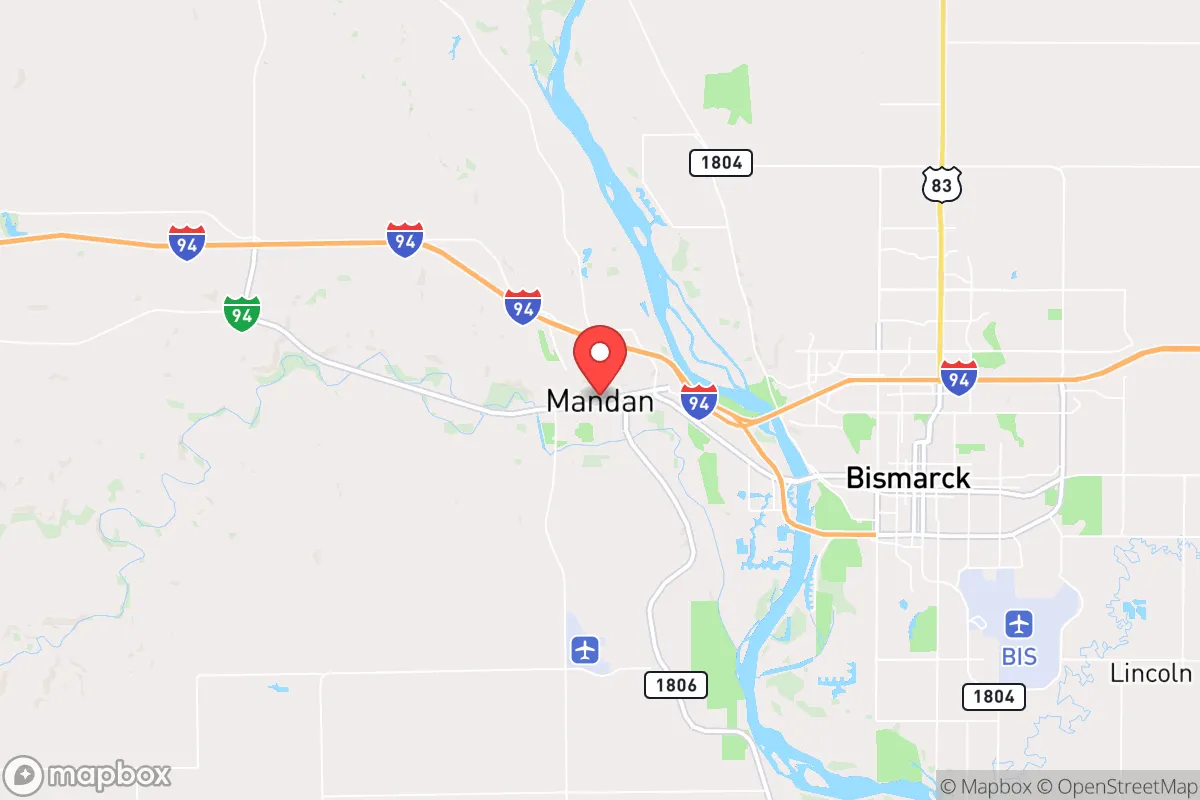
After the 1965 Immigration Act, Mandan saw virtually no influx from new source countries. The foreign-born share remained below 1% through 2020, a stark contrast to national trends. Domestic in-migration has been the sole driver of demographic change, primarily from rural North Dakota counties and, more recently, from oil-boom workers in the Bakken region who sought affordable housing in Mandan. The Prairie Hills subdivision, developed in the 1990s and 2000s, absorbed many of these domestic migrants—mostly white families from western North Dakota and Montana. The Hispanic population, now 5.4%, is largely the result of seasonal agricultural workers (sugar beet and potato farms) who settled permanently in the East Mandan area near the industrial corridor. The Black population (2.4%) is concentrated among military-affiliated families stationed at the nearby North Dakota National Guard base, with no distinct ethnic enclave. East/Southeast Asian residents (0.3%) are almost entirely professionals employed at Sanford Health or Bismarck State College, living in newer subdivisions like Fox Run. The Indian-subcontinent population is effectively zero (0.0%), reflecting the absence of tech or academic sectors that typically draw that group.
The future
Mandan’s population is projected to grow slowly, reaching roughly 26,000 by 2035, driven entirely by domestic migration from within the state and adjacent counties. The city is not homogenizing further—it is already near-maximum homogeneity—but it is also not tribalizing into distinct ethnic enclaves. The Hispanic share may rise to 7-8% as second-generation agricultural families remain, but assimilation into predominantly white neighborhoods is the norm. The foreign-born share will likely stay below 1%, as Mandan lacks the job diversity (tech, academia, logistics) that attracts immigrants. The college-educated share (30.6%) is below the national average and is concentrated in the Prairie Hills and Fox Run subdivisions, while the older South Hill and Riverside areas retain a higher share of blue-collar and retired residents. The next decade will see modest infill development on the city’s southern edge, but no major demographic disruption.
For someone moving in now, Mandan offers a stable, culturally cohesive community with low crime and strong schools, but little ethnic or religious diversity. The city is becoming slightly more Hispanic and slightly more educated, but its core identity as a white, native-born, family-oriented satellite of Bismarck will persist. New residents should expect a place where neighborly familiarity and civic engagement are high, but where the social fabric is unlikely to change rapidly.

* Values derived from national, state, county, city and local statistics and may differ in a specific area. Last updated: 2026-04-19T06:02:15.000Z
Narrative content on this page is AI-generated and may contain mistakes. Verify any details that matter before acting on them.
ReloMaps may earn a commission from affiliate links at no extra cost to you.

