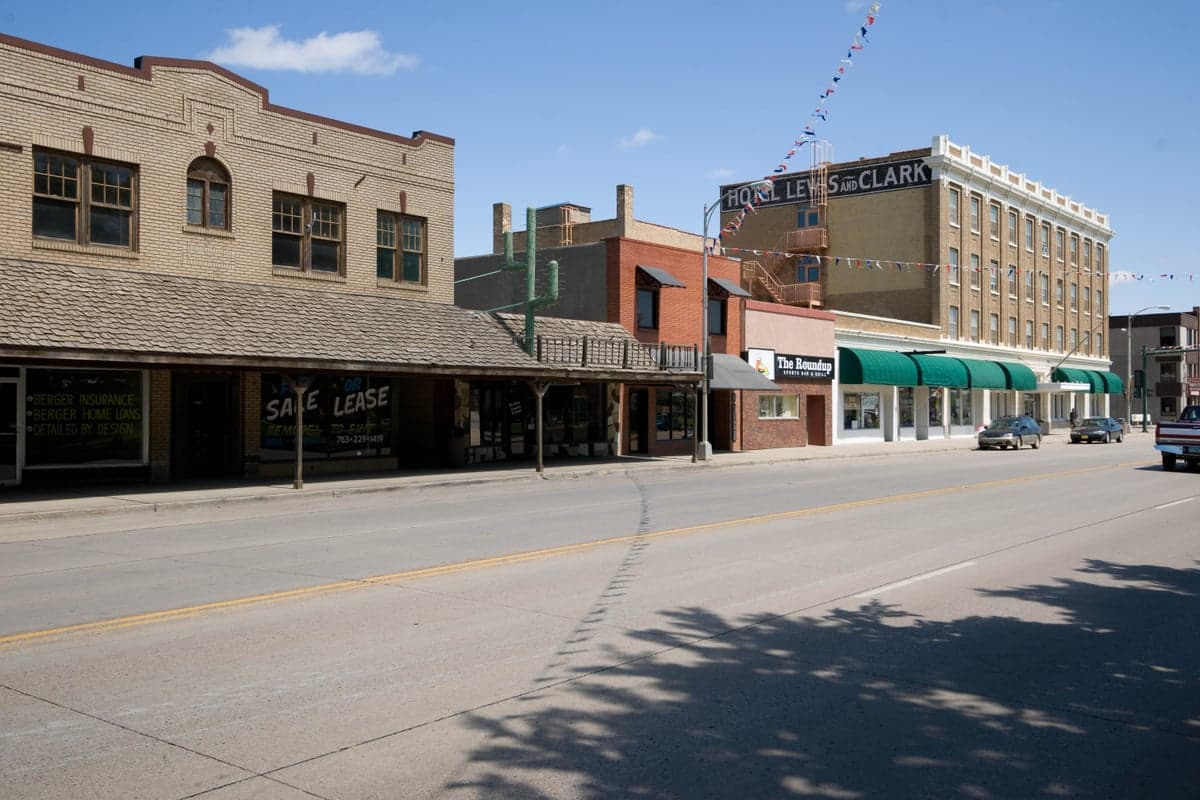
Photo: Wikipedia
Political ClimatePolitical Climate in Mandan, ND
District shown is the primary district for this city’s centroid. Cities may span multiple districts.
Inherited from parent state — no local data available.
Local Political AnalysisPolitical Analysis of Mandan, ND
Mandan, North Dakota, sits deep in reliably conservative territory, with a Cook PVI of R+18 that reflects a community where traditional values and limited government aren't just talking points—they're the default setting. The city has voted overwhelmingly Republican in every major election for decades, and that trend shows no signs of slowing down. If anything, the political climate here has hardened over the past ten years, as national debates over gun rights, energy policy, and federal mandates have pushed locals further away from anything resembling progressive ideology. You won't find much hand-wringing about "bipartisanship" here; most folks see it as a polite word for caving to government overreach.
How it compares
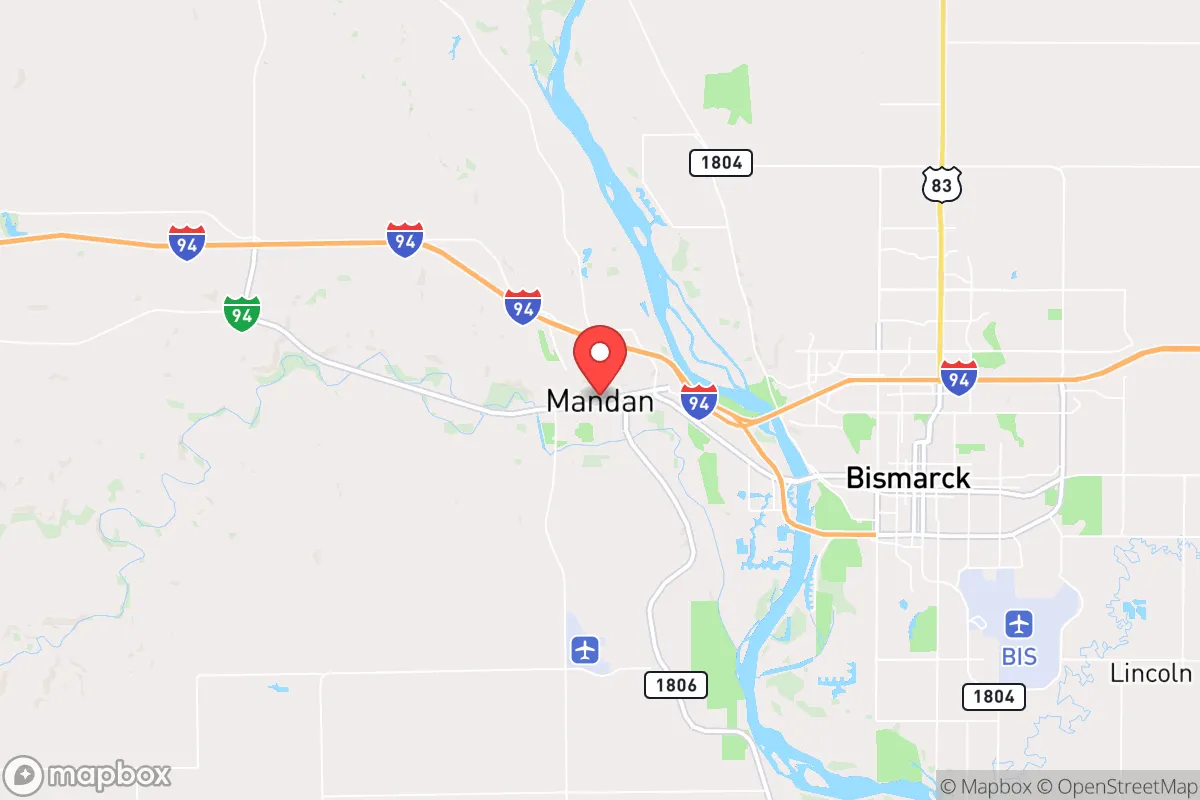
Drive ten miles east to Bismarck, and you'll find a slightly more moderate political mix, thanks to state government workers and a growing professional class that sometimes leans toward pragmatic centrism. But Mandan is a different animal. The city's blue-collar roots in agriculture, energy, and rail have kept it firmly anchored to conservative principles. Compare it to Fargo, which has drifted leftward in recent cycles—Mandan feels like a time capsule of pre-2020 North Dakota politics. Even within Morton County, Mandan is the conservative anchor; smaller towns like New Salem and Glen Ullin are even more reliably red, but they lack the population to shift the county's overall lean. The contrast with the state's Native American reservations, which vote heavily Democratic, is stark, but that's a cultural and geographic divide that's been in place for generations.
What this means for residents
For someone living in Mandan, the political climate translates into a daily life that's largely free from the kind of progressive policy experiments you see in coastal cities. There's no serious push for defunding the police, no local ordinances restricting gun ownership, and no appetite for carbon taxes that would hammer the region's oil and coal industries. Property taxes are a perennial gripe, but they're still lower than in most of the country, and the state's lack of a sales tax on groceries and clothing is a practical benefit that residents notice. The downside? If you're hoping for rapid change on issues like marijuana legalization or expanded public transit, you'll be disappointed. The city council and county commission move slowly, and they're not easily swayed by activist pressure. That's a feature, not a bug, for most locals who see government caution as a safeguard against overreach.
The cultural and policy distinctions here are subtle but real. Mandan is the kind of place where the annual Mandan Rodeo Days still draws a bigger crowd than any political rally, and where the local school board spends more time debating curriculum standards than social justice initiatives. The city's proximity to the Fort Berthold Reservation creates occasional friction over oil tax revenue sharing and law enforcement jurisdiction, but those debates rarely spill into the broader political conversation. Looking ahead, the biggest threat to Mandan's conservative character isn't a progressive takeover—it's the slow creep of federal regulations on energy and agriculture that could squeeze the local economy. As long as the state legislature in Bismarck holds the line on property rights and Second Amendment protections, Mandan will stay the course. But if Washington keeps pushing mandates on everything from trucking emissions to school lunch programs, you'll see that R+18 number start to look like a floor, not a ceiling.

State Political ClimatePolitical Climate in North Dakota
State Political AnalysisPolitical Environment in the State
North Dakota is a deeply conservative state, with Republicans holding every statewide office and supermajorities in both legislative chambers, but the political climate is more nuanced than a simple red-state label suggests. The state has shifted rightward over the past 20 years, driven by a rural exodus from the Democratic-NPL (Nonpartisan League) and the influx of oil workers in the Bakken region. However, the urban centers of Fargo and Grand Forks have become more competitive, occasionally electing Democrats to local office, creating a subtle but real urban-rural tension that any new resident should understand.
Urban vs. rural divide
The political map of North Dakota is a classic study in contrast. The eastern corridor, anchored by Fargo (Cass County) and Grand Forks (Grand Forks County), is the state’s most moderate region. Fargo, home to North Dakota State University and a growing tech and healthcare sector, voted for Joe Biden in 2020 by a slim margin, though it still sends Republicans to the legislature. Grand Forks, with the University of North Dakota, leans slightly more conservative but remains a swing area. In contrast, the rural west and central regions—places like Minot, Williston, Dickinson, and Bismarck—are deeply red. The Bakken oil boom supercharged this divide: oil counties like McKenzie and Williams routinely vote 80%+ Republican, while the state’s Native American reservations, such as the Standing Rock Sioux Tribe near Fort Yates, vote overwhelmingly Democratic but have little statewide influence. The result is a state where rural and small-town values dominate policy, but the growing urban centers are slowly pulling the Overton window toward moderation on social issues.
Policy environment
North Dakota’s policy environment is a conservative’s dream on paper, but with some practical wrinkles. The state has no personal or corporate income tax (the corporate tax was eliminated in 2025), relying instead on oil revenue, sales tax, and property taxes. Property taxes are relatively high compared to neighboring South Dakota, but the state offers a homestead credit for primary residences. Education policy is largely local, with no statewide curriculum mandates beyond basic standards, and school choice is limited—there are no voucher programs, though charter schools exist in a few districts like Fargo. Healthcare is a mixed bag: the state expanded Medicaid under the Affordable Care Act in 2013, a move that still rankles many conservatives, but it also has some of the nation’s most restrictive abortion laws (a near-total ban with no exceptions for rape or incest, only for life of the mother). Election laws are solidly conservative: voter ID is required, same-day registration is not allowed, and mail-in voting is restricted to absentee with an excuse. The state legislature meets biennially, which keeps government small but also means major policy changes come in bursts every two years.
Trajectory & freedom
Over the past decade, North Dakota has been on a trajectory of expanding personal freedom in several key areas, but with some concerning backsliding. On the positive side, the state passed Constitutional Carry (permitless concealed carry) in 2017, and in 2023 it enacted a near-total abortion ban, aligning with conservative values on life. Parental rights were strengthened in 2021 with a law requiring school districts to notify parents of any curriculum involving sexuality or gender identity, and in 2023 the state banned transgender athletes from female sports. Property rights were bolstered by the 2020 passage of Measure 2, which limited property tax increases to 3% annually. However, the state has also seen government overreach: in 2021, the legislature passed a law allowing the state to seize land for carbon pipeline projects via eminent domain, sparking a fierce backlash from landowners in counties like Emmons and Burleigh. Medical autonomy took a hit in 2022 when the state banned nearly all forms of gender-affirming care for minors, which conservatives see as protecting children but libertarians view as a limit on medical freedom. The net trend is toward more conservative governance, but the pipeline fight shows that even in deep-red North Dakota, the state can overstep when it comes to property rights.
Civil unrest & political movements
North Dakota is not known for widespread civil unrest, but it has seen its share of flashpoints. The most famous is the Standing Rock protests (2016-2017), where thousands of activists, including Native American tribes and environmental groups, clashed with law enforcement over the Dakota Access Pipeline near the reservation. The protests were a major national story and left a lasting scar on local politics, with many rural residents viewing the activists as outside agitators. More recently, the carbon pipeline controversy has become the state’s biggest political fight. Landowners in central and eastern counties have organized against Summit Carbon Solutions’ proposed pipeline, arguing that eminent domain for a private project violates their property rights. This has created an unusual alliance between conservative ranchers and environmental groups, and has led to several county-level resolutions opposing the project. On the right, the state has seen a rise in “constitutional sheriff” movements, particularly in western counties like McKenzie, where sheriffs have publicly stated they will not enforce federal gun laws they deem unconstitutional. Election integrity is not a major controversy here—North Dakota’s voter ID laws are strict but widely accepted, and there have been no significant fraud allegations since the 2020 election. Immigration politics are muted, as the state has a very small foreign-born population (about 4%), but there is a growing debate over whether to attract more immigrants to fill labor shortages in agriculture and oil.
Projection
Looking ahead 5-10 years, North Dakota is likely to remain deeply conservative, but with a growing urban-rural divide that could produce occasional surprises. The Fargo metro area is the state’s only significant growth engine, adding population through domestic migration and a small but steady influx of refugees (mostly from Somalia and Ukraine). This will slowly make Fargo more moderate, potentially flipping a few legislative seats in Cass County by 2030. However, the rural counties are shrinking and aging, which could actually strengthen their conservative voting power per capita. The oil boom is stabilizing, not collapsing, so western counties will remain red. The biggest wildcard is the carbon pipeline fight: if the state continues to use eminent domain for private projects, it could erode trust in the Republican supermajority and fuel a libertarian or populist backlash. For a new resident, the bottom line is that North Dakota offers a high degree of personal freedom on guns, taxes, and education, but you should expect the state to occasionally side with corporate interests over individual property rights. If you value low taxes, strong Second Amendment protections, and a culture of self-reliance, this is a good fit—just keep an eye on the pipeline battles and the slow liberalization of Fargo.
For someone moving here, the practical takeaway is that North Dakota is a state where your vote matters most in local primaries, not general elections. The real political action happens in the Republican primary, where the divide between establishment conservatives and populist insurgents is growing. If you want to influence policy, get involved at the county level—that’s where the pipeline fights, school board decisions, and property tax debates are won. The state is safe for conservative families, but it’s not a libertarian paradise; the government is small but not shy about using its power when it comes to energy projects and social issues. Come for the low taxes and the wide-open spaces, but be ready to fight for your property rights if a pipeline company comes knocking.
* Values derived from national, state, county, city and local statistics and may differ in a specific area. Last updated: 2026-04-19T06:02:15.000Z
Narrative content on this page is AI-generated and may contain mistakes. Verify any details that matter before acting on them.
ReloMaps may earn a commission from affiliate links at no extra cost to you.

