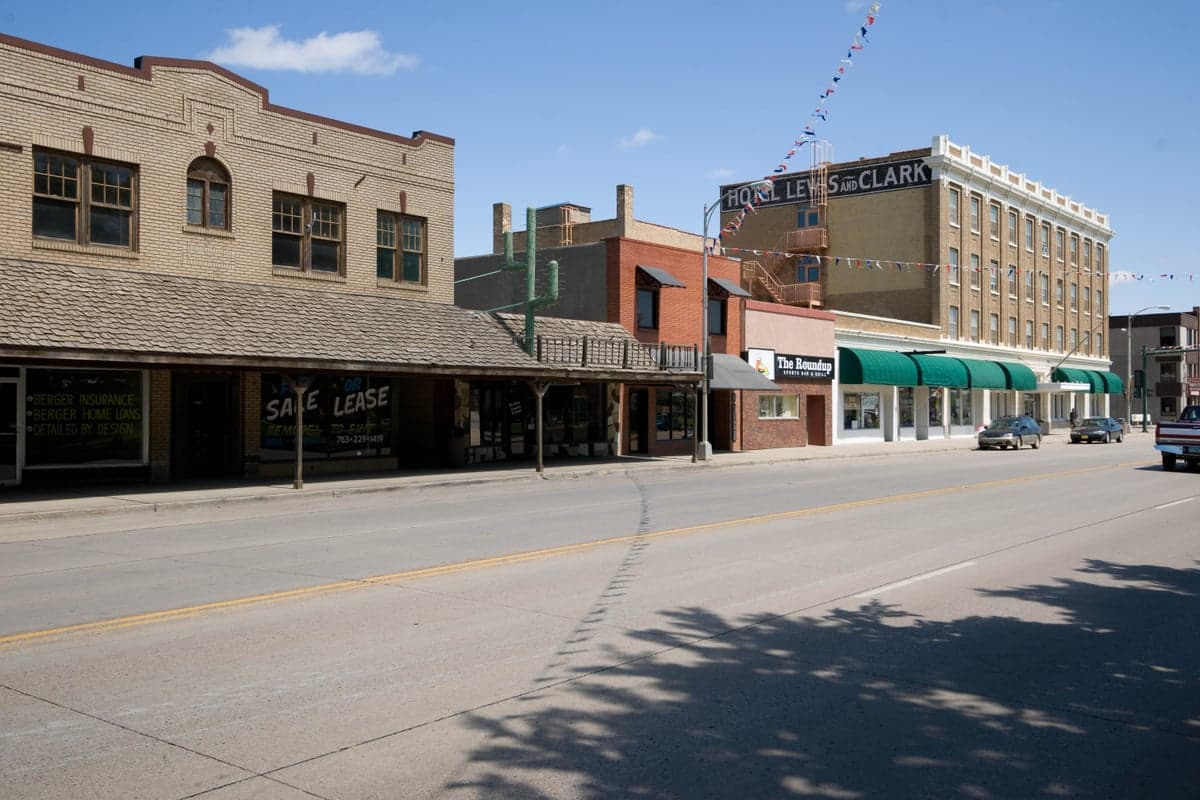
Photo: Wikipedia
Strategic Assessment of Mandan, ND
Workable tactical position. Some exposure to population density or targets, but generally defensible in a crisis.
What does the Strategic Assessment tell us?
Our Strategic Assessment grades tactical survivability of an area. Major population centers, military targets, fallout zones, natural disasters, and border exposure all drive risk — lower exposure means a more defensible position in a crisis.
This is heavily inspired by Joel Skousen's Strategic Relocation book. Highly recommended you checkout the book ($)What does this tell us?
Our Strategic Assessment grades tactical survivability of an area. Major population centers, military targets, fallout zones, natural disasters, and border exposure all drive risk — lower exposure means a more defensible position in a crisis.
This is heavily inspired by Joel Skousen's Strategic Relocation book. Highly recommended you checkout the book ($)Strategic Pillars

Key Distances
Regional Safe Places
Below is our recommended "safe zones" in North Dakota and the surrounding area based on our strategic heuristics. For most people, it's unrealistic to live in a “safe zone” full-time due to work, family or other personal reasons. They tend to be more rural. However, many of these areas are perfect for second homes and retreat properties that double as a vacation home or even a short-term rental.
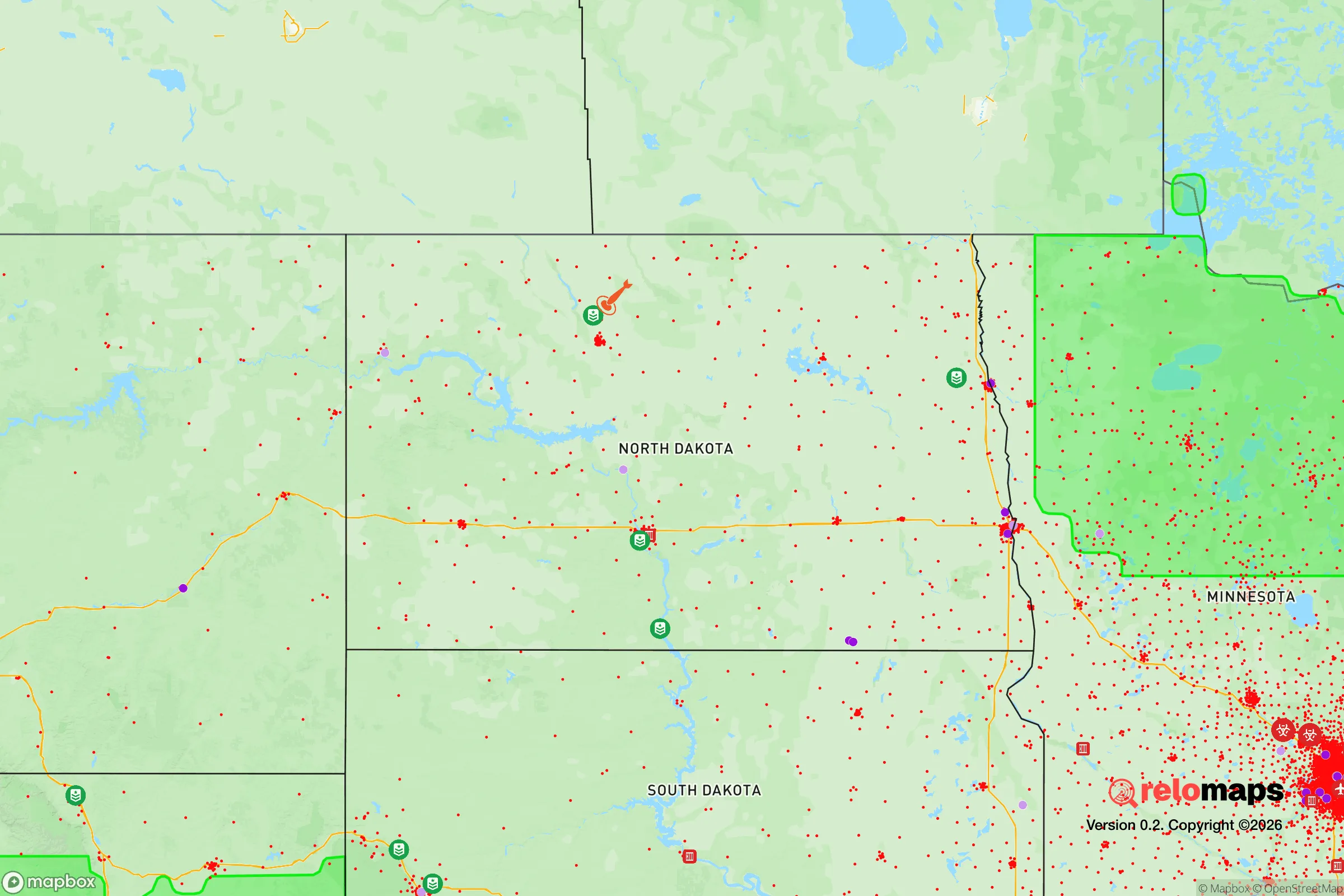
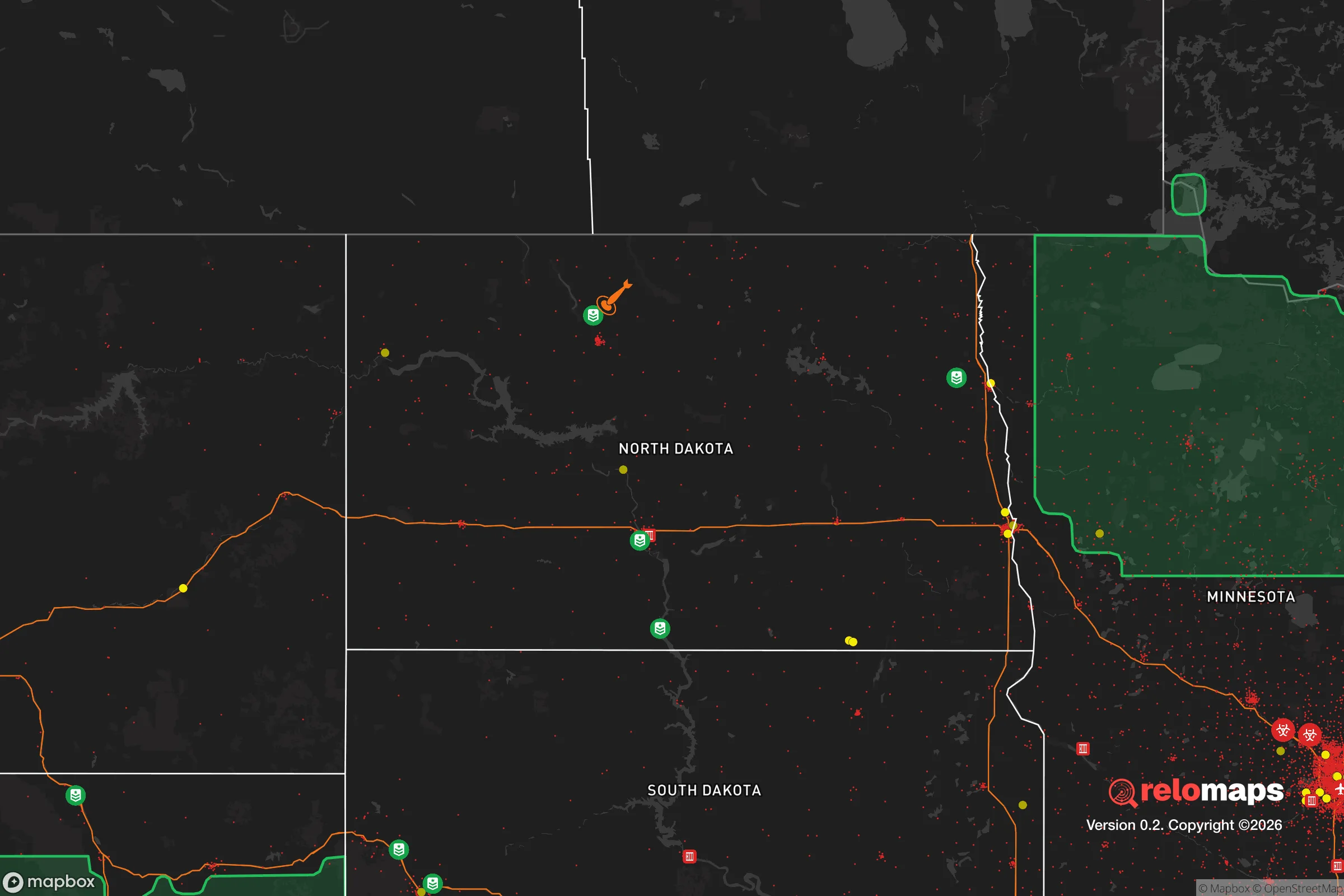


Important Note: For informational purposes only. This does not mean nothing bad ever happens in the green zones. Please use common sense. This is based on public data and modeled with AI. We tried to take a conservative approach but mistakes happen. We update this regularly as new information becomes available.
Solar Generator Recommendations
Backup power matters more here than in safer locations. We've picked three solar generators across budgets and capacity tiers — start with the budget unit if you only need a few essentials, or step up if you want to run a fridge and HVAC for days at a time.

Jackery Portable Power Station Explorer 300
Budget OptionPower on the Go: Weighing only 11 lbs, it's convenient to set up and store with book-sized foldable solar panels

BLUETTI Portable Power Station AC180
Designed for both indoor and outdoor scenarios, AC180 is highly capable as it has a robost capacity and continuous output power.

EF ECOFLOW DELTA Pro Ultra Power Station
Upgraded PickEcoFlow DELTA Pro Ultra is a whole-home energy system designed to grow with your family. Integrated with the Smart Home Panel 2, it scales to meet your evolving energy needs — keeping your home powered, intelligent, and secure through every stage of life.
We earn a commission, at no additional cost to you.
Strategic Assessment Analysis
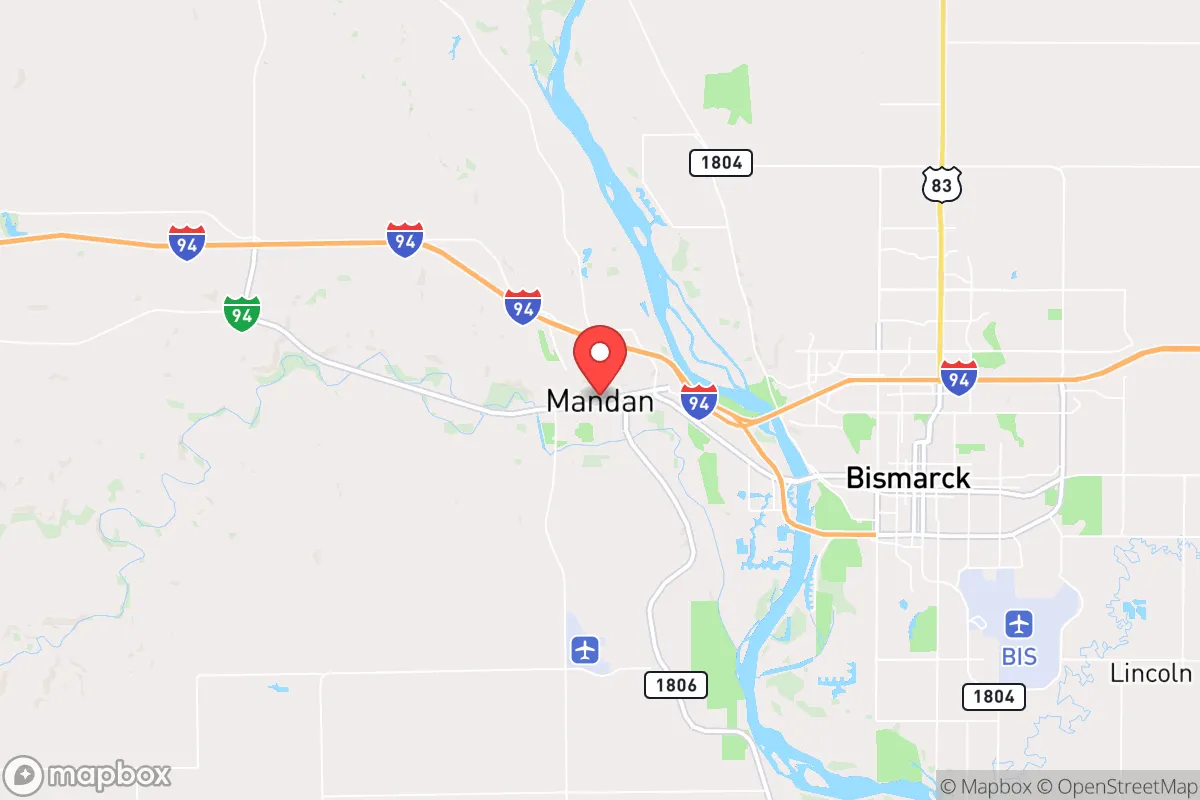
Mandan, North Dakota, offers a compelling strategic position for those prioritizing resilience and self-reliance in an uncertain future. Its location on the western edge of the state, across the Missouri River from Bismarck, provides a unique blend of isolation from major coastal population centers and access to critical infrastructure. For a relocator with a survivalist mindset, Mandan represents a low-profile, defensible base of operations with a strong agricultural and energy backbone, far removed from the high-risk corridors of the East and West Coasts.
Geographic position and natural advantages for long-term security
Mandan sits on the high plains, a region characterized by wide-open spaces, low population density, and a climate that naturally discourages mass migration. The city itself is nestled against the Missouri River, which provides a reliable freshwater source—a non-negotiable asset for any long-term survival scenario. The surrounding terrain is a mix of rolling hills, river breaks, and agricultural land, offering numerous natural choke points and defensible positions. The nearest major metropolitan area, the Twin Cities in Minnesota, is over 350 miles away, meaning that any cascading collapse of urban centers would take days or weeks to reach this area. This distance from coastal fallout zones, major ports, and nuclear targets (such as Minot Air Force Base, roughly 100 miles north) gives Mandan a significant buffer. The local economy is rooted in agriculture (wheat, corn, soybeans, cattle) and energy (oil and gas from the Bakken formation), meaning the area produces its own food and fuel—a critical advantage when supply chains falter.
Risks, exposures, and proximity to fallout-relevant landmarks
No location is without risk, and Mandan has specific exposures that a strategic relocator must weigh. The most obvious is the proximity to the Fort Abraham Lincoln State Park and the historic Mandan Indian Village site—while culturally significant, these are not modern threats. The real concern is the nearby Bismarck-Mandan metropolitan area (population ~130,000), which, while small by national standards, concentrates government, medical, and logistical assets. In a major civil unrest scenario, this population center could become a flashpoint, though its size and conservative culture make widespread chaos less likely than in larger cities. The presence of the Missouri River also introduces flood risk, particularly in low-lying areas near the riverbank. The Garrison Dam, located about 70 miles upstream, is a critical piece of infrastructure; a catastrophic failure would inundate the valley, though such an event is low-probability. More relevant for the prepper: the area is within a few hundred miles of the Minot Air Force Base, a primary nuclear bomber and missile base. While not a direct target for a first strike, it is a high-value military asset that could draw secondary effects. The prevailing winds generally blow from west to east, meaning fallout from a strike on Minot would likely move away from Mandan, but this is a factor to monitor. Overall, the risk profile is moderate—far lower than coastal cities or major industrial hubs, but not zero.
Practical resilience for a relocator: food, water, energy, and defensibility
For the individual or family looking to establish a resilient homestead, Mandan offers concrete advantages. Water security is excellent: the Missouri River is a massive, reliable source, and the local aquifer is productive. A well with a hand pump or a solar-powered pump can provide off-grid water indefinitely. Food production is viable: the growing season is short (about 120 days), but cold-hardy crops like potatoes, carrots, beets, and squash do well. The surrounding farmland means local food sources are abundant, and the area has a strong hunting culture (deer, pheasant, waterfowl) for protein. Energy is a standout: North Dakota is a net energy exporter, with natural gas, oil, and wind power. Mandan itself has a coal-fired power plant and is near the Bakken oil fields. For a prepper, this means fuel for generators and vehicles is locally sourced and relatively cheap. Solar and wind potential are good, though winter snow can reduce solar output. Defensibility is high: the open terrain makes approach visible for miles, and the low population density means fewer potential threats. The local culture is heavily armed and self-reliant—North Dakota has some of the most permissive gun laws in the nation, with no state permit required for concealed carry. The community is tight-knit, with a strong sense of mutual aid among rural residents. However, the harsh winters (temperatures can drop to -30°F) are a natural barrier that requires serious preparation: a well-insulated home, a wood stove, and a stockpile of winter gear are non-negotiable. The cold itself is a defensive asset, as it deters unprepared travelers and limits the mobility of any hostile groups.
The overall strategic picture for Mandan is that of a low-key, high-resilience location that balances isolation with access to critical resources. It is not a bunker—it is a working town with a functional economy and a conservative, self-sufficient population. The risks are manageable: moderate flood potential, a distant military target, and a small but present urban center. The rewards are substantial: abundant fresh water, local food and fuel, a defensible landscape, and a culture that values preparedness. For the relocator who is serious about long-term survival without disappearing into the wilderness, Mandan offers a realistic, sustainable option. It is a place where you can build a life that is both normal and resilient, ready to weather whatever comes—whether that is a supply chain collapse, a pandemic, or a broader societal breakdown. The key is to arrive prepared, integrate into the community, and respect the environment. Mandan will not save you from everything, but it will give you a fighting chance.

* Values derived from national, state, county, city and local statistics and may differ in a specific area. Last updated: 2026-04-19T06:02:15.000Z
Narrative content on this page is AI-generated and may contain mistakes. Verify any details that matter before acting on them.
ReloMaps may earn a commission from affiliate links at no extra cost to you.

