Photo: Wikipedia
Quality of Life in Mandan, ND
A high quality of life with strong walkability, manageable living costs, healthy neighborhood signals, and solid amenity access.
What does Quality of Life tell us?
Quality of Life blends cost of living, nearby amenities, socioeconomic signals, and neighborhood character. City-level scores represent the whole municipality; individual neighborhoods can differ.
What does this tell us?
Quality of Life blends cost of living, nearby amenities, socioeconomic signals, and neighborhood character. City-level scores represent the whole municipality; individual neighborhoods can differ.
Cost of Living
11% below national average
The Real Cost of Living in Mandan, ND for 2026
| Tier | Individual | Family (4) |
|---|---|---|
| Survival | $17k | $31k |
| Comfortable | $48k | $70k |
| Luxury | $137k+ | $213k+ |
| Elite (Top 5%) | $181k+ | $281k+ |
108%
The Area Signal
A metric tracking the socioeconomic signals of the area.


Hobbies
Explore the areaGroceries
5 within 10 miles
Gas
0 within 10 miles
Hospital
3 within 20 miles
Airport
JFK — John F. Kennedy Memorial
Post Office
USPS — Bismarck, ND
Critical Amenities
Quality-of-Life Analysis
Mandan, North Dakota, offers a quality of life defined by strong community ties, a slower pace, and a cost of living that significantly undercuts the national average. With a cost-of-living index of 89 (where 100 equals the U.S. average), the city attracts a mix of young families, energy-sector workers, and retirees seeking affordability without sacrificing access to a state capital. The median household income in the Bismarck-Mandan metro area hovers around $70,000, supporting a stable, middle-class lifestyle that feels increasingly out of reach in larger metros.
Cost of living, housing, and how Mandan compares to Bismarck
Mandan’s affordability is its strongest draw. The median home value sits at $246,300, roughly 20% below the national median, while the median rent of $1,044 is well under the U.S. average of $1,400. This makes homeownership attainable for first-time buyers and keeps monthly housing costs manageable for renters. Compared to neighboring Bismarck—where median home values are about 10% higher—Mandan offers more square footage per dollar and lower property tax rates (averaging 1.2% of assessed value vs. Bismarck’s 1.4%). The average commute of just 18.4 minutes is a standout feature, cutting typical drive times in half compared to national averages and freeing up hours each week for family or recreation. Utility costs, including heating in harsh winters, run slightly above the U.S. average due to climate, but overall monthly expenses remain 10–15% lower than in Bismarck.
Local amenities, schools, and what daily life feels like
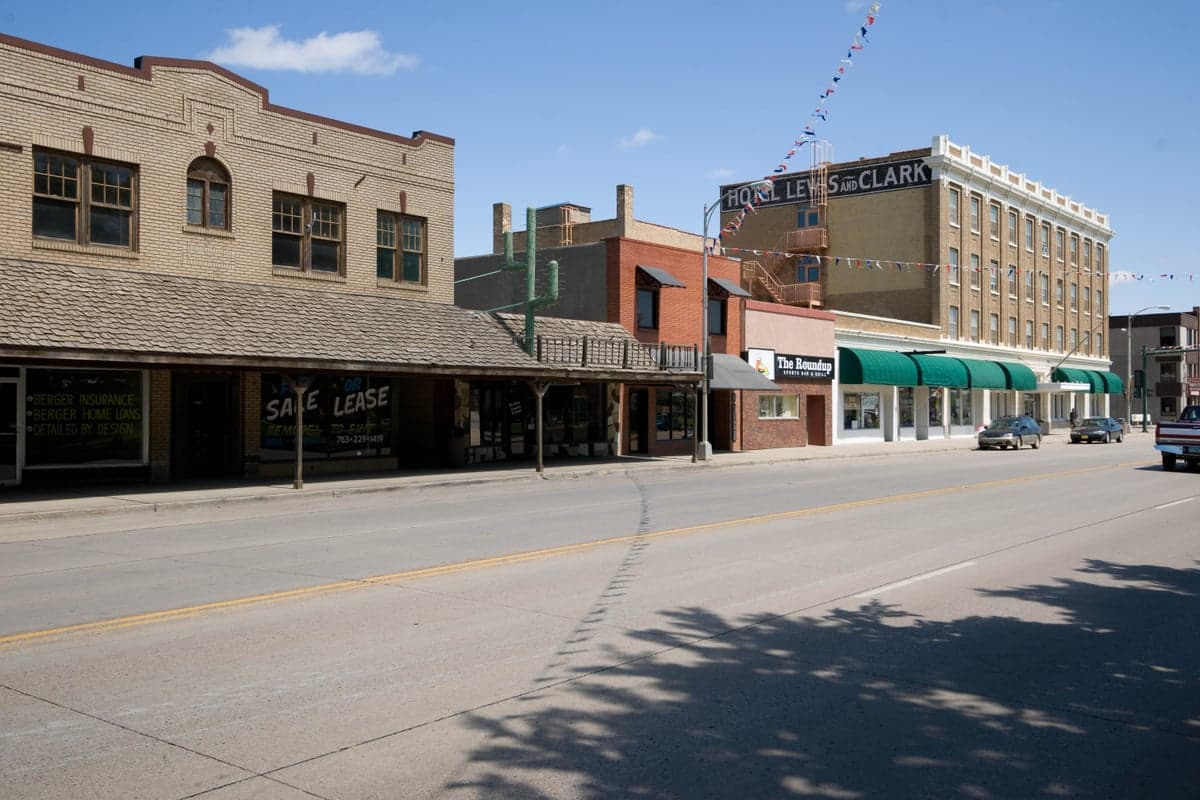
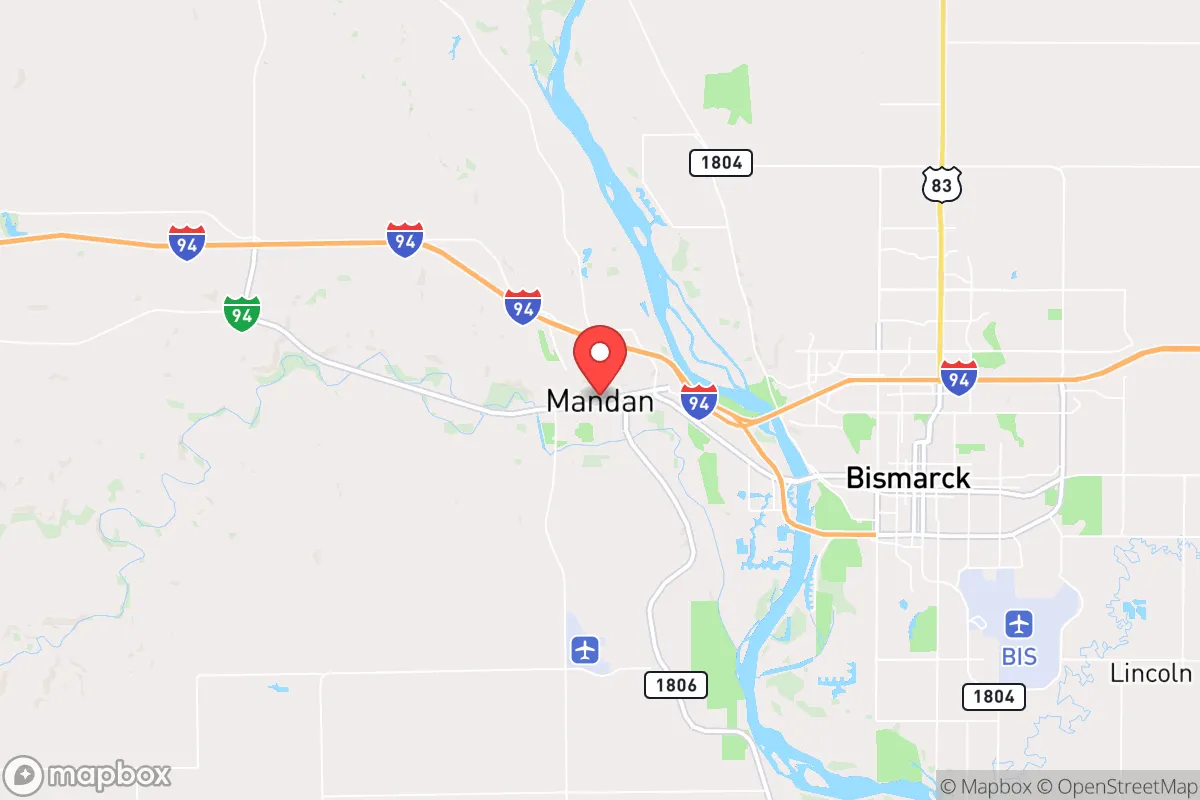
Daily life in Mandan centers on outdoor access and community events. The city maintains over 20 parks, with the Missouri River running along its western edge providing fishing, boating, and the 1.5-mile Mandan Riverwalk. Fort Abraham Lincoln State Park, five minutes south, offers hiking and reconstructed Mandan earthlodges. The Mandan Public School District serves roughly 2,500 students across five elementary schools, one middle school, and Mandan High School, which posts a graduation rate near 90%. For healthcare, CHI St. Alexius Health Mandan provides urgent care and primary services, while major hospital care is a 10-minute drive to Bismarck. The retail and dining scene is modest but functional—downtown’s Main Street features local cafes, a brewpub, and the historic Art Main gallery. The city’s rhythm is quiet and family-oriented, with Friday night high school football and summer farmers’ markets anchoring the social calendar. Bismarck’s larger shopping, dining, and cultural venues (including the Dakota Zoo and Belle Mehus Auditorium) are a short bridge crossing away, giving Mandan residents small-town peace with big-city access.
Mandan is best suited for those who prioritize affordability, short commutes, and a tight-knit community over urban nightlife or career diversity. Energy workers commuting to the Bakken region, remote professionals seeking lower housing costs, and families wanting good schools without high taxes will find the city a practical fit. Retirees on fixed incomes also benefit from the low cost of living and proximity to Bismarck’s medical facilities. The trade-off is limited job variety outside of government, healthcare, and energy, plus harsh winters with average January highs of 22°F. For residents who value financial breathing room and outdoor recreation over constant stimulation, Mandan delivers a stable, grounded quality of life.

Crime in Mandan, ND
Lower crime rates than 76% of comparable U.S. locations.
Violent CrimeViolent Crime Analysis
Property CrimeProperty Crime Analysis
Crime Analysis
Mandan, North Dakota, presents a mixed safety profile for prospective residents. While the city’s violent crime rate of 216.6 per 100,000 residents is notably lower than the national average, its property crime rate of 1,780.9 per 100,000 is significantly higher, indicating that theft and burglary are the primary public safety concerns. As a smaller city adjacent to the state capital of Bismarck, Mandan benefits from a relatively stable community environment, but the elevated property crime figures warrant careful consideration for anyone planning a move.
Crime in context
When compared to state and national benchmarks, Mandan’s crime data reveals a clear divergence. The city’s violent crime rate is roughly 38% lower than the U.S. average, placing it in a safer tier for serious offenses like assault and robbery. However, the property crime rate is approximately 15% higher than the national figure and well above the North Dakota state average. This pattern suggests that while the risk of violent victimization is low, residents face a heightened probability of experiencing theft, vehicle break-ins, or burglary. It is important to note that North Dakota’s judicial system, particularly in Morton County where Mandan is located, has not adopted the progressive prosecutorial policies seen in some larger, liberal-leaning metro areas. This conservative legal environment generally prioritizes enforcement and victim accountability, which can contribute to the lower violent crime numbers but does not appear to fully deter property offenses.
What residents experience
Daily life in Mandan for most residents involves a low risk of violent confrontation, but a tangible awareness of property crime. Common incidents reported by locals include unlocked vehicle thefts, package theft from porches, and occasional garage burglaries. The city’s police department actively encourages community vigilance and participates in neighborhood watch programs. Because Mandan is not part of a large, progressive metro area with lenient sentencing policies, the justice system here is more likely to hold offenders accountable, which can provide a greater sense of security for victims and the public. However, the sheer volume of property crime means that preventative measures—such as securing vehicles, using outdoor lighting, and installing security cameras—are a practical necessity rather than an optional precaution.
Neighborhood-level crime data for Mandan is not as granular as for larger cities, but general patterns are observable. Areas closer to the downtown core and along the Main Street corridor, which have higher foot traffic and commercial activity, tend to report more property crimes. In contrast, the newer residential subdivisions on the city’s south and west sides, such as those near Fort Lincoln Elementary, generally experience fewer incidents. Prospective renters or buyers should consult the Morton County Sheriff’s Office or local police for block-level statistics, but the overall advice is consistent: Mandan is a safe city for families and individuals who take standard precautions against property crime, and its conservative legal framework provides a strong deterrent against the more lenient approaches found in larger, progressive jurisdictions.
* Values derived from national, state, county, city and local statistics and may differ in a specific area. Last updated: 2026-04-19T06:02:15.000Z
Narrative content on this page is AI-generated and may contain mistakes. Verify any details that matter before acting on them.
ReloMaps may earn a commission from affiliate links at no extra cost to you.

