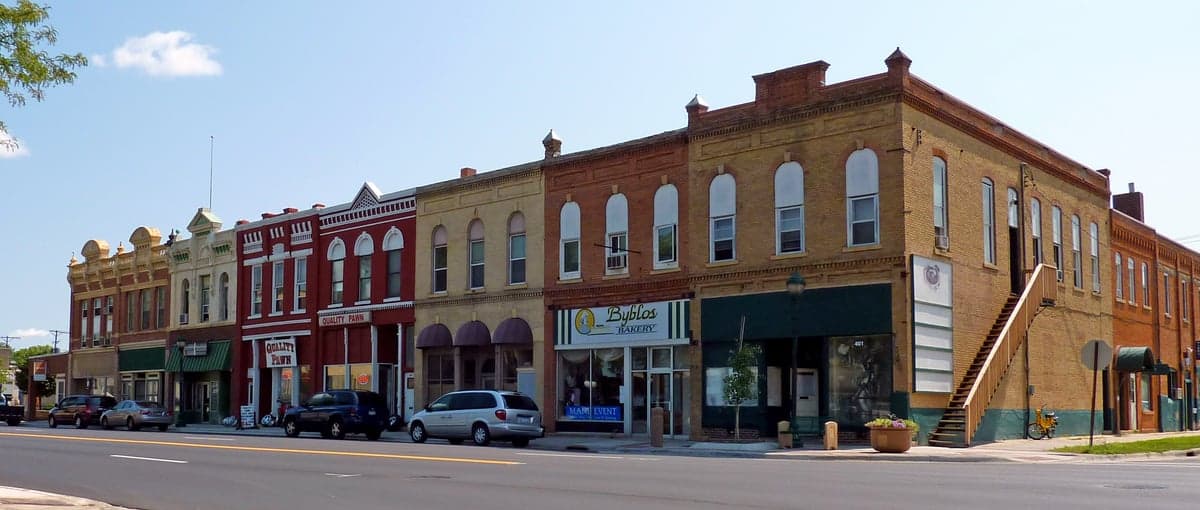
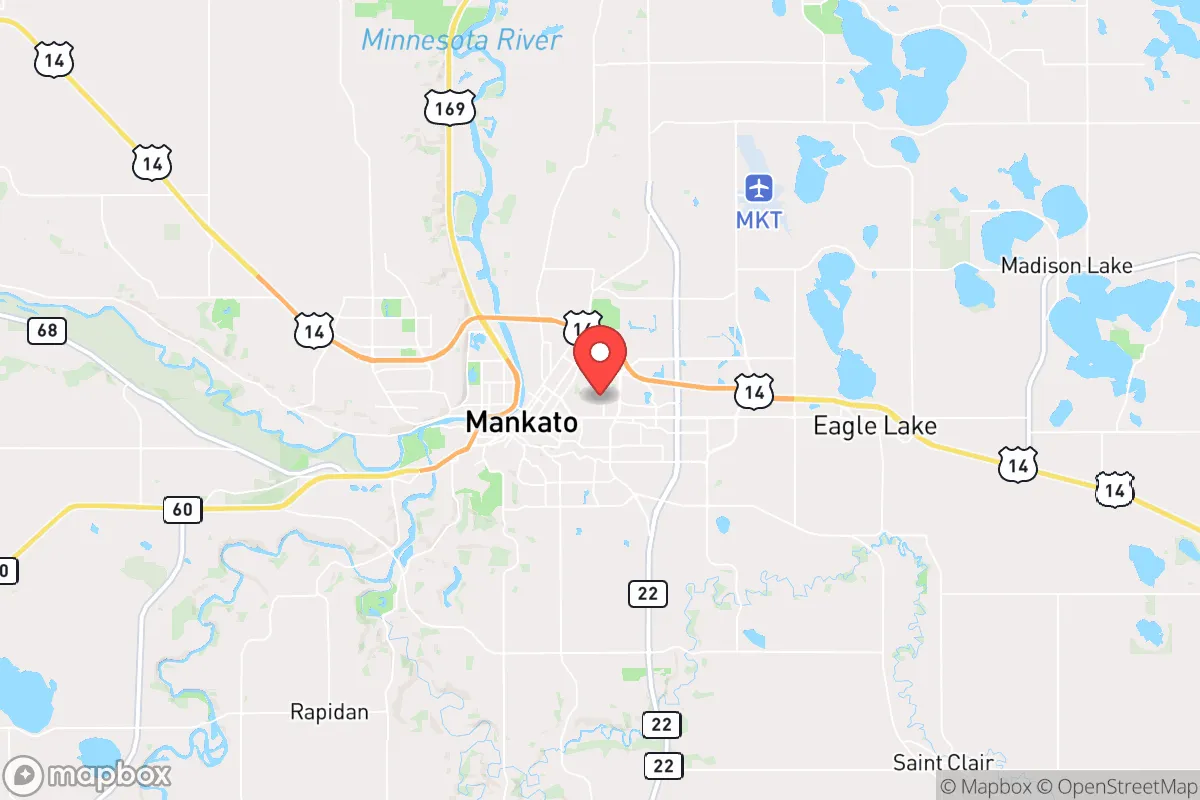
Photo: Wikipedia
Personal Sovereignty in Mankato, MN
Viable for self-reliance. Generally workable, though some barriers may limit total independence.
What does Personal Sovereignty tell us?
Personal Sovereignty measures your capacity for self-reliance and independence with minimal government friction. Higher scores mean fewer barriers between you and the way you want to live... but it assumes you have the space you need and good neighbors.
What does this tell us?
Personal Sovereignty measures your capacity for self-reliance and independence with minimal government friction. Higher scores mean fewer barriers between you and the way you want to live... but it assumes you have the space you need and good neighbors.
State Policy
Energy independence: Importer (20% of energy produced in-state)
Personal Liberty
Homesteading

Personal Liberty Analysis
Mankato, Minnesota offers a mixed bag for those prioritizing personal sovereignty, with a state-level political environment that leans interventionist but a local culture and geography that still permit meaningful self-reliance. While Minnesota’s tax burden and regulatory framework are heavier than many Sunbelt or Plains states, Mankato’s position as a regional hub—away from the Twin Cities metro—provides a buffer against the most aggressive government overreach. For a survivalist or prepper mindset, the key is understanding where the state imposes constraints and where local conditions allow you to carve out autonomy.
Tax burden and regulatory posture in Mankato
Minnesota ranks among the highest in the nation for combined state and local tax burden, with a progressive income tax topping 9.85% on high earners and a state sales tax of 6.875% (plus local options in Mankato). Property taxes in Blue Earth County are moderate for the region, averaging around 1.1% of assessed value, but the state’s aggressive estate tax—kicking in at $3 million—penalizes multigenerational wealth building. On the regulatory front, Minnesota’s environmental and labor rules are stricter than federal minimums. The state mandates paid sick leave (effective 2024) and has a $10.85/hour minimum wage (large employers). For a prepper, this means higher operating costs for any home-based business or side hustle, and more paperwork for land improvements. However, Mankato’s city council has historically been more business-friendly than Minneapolis or St. Paul, with streamlined permitting for accessory dwelling units and home occupations. The real regulatory friction comes from the state level—especially the Minnesota Pollution Control Agency’s oversight of well water, septic systems, and land clearing—which can delay or complicate off-grid projects.
Self-defense and gun law specifics in Mankato
Minnesota is a “shall-issue” state for concealed carry permits, meaning no subjective discretion by local authorities—a plus for sovereignty-minded individuals. Mankato itself has no additional gun ordinances beyond state law, so permitless carry (open carry without a permit) is legal for anyone 18+ who can legally possess a firearm. However, the state does require a permit to carry a handgun concealed, and that permit requires a training course and background check. Magazine capacity is not restricted, and there is no state-level assault weapons ban. The downside: Minnesota has a “red flag” law (Extreme Risk Protection Order) that allows police or family members to petition a court to temporarily seize firearms from someone deemed a risk. This law is actively used in Blue Earth County, though not as aggressively as in the metro. For a prepper, the practical takeaway is that you can legally build a substantial armory, but you must be careful about who you associate with—a disgruntled neighbor or ex could theoretically trigger a red flag order. Stand-your-ground laws do not exist in Minnesota; there is a duty to retreat in public spaces before using deadly force, though the Castle Doctrine applies inside your home. This makes Mankato a moderate choice for self-defense autonomy—better than Illinois or California, but weaker than Texas or Florida.
Self-reliance and homesteading viability in Mankato
Mankato’s surrounding area offers genuine homesteading potential, especially in rural Blue Earth, Nicollet, and Le Sueur counties. Outside city limits, minimum lot sizes are typically 2-5 acres for residential development, with many parcels available at $5,000-$10,000 per acre—affordable by national standards. Zoning in unincorporated areas generally permits livestock, gardens, and outbuildings without special permits, though the state’s feedlot rules kick in for larger animal operations. Off-grid feasibility is mixed: Minnesota law requires a septic system permit for any dwelling, and the state’s well code is strict (casing depth, water testing). Solar panels are legal and net metering is available through Xcel Energy and local co-ops, but battery storage for true off-grid living requires navigating fire codes and electrical inspections. Rainwater collection is legal for outdoor use but restricted for potable purposes without treatment. The growing season is short (140-160 days), so serious food production requires a greenhouse or cold frames. For a prepper, the best strategy is to buy land in a township with minimal zoning (e.g., Lime Township or Mankato Township) and build a pole barn or tiny house as a “workshop” while living in a more conventional home—a common workaround. The Minnesota Department of Natural Resources also imposes restrictions on timber harvesting and wetland alteration, so clearing land for a food plot or defensive perimeter requires a permit in many cases.
Personal liberties in Mankato: parental rights, medical autonomy, speech, and property
Parental rights in Minnesota are under increasing pressure. The state passed a “trans refuge” law in 2023 that allows minors to receive gender-affirming care without parental consent in certain circumstances, though a court challenge is pending. Mankato’s school district (Mankato Area Public Schools) has a generally progressive curriculum, including comprehensive sex education and DEI initiatives. For parents wanting to opt out, the state requires districts to allow alternative instruction, but the process is bureaucratic. Homeschooling is legal with minimal regulation—no prior approval, no testing requirements, and no curriculum mandates—making it a strong option for sovereignty-minded families. Medical autonomy is constrained: Minnesota has a vaccine mandate for school attendance (MMR, polio, etc.) with only medical exemptions (no philosophical or religious exemptions). COVID-era mandates have been lifted, but the state retains broad emergency powers. On speech, Minnesota has no “anti-SLAPP” law strong enough to protect against frivolous lawsuits over political speech, and the state’s campaign finance board has been aggressive in regulating independent political activity. Property rights are relatively strong: eminent domain is limited to public use (not economic development), and there is no statewide rent control. However, Mankato’s city government has a rental inspection program that can be used to enforce code compliance on owner-occupied properties if complaints are filed. For a prepper, the biggest liberty concern is the state’s ability to impose emergency orders—as seen during COVID, when Minnesota’s governor shut down businesses and limited gatherings for months without legislative approval.
Overall, Mankato ranks as a moderate-to-low sovereignty location compared to states like Idaho, Montana, or New Hampshire, but it is significantly better than the West Coast or Northeast. The state’s tax burden, red flag law, and emergency powers are genuine drawbacks for a survivalist mindset. However, the low cost of rural land, minimal homeschooling restrictions, and permissive gun laws (relative to blue states) make it a viable option for those willing to navigate the regulatory landscape. The key is to buy land outside city limits, keep a low profile on firearms, and build a network of like-minded locals—Mankato has a small but active prepper community centered around the southern Minnesota preparedness meetups. If you can tolerate the cold and the paperwork, Mankato offers enough space and legal wiggle room to live on your own terms.

* Values derived from national, state, county, city and local statistics and may differ in a specific area. Last updated: 2026-04-24T12:27:15.000Z
Narrative content on this page is AI-generated and may contain mistakes. Verify any details that matter before acting on them.
ReloMaps may earn a commission from affiliate links at no extra cost to you.

