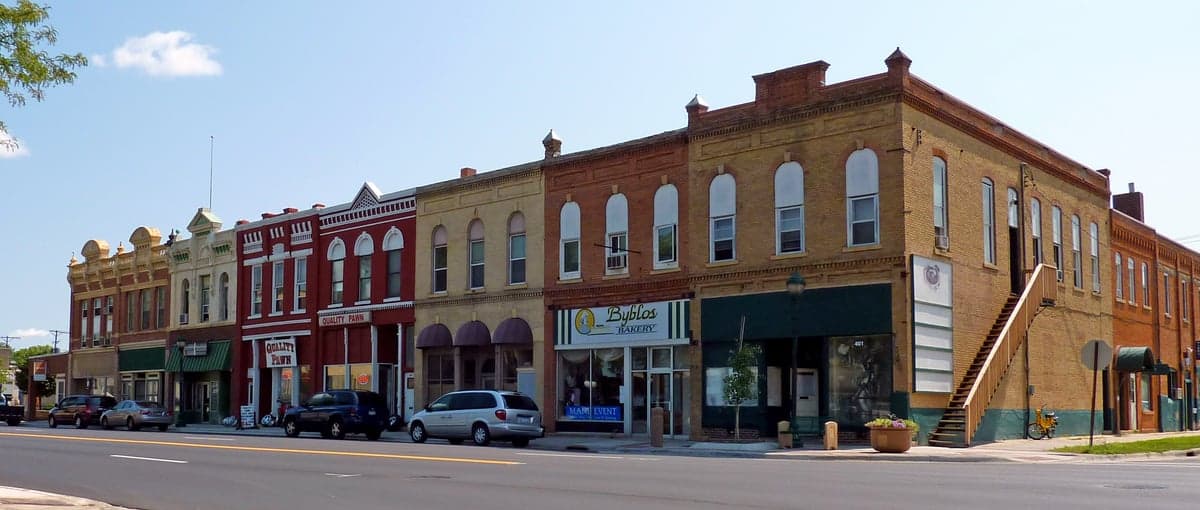
Photo: Wikipedia
Political ClimatePolitical Climate in Mankato, MN
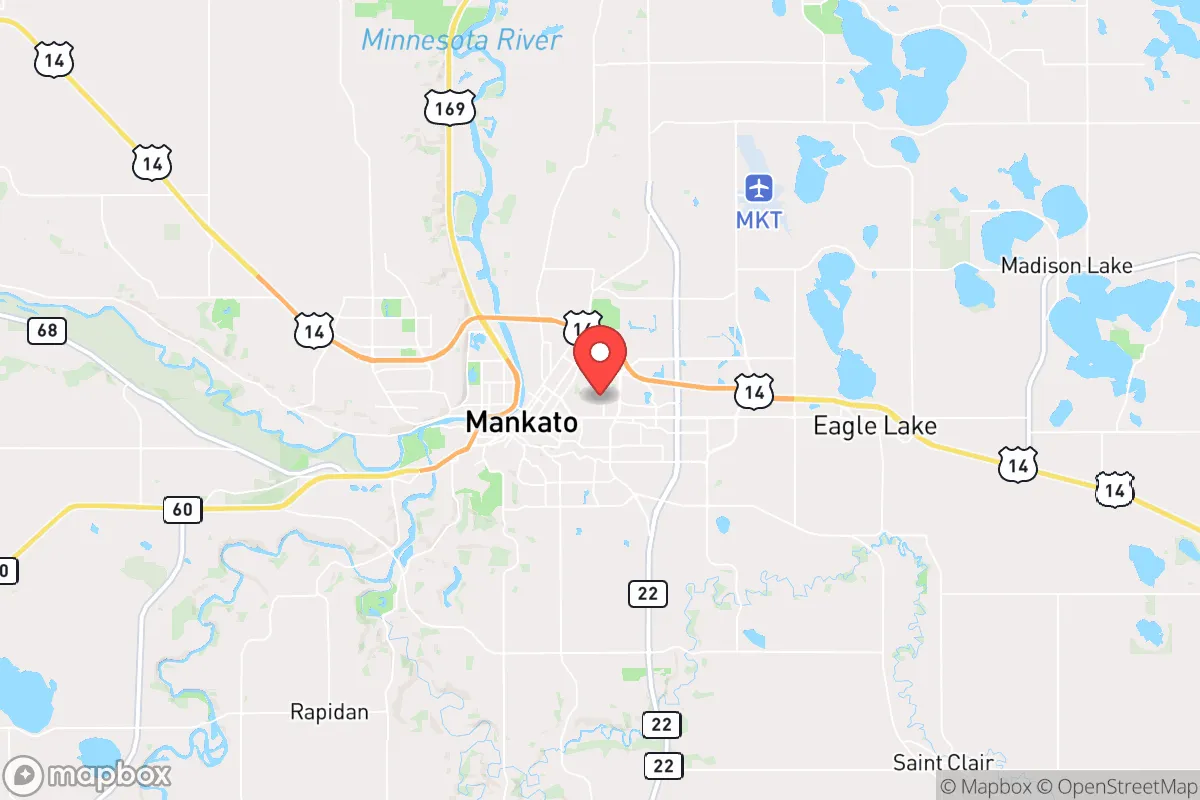
District shown is the primary district for this city’s centroid. Cities may span multiple districts.
Local Political AnalysisPolitical Analysis of Mankato, MN
Look, I’ve lived in Mankato my whole life, and I can tell you straight up: this town used to be a rock-solid conservative stronghold, but it’s been drifting left for the last decade or so. The Cook PVI for the district is R+6, which sounds red on paper, but that number hides a lot. Mankato itself is the blue dot in a sea of red—Blue Earth County went for Biden in 2020 by about 10 points, while the surrounding rural areas like Nicollet and Le Sueur counties stayed firmly Republican. The city’s political lean is now center-left, driven by the university (Minnesota State University, Mankato) and a growing service-sector workforce, but the trajectory is concerning if you value limited government and personal freedoms.
How it compares
Drive 15 minutes outside city limits, and you’re in a different world. Towns like St. Peter, North Mankato, and Madison Lake still vote reliably red—think 60-40 splits in favor of conservative candidates. But inside Mankato, especially in the newer developments near the university and downtown, you’ll see yard signs for progressive candidates and local measures that push higher taxes and more regulations. Compare that to, say, New Ulm or Fairmont, which are 45 minutes away and haven’t budged an inch from their conservative roots. The contrast is stark: Mankato’s city council has been flirting with zoning changes and “equity” initiatives that feel like government overreach, while the surrounding towns just want to be left alone to run their own lives.
What this means for residents
For folks who value personal freedom and low taxes, the shift is a real red flag. Property taxes in Mankato have crept up faster than in neighboring counties, partly because the city keeps adding new programs and staff positions tied to progressive priorities. You’ll also see more local ordinances—like restrictions on short-term rentals or mandates for affordable housing quotas—that tell you the government thinks it knows better than you do. If you’re a gun owner, the vibe is different here than in rural areas; open carry is legal statewide, but you’ll get more sideways glances in Mankato than you would in Amboy or Mapleton. The school board has also gotten more activist, pushing curriculum changes that prioritize social-emotional learning over core academics, which has a lot of parents worried about government overreach into what their kids are taught.
On the cultural side, Mankato still has its conservative pockets—the VFW, the local farm bureaus, and the older neighborhoods near Sibley Park—but the downtown scene is increasingly dominated by coffee shops and boutiques that cater to a younger, more progressive crowd. The big policy distinction is that Mankato is more willing to spend taxpayer money on “quality of life” projects—like bike lanes, public art, and a new civic center—while the surrounding towns keep their budgets lean and focused on roads and public safety. If you’re a conservative who values fiscal restraint and minimal government interference, you’ll feel the tension here. My advice? Keep an eye on the city council elections in 2026—that’s your best shot at slowing the slide before Mankato becomes another Northfield or Duluth.

State Political ClimatePolitical Climate in Minnesota
State Political AnalysisPolitical Environment in the State
Minnesota has shifted from a reliably purple battleground to a solidly blue state over the past 15 years, with Democrats now controlling the governorship, both legislative chambers, and the entire federal delegation. The state voted for Joe Biden by 7 points in 2020 and for Hillary Clinton by 1.5 points in 2016, a stark contrast to its 2008 status as a true swing state. The driving force is the explosive growth of the Twin Cities metro area, which now casts roughly 60% of the state’s vote and leans heavily Democratic, while the rest of the state has trended red but lacks the population to counterbalance it.
Urban vs. rural divide
The political map of Minnesota is a tale of two worlds. The Minneapolis-St. Paul metro area, including suburbs like Bloomington, Maple Grove, and Edina, is the engine of Democratic power. These suburbs have flipped hard left since 2016, with once-Republican strongholds like Anoka County and Washington County now reliably blue. Meanwhile, greater Minnesota—places like St. Cloud, Rochester, and Duluth—is more mixed. St. Cloud is a conservative island in a sea of blue, while Rochester, home to the Mayo Clinic, leans left but not as aggressively as the metro. The Iron Range, once a Democratic stronghold, has shifted right over the past decade, with Hibbing and Virginia now voting Republican in presidential races. The rural-urban split is stark: outside the metro, the state is deeply red, but the metro’s sheer size drowns out that voice.
Policy environment
Minnesota’s policy environment has become aggressively progressive under Governor Tim Walz and the DFL trifecta. The state has a progressive income tax with a top rate of 9.85%, one of the highest in the nation, and a statewide sales tax of 6.875% that local governments can pile onto. Property taxes are also high, especially in the metro. In 2023, the legislature passed a slew of new laws: a paid family and medical leave program funded by payroll taxes, a carbon-free electricity mandate by 2040, and a new state-run retirement program for private-sector workers. Education policy is dominated by teachers’ unions, with per-pupil spending among the highest in the country but school choice options limited—no voucher programs and a weak charter school system. Healthcare is heavily regulated, with a state-run insurance exchange and strict certificate-of-need laws that limit new hospital construction. Election laws have been loosened: Minnesota now has automatic voter registration, same-day registration, and no-excuse absentee voting, which critics say undermines election integrity.
Trajectory & freedom
Minnesota is clearly trending less free across multiple dimensions. The 2023 legislative session was a watershed for government expansion. On gun rights, the state passed universal background checks and a “red flag” law allowing courts to confiscate firearms without a criminal conviction—a direct infringement on Second Amendment rights. On parental rights, the legislature passed a law requiring schools to adopt policies that affirm students’ “gender identity” without parental notification, effectively sidelining parents in their children’s education. Medical autonomy took a hit with the passage of a law protecting abortion “access” up to viability, removing any parental consent requirements for minors. Property rights are under pressure from a new law that allows local governments to impose rent control and from a controversial “climate justice” bill that empowers state agencies to deny permits for energy projects. On the tax front, the new paid leave program adds a 0.7% payroll tax split between employers and employees, and a new 1% tax on farm machinery sales hit rural areas hard. The state’s freedom index has dropped sharply, and there’s no sign of reversal.
Civil unrest & political movements
Minnesota has been a flashpoint for civil unrest since the 2020 George Floyd protests, which caused over $500 million in damage in Minneapolis and St. Paul. The state’s response was widely criticized as weak, with the governor slow to deploy the National Guard. Since then, left-wing activist groups like the Minnesota Freedom Fund and Reclaim the Block have gained influence, pushing for defunding the police and bail reform. On the right, the Minnesota Gun Owners Caucus and the Minnesota Family Council have mobilized, but they face an uphill battle in a state where the DFL controls the levers of power. Immigration politics are tense: Minnesota is a “sanctuary state” in practice, with a 2023 law prohibiting state and local law enforcement from cooperating with federal immigration authorities. This has led to a surge in illegal immigration, particularly in the metro, straining schools and healthcare. Election integrity remains a hot-button issue: the 2020 election saw record absentee voting, and the 2023 law making it easier to vote has fueled concerns about fraud, though no major scandals have been proven. Secession rhetoric is rare, but some rural counties have passed resolutions calling for a “Greater Minnesota” autonomy movement, though it’s mostly symbolic.
Projection
Over the next 5-10 years, Minnesota will likely become more progressive and less free. Demographic trends favor the DFL: the Twin Cities metro is growing rapidly, driven by immigration and young professionals, while rural areas are shrinking. The state’s in-migration is heavily skewed toward the metro, with people from blue states like California and Illinois moving in, reinforcing the leftward tilt. The 2023 legislative session set a template for future expansions: expect a state-run public option for healthcare, a carbon tax, and further restrictions on gun ownership. The state’s fiscal trajectory is concerning: the new spending programs are funded by temporary surpluses, and when the economy slows, taxes will likely rise again. For a conservative-leaning resident, the outlook is grim: the state will continue to erode Second Amendment rights, parental authority, and economic freedom. The only hope is a political realignment, but that would require the metro to moderate, which seems unlikely given current trends.
Bottom line for a new resident: If you value low taxes, gun rights, parental control over education, and limited government, Minnesota is a tough place to call home. The state is beautiful, with great outdoor recreation and a strong economy, but the political climate is increasingly hostile to conservative values. You’ll find like-minded communities in rural areas and some suburbs, but you’ll be fighting a losing battle at the state level. If you’re moving here, be prepared for high taxes, heavy regulation, and a government that sees personal freedom as an obstacle to its agenda. It’s a great place to visit, but think twice before making it your permanent home.
* Values derived from national, state, county, city and local statistics and may differ in a specific area. Last updated: 2026-04-24T12:27:15.000Z
Narrative content on this page is AI-generated and may contain mistakes. Verify any details that matter before acting on them.
ReloMaps may earn a commission from affiliate links at no extra cost to you.

