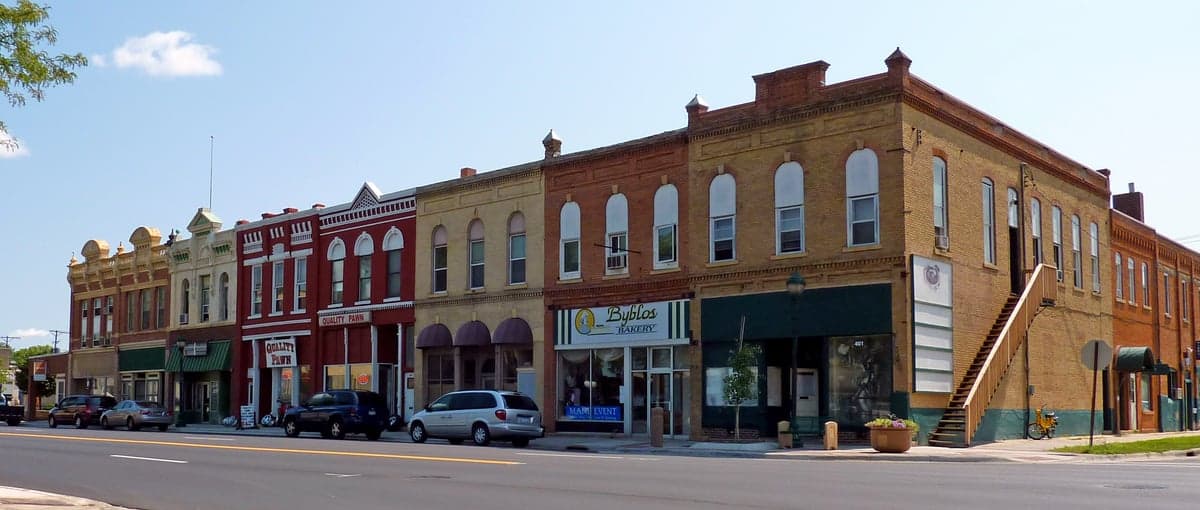
Photo: Wikipedia
Quality of Life in Mankato, MN
A high quality of life with strong walkability, manageable living costs, healthy neighborhood signals, and solid amenity access.
What does Quality of Life tell us?
Quality of Life blends cost of living, nearby amenities, socioeconomic signals, and neighborhood character. City-level scores represent the whole municipality; individual neighborhoods can differ.
What does this tell us?
Quality of Life blends cost of living, nearby amenities, socioeconomic signals, and neighborhood character. City-level scores represent the whole municipality; individual neighborhoods can differ.
Cost of Living
8% below national average
The Real Cost of Living in Mankato, MN for 2026
| Tier | Individual | Family (4) |
|---|---|---|
| Survival | $17k | $33k |
| Comfortable | $49k | $72k |
| Luxury | $109k+ | $169k+ |
| Elite (Top 5%) | $129k+ | $199k+ |
91%
The Area Signal
A metric tracking the socioeconomic signals of the area.
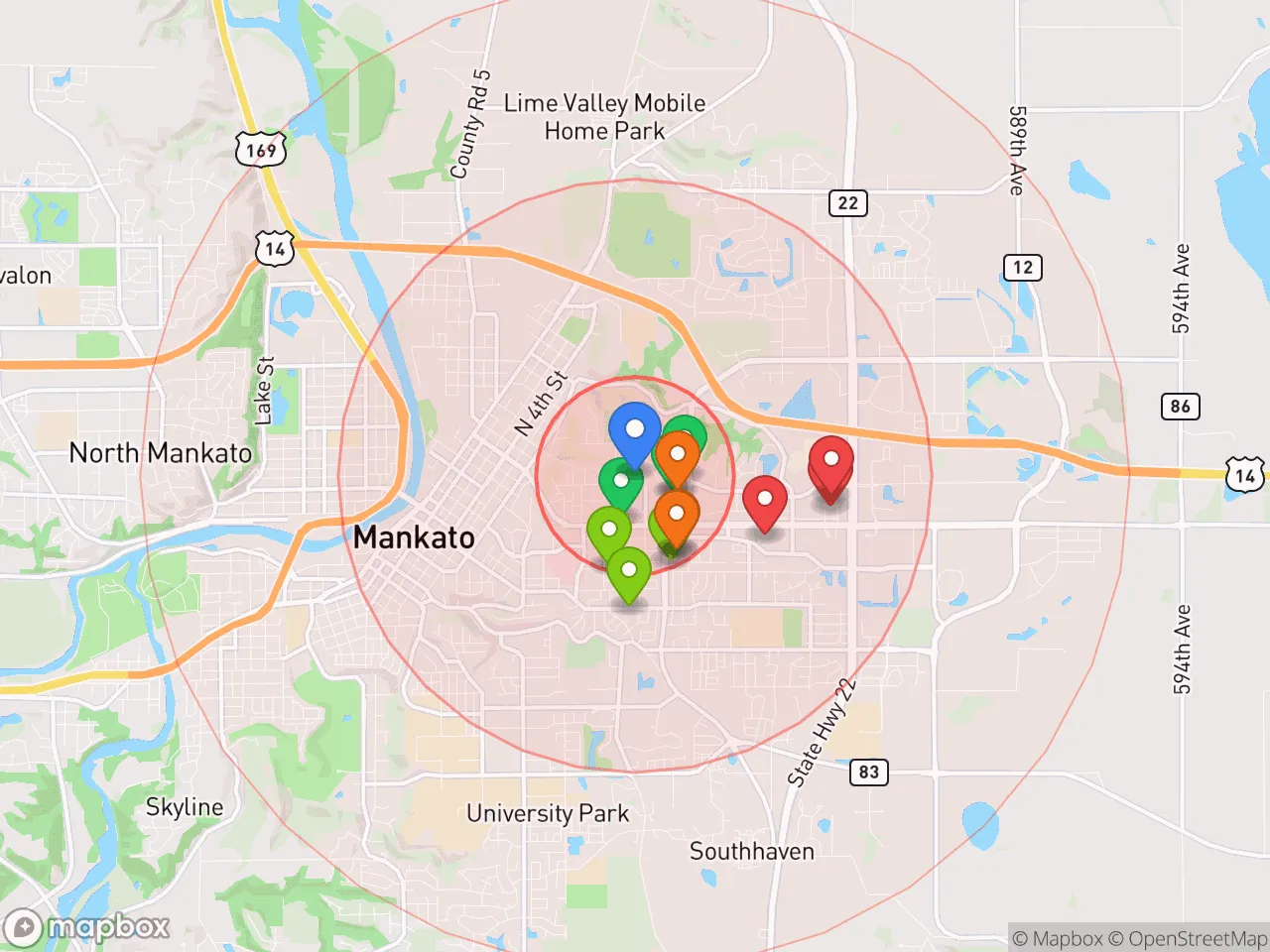
Hobbies
Explore the areaGroceries
5 within 10 miles
Gas
20 within 10 miles
Hospital
5 within 20 miles
Airport
JFK — John F. Kennedy Memorial
Post Office
USPS — Mankato, MN
Critical Amenities
Quality-of-Life Analysis
Mankato, Minnesota, offers a quality of life that blends Midwestern affordability with a surprisingly robust urban amenity set, attracting a mix of young professionals, families, and retirees. The city’s cost of living index sits at 92 (12% below the national average), making it a practical choice for those seeking economic stability without sacrificing access to culture or outdoor recreation. The population skews younger than the state average, driven by Minnesota State University, Mankato, which infuses the area with a steady stream of students and faculty, while the broader workforce is anchored in healthcare, education, and manufacturing.
How housing costs and daily expenses compare to nearby cities
Housing in Mankato remains a standout value relative to the Twin Cities metro. The median home value is $250,600, roughly half the median in Minneapolis-St. Paul, while the median rent of $1,089 is similarly competitive. This affordability is paired with an average commute of just 14.5 minutes, a figure that dramatically undercuts the 30-minute-plus averages common in larger metros. Compared to Rochester (COL index 96) or St. Cloud (94), Mankato offers slightly lower housing costs and a shorter commute, though Rochester edges ahead in healthcare employment density. Utility costs and grocery prices are in line with state averages, meaning the biggest savings come from the housing market and transportation time. First-time homebuyers and renters alike find that their dollar stretches further here than in any of the state’s other major regional centers.
What daily life is like for families, students, and professionals
Daily life in Mankato revolves around a compact, walkable downtown core along the Minnesota River, anchored by the Mankato Civic Center and the Riverfront Park trail system. The city’s public schools, particularly Mankato East and West High Schools, consistently rank above state averages in graduation rates and college readiness, while the presence of Minnesota State University provides dual-enrollment options and a steady calendar of public lectures, concerts, and Division II athletics. For outdoor recreation, the Minnesota River Valley Trail offers over 40 miles of paved paths, and nearby Minneopa State Park provides hiking and a bison herd within a 15-minute drive. The restaurant scene is more diverse than expected for a city of 45,000, with a notable concentration of locally owned Vietnamese, Mexican, and Somali eateries reflecting a growing immigrant community. Retail is concentrated along the Highway 14 corridor, anchored by the River Hills Mall, but the downtown area has seen a revival of boutique shops and breweries. The overall pace is slower than the suburbs of Minneapolis, but faster than most rural Minnesota towns, with a strong emphasis on community events like the annual Mankato Marathon and the Vikings: The Art of Hnefatafl festival.
Who thrives in Mankato? The city is an excellent fit for budget-conscious professionals who want a short commute and a lower cost of living without moving to a rural area. Families benefit from strong schools and abundant parks, while retirees appreciate the walkable downtown and access to Mayo Clinic Health System’s regional hospital. Students and academics find a lively, affordable college town atmosphere. Those seeking a high-energy nightlife scene or a dense urban job market will find Mankato too quiet, but for anyone prioritizing financial breathing room, outdoor access, and a tight-knit community feel, it is one of the best values in southern Minnesota.

Crime in Mankato, MN
Generally safer than 61% of comparable U.S. locations.
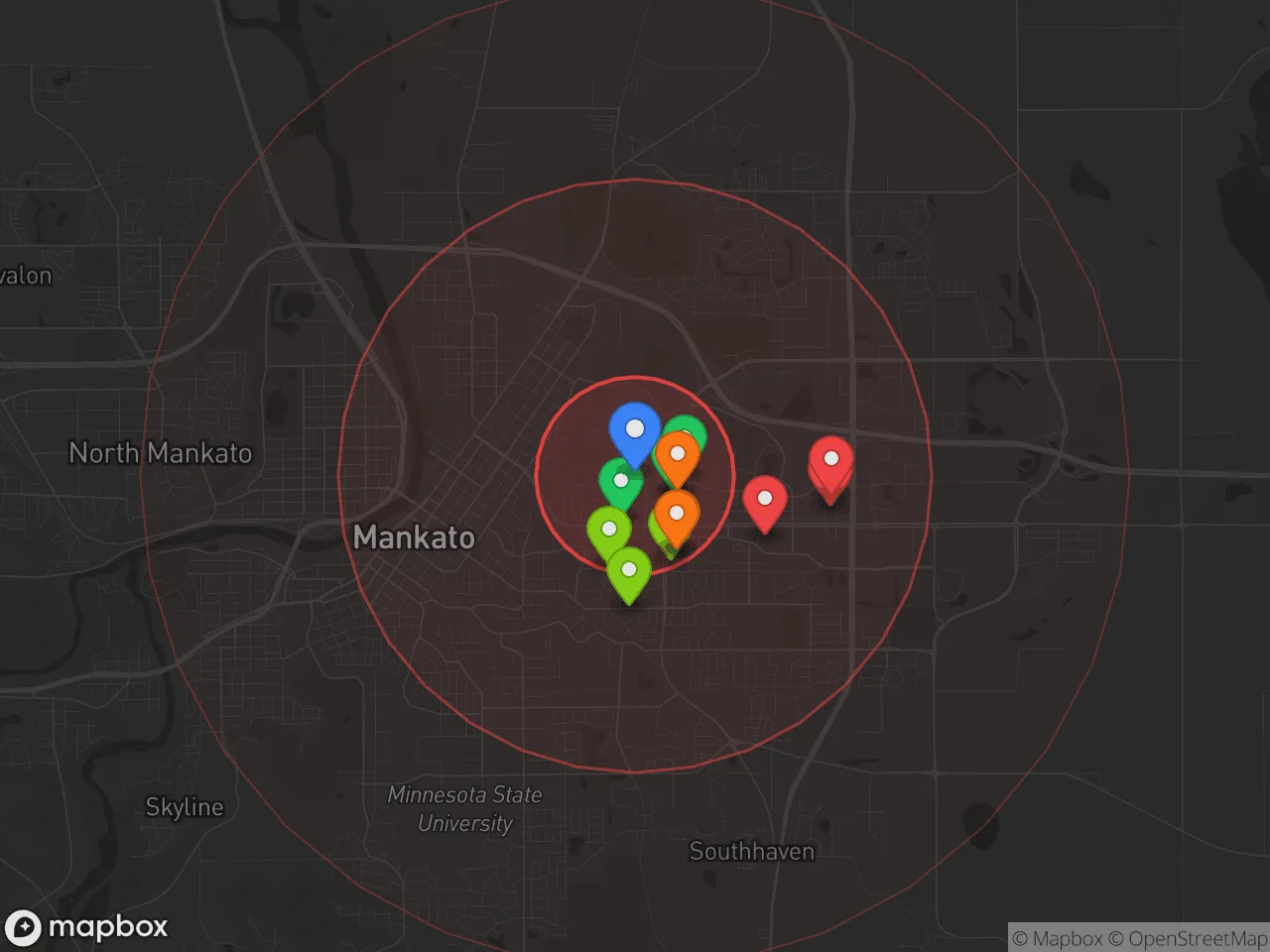
Violent CrimeViolent Crime Analysis
Property CrimeProperty Crime Analysis
Crime Analysis
Mankato, Minnesota, presents a mixed safety profile for prospective residents. The city’s overall crime rate is notably higher than the state average, driven primarily by property offenses, though violent crime remains below the national median. Understanding these figures in the context of local law enforcement and judicial philosophy is critical for anyone evaluating relocation to this growing regional hub.
Crime in context
Mankato’s violent crime rate stands at 289.8 incidents per 100,000 residents, which is roughly 17% lower than the U.S. national average but significantly higher than the Minnesota state average of approximately 240 per 100,000. Property crime, however, is a more pressing concern, with a rate of 2,175.7 per 100,000—well above both the state average (around 1,800) and the national median. This elevated property crime rate includes theft, burglary, and motor vehicle theft, and it aligns with patterns seen in other small metro areas in the Upper Midwest. As a city that anchors a metropolitan statistical area of roughly 100,000 people, Mankato’s crime data reflects the challenges of a regional retail, education, and healthcare center that draws both commuters and transient populations.
What residents experience
Daily life in Mankato is generally safe, but residents report property crime as the most tangible safety issue. Car break-ins, package thefts, and bicycle thefts are common complaints, particularly in neighborhoods near Minnesota State University, Mankato, and along the commercial corridors of Highway 22 and Madison Avenue. Violent incidents—such as aggravated assaults or robberies—are less frequent but tend to cluster in specific areas, including parts of the downtown core and near the university campus during late-night hours. A key factor influencing public safety perception is the judicial environment in Blue Earth County. Like many counties in greater Minnesota, the local bench and prosecutor’s office have leaned toward progressive sentencing reforms in recent years, including diversion programs and reduced incarceration for property and drug offenses. While these policies aim to reduce recidivism, critics argue they result in shorter sentences and quicker return of offenders to the streets, which can erode deterrence and leave victims feeling underserved. Residents should be aware that this judicial philosophy may contribute to repeat property crime and a sense of impunity among some offenders.
Neighborhood-level variation
Safety in Mankato varies considerably by neighborhood. The western and southern residential areas—such as the Hilltop, Lincoln Park, and the newer developments near Stoltzman Road—generally report lower crime rates and are considered safer by long-term residents. In contrast, the central and eastern parts of the city, including the area around the university and the commercial strip along Madison Avenue, see higher concentrations of both property and violent crime. The downtown district, while vibrant, experiences periodic incidents of disorder, particularly after bar closing hours. For families and professionals, the safest housing options are typically found in the outlying subdivisions and in nearby communities like North Mankato, which has its own police force and a slightly lower crime profile. Prospective renters and buyers should consult the Mankato Department of Public Safety’s online crime mapping tool to assess specific blocks before committing to a lease or purchase.
* Values derived from national, state, county, city and local statistics and may differ in a specific area. Last updated: 2026-04-24T12:27:15.000Z
Narrative content on this page is AI-generated and may contain mistakes. Verify any details that matter before acting on them.
ReloMaps may earn a commission from affiliate links at no extra cost to you.

