Photo: Wikipedia
Demographics of Mansfield, TX
Affluence Level in Mansfield, TX
An upper-middle-class area. Household wealth, education levels, and homeownership run ahead of national benchmarks.
People of Mansfield, TX
Mansfield, Texas, today is a predominantly family-oriented suburb of 75,398 residents, characterized by a notably diverse and middle-to-upper-middle-class population. The city’s identity is shaped by a blend of established White and Black communities, a growing Hispanic presence, and smaller but visible East/Southeast Asian and Indian populations, all drawn by strong schools and a relatively affordable housing market compared to nearby Dallas-Fort Worth suburbs. With a 43.2% college-educated rate and a foreign-born share of just 5.2%, Mansfield’s people are largely native-born, English-speaking, and politically moderate-to-conservative, reflecting its roots as a quiet railroad town that transformed into a sought-after bedroom community.
How the city was settled and grew
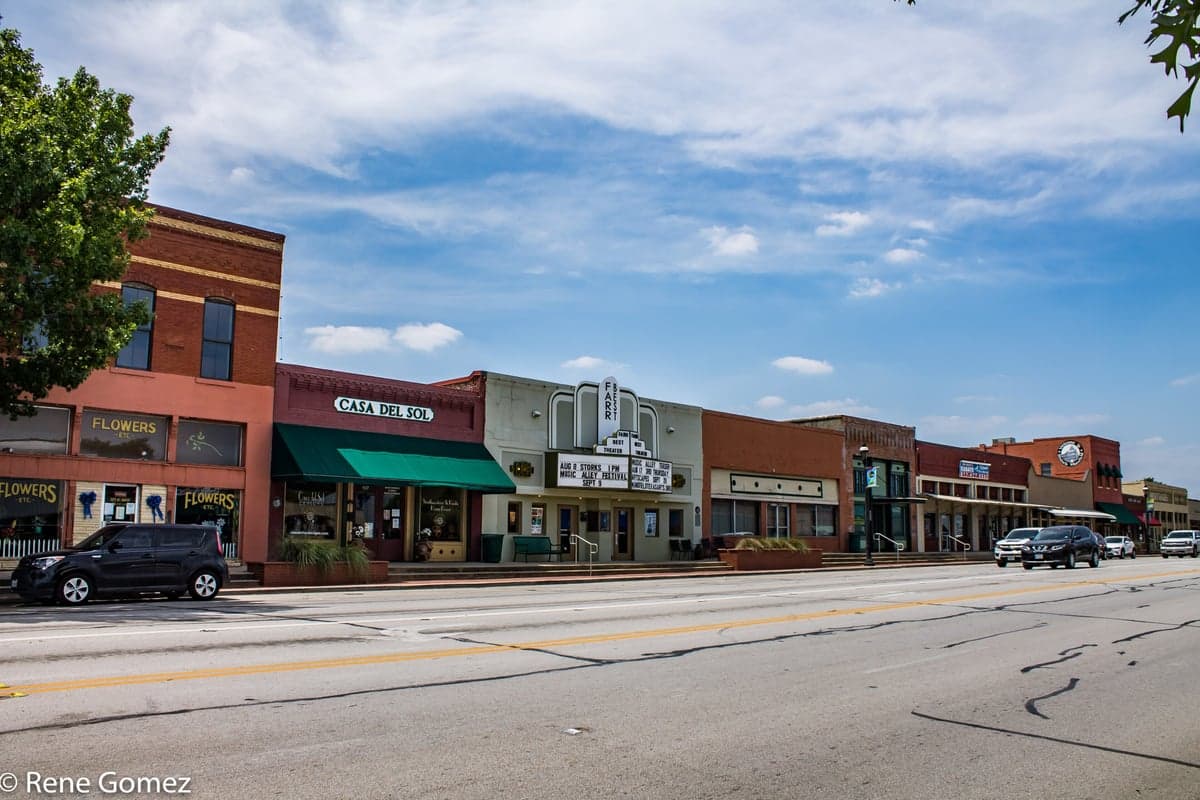
Mansfield’s original population was drawn by the arrival of the Gulf, Colorado and Santa Fe Railway in the 1880s, which turned a small farming crossroads into a cotton and shipping hub. Early settlers were primarily Anglo-American farmers from the U.S. South, who established the Historic Downtown Mansfield district around the rail depot, building wood-frame homes and brick storefronts that still stand. A smaller number of Black families, many formerly enslaved or their descendants, settled in the Willow Grove area south of the tracks, forming a tight-knit community centered on the St. John Missionary Baptist Church (founded 1875). The city remained a rural, majority-White farming town through the 1950s, with a population under 2,000, as cotton and dairy farming dominated the local economy.
Modern era (post-1965)
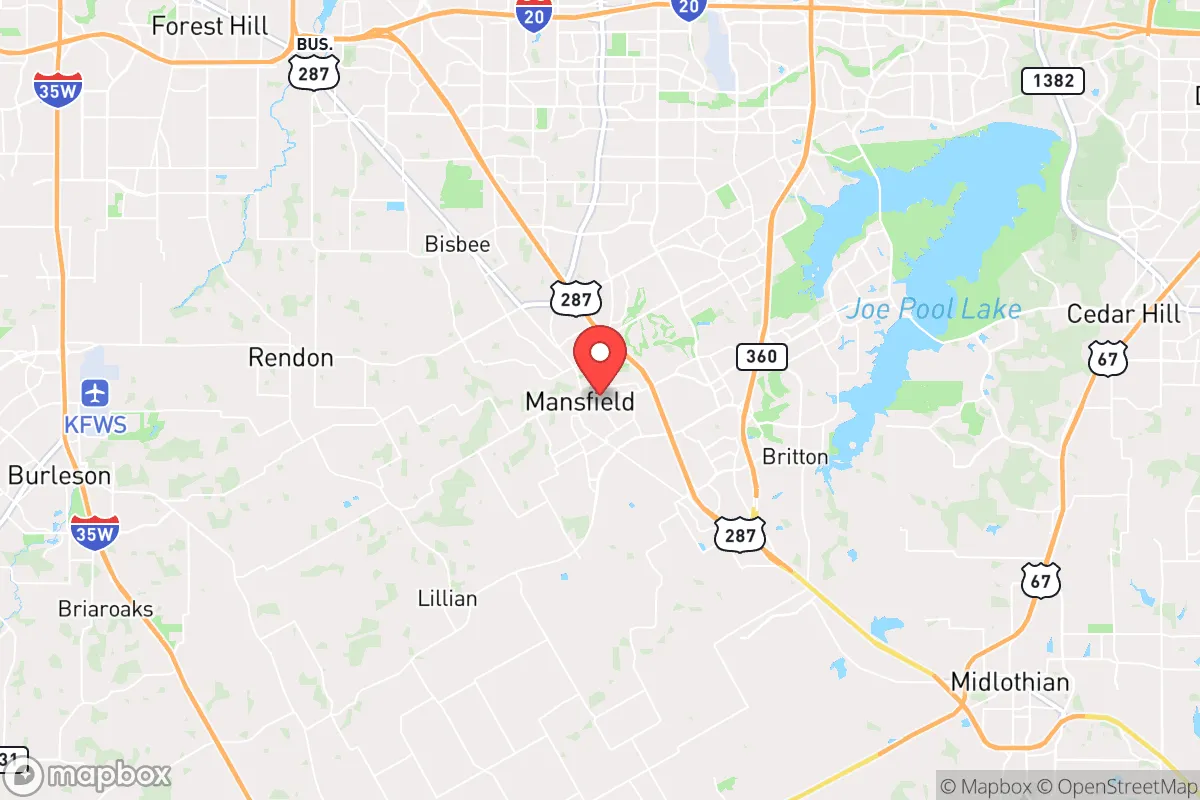
Mansfield’s modern population boom began in the 1970s and accelerated through the 1990s, driven by the expansion of the Dallas-Fort Worth metroplex and the construction of U.S. Highway 287. Suburban developers targeted Mansfield for its large tracts of undeveloped land and lower tax rates, attracting middle-class families seeking newer, larger homes. The Walnut Creek neighborhood, built in the 1980s and 1990s, became a primary landing spot for White professionals moving from Dallas and Tarrant counties, drawn by the Mansfield Independent School District’s reputation. Simultaneously, Black families from southern Dallas and Oak Cliff began relocating to the Brookside and Mansfield National subdivisions, seeking safer streets and better schools. This wave shifted the city’s racial composition: by 2020, the Black share had risen to over 23%, making Mansfield one of the most racially balanced suburbs in the region. Hispanic families, many from Texas’s Rio Grande Valley and Mexico, began arriving in the 2000s, settling primarily in the Mansfield Towne Crossing area and the newer Hidden Creek development, drawn by construction and service-sector jobs. The East/Southeast Asian population (3.6%) and Indian population (1.0%) are smaller but concentrated in the Mansfield Ranch and Shady Valley neighborhoods, where tech and medical professionals from the DFW corridor have bought homes since 2010.
The future
Mansfield’s population is projected to continue growing, likely reaching 90,000–100,000 by 2040, as land annexation and new master-planned communities fill remaining open space. The city is not homogenizing into a single demographic bloc but rather tribalizing into distinct, income-stratified enclaves: older, established White and Black residents dominate the historic core and mid-century subdivisions, while newer Hispanic and Asian families cluster in the western and southern edges. The foreign-born share (5.2%) is low but slowly rising, driven by Hispanic and Asian immigration, though the city remains overwhelmingly native-born. The Indian and East/Southeast Asian communities are small but growing steadily, attracted by the school district and proximity to corporate jobs in Grand Prairie and Las Colinas. The Black population share appears to have plateaued near 23%, while the Hispanic share (17%) is the fastest-growing segment, likely reaching 25–30% by 2040. No single group is likely to achieve a majority in the next decade, making Mansfield a genuinely multiethnic suburb where no one racial group dominates.
For a conservative-leaning family or individual moving in now, Mansfield offers a stable, family-focused environment with strong schools and a low crime rate, but one that is gradually diversifying along income and ethnic lines. The city is becoming a middle-class melting pot where older Anglo and Black communities coexist with newer Hispanic and Asian arrivals, all sharing a common commitment to property values and local schools. The key trade-off is between the city’s still-affordable housing and its increasing distance from the urban job centers of Dallas and Fort Worth, a commute that now averages 35–45 minutes each way. Mansfield is not a transient boomtown but a maturing suburb where the people are putting down roots, building churches and civic organizations, and shaping a distinct identity that is neither fully urban nor rural.

* Values derived from national, state, county, city and local statistics and may differ in a specific area. Last updated: 2026-04-19T07:10:30.000Z
Narrative content on this page is AI-generated and may contain mistakes. Verify any details that matter before acting on them.
ReloMaps may earn a commission from affiliate links at no extra cost to you.

