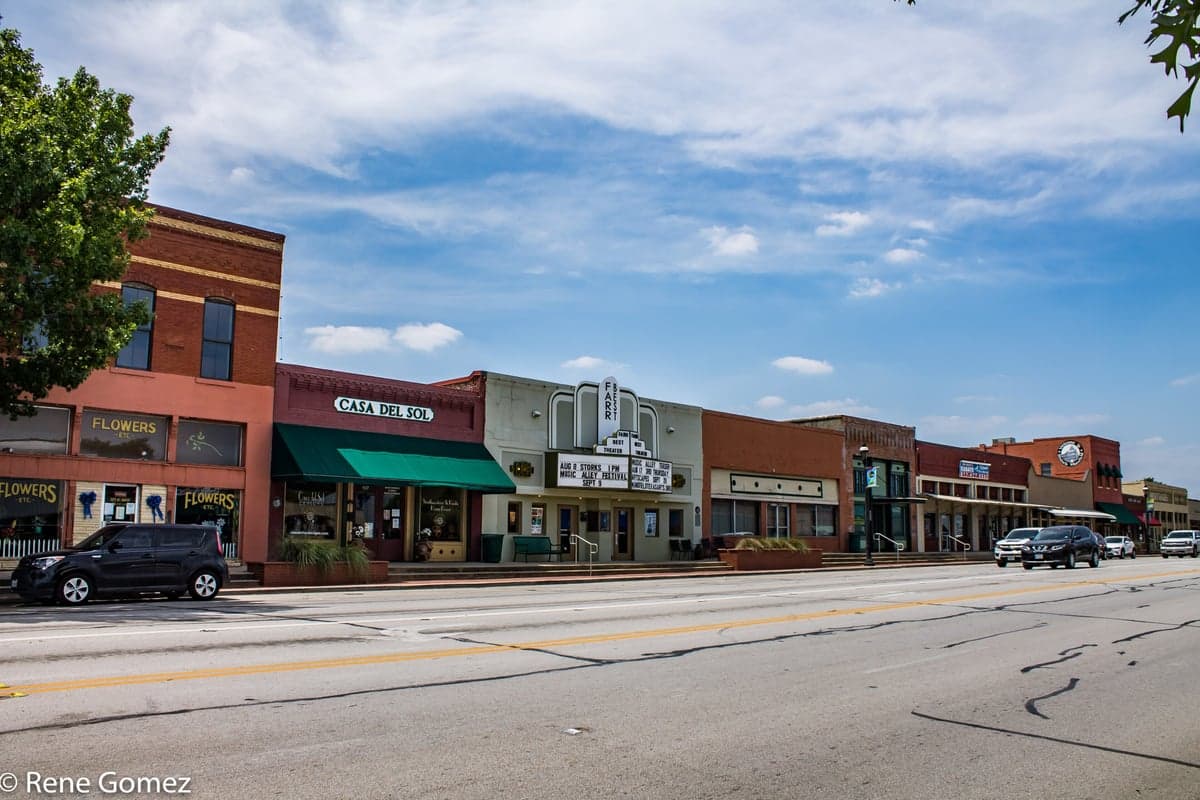
Photo: Wikipedia
Political ClimatePolitical Climate in Mansfield, TX
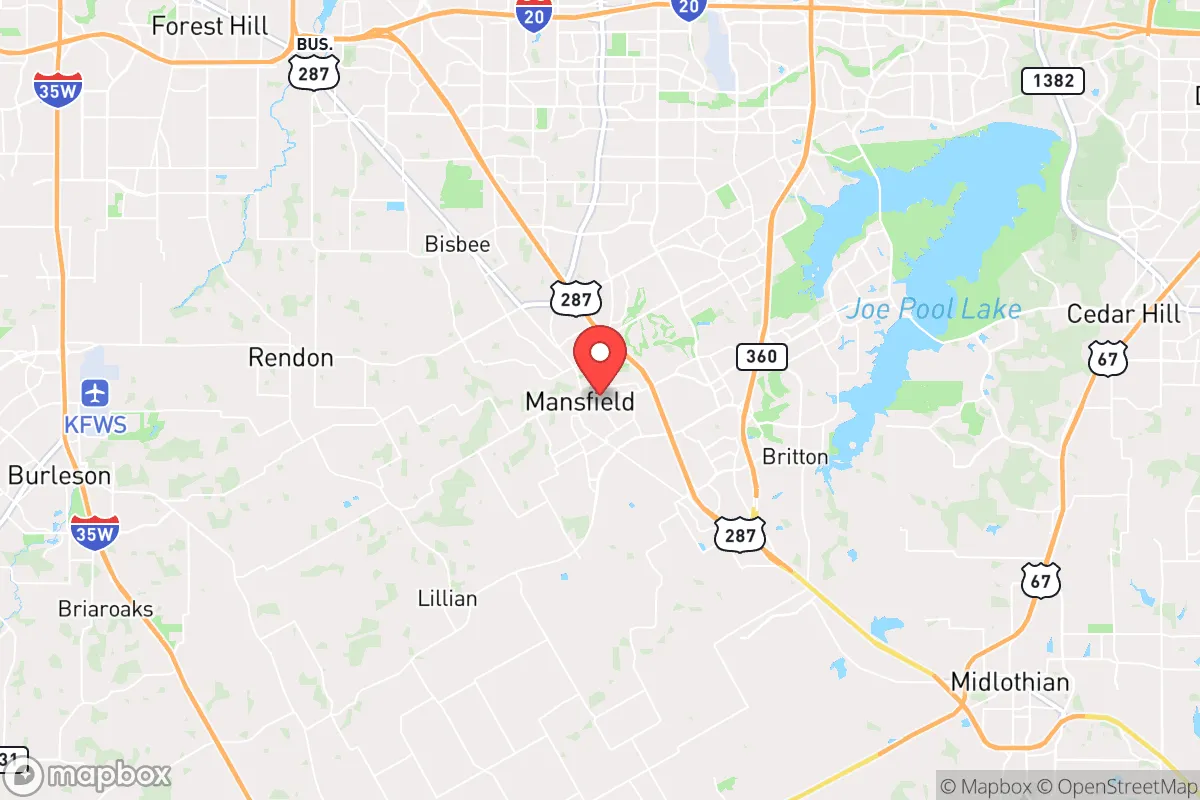
District shown is the primary district for this city’s centroid. Cities may span multiple districts.
Local Political AnalysisPolitical Analysis of Mansfield, TX
Mansfield, Texas, leans solidly conservative, with a Cook PVI of R+14 that places it firmly in the Republican column. This isn't just a number on a map—it reflects a community where folks have long valued personal responsibility, limited government, and the freedom to live without a bunch of bureaucratic red tape. If you look at the voting patterns over the last decade, Mansfield has stayed reliably red, even as some neighboring areas like Arlington or Fort Worth have drifted leftward. The trajectory here is steady, but there's a growing undercurrent of concern among long-time residents about outside influences creeping in, especially from the more progressive policies taking hold in Dallas and Tarrant County's urban core.
How it compares
When you stack Mansfield up against its neighbors, the contrast is pretty stark. Head east to Arlington, and you'll find a city that's been trending more purple, with local elections increasingly influenced by union-backed candidates and affordable housing mandates that feel like a government overreach. South of Mansfield, places like Burleson and Alvarado still lean conservative, but they're smaller and less exposed to the kind of regional pressure Mansfield faces. The real eye-opener is comparing Mansfield to Dallas proper, where city council votes on zoning and police funding have become battlegrounds for progressive ideology. Mansfield, by contrast, has kept its city council focused on core services—roads, public safety, and keeping property taxes in check—without diving into the social engineering experiments you see elsewhere. That said, the 2024 election cycle showed a slight uptick in Democratic turnout in Mansfield's newer subdivisions, which has some of us watching closely. It's not a flip, but it's a reminder that no community is immune to the broader cultural shifts happening across the state.
What this means for residents
For the people living here, Mansfield's political climate translates into a pretty straightforward deal: you get to keep more of your own money and make your own choices without a lot of nanny-state interference. The city has resisted adopting the kind of strict environmental regulations or "equity" mandates that have driven up housing costs in Austin or Houston. School board meetings here still focus on curriculum and safety, not on pushing divisive social agendas. But the warning signs are there. You'll hear folks at the local coffee shop grumbling about how the county commissioners are starting to eye more zoning restrictions, or how a few city council candidates ran on "diversity, equity, and inclusion" platforms in the last cycle. The concern is that if these progressive ideas take root, you'll see the same pattern that played out in places like Plano or Richardson: higher taxes, more red tape, and a slow erosion of the personal freedoms that made Mansfield attractive in the first place. For now, the conservative majority holds, but it takes active participation—showing up at town halls, voting in every local election—to keep it that way.
One cultural distinction that sets Mansfield apart is its strong sense of local identity, rooted in its ranching history and a "live and let live" attitude. You won't find the kind of aggressive government messaging you see in larger cities—no public health overreach, no mandatory bike lane programs, no city-funded "social justice" initiatives. The police department here still operates with a focus on community trust, not on being a political tool. But the long-term outlook depends on whether Mansfield can hold the line against the regional tide. If you're looking for a place where your rights to speak freely, raise your family, and run a business without endless government interference are still respected, Mansfield is one of the last strongholds in the DFW metroplex. Just keep an eye on those city council races—that's where the real battle for the soul of this town is being fought.

State Political ClimatePolitical Climate in Texas
State Political AnalysisPolitical Environment in the State
Texas remains a solidly Republican state at the statewide level, but the coalition that keeps it red is shifting. The GOP still dominates rural and exurban areas, but the massive growth in the Dallas-Fort Worth, Houston, San Antonio, and Austin metros is slowly making the state more competitive. In 2024, Donald Trump carried Texas by about 9 points, down from 11 in 2020 and 16 in 2016. The state’s political future is being written in the suburbs and the I-35 corridor, where transplants from blue states are changing the electorate faster than anywhere else.
Urban vs. rural divide
The political map of Texas is stark. The big cities — Austin, Houston, Dallas, San Antonio, and El Paso — are reliably Democratic, with Austin and El Paso being the most liberal. The rural counties in West Texas, the Panhandle, and East Texas are deeply Republican. The real battleground is the suburbs. Places like Collin County (north of Dallas) and Fort Bend County (southwest of Houston) were once GOP strongholds but are now competitive. Collin County voted for Trump by only 3 points in 2024, down from 15 in 2016. Meanwhile, Bexar County (San Antonio) and Harris County (Houston) have become solidly blue. The rural-urban split is so pronounced that a drive from Lubbock to Austin feels like crossing into a different country politically.
Policy environment
Texas has no state income tax, which is a major draw for conservatives and businesses. The property tax burden is high, but the state’s Proposition 4 (2023) provided significant relief by raising the homestead exemption and compressing school tax rates. The regulatory posture is business-friendly, with minimal zoning in many cities and a right-to-work law that keeps unions weak. On education, the state passed HB 3 in 2019 to boost teacher pay and school funding, but the 2023 legislative session saw a major push for school choice, including SB 8, which created education savings accounts for special needs students. A broader universal school choice bill failed, but the issue is far from dead. Healthcare policy is mixed: Texas expanded Medicaid under the Affordable Care Act? No — it famously did not, leaving about 1.5 million low-income adults in the coverage gap. The state’s Heartbeat Act (SB 8, 2021) effectively banned abortion after six weeks, and the 2023 Human Life Protection Act (HB 1280) made it a near-total ban. Election laws tightened with SB 1 (2021), which added ID requirements for mail ballots, banned drive-through voting, and limited early voting hours. For a conservative, the policy environment is generally favorable, but the property tax and healthcare gaps are real concerns.
Trajectory & freedom
Texas has been moving in a more conservative direction on several key fronts, but there are warning signs. On gun rights, the state passed constitutional carry (HB 1927) in 2021, allowing permitless carry for anyone 21 or older. That was a clear expansion of personal liberty. On parental rights, HB 18 (2023) requires parental consent for minors to create social media accounts and restricts what content platforms can show them. The Save Women’s Sports Act (SB 15, 2023) bans transgender athletes from competing on teams matching their gender identity. On medical autonomy, the state restricted COVID-19 vaccine mandates for private employers (SB 7, 2023) and banned mask mandates in schools (SB 29, 2023). However, the state’s abortion ban is a double-edged sword for freedom advocates: it protects unborn life but also creates a legal environment where women may face travel restrictions or prosecution. The Texas Privacy Act (HB 4, 2023) limits government collection of biometric data, which is a win for privacy. The trajectory is toward more state-level control over social issues, which pleases many conservatives but worries libertarians who want less government involvement overall.
Civil unrest & political movements
Texas has seen its share of political flashpoints. The 2020 protests in Austin and Houston over George Floyd’s death were large and occasionally violent, leading to property damage and a lasting rift between city leaders and state lawmakers. The state responded with HB 9 (2021), which increased penalties for rioting and made it easier to sue local governments that defund police. Immigration is a constant flashpoint. Governor Greg Abbott’s Operation Lone Star (2021) deployed state troopers and National Guard to the border, bused migrants to blue cities, and installed razor wire along the Rio Grande. The state passed SB 4 (2023), which makes illegal entry a state crime and allows state judges to order deportation — a direct challenge to federal authority. The law is tied up in court, but it shows the state’s willingness to push the envelope. Secession talk, led by the Texas Nationalist Movement, remains fringe but louder than in most states. Election integrity remains a hot topic: the 2020 election in Texas was not seriously disputed, but SB 1 was passed in response to concerns about Harris County’s 2020 election administration, including a widely criticized drive-through voting experiment. A new resident would notice the heavy police presence at the border, the political bumper stickers, and the fact that many rural counties fly “Come and Take It” flags.
Projection
Over the next 5-10 years, Texas will become more politically competitive, but it is unlikely to flip blue statewide. The in-migration from California, New York, and Illinois is real, but many of those transplants are conservatives or moderates fleeing high taxes and crime. The suburbs of Dallas, Houston, and San Antonio will continue to shift left, but the rural and exurban areas will remain deeply red. The state’s fast-growing Hispanic population is not voting as a bloc — many are conservative on social issues and support the GOP. The 2026 and 2028 elections will be close, but the Republican Party’s structural advantages (no state income tax, a business-friendly climate, and a strong rural base) will keep Texas red for at least another decade. The biggest wild card is the state’s response to growth: if infrastructure, schools, and housing become unaffordable, the political mood could sour. For now, the trajectory is toward a more polarized but still Republican state.
For a new resident, the bottom line is this: Texas offers a low-tax, business-friendly environment with a strong conservative tilt on social issues. You will find a wide range of political climates depending on where you live — from the deep red Panhandle to the deep blue urban cores. The state is actively pushing back against federal overreach on immigration, education, and healthcare. If you value personal liberty, low taxes, and a government that respects your rights, Texas is still one of the best bets in the country. Just be prepared for high property taxes and a summer that will test your commitment to freedom.
* Values derived from national, state, county, city and local statistics and may differ in a specific area. Last updated: 2026-04-19T07:10:30.000Z
Narrative content on this page is AI-generated and may contain mistakes. Verify any details that matter before acting on them.
ReloMaps may earn a commission from affiliate links at no extra cost to you.

