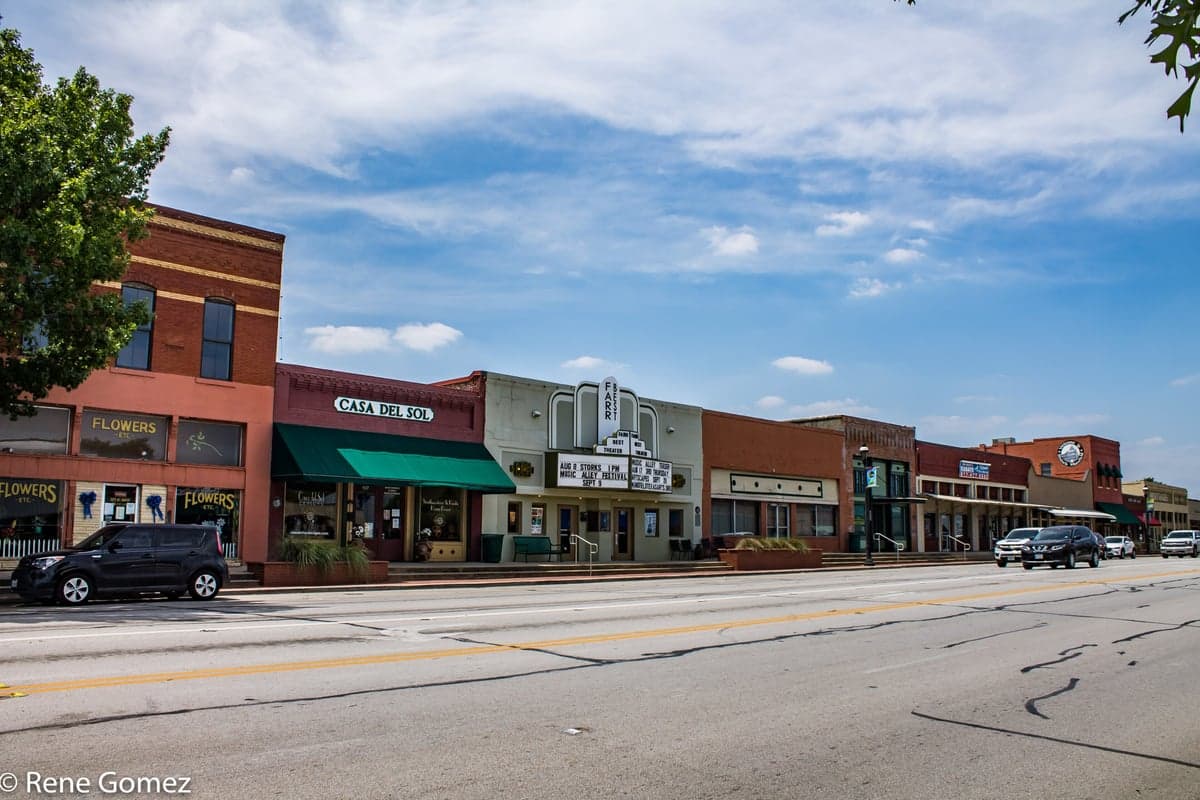
Photo: Wikipedia
Strategic Assessment of Mansfield, TX
Multiple tactical vulnerabilities. Population density, target proximity, or disaster risk are likely compounding. A retreat property and exit planning is required.
What does the Strategic Assessment tell us?
Our Strategic Assessment grades tactical survivability of an area. Major population centers, military targets, fallout zones, natural disasters, and border exposure all drive risk — lower exposure means a more defensible position in a crisis.
This is heavily inspired by Joel Skousen's Strategic Relocation book. Highly recommended you checkout the book ($)What does this tell us?
Our Strategic Assessment grades tactical survivability of an area. Major population centers, military targets, fallout zones, natural disasters, and border exposure all drive risk — lower exposure means a more defensible position in a crisis.
This is heavily inspired by Joel Skousen's Strategic Relocation book. Highly recommended you checkout the book ($)Strategic Pillars

Key Distances
Regional Safe Places
Below is our recommended "safe zones" in Texas and the surrounding area based on our strategic heuristics. For most people, it's unrealistic to live in a “safe zone” full-time due to work, family or other personal reasons. They tend to be more rural. However, many of these areas are perfect for second homes and retreat properties that double as a vacation home or even a short-term rental.

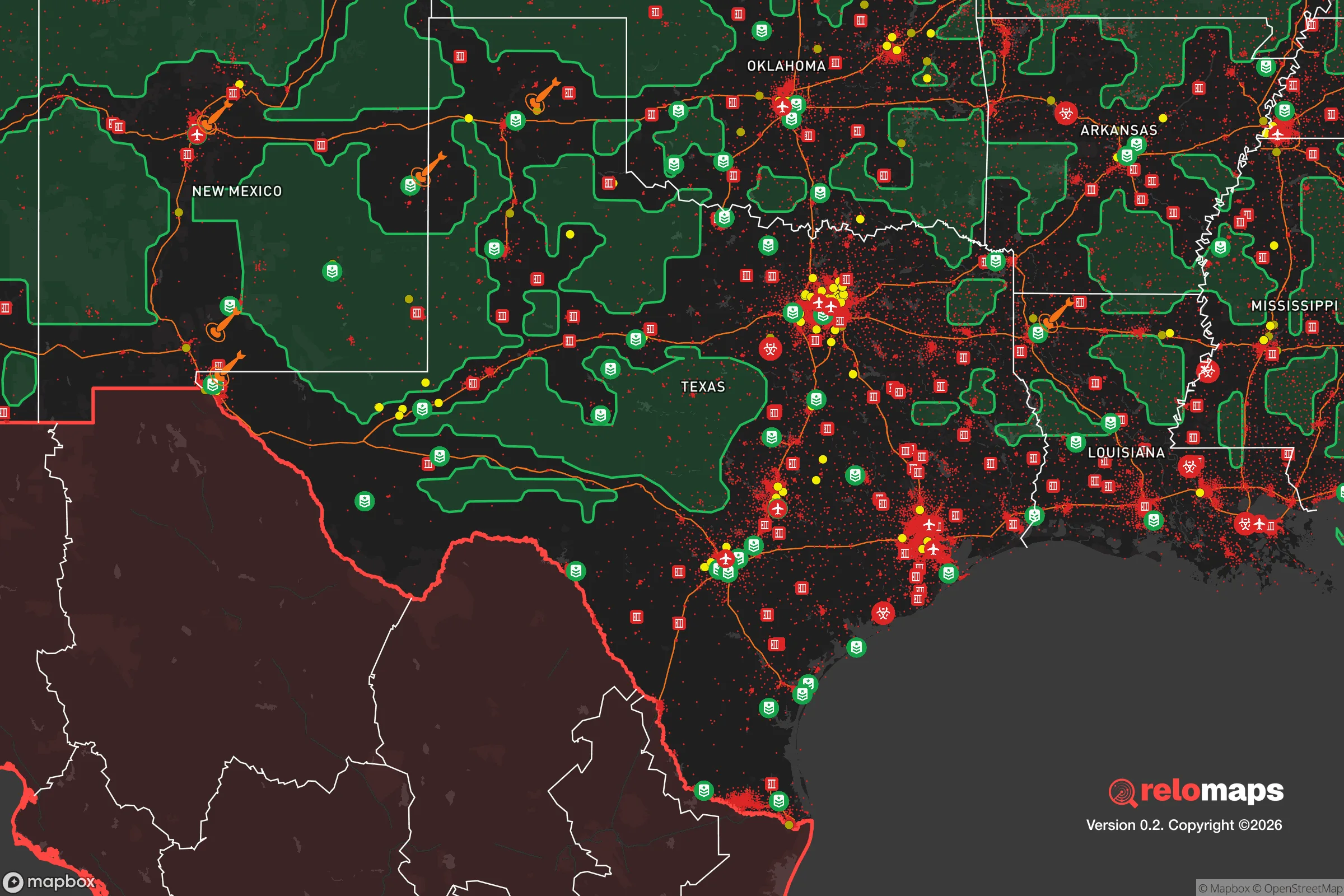


Important Note: For informational purposes only. This does not mean nothing bad ever happens in the green zones. Please use common sense. This is based on public data and modeled with AI. We tried to take a conservative approach but mistakes happen. We update this regularly as new information becomes available.
Solar Generator Recommendations
Backup power matters more here than in safer locations. We've picked three solar generators across budgets and capacity tiers — start with the budget unit if you only need a few essentials, or step up if you want to run a fridge and HVAC for days at a time.

Jackery Portable Power Station Explorer 300
Budget OptionPower on the Go: Weighing only 11 lbs, it's convenient to set up and store with book-sized foldable solar panels

BLUETTI Portable Power Station AC180
Designed for both indoor and outdoor scenarios, AC180 is highly capable as it has a robost capacity and continuous output power.

EF ECOFLOW DELTA Pro Ultra Power Station
Upgraded PickEcoFlow DELTA Pro Ultra is a whole-home energy system designed to grow with your family. Integrated with the Smart Home Panel 2, it scales to meet your evolving energy needs — keeping your home powered, intelligent, and secure through every stage of life.
We earn a commission, at no additional cost to you.
Strategic Assessment Analysis
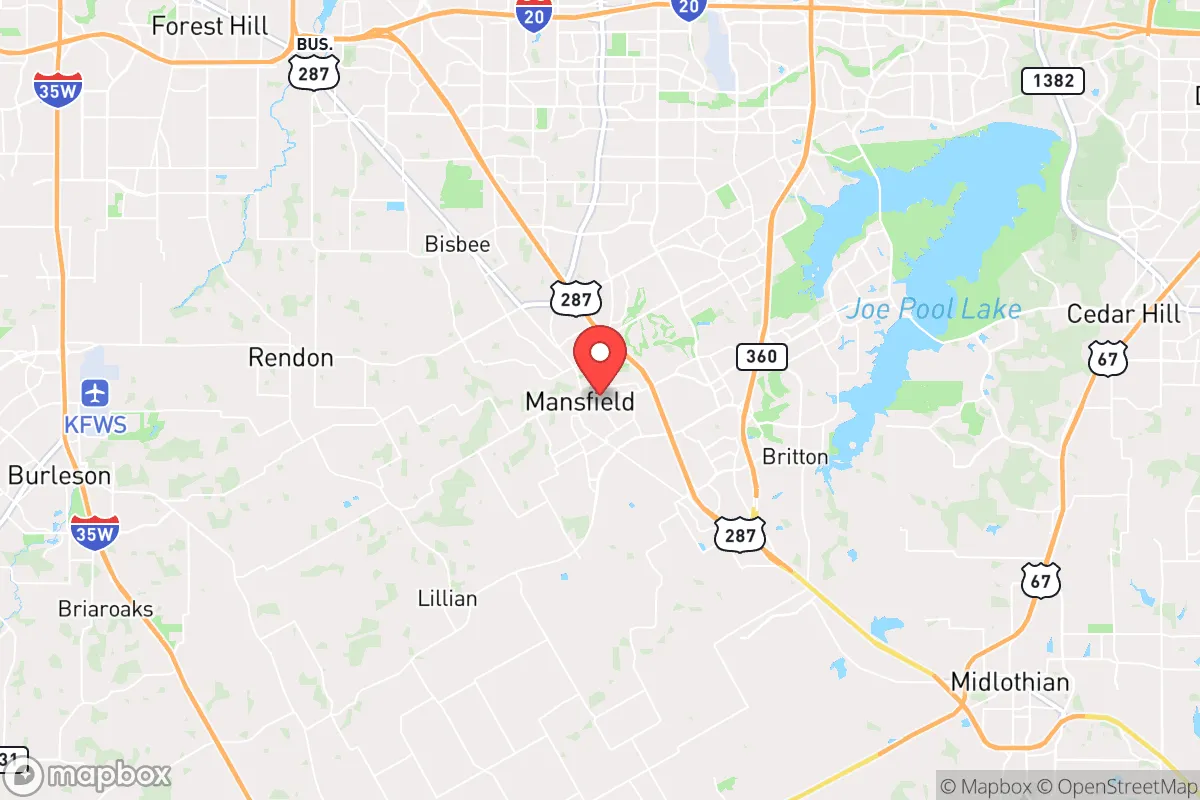
Mansfield, Texas, sits in a strategic sweet spot that few fast-growing suburbs can claim: close enough to the economic engine of the Dallas-Fort Worth metroplex to offer job access and infrastructure, yet far enough from the urban core to provide a meaningful buffer against the cascading failures that could follow a major crisis. For a relocator thinking in terms of resilience—not just commute times—this 30-mile separation from downtown Dallas and Fort Worth is a genuine asset. The city’s position along U.S. 287 and near Interstate 20 gives it multiple egress routes, a critical advantage when a single choked highway can mean the difference between getting out and being trapped. Mansfield’s population has surged past 80,000, but its development pattern—largely master-planned subdivisions with some remaining ranchland—means it hasn’t yet succumbed to the wall-to-wall density that makes evacuation a nightmare. For the conservative-minded prepper, this is a place that balances growth with a workable footprint.
Geographic position and natural advantages for long-term security
Mansfield’s geography is defined by its position on the eastern edge of the Cross Timbers region, a transition zone between the blackland prairies and the rolling hills to the west. This means the soil is generally well-drained, the terrain offers modest elevation changes that aid in both drainage and defensibility, and the area is not prone to the flooding that plagues communities closer to the Trinity River. The city sits atop the Trinity Aquifer, which provides a reliable groundwater source—a detail that matters when municipal water systems face contamination or pressure loss. The climate is classic North Texas: hot summers, occasional ice storms in winter, and a tornado risk that is real but not extreme compared to points farther north. For a relocator, the key takeaway is that Mansfield lacks the catastrophic natural disaster profile of coastal or mountain regions. No hurricanes, no wildfires of the California scale, no earthquake zones. The primary natural threat is severe weather, which is predictable and survivable with basic preparation—a basement or storm shelter, a generator, and a week of supplies. The area’s natural advantages are modest but real: good water access, stable geology, and a climate that supports year-round gardening if you’re willing to manage the summer heat.
Risks, exposures, and proximity to fallout-relevant landmarks
The most significant risk for Mansfield is its proximity to what strategists call “high-value targets” in the DFW metroplex. Dallas is home to a Federal Reserve Bank, major defense contractors like Lockheed Martin in Fort Worth, and critical transportation hubs including DFW International Airport and Alliance Airport, a major cargo and military airfield. In a conflict scenario involving strategic strikes or cyber-physical attacks on infrastructure, these are the kinds of assets that draw attention. Mansfield is roughly 25 miles from the Lockheed Martin plant and about 30 miles from the Dallas Fed—close enough that a ground-level event could send shockwaves through the region, but far enough that a direct kinetic hit is unlikely. The city is also within 50 miles of the Pantex nuclear weapons plant near Amarillo, though that’s a stretch for fallout concerns; prevailing winds would carry any airborne contamination eastward, not toward Mansfield. More immediately relevant is the proximity to the Barnett Shale natural gas fields, which means pipelines and processing facilities crisscross the area. A pipeline rupture or industrial accident is a low-probability but real hazard. For the prepper, the calculus is this: Mansfield is not a primary target, but it sits in the shadow of several. The risk is manageable with situational awareness and a plan for self-sufficiency during the chaos that would follow a major event in Dallas or Fort Worth.
Practical resilience for a relocator: food, water, energy, and defensibility
Mansfield’s practical resilience profile is mixed but leans positive for a relocator willing to invest in preparation. The city’s water supply comes from a combination of the Trinity Aquifer and surface water from Richland-Chambers Reservoir, about 40 miles southeast. In a prolonged grid-down scenario, municipal water treatment could fail, but the aquifer means private wells are viable in the more rural pockets of the city—look for properties on the western or southern edges where lot sizes are larger. The electrical grid is part of the ERCOT system, which has demonstrated fragility during winter storms (see February 2021). A whole-house generator with a propane tank is not optional here; it’s baseline equipment. Natural gas is widely available, and many homes already have gas lines for heating and cooking, which is a resilience plus. Food security is a challenge in a suburb dominated by grocery chains and fast food. The nearest significant agricultural land is in Johnson County to the south, where you’ll find cattle operations and some row crops. For a relocator serious about self-sufficiency, a property with at least a half-acre for a garden and a few fruit trees is realistic in the city’s extraterritorial jurisdiction or in unincorporated areas just outside the city limits. Defensibility is where Mansfield shows its weakness: most neighborhoods are typical suburban layouts with cul-de-sacs and open yards, offering little natural cover or chokepoints. The better option for a prepper is a home on a larger lot near the city’s periphery, where tree lines and rural roads provide more tactical options. The city’s police force is well-funded and responsive, but in a widespread crisis, law enforcement will be stretched thin. Your security plan should rely on your own perimeter and community ties, not on a 911 call.
The overall strategic picture for Mansfield is that of a solid B-tier relocation choice for the conservative prepper. It avoids the worst vulnerabilities of deep urban living—density, single points of failure, target attractiveness—while retaining access to the economic and medical infrastructure that makes daily life functional. The trade-off is that you’re not in a remote redoubt; you’re in a suburb that could become a pressure cooker if the metroplex collapses. The key is to treat Mansfield as a base of operations, not a final retreat. Build your supplies, establish relationships with like-minded neighbors, and have a secondary location farther out—perhaps in the Hill Country or East Texas—if the situation deteriorates beyond a temporary disruption. For the relocator who wants a place that works in normal times and doesn’t automatically fail in bad ones, Mansfield offers a workable middle ground. It’s not the bunker, but it’s a defensible forward position.

* Values derived from national, state, county, city and local statistics and may differ in a specific area. Last updated: 2026-04-19T07:10:30.000Z
Narrative content on this page is AI-generated and may contain mistakes. Verify any details that matter before acting on them.
ReloMaps may earn a commission from affiliate links at no extra cost to you.

