


Photo: Wikipedia
Quality of Life in Marietta, GA
A high quality of life with strong walkability, manageable living costs, healthy neighborhood signals, and solid amenity access.
What does Quality of Life tell us?
Quality of Life blends cost of living, nearby amenities, socioeconomic signals, and neighborhood character. City-level scores represent the whole municipality; individual neighborhoods can differ.
What does this tell us?
Quality of Life blends cost of living, nearby amenities, socioeconomic signals, and neighborhood character. City-level scores represent the whole municipality; individual neighborhoods can differ.
Cost of Living
34% above national average
The Real Cost of Living in Marietta, GA for 2026
| Tier | Individual | Family (4) |
|---|---|---|
| Survival | $24k | $45k |
| Comfortable | $78k | $115k |
| Luxury | $127k+ | $196k+ |
| Elite (Top 5%) | $177k+ | $275k+ |
61%
The Area Signal
A metric tracking the socioeconomic signals of the area.
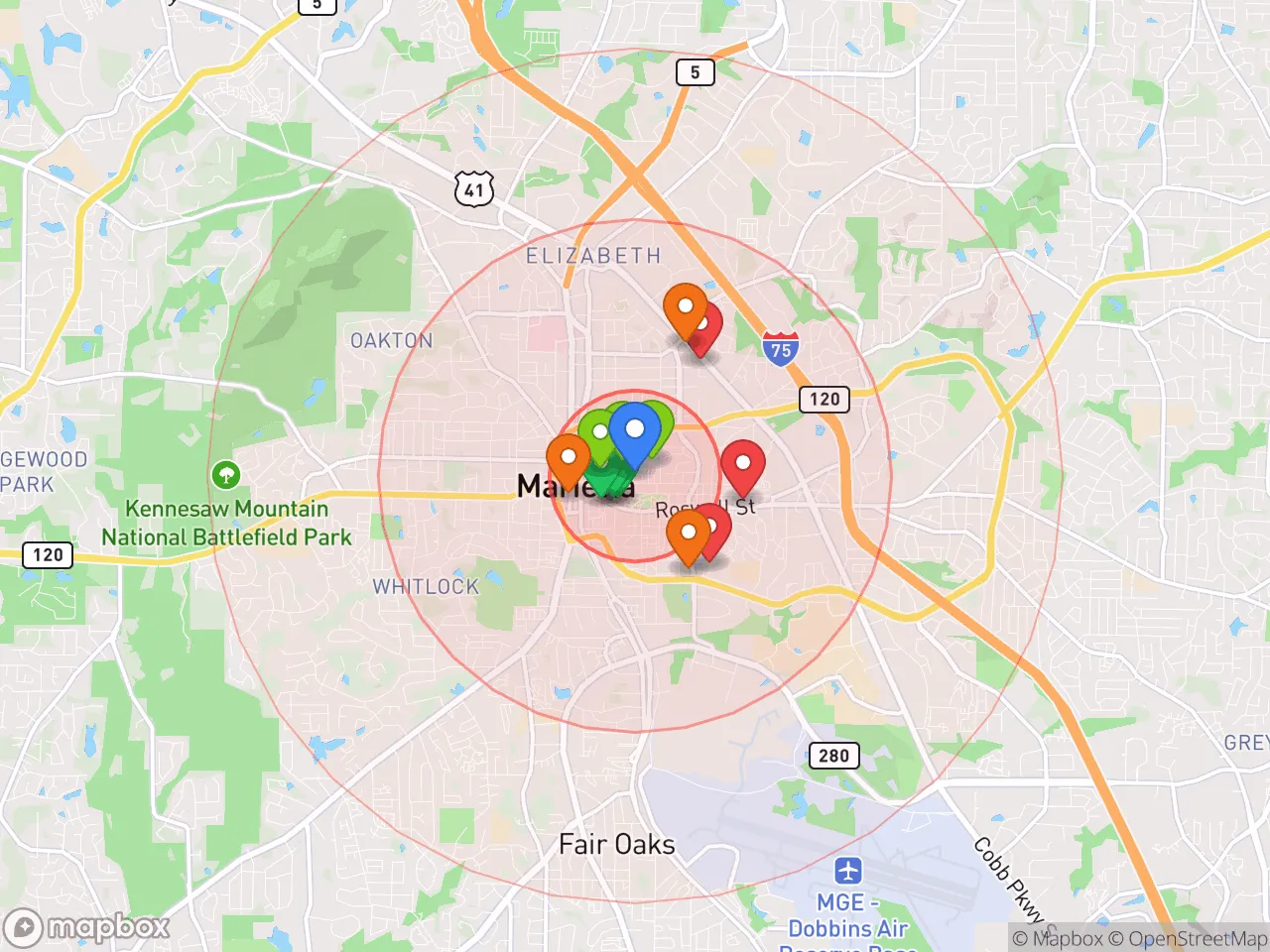
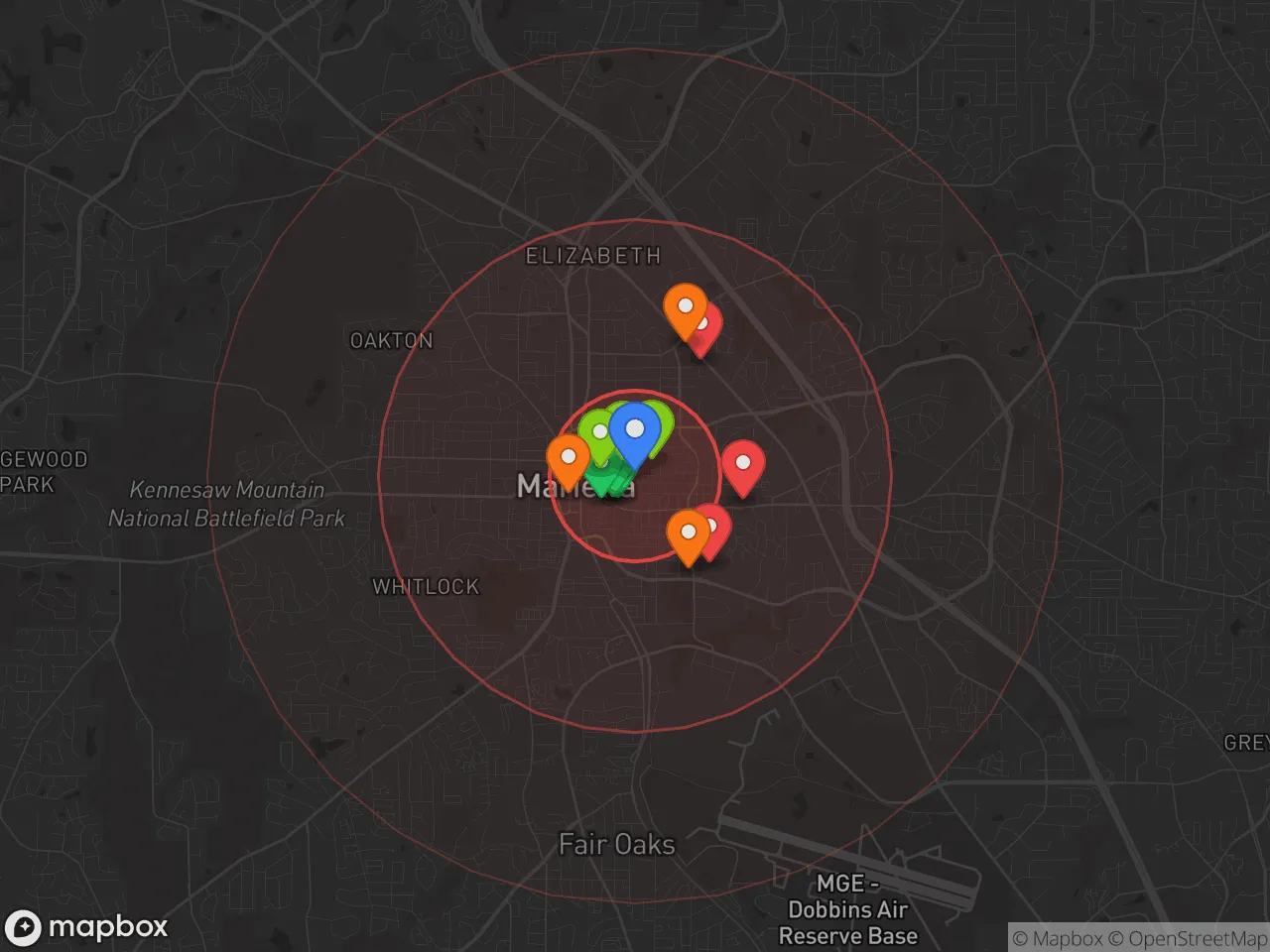
Hobbies
Explore the areaGroceries
7 within 10 miles
Gas
20 within 10 miles
Hospital
20 within 20 miles
Airport
ATL — Hartsfield–Jackson Atlanta International
Post Office
USPS — Marietta, GA
Critical Amenities
Quality-of-Life Analysis
Marietta, Georgia, presents a quality of life defined by suburban affluence and deep-rooted community character, attracting a mix of established professionals, growing families, and long-time residents who value its historic core and proximity to Atlanta. With a cost of living index of 134 (34% above the national average), the city commands a premium for its blend of antebellum architecture, top-tier schools, and a walkable downtown square that feels distinctly separate from the urban sprawl of its larger neighbor. This is a place where residents trade the frenetic pace of Buckhead for front-porch living and Friday night football, yet still expect high-end dining and cultural amenities within a short drive.
Cost of living, housing, and affordability compared to nearby areas
Marietta’s housing market is the primary driver of its elevated cost of living, with a median home value of $401,100 and a median rent of $1,491 — figures that are notably higher than the national median but still below the eye-watering prices of intown Atlanta neighborhoods like Virginia-Highland or Decatur. For context, the median home value in Marietta is roughly 15-20% less than in East Cobb (a neighboring unincorporated area with even pricier schools) but about 10% higher than in Smyrna or Kennesaw, making it a middle-ground option for buyers seeking a historic home within Cobb County. Renters face a tighter market: the average rent here is about $200 more per month than in nearby Acworth, though it remains competitive for a city with a National Register-listed historic district and direct access to I-75. Property taxes in Cobb County hover around 0.87% of assessed value, which is moderate for metro Atlanta, but the city’s overlay districts and historic preservation rules can add renovation costs for older homes. The average commute of 27.5 minutes is a critical trade-off — it’s shorter than the Atlanta metro average of 32 minutes, but still a grind for those driving to jobs in Buckhead or Midtown, especially during rush hour on the CobbLinc bus or via the limited MARTA rail access at the Marietta transfer center.
Amenities, schools, and what daily life is like for families
Daily life in Marietta revolves around its compact, walkable downtown square, anchored by the historic 1834 Cobb County Courthouse, the Earl and Rachel Smith Strand Theatre, and a rotating roster of farmers’ markets and festivals like the annual Art in the Park. The city’s public schools, part of the Cobb County School District, are a major draw: Marietta High School and its magnet programs (e.g., the International Baccalaureate program) consistently rank among Georgia’s top 10%, while elementary schools like West Side and A.L. Burruss earn high marks for their STEM and arts integration. For families, the rhythm includes weekend mornings at the Marietta Square Farmers Market, afternoons at the 130-acre Kennesaw Mountain National Battlefield Park (a 5-minute drive), and evenings at Glover Park for concerts. The city also offers a robust recreation department with 30+ parks, the Marietta Aquatic Center, and the Marietta/Cobb Museum of Art. However, the trade-off is that nightlife is limited to a handful of breweries (like Glover Park Brewery) and wine bars, with most residents driving 20 minutes to the Battery Atlanta for more options. Traffic on Cobb Parkway (US 41) and the I-75/575 interchange is a persistent frustration, and the lack of a comprehensive bike lane network means most errands require a car.
Marietta is best suited for families and professionals who prioritize excellent public schools, a strong sense of community, and a historic downtown over urban excitement or ultra-low housing costs. Empty-nesters and retirees also thrive here, drawn to the walkable square, active senior centers, and proximity to Wellstar Kennestone Hospital. Those who will struggle are young singles seeking a vibrant nightlife scene or renters on a tight budget, as the city’s affordability gap with nearby Smyrna and Kennesaw is narrowing. For anyone who values a front-porch lifestyle with a side of Southern history and a manageable commute to Atlanta, Marietta delivers a quality of life that justifies its premium price tag.

Crime in Marietta, GA
Generally safer than 58% of comparable U.S. locations.
Violent CrimeViolent Crime Analysis
Property CrimeProperty Crime Analysis
Crime Analysis
Marietta, Georgia, presents a mixed safety profile for potential residents. The city’s violent crime rate of 274.9 per 100,000 residents is notably lower than the national average, but its property crime rate of 1,421.7 per 100,000 is significantly higher, creating a situation where residents must be vigilant about theft and burglary while generally feeling safe from violent confrontations. This disparity is a key factor for anyone evaluating a move to this Cobb County hub.
Crime in context
Marietta’s violent crime rate sits well below the U.S. average of roughly 380 per 100,000, placing it in a safer tier for serious offenses like homicide, robbery, and aggravated assault. However, the property crime rate is a clear concern, exceeding the national average of approximately 1,950 per 100,000 but still falling below many other Atlanta suburbs. A significant factor influencing these figures is the legal and prosecutorial environment in the broader metro Atlanta area. Cobb County and the city of Marietta operate within a state judicial system where some district attorneys and judges have adopted progressive policies, including reduced bail requirements and diversion programs for property offenders. While these policies aim to reduce incarceration, they can result in repeat property criminals returning to the streets more quickly, directly contributing to the elevated property crime numbers residents face. Readers should be aware that this ideological approach to justice, while sympathetic to offenders, can undermine public safety by prioritizing leniency over deterrence.
What residents experience
Daily life in Marietta involves a practical awareness of property crime. Residents commonly report incidents of package theft from porches, vehicle break-ins (especially in apartment complexes and near the Marietta Square), and occasional home burglaries in quieter neighborhoods. Violent crime is less of a daily concern, but it is not absent, with incidents often concentrated in specific areas rather than being widespread. The city’s police department is active, employing community policing strategies and a real-time crime center, but the sheer volume of property crime can strain resources. The presence of progressive prosecutorial policies in the region means that even when arrests are made, offenders may face minimal consequences, a reality that frustrates many long-term residents and neighborhood watch groups.
Neighborhood-level variation is pronounced. Areas closer to the historic Marietta Square and well-established subdivisions like Whitlock Heights and West Cobb generally experience lower crime rates, benefiting from higher property values and active homeowners’ associations. In contrast, neighborhoods along the Franklin Road corridor and parts of the city near the I-75 and I-575 interchange see higher concentrations of both property and violent crime. For a family or individual, choosing a specific neighborhood within Marietta is the single most important safety decision, as the difference in risk between a quiet cul-de-sac and a busy arterial street can be dramatic.
* Values derived from national, state, county, city and local statistics and may differ in a specific area. Last updated: 2026-04-24T07:12:47.000Z
Narrative content on this page is AI-generated and may contain mistakes. Verify any details that matter before acting on them.
ReloMaps may earn a commission from affiliate links at no extra cost to you.

