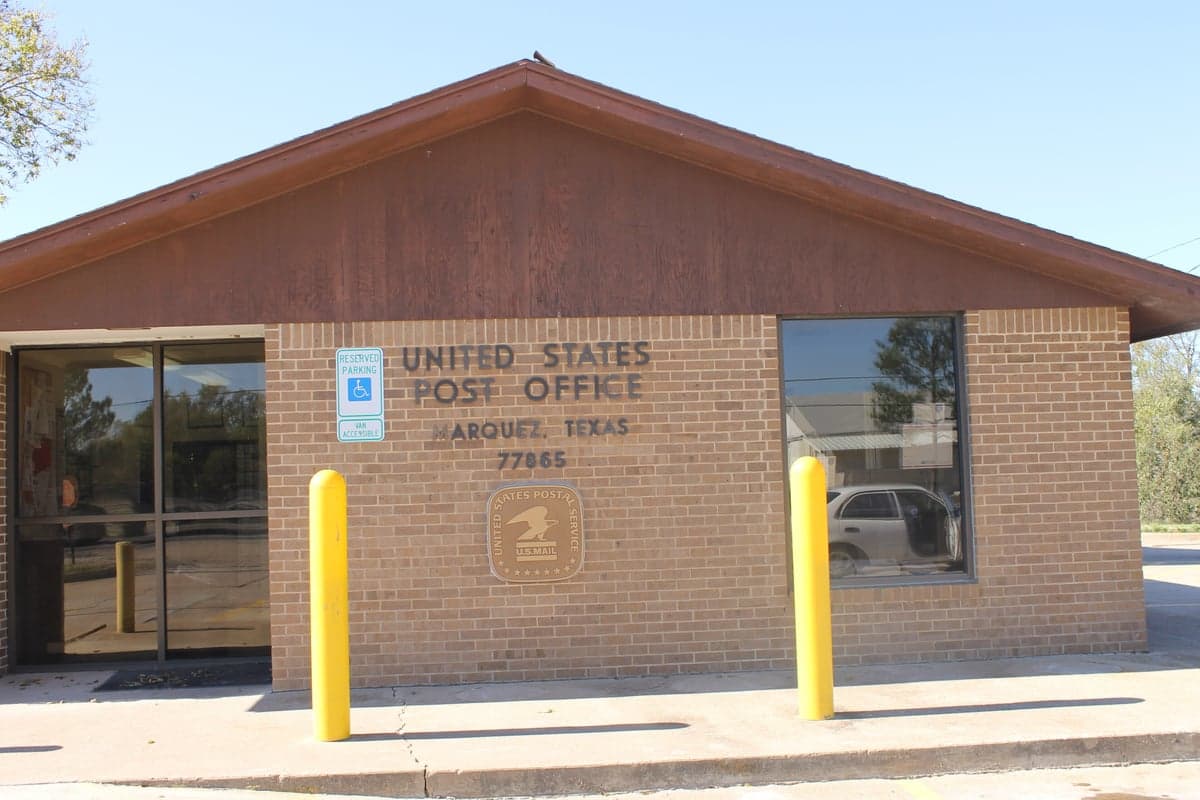
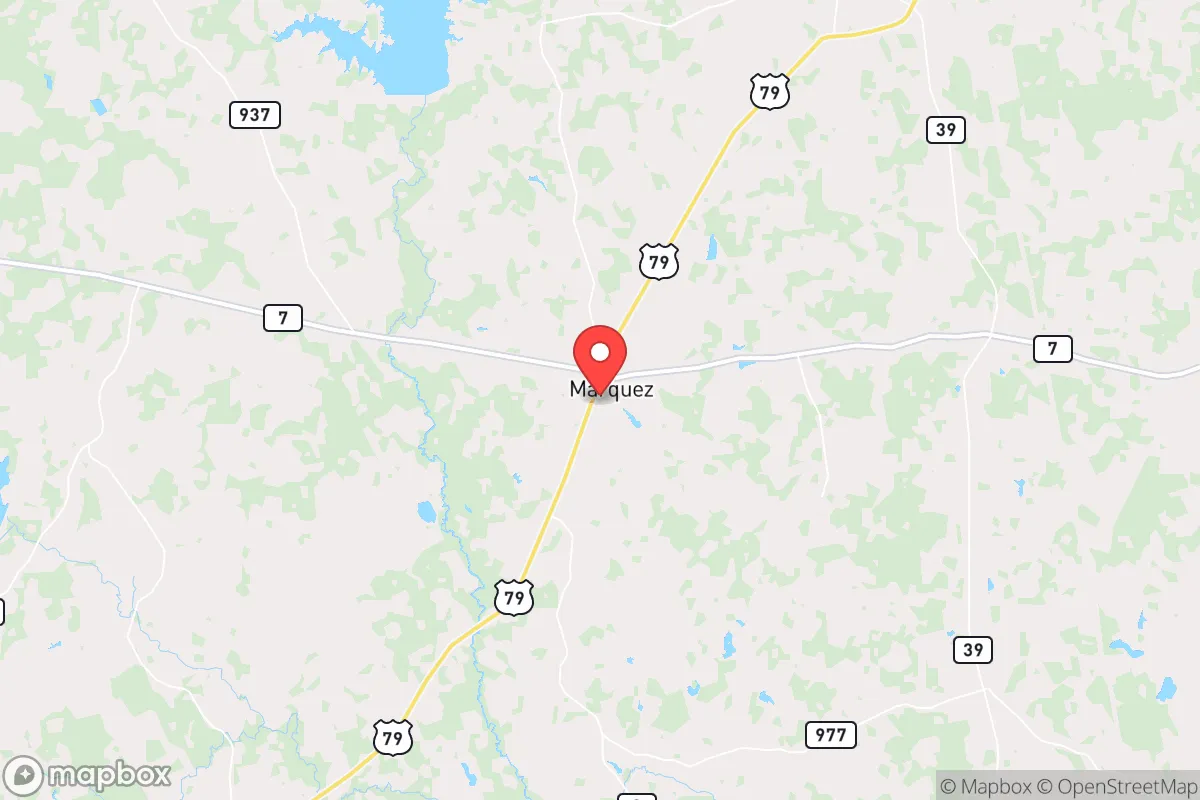
Photo: Wikipedia
Demographics of Marquez, TX
Affluence Level in Marquez, TX
A below-average socioeconomic profile. Incomes, home values, and educational attainment trail the U.S., with higher poverty and unemployment.
People of Marquez, TX
Marquez, Texas, is a small, tight-knit community of 168 residents where a White plurality (51.8%) and a substantial Hispanic population (34.5%) form the core of daily life, alongside smaller Black (7.1%) and Indian-subcontinent (6.0%) communities. The city’s character is defined by its rural, slow-paced atmosphere, with a notably low college attainment rate of 9.5% reflecting a workforce rooted in local trades and agriculture. A distinctive marker is the presence of a small but established Indian-subcontinent community, a demographic rarity for a town this size in East Texas. The population is overwhelmingly native-born, with a foreign-born share of 10.7% that is almost entirely accounted for by the Indian-subcontinent cohort.
How the city was settled and grew
Marquez was founded in the late 19th century as a railroad stop on the International-Great Northern Railroad, drawing its first permanent settlers primarily from Anglo-American farming families migrating westward from the Deep South. The original town plat, centered around the depot, attracted merchants and cotton farmers, with the earliest homes built along what is now Main Street and the surrounding blocks of Railroad Avenue. A second wave arrived in the early 1900s as Mexican and Mexican-American laborers came to work the cotton fields and later the region’s timber and livestock operations, settling in what became known locally as La Colonia, a neighborhood south of the railroad tracks that remains a Hispanic cultural anchor. By the mid-20th century, Marquez had stabilized as a small agricultural service center, with the population hovering around 200 and the racial makeup nearly entirely White and Hispanic.
Modern era (post-1965)
The post-1965 period brought little immediate change to Marquez, as the town’s remote location and limited economic base discouraged large-scale immigration. The most significant demographic shift occurred in the 1990s and 2000s, when a small number of Indian-subcontinent families—primarily professionals in healthcare and small retail—moved into the area, drawn by low property costs and proximity to larger job centers like College Station and Huntsville. These families concentrated in newer housing along FM 1511 and the Lake Road corridor, forming a distinct enclave that today accounts for the entire 6.0% Indian-subcontinent share. The Hispanic population grew modestly through natural increase and some domestic migration from South Texas, with La Colonia remaining the primary Hispanic neighborhood, while the White population aged in place in the historic core around Main Street and Oak Street. The Black population, at 7.1%, is largely composed of long-standing families who have lived in the area for generations, with a small cluster of homes near Church Street. The East/Southeast Asian share remains at 0.0%, with no recorded community forming.
The future
The population of Marquez is likely to remain very small and stable, with gradual aging of the White cohort and modest growth among Hispanic families through natural increase. The Indian-subcontinent community, while small, appears stable and may grow slightly if more professionals seek affordable rural housing within commuting distance of College Station. The town is not experiencing significant in-migration from any new group, and the foreign-born share is unlikely to rise substantially. The city is not homogenizing into a single identity but rather maintaining distinct, quiet enclaves: La Colonia remains predominantly Hispanic, the FM 1511 corridor is the Indian-subcontinent hub, and the historic core is mostly White and older. Over the next 10-20 years, Marquez will likely see a slight increase in Hispanic plurality as younger families remain, while the White population continues to age. No major new development or immigration wave is anticipated.
For someone moving in now, Marquez offers a deeply rural, low-cost environment where community life is centered on family, church, and local events. The town is becoming slightly more Hispanic and retaining a small Indian-subcontinent professional presence, but remains overwhelmingly native-born and culturally conservative. New residents should expect a quiet, insular setting where established neighborhood identities—La Colonia, the Main Street core, and the FM 1511 corridor—shape daily interactions, and where the pace of change is measured in decades, not years.

* Values derived from national, state, county, city and local statistics and may differ in a specific area. Last updated: 2026-10-10T16:28:14.000Z
Narrative content on this page is AI-generated and may contain mistakes. Verify any details that matter before acting on them.
ReloMaps may earn a commission from affiliate links at no extra cost to you.

