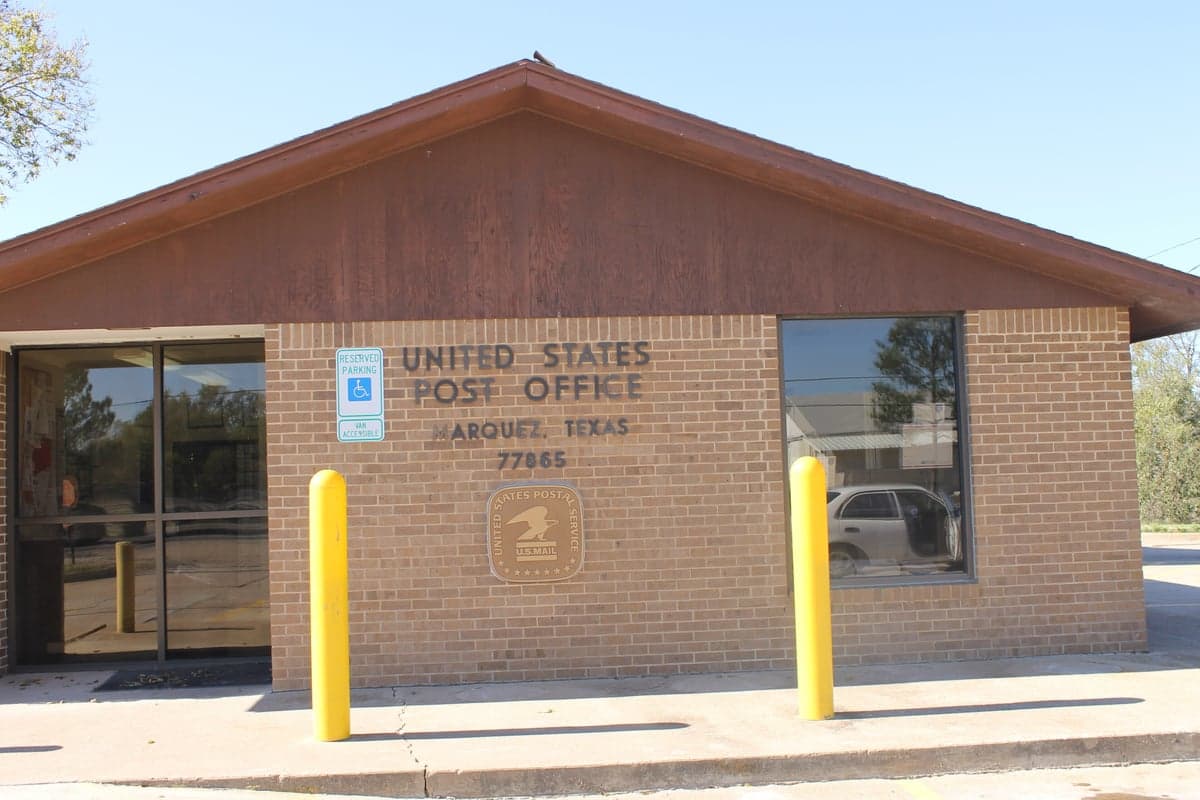
Photo: Wikipedia
Personal Sovereignty in Marquez, TX
Strong independent fundamentals that actively favor personal liberty and low regulation.
What does Personal Sovereignty tell us?
Personal Sovereignty measures your capacity for self-reliance and independence with minimal government friction. Higher scores mean fewer barriers between you and the way you want to live... but it assumes you have the space you need and good neighbors.
What does this tell us?
Personal Sovereignty measures your capacity for self-reliance and independence with minimal government friction. Higher scores mean fewer barriers between you and the way you want to live... but it assumes you have the space you need and good neighbors.
State Policy
Energy independence: Net exporter (220% of energy produced in-state)
Personal Liberty
Homesteading

Personal Liberty Analysis
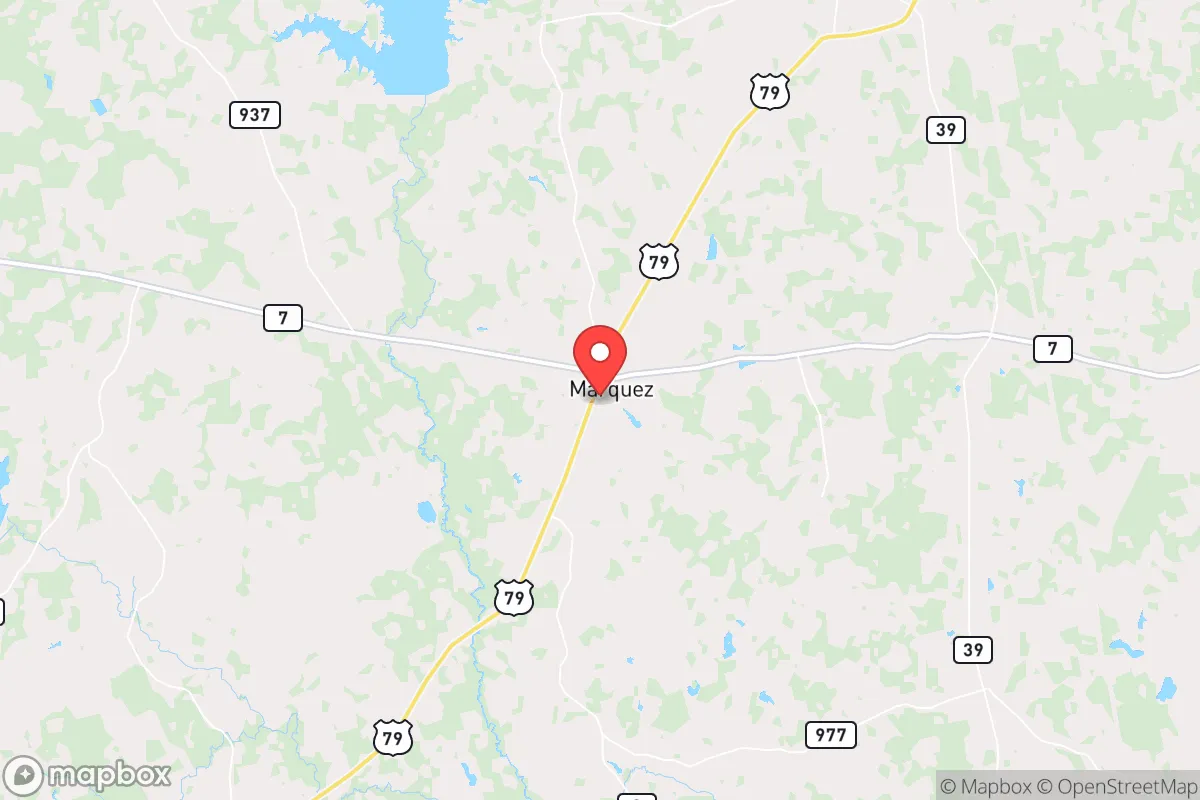
For the individual or family prioritizing personal sovereignty above all else, Marquez, Texas, offers a compelling but nuanced environment. Located in Leon County, roughly 100 miles southeast of Dallas and 50 miles west of the Texas-Louisiana border, this unincorporated community of fewer than 250 residents operates under a minimal local government structure, which inherently limits the reach of municipal overreach. The broader state framework—Texas’s constitutional carry, lack of a state income tax, and strong property rights—provides a baseline of autonomy that is increasingly rare in the United States. However, the reality of living in a rural, unincorporated area means that personal sovereignty is less about legal protections and more about the practical ability to live without interference, a trade-off that demands self-reliance in everything from law enforcement response times to waste management.
Tax burden and regulatory posture in a low-governance rural setting
Marquez sits in a jurisdiction where the tax burden is low by national standards, but not negligible. Leon County’s property tax rate hovers around 0.65% to 0.75% of assessed value, which is moderate for rural Texas. There is no city property tax because Marquez is unincorporated, and there is no state income tax. This means the primary recurring cost of government is property tax, plus a state sales tax of 6.25% (plus county and local additions, typically totaling 8.25%). For a prepper or survivalist, the absence of a municipal code is a major advantage: there is no city planning department to enforce zoning, no building permits for most structures, and no noise ordinances. The regulatory posture is essentially "leave you alone unless you cause a nuisance." However, this freedom comes with a caveat: the county still enforces state-level regulations, such as the Texas Commission on Environmental Quality (TCEQ) rules on wastewater disposal. If you install a septic system, it must meet state standards, and burning trash is technically illegal under state air quality rules, though enforcement is rare in practice. The trade-off is that you are largely free to build, store, and live as you see fit, but you must also handle your own infrastructure—water wells, septic, and road maintenance—without municipal support.
Self-defense and gun law specifics: constitutional carry and castle doctrine
Texas is a constitutional carry state, meaning that as of September 2021, any adult who is not legally prohibited from possessing a firearm may carry a handgun openly or concealed without a permit. This is a foundational pillar of personal sovereignty in Marquez. The state also has a strong castle doctrine (Texas Penal Code §9.32), which eliminates any duty to retreat before using deadly force in one’s home, vehicle, or workplace if you reasonably believe it is necessary to prevent imminent bodily harm or a violent felony. For the survivalist, this is critical: the law does not require you to attempt escape before defending your property or person. Additionally, Texas law explicitly protects the right to possess firearms during a declared disaster or state of emergency, a provision that directly counters government overreach seen in other states during crises. Magazine capacity restrictions, assault weapon bans, and red flag laws do not exist at the state level. The nearest sheriff’s office is in Centerville, about 20 minutes away, so response times for law enforcement are measured in tens of minutes, not single digits. This makes personal firearm proficiency and home security a practical necessity, not just a philosophical preference. The only notable limitation is that Marquez is within 1,000 feet of a school zone (Marquez Elementary), where carry is restricted unless you have a License to Carry (LTC), though the federal Gun-Free School Zones Act is rarely enforced against lawful carriers in practice.
Self-reliance and homesteading viability: lot sizes, zoning, and off-grid feasibility
Marquez is a prime location for those seeking to live off-grid or pursue a homesteading lifestyle. Because it is unincorporated, there is no municipal zoning. You can keep livestock, build a workshop, install solar panels, drill a well, and construct a composting toilet without seeking permission from a local planning board. Lot sizes in the area vary widely, from small 1-acre parcels to 50-acre tracts, with prices ranging from $3,000 to $8,000 per acre as of 2025. This makes it feasible to acquire enough land for subsistence farming, rainwater catchment, and alternative energy systems. The Texas state government does not prohibit rainwater harvesting; in fact, it encourages it through tax exemptions on related equipment. Solar and wind energy systems are also unregulated at the local level, though you must still connect to the ERCOT grid if you want to sell excess power—or you can simply go fully off-grid without any legal barrier. The main practical challenge is water availability: the Carrizo-Wilcox Aquifer underlies the area, but well depths typically range from 200 to 500 feet, and drilling costs $15-$30 per foot. Septic systems require a permit from the Leon County Environmental Health Department, but the process is straightforward for standard systems. For the survivalist, the key takeaway is that Marquez offers near-total freedom to build a self-sufficient compound, but the burden of infrastructure cost and maintenance falls entirely on the landowner.
Personal liberties: parental rights, medical autonomy, speech, and property
Texas law provides strong protections for parental rights, including the right to direct the education and healthcare of one’s children. Homeschooling is legal with minimal regulation: no notification to the state is required, no standardized testing is mandated, and curriculum is at the parent’s discretion. Marquez is served by the Leon Independent School District, but many families in the area opt for private or home-based education. Medical autonomy is more complex. Texas has not expanded Medicaid, and the state’s health insurance market is expensive for individuals. However, the state does not mandate COVID-19 vaccines for adults or children, and there is no state-level vaccine passport system. Direct primary care (DPC) clinics are available in nearby cities like Centerville and Buffalo, offering a cash-pay model that bypasses insurance bureaucracy. For those concerned with medical freedom, Texas also has a robust right-to-try law for terminally ill patients and allows the use of medical cannabis under the Compassionate Use Program, though it is limited to low-THC products. Free speech is protected under the Texas Religious Freedom Restoration Act (TRFRA), which provides stronger protections than federal law against government actions that burden religious exercise. Property rights are similarly robust: Texas has no state-level property tax on personal property (like vehicles or equipment), and the state’s homestead exemption protects up to 100 acres of rural land from forced sale to satisfy most creditors. The only significant limitation is the lack of a state-level preemption on local regulations regarding short-term rentals or noise, but since Marquez has no municipal government, this is a non-issue.
In the broader context of personal sovereignty, Marquez represents a rare pocket where the default is freedom rather than permission. Compared to urban areas in Texas or states like California, New York, or Oregon, the regulatory burden is minimal, the tax load is low, and the legal framework supports self-defense, self-reliance, and parental autonomy. The trade-off is that you are largely on your own—no city services, slow law enforcement, and a need for significant upfront capital for infrastructure. For the survivalist or prepper who values independence over convenience, Marquez offers a viable base of operations. For those who want the protections of a strong community but the freedom of minimal government, it is one of the better options in the state. The key is to go in with eyes open: the sovereignty is real, but so is the responsibility.

* Values derived from national, state, county, city and local statistics and may differ in a specific area. Last updated: 2026-10-10T16:28:14.000Z
Narrative content on this page is AI-generated and may contain mistakes. Verify any details that matter before acting on them.
ReloMaps may earn a commission from affiliate links at no extra cost to you.

