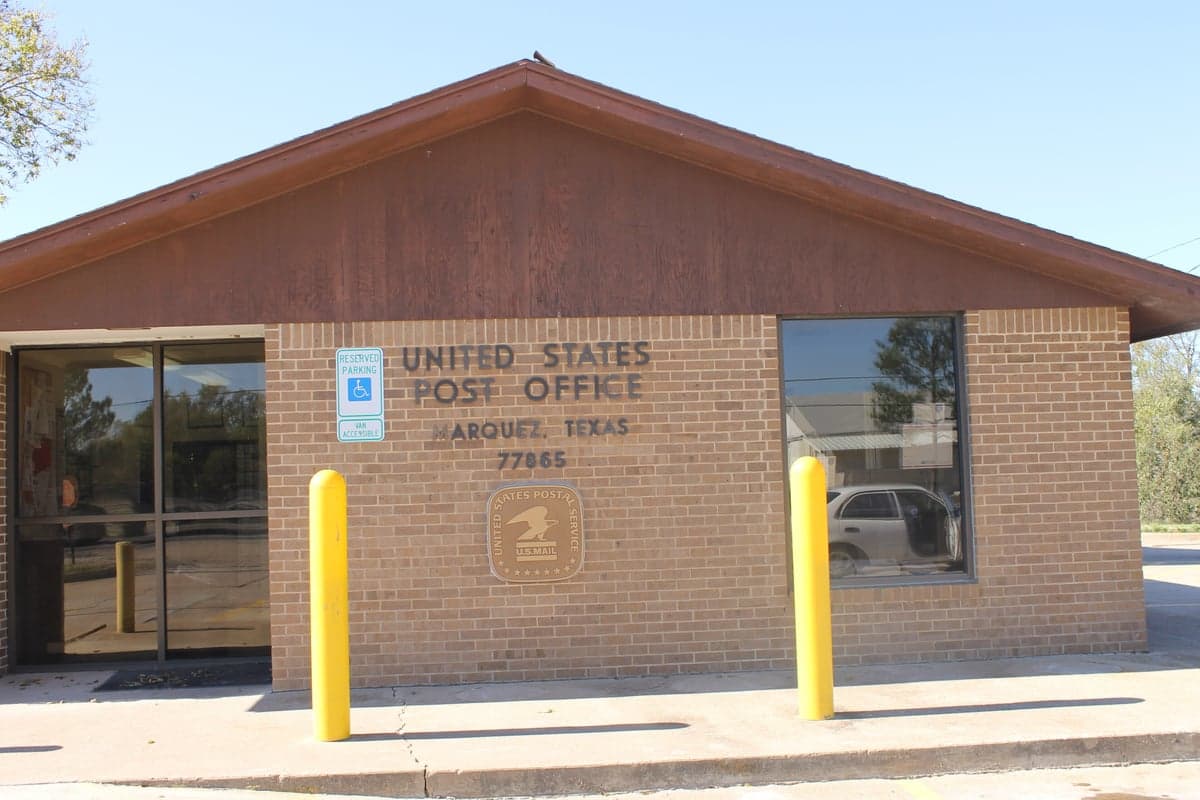
Photo: Wikipedia
Political ClimatePolitical Climate in Marquez, TX
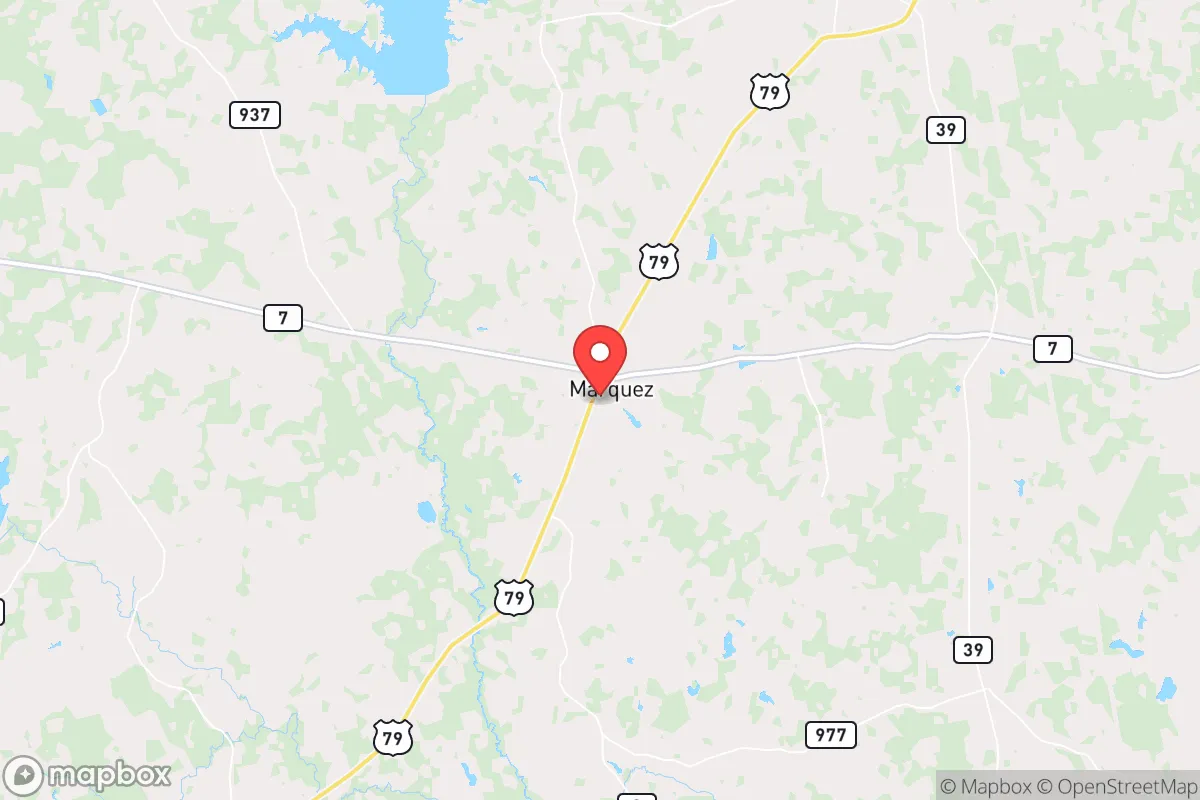
District shown is the primary district for this city’s centroid. Cities may span multiple districts.
Local Political AnalysisPolitical Analysis of Marquez, TX
Marquez, Texas, sits in a deeply conservative pocket of the state, with a Cook PVI of R+14 that makes it one of the most reliably Republican areas in the region. That’s a full ten points more conservative than the state of Texas as a whole, which sits at R+4, and it’s not just a number on a map—it reflects a way of life that’s held steady for generations. You don’t see the kind of political drift here that you might in places like Austin or even College Station; Marquez has stayed true to its roots, and most folks around here like it that way.
How it compares
When you stack Marquez up against the rest of Texas, the difference is stark. The state’s R+4 rating already leans Republican, but that average gets pulled left by fast-growing urban centers like Houston, Dallas, and San Antonio, where progressive policies on taxes, land use, and personal freedoms are gaining ground. Marquez, by contrast, is surrounded by smaller towns like Jewett and Normangee that share its conservative values, and the nearest city of any size—Bryan-College Station—is a mixed bag politically, with a university influence that sometimes pushes left. That’s not the case here. In Marquez, the local government tends to stay out of your business, and there’s a strong resistance to any kind of overreach, whether it’s from the state or the feds. The R+14 rating isn’t just a statistic; it’s a reflection of a community that votes with its gut on issues like gun rights, school choice, and keeping taxes low.
What this means for residents
For someone living in Marquez, the political climate translates into a daily life that feels free from a lot of the bureaucratic nonsense you hear about in bigger cities. You’re not dealing with heavy-handed zoning laws or constant new regulations on how you can use your property. The county commission and local school board are filled with folks who believe in limited government, and that shows in things like lower property tax rates compared to nearby Leon County or even parts of Brazos County. That said, there’s a quiet concern among long-time residents about the direction of the state as a whole. As Texas grows and attracts new people from blue states, there’s pressure to adopt more progressive policies—think expanded government programs or stricter environmental rules—that could start creeping into rural areas. For now, Marquez remains a stronghold, but you can feel the tension when you talk to neighbors about what might happen in the next decade if the state’s political center of gravity shifts further left.
One of the biggest cultural distinctions here is the emphasis on personal responsibility over government solutions. You won’t find much appetite for things like universal basic income or heavy-handed public health mandates in Marquez. The community prides itself on self-reliance, and that’s reflected in everything from the local churches to the volunteer fire department. If you’re looking for a place where the government stays small and the people stay free, Marquez is about as good as it gets in Texas right now. But keep an eye on the state legislature—if Austin starts pushing more progressive agendas, even a place like this could feel the heat. For now, though, it’s a solid bet for anyone who values conservative principles and wants to live without a lot of political noise.

State Political ClimatePolitical Climate in Texas
State Political AnalysisPolitical Environment in the State
Texas remains a solidly Republican state with a Cook PVI of R+4, but the political landscape has shifted noticeably over the past decade. The dominant coalition is still built on rural conservatives, suburban moderates, and a growing population of transplants from blue states, but the margins have tightened. In 2024, Donald Trump carried the state by about 9 points, down from 11 points in 2020 and 16 points in 2016. The long arc shows a slow but steady drift toward competitiveness, driven largely by explosive growth in the urban corridors of Dallas-Fort Worth, Houston, Austin, and San Antonio, where new arrivals are bringing more diverse political views.
Urban vs. rural divide
The political map of Texas is a study in contrasts. The vast rural and exurban counties—places like Lubbock, Amarillo, and the Panhandle—vote Republican by margins of 70-80%. Meanwhile, the major metros are increasingly blue. Austin (Travis County) is the state’s most liberal stronghold, voting Democratic by 40+ points. El Paso and the Rio Grande Valley have long been Democratic, though the Valley shifted rightward in 2020 and 2024, with counties like Starr and Hidalgo flipping to Trump. The real battleground is the suburban ring around Dallas, Houston, and San Antonio. Collin County (north of Dallas) voted Republican by 15 points in 2024, down from 25 points in 2016. Fort Bend County (southwest of Houston) flipped to Democrats in 2018 and has stayed blue. These suburbs are where the political future of Texas is being decided—and where new residents will find the most ideological diversity.
Policy environment
Texas’s policy environment is defined by a low-tax, low-regulation posture that appeals strongly to conservative newcomers. There is no state income tax, and property taxes are high but capped at 10% annual growth for homesteads. The regulatory climate is business-friendly, with minimal zoning in many areas and a right-to-work law that keeps unions weak. On education, the state has expanded school choice through the creation of education savings accounts (ESAs) in 2023, though the program is limited to students with disabilities and low-income families. The Texas Legislature also passed a law in 2023 requiring public schools to display “In God We Trust” posters, a symbolic but telling move. Healthcare policy remains a flashpoint: Texas has not expanded Medicaid, and the state has some of the strictest abortion laws in the nation, with a near-total ban after six weeks (SB 8, 2021) and a trigger law that took effect in 2022. Election laws tightened in 2021 with SB 1, which banned drive-through voting, restricted mail-in ballot access, and empowered poll watchers. For a conservative-leaning resident, the policy environment is broadly favorable, though the property tax burden and lack of Medicaid expansion can be a shock for those coming from high-tax states.
Trajectory & freedom
The trajectory of personal freedom in Texas is a mixed bag, and it’s worth watching closely. On the positive side for conservatives, the state has expanded gun rights significantly: permitless carry (HB 1927) became law in 2021, allowing most adults to carry a handgun without a license. Parental rights were strengthened in 2023 with the passage of the “Parental Bill of Rights” (HB 900), which requires schools to notify parents of instructional materials involving sexuality and gives them the right to opt their children out. Medical autonomy took a hit with the abortion bans, but the state also passed a law in 2023 protecting doctors who refuse to perform gender-transition procedures on minors. Property rights are generally strong, though eminent domain battles over pipelines and transmission lines remain a concern in rural areas. The biggest red flag for freedom-minded residents is the growing influence of local governments in blue cities. Austin and Dallas have passed ordinances that conflict with state law—like local minimum wage hikes and sanctuary city policies—leading to a constant tug-of-war with the state legislature. The state has preempted many of these local efforts, but the trend is toward more friction between state and local authority.
Civil unrest & political movements
Texas has seen its share of political flashpoints in recent years. The 2020 Black Lives Matter protests in Austin and Houston were large and occasionally violent, leading to property damage and a lasting sense of unease among residents. The state responded with a law in 2021 (HB 9) that increased penalties for rioting and made it a crime to block highways during protests. Immigration politics are a constant source of tension. Governor Greg Abbott’s Operation Lone Star, launched in 2021, deployed state troopers and National Guard to the border, bused migrants to blue cities like New York and Chicago, and led to the arrest of thousands for trespassing. The state also passed SB 4 in 2023, which makes illegal entry a state crime—a direct challenge to federal authority that is currently tied up in court. Secession rhetoric has flared on the right, with the Texas Nationalist Movement gaining some traction, but it remains a fringe position. Election integrity remains a hot-button issue: the 2020 and 2022 cycles saw widespread claims of fraud, though no major cases were proven. For a new resident, the most visible sign of political division is the proliferation of yard signs, bumper stickers, and local news coverage of school board meetings, which have become battlegrounds over curriculum and library books.
Projection
Over the next 5-10 years, Texas is likely to become more politically competitive, but not necessarily more liberal. The in-migration from California, New York, and Illinois is slowing, and many of those newcomers are conservatives fleeing blue-state policies. The suburbs are the key: if they continue to drift left, Texas could become a swing state by 2032. But if the state legislature continues to pass conservative policies on education, taxes, and guns, it may hold the line. The biggest wildcard is the Hispanic vote, which has been trending rightward—if that trend accelerates, Texas could actually become more Republican. For someone moving in now, expect a state that remains broadly conservative but with growing pockets of progressive influence in the cities. The political fights will be over local control, school curriculum, and property taxes. If you value low taxes, gun rights, and parental control over education, Texas is still a safe bet. But if you’re looking for a place where government stays out of your life entirely, keep an eye on the growing power of local governments in the blue metros.
For a new resident, the bottom line is this: Texas offers a policy environment that is broadly aligned with conservative values, but it is not a monolith. You’ll find strong protections for gun rights, parental rights, and religious liberty, alongside a low-tax, low-regulation economy. The trade-offs are high property taxes, a contentious immigration environment, and a growing urban-rural divide that can feel like two different states. If you’re moving here, choose your county carefully—the political climate in Collin County is very different from Travis County. And be prepared for the political battles to continue, because Texas is still very much a battleground for the soul of the state.
* Values derived from national, state, county, city and local statistics and may differ in a specific area. Last updated: 2026-10-10T16:28:14.000Z
Narrative content on this page is AI-generated and may contain mistakes. Verify any details that matter before acting on them.
ReloMaps may earn a commission from affiliate links at no extra cost to you.

